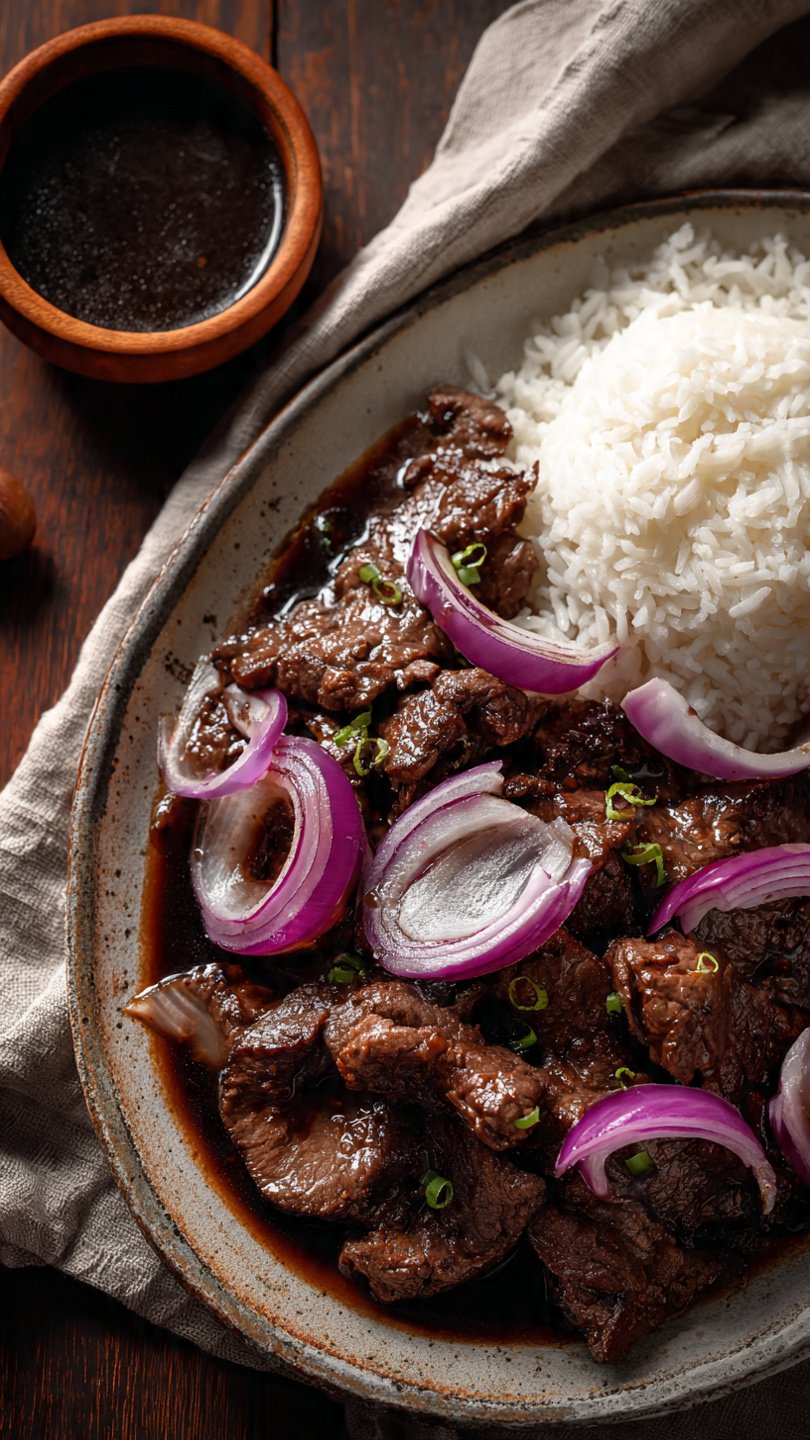
🥩 Easy Filipino Bistek Recipe: Savory Beef & Onions
👩🍳 The Busy Home Cook's Arsenal
Consistently cooking incredible meals for your family doesn't mean spending three hours in the kitchen every night. These are the 5 absolute life-saving appliances and culinary tools that dramatically cut down prep time while guaranteeing restaurant-quality results.
🌪️ Ninja 4-Quart Air Fryer
The machine that completely changed weeknight dinners. It preheats in seconds and cooks frozen vegetables, chicken wings, and battered fish to an incredibly crispy, deep-fried texture using 75% less oil and taking half the time of a traditional oven.
⏱️ Instant Pot Duo 7-in-1 Pressure Cooker
Forget slow cookers that take 8 hours. This legendary appliance aggressively pressure cooks tough cuts of meat into melt-in-your-mouth tender roasts, stews, and perfectly fluffy rice in under 45 minutes, saving you when you forget to defrost dinner.
🔪 Victorinox Fibrox Pro 8" Chef's Knife
A dull knife is dangerous and makes chopping vegetables a miserable chore. This exact blade reigns supreme in professional kitchens because it holds a terrifyingly sharp edge, features a non-slip grip, and costs significantly less than heavy German steel.
🌡️ ThermoPro Instant Read Thermometer
The secret difference between dry, rubbery chicken and juicy perfection. Stop nervously slicing your proteins open to check if they're done—this waterproof digital pen gives you a highly accurate temperature reading in less than three seconds.
🥤 Vitamix 5200 Professional-Grade Blender
Whether you are making silky-smooth breakfast smoothies, pureed soups from scratch, or blending absolutely lump-free sauces, this famously indestructible motor pulverizes anything you throw at it. It literally heats soup from the friction of the blades alone.
So, you’re craving something tasty but you’re too lazy to spend forever in the kitchen, right? Same.
We’ve all been there. It’s 6:00 PM, you’re staring into the abyss of your refrigerator, and the takeout apps are calling your name. But your wallet is judging you, and honestly, waiting 45 minutes for soggy fries isn’t the vibe. Enter the holy grail of weeknight dinners: Filipino Bistek Recipe (or Bistek Tagalog).
If you aren’t familiar with this dish, imagine a world where tender beef, salty soy sauce, and zesty citrus had a beautiful, savory baby, and then covered that baby in a blanket of sweet, caramelized onions. It is the ultimate “low effort, high reward” meal. It’s salty, it’s sour, it’s savory—it’s basically a hug in a bowl, provided that hug smells like garlic and happiness.
Grab your skillet and let’s do this.
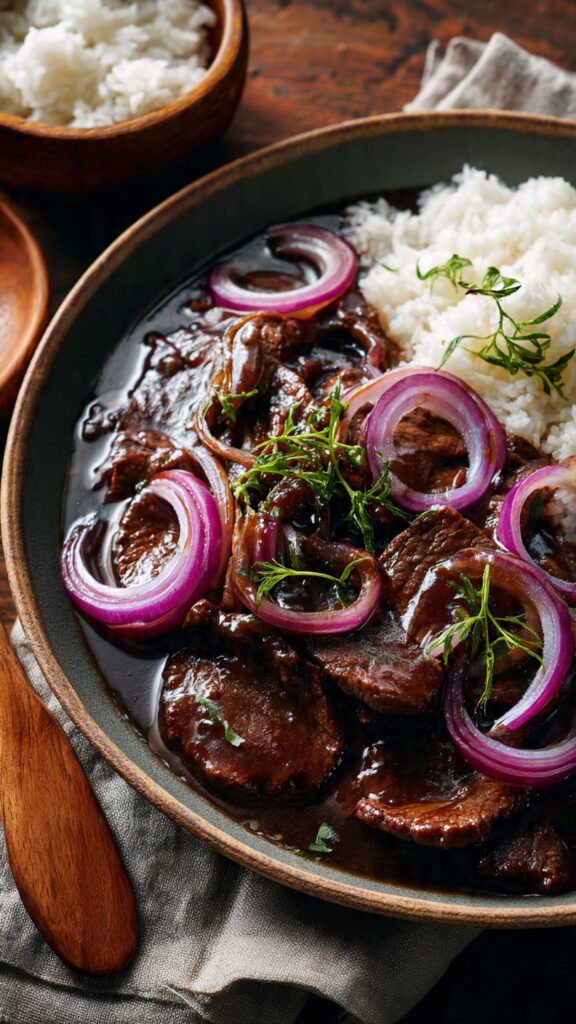
Why This Recipe is Awesome
Look, I don’t use the word “perfect” lightly because nothing is perfect except maybe dogs and payday. But this recipe comes close. Here is why you are going to fall in love with it:
- It’s Idiot-Proof: I mean this with love. Even if your culinary skills maximize at “boiling water,” you can make this. It’s incredibly forgiving. Did you marinate it too long? Fine. Did you cut the onions a bit thick? Who cares? It’s rustic.
- The Flavor Balance: This dish is a masterclass in balancing the five flavor profiles. You have the deep, earthy umami from the soy sauce, the sharp, bright acidity from the calamansi (or lemon), the slight sweetness from the caramelized onions, and the richness of the beef. It hits every single taste bud at once.
- Pantry Staples: You probably have 90% of the ingredients in your kitchen right now. No hunting for obscure spices in the “international aisle” where you stare at jars for 20 minutes.
- The Aroma: When you start frying those onions in the beef fat? Game over. Your neighbors will be jealous. The smell of garlic and soy sauce hitting a hot pan triggers a primal hunger that cannot be ignored.
- It’s Better the Next Day: This is one of those magical dishes where the leftovers arguably taste better than the fresh meal. The meat has had time to really sit in that sauce and think about what it’s done. Pro tip: Make a double batch. Future You will thank Past You.
Ingredients You’ll Need
Don’t panic—the list is short. Here is exactly what you need to grab to pull this off.
- Beef Sirloin or Top Round (1 lb): You want this thinly sliced. Like, very thin. If you have a butcher, ask them to slice it for “stir-fry” or specifically for Bistek. If you are slicing it yourself, freeze the meat for 30 minutes first—it makes it firm and way easier to slice thinly without mangling it.
- Soy Sauce (1/4 cup): Please, for the love of food, try to use a Filipino brand like Silver Swan or Datu Puti. They have a specific savory depth. If you only have Kikkoman, it works, but it’s like drinking instant coffee instead of a fresh brew. Doable, but not the same.
- Calamansi Juice (3-4 tbsp): This is the Filipino lime. It’s tiny, green/orange, and smells like floral magic. If you can’t find fresh ones or the frozen packets at an Asian grocer, use a mix of lemon and lime juice (50/50 ratio). It’s a decent dupe.
- Garlic (4-5 cloves): Minced. If a recipe calls for one clove, we use three. If it calls for four, we use six. Measure with your heart, not the spoon.
- Red Onions (2 large): You need huge rings. We are using these two ways: some cooked down until soft, and some kept slightly raw for crunch. The onion is not a garnish here; it’s a main character.
- Black Pepper (Freshly cracked): Use a lot. The “bistek” name actually comes from the Spanish “bistec” (steak), and the pepper adds a necessary kick.
- Cooking Oil: Vegetable or canola is fine. You need a high smoke point because we are searing.
- Water (approx. 1/2 cup): To tame the saltiness and create that luscious gravy.
- Sugar (1 tsp, optional): Purists might yell at me, but a pinch of sugar balances the sharp acid and salty soy. Trust me.
Step-by-Step Instructions
Alright, apron on. Let’s cook.
1. The Prep Work (The most important part) First, take your thinly sliced beef and give it a little pounding with a meat mallet or the back of a heavy knife. We aren’t trying to destroy it, just tenderize the fibers. Place the beef in a bowl and add the soy sauce, calamansi juice, minced garlic, and a generous amount of black pepper.
- Science Tip: The acid in the calamansi creates a chemical reaction that breaks down the collagen in the meat, making it tender. Let this sit for at least 30 minutes, or overnight if you’re organized (which I am usually not).
2. Sear the Meat Heat your oil in a large skillet over medium-high heat. Remove the beef from the marinade (save the marinade! Do not throw it away!) and shake off the excess liquid. Pan-fry the beef slices in a single layer.
- Crucial Step: Do not crowd the pan. If you pile all the meat in at once, the temperature drops, and the meat steams instead of searing. We want browning—that’s the Maillard reaction, and that equals flavor. Sear for about 1-2 minutes per side until browned, then remove and set aside. You’ll likely need to do this in batches.
3. The Aromatics In the same pan (don’t wash it, that brown stuff on the bottom is flavor gold), toss in half of your onion rings. Cook them until they are soft and translucent, picking up all the beefy bits from the bottom of the pan. Once they are soft, set them aside with the beef.
4. The Simmer Pour the reserved marinade into the hot pan. Add the water and bring it to a boil. Let it simmer for about 2-3 minutes to cook off the raw garlic taste and thicken slightly.
- Taste Test: Dip a spoon in (carefully). Too salty? Add a splash more water. Too sour? Add that pinch of sugar I mentioned. This is your sauce; own it.
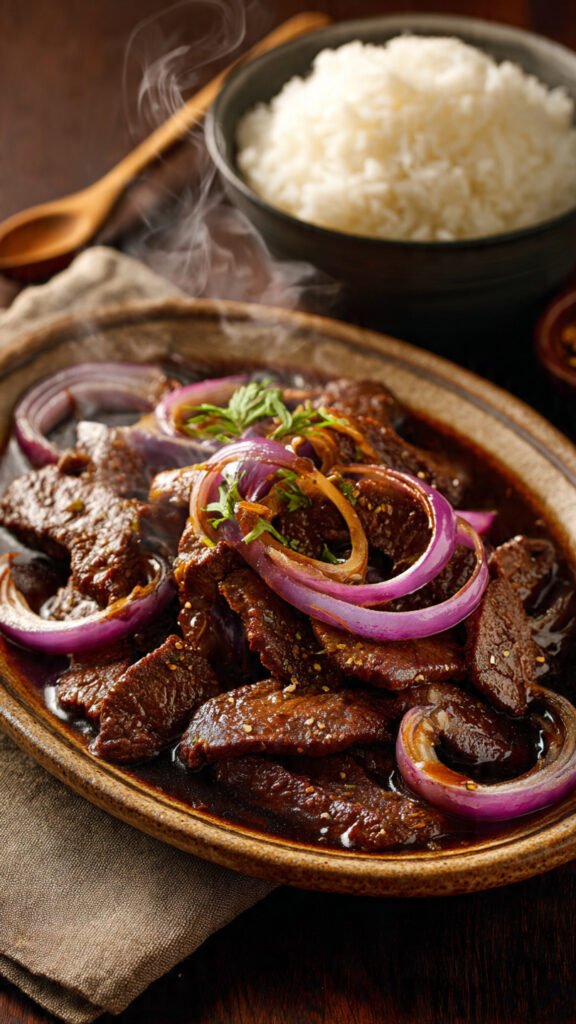
5. The Reunion Toss the beef and the cooked onions back into the pan with the simmering sauce. Stir everything to coat. Let it simmer together for another 5-7 minutes. This allows the beef to finish cooking and absorb that rich gravy. The sauce should reduce and become slightly glossy.
6. The Crunch Factor Right before you turn off the heat, toss in the remaining raw onion rings. Give it one quick toss. We want these onions to stay slightly crisp to cut through the richness of the sauce.
7. Serve Serve immediately over a mountain of steaming white jasmine rice. And I do mean a mountain. The sauce is potent, and the rice is the perfect canvas.
Common Mistakes to Avoid
Even though I said this is idiot-proof, there are still ways to make it sad. Avoid these rookie moves:
- Overcooking the Beef: Since we are using thin slices and lean cuts like top round, if you boil it for an hour, it will taste like an old shoe. Sear it fast, simmer it briefly. That’s it.
- Crowding the Pan: I mentioned this earlier, but I’m saying it again because it’s the #1 sin in cooking meat. Crowding = Steaming. Steaming = Grey, sad meat. Give the beef personal space.
- Using “Light” Soy Sauce: If you use low-sodium soy sauce, you might find the dish lacks punch. If you must use it for health reasons, you’ll likely need to adjust the seasoning with a pinch of salt.
- Drowning the Meat: This isn’t a soup. It’s a braise. The sauce should coat the meat lovingly, not cover it completely like a swimming pool. We want a gravy, not a broth.
- Ignoring the Rice: FYI: Eating this without rice is technically legal, but it feels morally wrong. The saltiness of the dish relies on the bland, fluffy rice to balance it out. Don’t go low-carb on me today.
Alternatives & Substitutions
Cooking is jazz, not classical music. Improvise if you have to!
- Vegetarian/Vegan? Swap the beef for Extra Firm Tofu or thick slices of Portobello Mushrooms. Press the tofu first to get the water out, slice it into planks, and fry it up just like the beef. The marinade works perfectly on plant-based proteins.
- No Calamansi? As mentioned, lemon is the standard substitute. However, if you want to get fancy, a mix of 3 parts lemon juice to 1 part orange juice creates a closer flavor profile to the floral sweetness of calamansi. Vinegar (cane vinegar) works too, but it changes the dish from Bistek to something closer to Adobo.
- Pork Version: This recipe works 100% effectively with pork chops or pork belly slices. It’s called Bistek Baboy. If using pork, ensure you simmer it a bit longer to ensure it’s cooked through.
- The Onion Situation: If red onions are too sharp for you, use sweet Vidalia onions. They caramelize beautifully and add a nice sugary contrast to the salty soy sauce.
FAQ (Frequently Asked Questions)
Q: Can I make this spicy? A: Absolutely. Chop up some bird’s eye chilies (siling labuyo) and throw them in with the garlic. It adds a heat that cuts right through the fat. Highly recommended if you like to sweat while you eat.
Q: My sauce is too thin! What did I do? A: You probably added too much water. Just take the meat out and boil the sauce on high heat for a few minutes. It will reduce and thicken. If you’re really desperate, a tiny cornstarch slurry will fix it, but don’t tell the grandmas I told you that.
Q: Can I marinate this for 2 days? A: I wouldn’t. Because there is acid (citrus) in the marinade, if you leave it too long, the acid will start to “cook” the meat and turn the texture mushy. 24 hours is the max limit, IMO.
Q: Why is my meat tough? A: Either you didn’t slice it against the grain, or you boiled the life out of it. Next time, slice perpendicular to the muscle fibers and cook it for less time.
Q: Can I use margarine instead of oil? A: Well, technically yes, but why hurt your soul like that? Stick to neutral oil for frying, or if you want to be decadent, finish the sauce with a knob of real butter at the end.
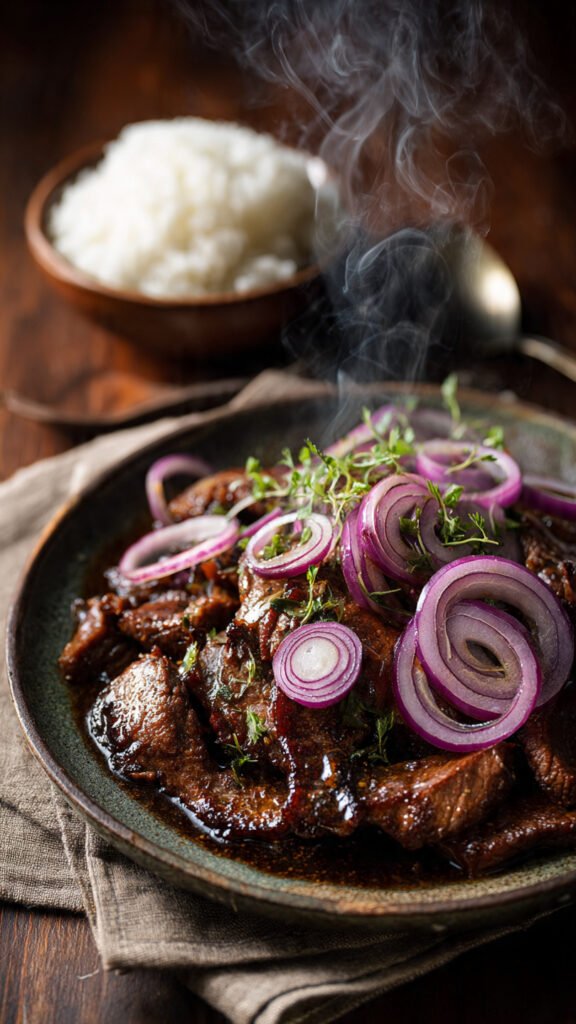
Final Thoughts
There you have it. A Filipino Bistek recipe that will impress your friends, your family, or just your cat (though don’t feed it to the cat, onions are bad for them).
This dish is the definition of comfort. It’s loud, flavorful, and unapologetically savory. It doesn’t require fancy French techniques or tweezers to plate. It just requires a hot pan, some patience, and a very large appetite for rice.
So, put down the phone, close the delivery app, and go thaw that beef. You’ve got this. Now go impress someone—or yourself—with your new culinary skills. You’ve earned it!