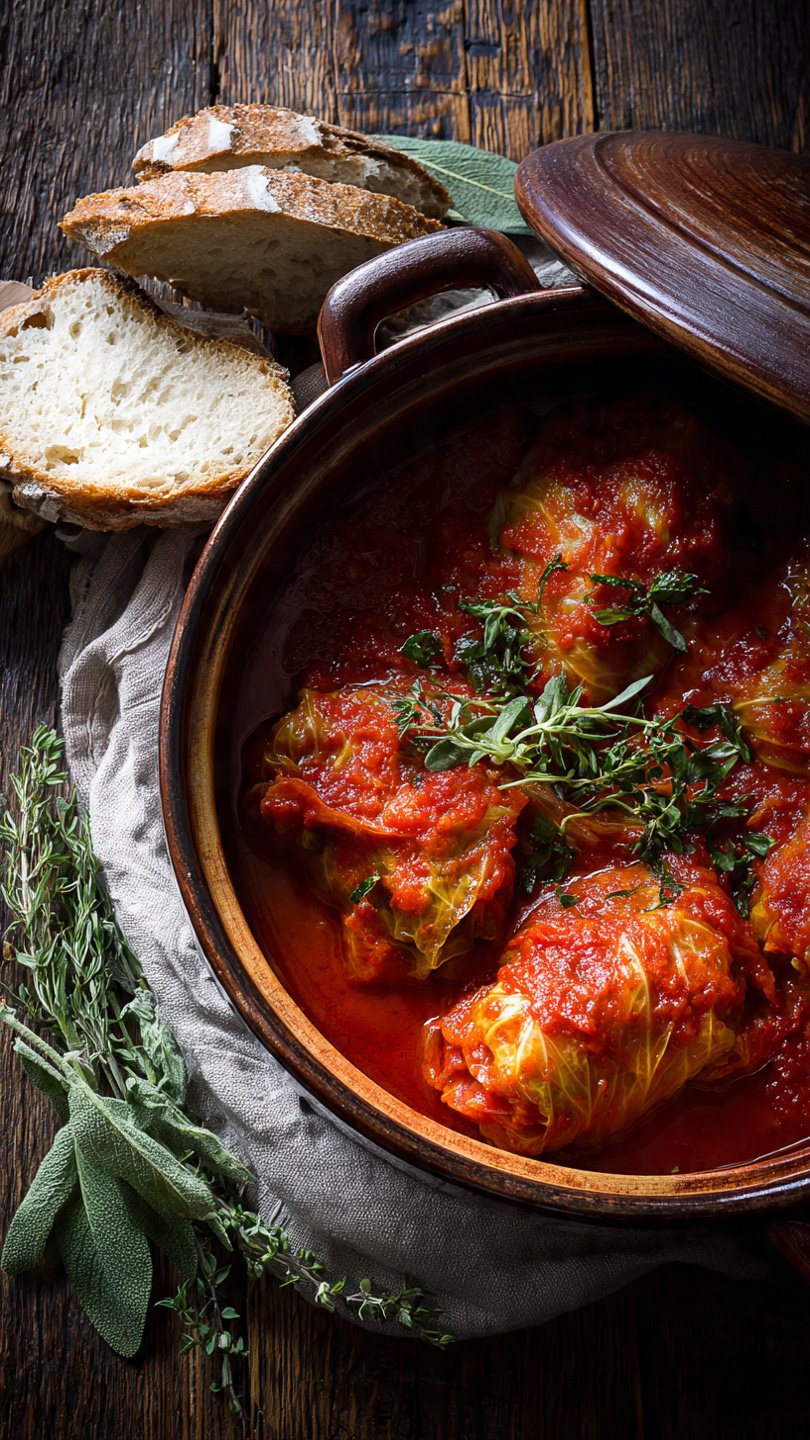
🥬 Authentic Golabki Recipe Polish Style
So, you’ve decided to tackle the Mount Everest of comfort food: the Golabki recipe Polish style. Or, as I like to call it, “meat-stuffed yoga mats drowned in tomato goodness.”
Maybe you’re craving something tasty but are currently too lazy to spend forever in the kitchen? Well, I have bad news and good news. The bad news: This isn’t a 15-minute meal. The good news: It is absolutely, undeniably, soul-soothingly worth every second of effort. Plus, once they are in the oven, you can go back to scrolling TikTok while your house starts smelling like a rustic Polish cottage.
If you’ve never had them, Golabki (pronounced gwump-key—don’t embarrass yourself) are cabbage leaves stuffed with a savory mix of meat and rice, baked until tender in a rich tomato sauce. It’s peasant food fit for a king. Let’s get cooking before I start drooling on the keyboard.
Why This Recipe is Awesome
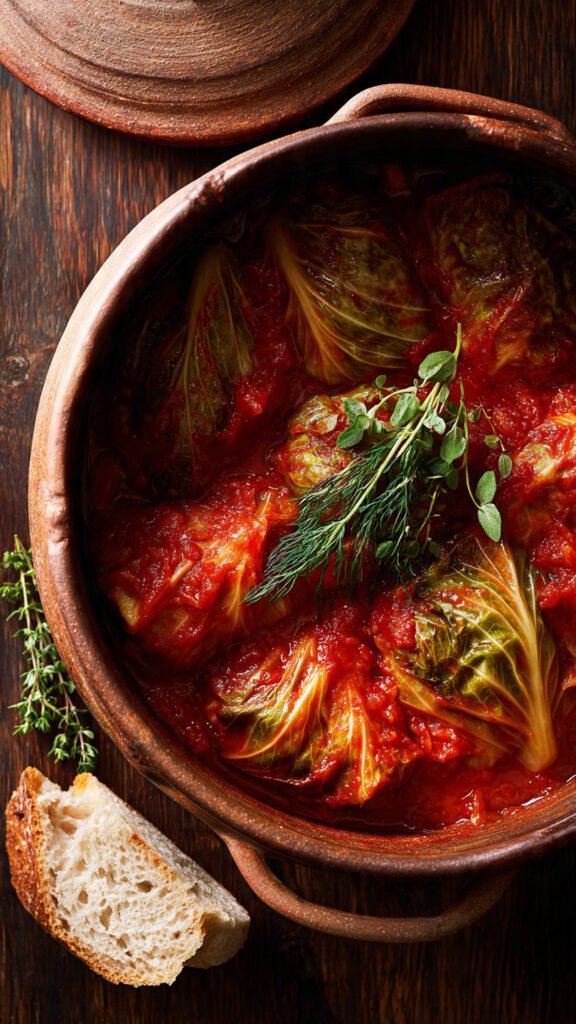
Look, I know cabbage has a bad rap. It’s usually the sad, rubbery thing floating in a cafeteria soup. But this recipe? This is the glow-up cabbage deserves.
Here is why this specific version rocks:
- It’s a Texture Masterpiece: We aren’t doing mushy here. By par-boiling the rice and perfecting the bake time, you get that distinct “bite” where the cabbage is tender but holds its shape, and the filling is fluffy, not a dense meat brick.
- The Sauce is Boss: Many recipes use straight tomato soup (no shade to canned soup, but we can do better). We are doctoring up a sauce that strikes the perfect balance between sweet, acidic, and creamy. It soaks into the rice and creates a flavor bomb.
- It’s “Idiot-Proof”: Okay, maybe that’s strong. But honestly, even if you tear a few leaves or roll them looking like deformed burritos, it still tastes amazing. It’s a very forgiving dish.
- The Leftover Magic: FYI, Golabki are legally required to taste better the next day. The flavors marry overnight in the fridge, making this the ultimate meal-prep hack for people who hate sad desk lunches.
- It’s Cheap: Let’s be real. Cabbage, rice, and ground meat? Your wallet is going to thank you. You’re feeding an army for the price of two lattes.
Ingredients You’ll Need
We are keeping this classic. No kale substitutions here, please.
The Heavy Hitters:
- 1 Large Head of Green Cabbage: Get the biggest one you can find. Seriously. Think “bowling ball.” The larger the leaves, the easier the rolling. If you buy a tiny cabbage, you will cry.
- 1 lb (450g) Ground Beef: Lean is good, but 80/20 adds flavor.
- 1 lb (450g) Ground Pork: The mix of beef and pork is crucial for authentic flavor and fat content. Don’t skip the pork unless you have to.
- 1.5 Cups Cooked White Rice: Long grain or parboiled works best. Pro tip: Undercook it slightly; it will finish in the oven.
- 1 Large Onion: Finely chopped. You want it to melt into the meat, not provide crunchy surprises.
The Flavor Squad:
- 2 tbsp Butter: For sautéing the onions. Because butter makes everything better.
- 3 cloves Garlic: Minced. Measure with your heart. If you think you need 5, use 5.
- 1 tsp Salt & 1 tsp Black Pepper: Essential.
- 1 tsp Marjoram: This is the secret Polish weapon. It gives it that earthy, distinct aroma.
- 1 Egg: The glue that holds your meat and rice marriage together.
The Sauce (The Liquid Gold):
- 28 oz Can Tomato Puree (or Crushed Tomatoes): Smooth texture is key.
- 1-2 Cups Beef Broth: To thin it out so the cabbage steams properly.
- 1 tbsp Sugar: To cut the acidity of the tomatoes.
- 1 tbsp Vinegar (or Lemon Juice): Just a splash to wake up the sauce.
- Salt/Pepper to taste.
Step-by-Step Instructions
Alright, apron on. Let’s do this.
Phase 1: The Cabbage Spa Day
- Core the Beast: Take a sharp knife and cut out the hard core of the cabbage at the bottom. Be careful—stab the cabbage, not your hand. You want to go deep enough so the leaves detach easily.
- The Hot Bath: Bring a massive pot of salted water to a boil. Submerge the whole head of cabbage hole-side down. Let it boil for about 5–8 minutes.
- The Strip Tease: Using tongs and a fork, gently peel off the outer leaves as they soften. They should be pliable but not falling apart. Place them on a baking sheet to cool. Keep going until you hit the tiny leaves in the center (save those!). Science Note: We are breaking down the pectin here so the leaves roll without snapping.
Phase 2: The Filling 4. Sauté Aromatics: In a skillet, melt the butter and sauté your onions until they are translucent and smell amazing. Add the garlic at the very end for 30 seconds so it doesn’t burn. Let this cool slightly. 5. The Mix: In a large bowl, combine the ground beef, ground pork, slightly undercooked rice, the cooled onion/garlic mix, the egg, marjoram, salt, and pepper. 6. Get Dirty: Use your hands to mix. Don’t overwork it into a paste; just toss it until combined. Overworking leads to tough meatballs.
Phase 3: The Roll Up 7. Prep the Leaf: Take a cooled cabbage leaf. See that thick, hard rib running down the center? Use a paring knife to shave it flat so the leaf is an even thickness. This makes rolling infinitely easier. 8. Fill and Tuck: Place a generous scoop (about 1/3 cup) of filling near the stem end of the leaf. Fold the stem end over the meat. Fold in the sides (like a burrito). Roll it up tight. 9. Repeat: Do this until you run out of meat or leaves. It’s a rhythm thing—put on some music.
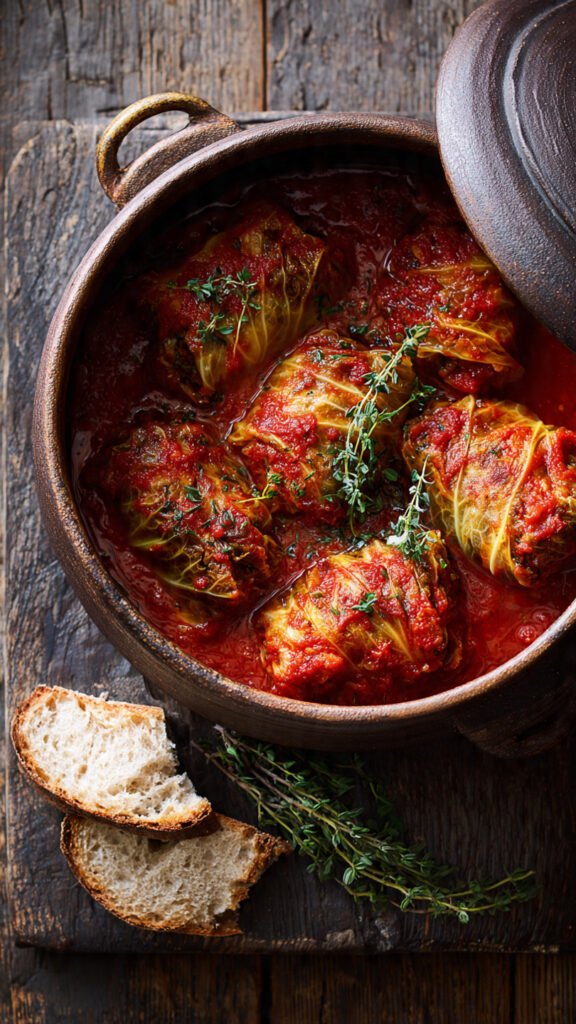
Phase 4: The Bake 10. Bed of Cabbage: Remember those tiny, useless leaves from the center of the cabbage head? Chop them roughly and scatter them on the bottom of your Dutch oven or large casserole dish. This prevents the rolls from burning and sticking to the bottom. 11. Stack ‘Em: Place your beautiful rolls seam-side down on the cabbage bed. Pack them in snugly. 12. Sauce It: Whisk together your tomato puree, broth, sugar, vinegar, and seasoning. Pour this ruby red liquid over the rolls. They don’t need to be swimming, but they should be mostly submerged. 13. The Oven: Cover the dish tightly with a lid or foil. Bake at 350°F (175°C) for roughly 60 to 90 minutes. 14. The Check: Test one. The cabbage should be fork-tender (butter soft). If it’s tough, give it another 15 minutes.
Common Mistakes to Avoid
Listen, I’ve failed at this so you don’t have to. Here is the Hall of Shame:
- Using Raw Rice: Some grandmas do this. You are not grandma. Raw rice absorbs too much moisture from the meat, resulting in dry filling and crunchy rice grains. Always par-cook your rice.
- Forgetting to Shave the Rib: If you don’t shave down the thick center vein of the cabbage leaf, it won’t roll. It will snap. You will get angry.
- Over-crowding the Boiling Pot: If your pot is too small, the water temperature drops too much, and the cabbage takes forever to soften. Use your lobster pot.
- Going Easy on Salt: Cabbage and rice are flavor sponges. They soak up salt like crazy. If you think you’ve seasoned enough, add a tiny pinch more. Bland Golabki is a tragedy.
- Thinking You Can Rush It: “Can I bake it at 450°F to speed it up?” No. The collagen in the meat needs time to break down, and the cabbage needs gentle heat to become silky. Patience, grasshopper.
Alternatives & Substitutions
Cooking is art, not a hostage situation. Customize it!
- Vegetarian/Vegan: Swap the meat for a mix of lentils, mushrooms, and walnuts. The texture is surprisingly close to ground meat! Use veggie broth instead of beef.
- Lazy Girl Version (Unstuffed Cabbage): Can’t be bothered to roll? Chop the cabbage, brown the meat, and throw everything into a pot as a casserole. Same flavor, zero architectural skills required.
- The Meat Swap: Ground turkey or chicken works if you are watching calories. Just add a tablespoon of olive oil to the mix so it isn’t dry as dust.
- Sauce Switch: Some regions in Poland serve this with a creamy mushroom sauce instead of tomato. If you hate tomatoes, look up “Golabki with Mushroom Sauce.” It’s rich, white, and decadent.
FAQ (Frequently Asked Questions)
1. Can I freeze these? Absolutely. Golabki are basically designed for the apocalypse. Freeze them cooked or uncooked (cooked is better, IMO). Thaw in the fridge and reheat.
2. Do I have to use white rice? Technically no, but brown rice takes longer to cook and has a chewier texture that interferes with the softness of the dish. I’d stick to white or parboiled for the authentic feel.
3. Can I use Savoy cabbage? You fancy, huh? Yes, Savoy cabbage is actually prettier (crinkly leaves) and softer, so it boils faster. It’s a great choice if you can find a big head of it.
4. Why is my sauce watery? Cabbage releases a lot of water as it cooks. If the sauce is too thin at the end, remove the rolls, pour the sauce into a pan, and simmer it down to reduce it. Or just serve it with crusty bread to mop it up.
5. Can I make this in a Slow Cooker? Yes! Layer them in, pour the sauce, and cook on Low for 6–7 hours. It’s arguably even easier than the oven method.
6. Is it “Golabki” or “Galumpkis”? “Golabki” is the Polish spelling. “Galumpkis” is what happens when the word moves to Pittsburgh or Chicago and has a few beers. Both are accepted in the language of love and food.
Final Thoughts
There you have it. The Golabki recipe Polish tradition demands.
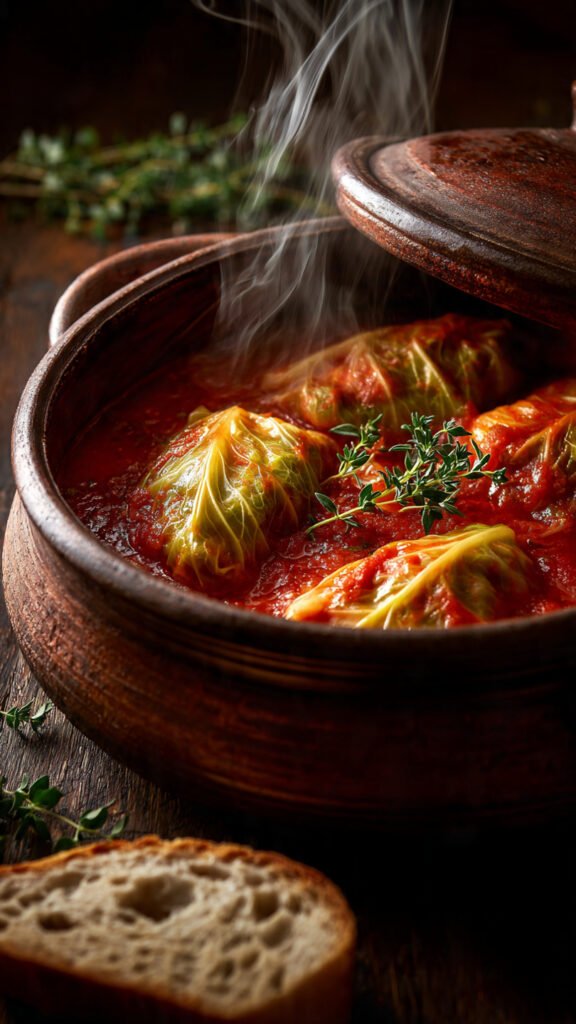
Is it a bit of work? Yes. Will your kitchen look like a cabbage bomb went off? Probably. But when you pull that heavy pot out of the oven, steam rolling off the red sauce, and take that first bite of savory, tender goodness… you’ll get it.
It’s comfort food that feels like a hug from the inside out.
Now go impress someone—or yourself—with your new culinary skills. You’ve earned it!