🥔 Spicy Aloo Chokha Recipe | Authentic Bihari Mashed Potatoes
👩🍳 The Busy Home Cook's Arsenal
Consistently cooking incredible meals for your family doesn't mean spending three hours in the kitchen every night. These are the 5 absolute life-saving appliances and culinary tools that dramatically cut down prep time while guaranteeing restaurant-quality results.
🌪️ Ninja 4-Quart Air Fryer
The machine that completely changed weeknight dinners. It preheats in seconds and cooks frozen vegetables, chicken wings, and battered fish to an incredibly crispy, deep-fried texture using 75% less oil and taking half the time of a traditional oven.
⏱️ Instant Pot Duo 7-in-1 Pressure Cooker
Forget slow cookers that take 8 hours. This legendary appliance aggressively pressure cooks tough cuts of meat into melt-in-your-mouth tender roasts, stews, and perfectly fluffy rice in under 45 minutes, saving you when you forget to defrost dinner.
🔪 Victorinox Fibrox Pro 8" Chef's Knife
A dull knife is dangerous and makes chopping vegetables a miserable chore. This exact blade reigns supreme in professional kitchens because it holds a terrifyingly sharp edge, features a non-slip grip, and costs significantly less than heavy German steel.
🌡️ ThermoPro Instant Read Thermometer
The secret difference between dry, rubbery chicken and juicy perfection. Stop nervously slicing your proteins open to check if they're done—this waterproof digital pen gives you a highly accurate temperature reading in less than three seconds.
🥤 Vitamix 5200 Professional-Grade Blender
Whether you are making silky-smooth breakfast smoothies, pureed soups from scratch, or blending absolutely lump-free sauces, this famously indestructible motor pulverizes anything you throw at it. It literally heats soup from the friction of the blades alone.
So, you’re craving something tasty but too lazy to spend forever in the kitchen, huh? Same.
We have all been there. It’s 8 PM, you’re staring into the abyss of your pantry, and you need comfort food stat. You don’t want a salad (let’s be honest, nobody craves salad at 8 PM), and you certainly don’t want to wash fifteen different pots and pans. Enter Aloo Chokha.
If you aren’t familiar with this gem from the Indian states of Bihar and Jharkhand, let me introduce you to your new obsession. Think of it as mashed potatoes, but with an attitude problem. It’s spicy, it’s punchy, it’s smoky, and it absolutely refuses to be bland. While the Western world loads potatoes with butter and cream, the desi way involves mustard oil, roasted chilies, and enough garlic to ward off vampires for a decade.
It is rustic, unpretentious, and arguably the greatest sidekick to rice and dal ever invented. Let’s get mashing.
Why This Recipe is Awesome
Look, I’m not saying this recipe will solve all your life problems, but it will definitely solve your hunger problems, and isn’t that basically the same thing?
It’s The “Anti-Mash” Most mashed potato recipes strive for smooth, creamy perfection. They want to be silk. Aloo Chokha? It wants to be a rockstar. It embraces the chunks, the texture, and the raw pungency of fresh ingredients. It doesn’t apologize for having strong flavors. If a standard mashed potato is a lullaby, Aloo Chokha is heavy metal.
The “Mustard Oil Kick” If you’ve never cooked with raw mustard oil (Sarson ka Tel), you are in for a sensory experience. It has a high “pungency” factor—similar to the nasal hit you get from wasabi or horseradish. This is because of a compound called allyl isothiocyanate. In this recipe, that sharp, sinus-clearing zing cuts right through the starchiness of the potato, creating a balance that butter simply cannot achieve. It wakes up your palate in a way that’s aggressive yet addictive.
It’s Idiot-Proof (Mostly) Even if you burn the toast regularly, you can make this. The rustic nature of the dish means precision is actually the enemy. Did you unevenly chop the onions? Good, it adds texture. Did you mash the potatoes a bit too roughly? Perfect, that’s authentic. This recipe thrives on imperfection.
The Nostalgia Factor For anyone who grew up in Eastern India, this dish is pure nostalgia. It’s the smell of winter lunches, the side dish to a steaming plate of Khichdi, and the heart of the famous Litti Chokha. It’s “village food” in the best possible sense—earthy, honest, and incredibly satisfying.
Ingredients You’ll Need
Here is your shopping list. It’s short, sweet, and probably already in your kitchen.
- Potatoes (Aloo): 4-5 medium-sized. You want a starchy variety like Russets or Yukon Golds that fluff up nicely. Waxy potatoes can turn into glue, and nobody wants glue for dinner.
- Mustard Oil: 2 tablespoons. Non-negotiable. This is the soul of the dish. If you use olive oil or vegetable oil, you aren’t making Aloo Chokha; you’re making a sad potato salad.
- Dried Red Chilies: 3-4 pieces. These provide the heat and the smokiness. We are going to roast these until they look like they’ve been through a fire (because they have).
- Garlic: 5-6 cloves, finely chopped. We aren’t being shy here.
- Red Onion: 1 medium, finely chopped. Raw onion provides a necessary crunch and sweetness to combat the spicy oil.
- Fresh Coriander (Cilantro): A generous handful, chopped. It lifts the heavy flavors with a bit of grassy freshness.
- Salt: To taste. (Obviously).
- Lemon Juice (Optional): A tiny squeeze can brighten things up, though purists might argue with me on this one.
Step-by-Step Instructions
Ready to make magic? Put on your apron (or don’t, I’m not your mom) and let’s go.
1. The Boil (or Roast) Wash your potatoes thoroughly. You have two paths here:
- The Boil (Classic): Boil them whole with the skin on until they are fork-tender. Pressure cooking is faster (3-4 whistles), but a pot works fine.
- The Roast (Gourmet): If you have time, wrap them in foil and bake them at 400°F (200°C) for an hour. This dries out the moisture and intensifies the potato flavor.
- Pro Tip: Peel them while they are still hot! I know it burns your fingers a little (use a kitchen towel to hold them), but hot potatoes mash fluffier. Cold potatoes get gummy.
2. The “Tarka” (Tempering the Flavor) This is where the science happens.
- Heat 1 tablespoon of the mustard oil in a small ladle or pan until it reaches smoking point.
- Toss in your dried red chilies. Let them turn almost black. Yes, burn them slightly. That char creates the signature smoky flavor.
- Alternative Method: You can hold the dried chilies directly over a gas flame with tongs until they char. It’s faster and smokier!
3. The Crush Take those roasted/fried red chilies and put them in a bowl. Add a pinch of salt. Now, use your fingers to crush the chilies into the salt.
- Warning: Do not touch your eyes after this. Seriously. If you wear contact lenses, be very, very afraid.
- The salt acts as an abrasive to help break down the chilies into chili flakes.
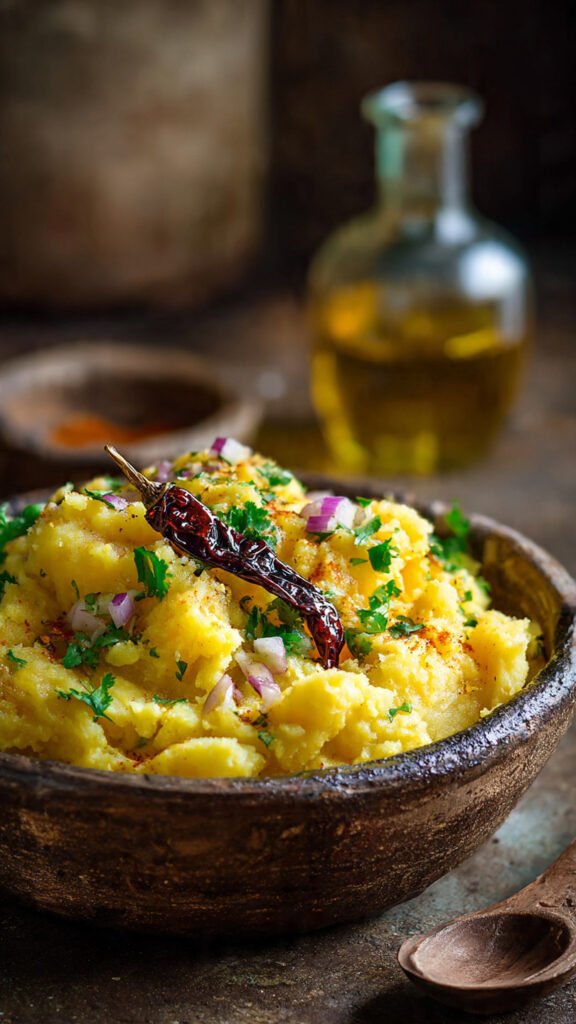
4. The Mash In a large mixing bowl, take your peeled, warm potatoes. Mash them.
- Do not use a blender or food processor. Use a fork, a potato masher, or your clean hands. You want a mix of smooth mash and small chunks. It should look rustic, not like baby food.
5. The Assembly Now, throw everything into the bowl with the potatoes:
- The crushed chili-salt mixture.
- The chopped raw onions.
- The chopped garlic.
- The fresh coriander.
- The remaining 1 tablespoon of raw mustard oil.
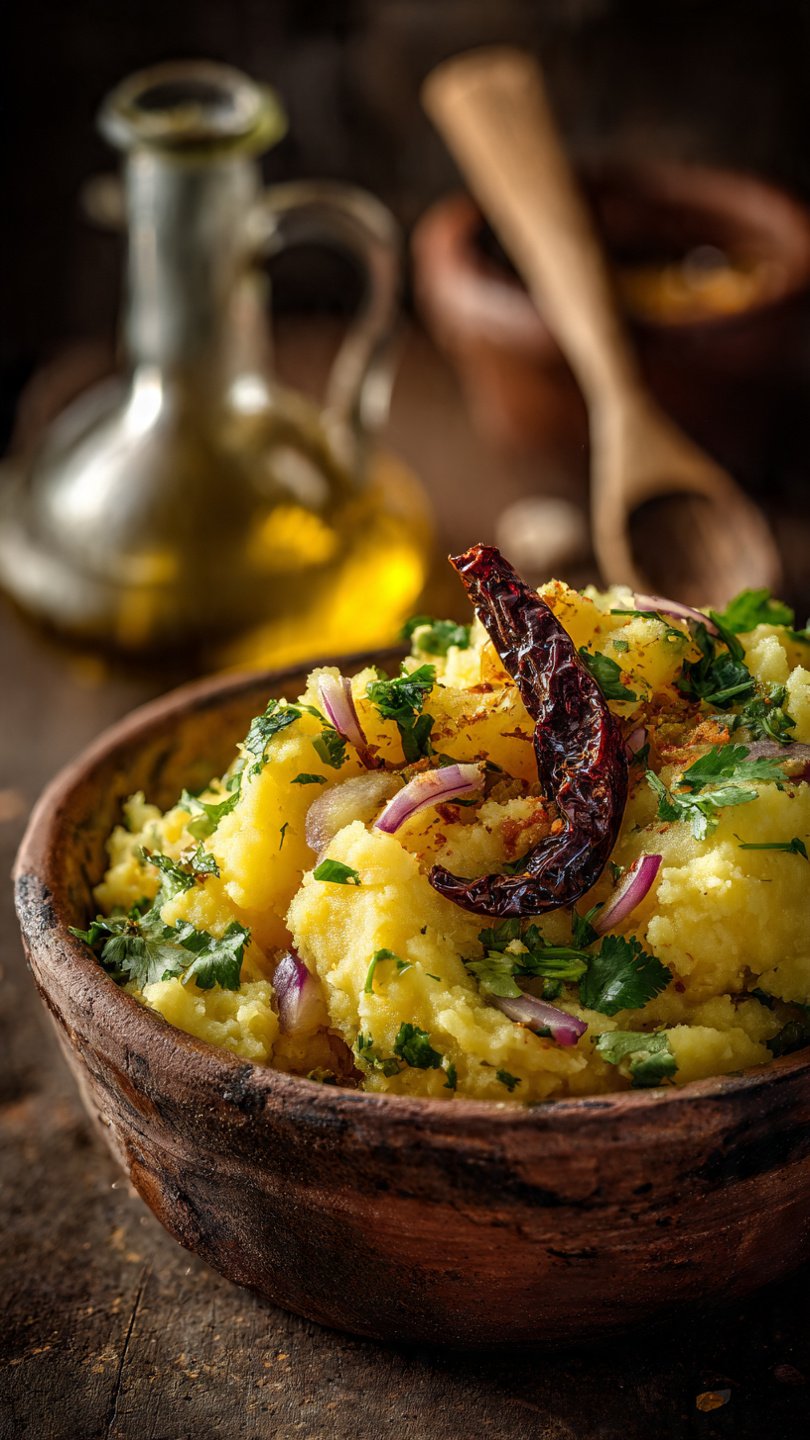
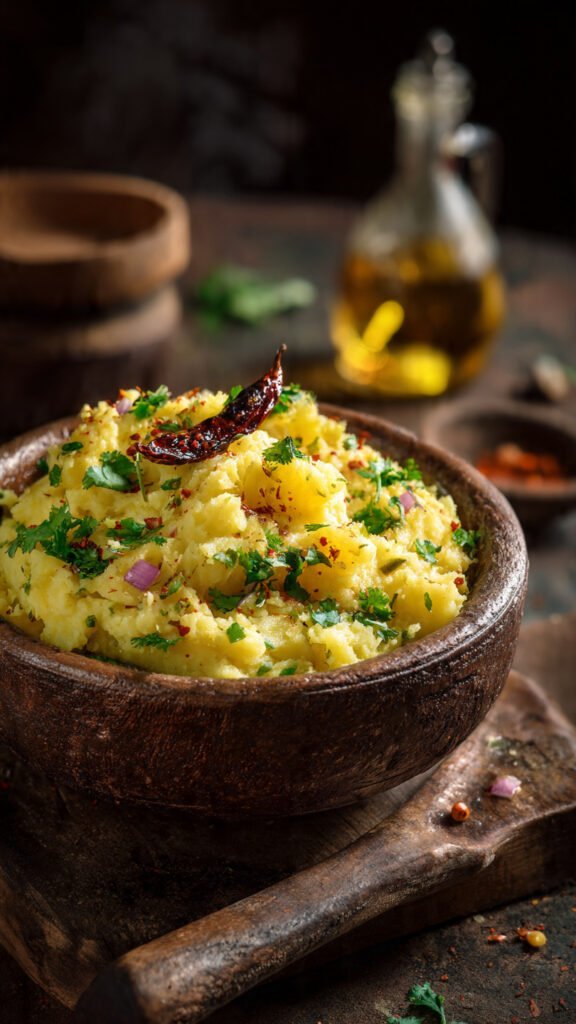
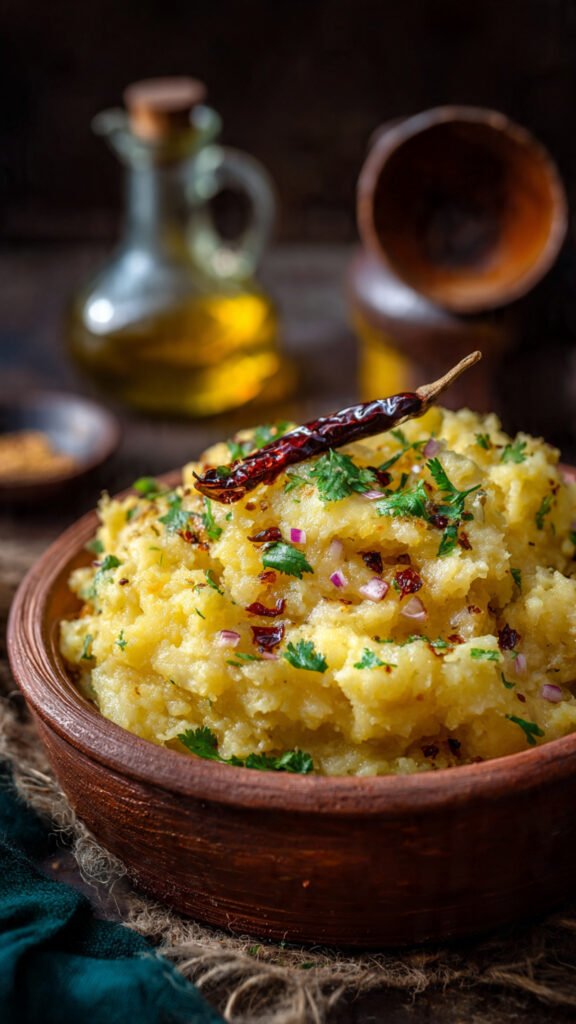
6. The Final Mix Get your hands in there and mix it all up. Squeeze the onions a little as you mix to release their juices into the potatoes. Taste it. Does it need more salt? More heat? Adjust it now. The final result should be a golden-yellow, aromatic, spicy mash that makes your mouth water just looking at it.
Common Mistakes to Avoid
Even though I said this was idiot-proof, there are still ways to mess it up. Let’s avoid these tragedies, shall we?
1. The “Gluey” Potato Disaster The Mistake: Using a blender or over-mashing waxy potatoes. The Fix: Always mash by hand. If you overwork the starch in the potatoes, you release too much amylose, turning your delicious Chokha into wallpaper paste.
2. The Oil Swap The Mistake: “I don’t like mustard oil, can I use butter?” The Fix: No. Stop it. Butter makes it mashed potatoes. Mustard oil makes it Chokha. If the raw smell is too strong for you, heat the oil to the smoking point first to kill the bacteria and reduce the pungency, then let it cool before adding. But don’t swap it for butter.
3. The Cold Mash The Mistake: Letting the potatoes get ice cold before mashing. The Fix: As mentioned, mash ’em hot. The steam escaping helps fluff the texture. If they are cold, they become hard lumps that refuse to integrate with the spices.
4. Skimping on the Chilies The Mistake: Making it too mild. The Fix: Aloo Chokha is meant to wake you up. The fat from the oil and the starch from the potato naturally dampen the heat, so you need more chili than you think. Be brave.
Alternatives & Substitutions
Cooking is an art, not a rigid set of laws (unless we are talking about baking, which is chemistry and very scary). Here are some ways to tweak the recipe:
- Make it “Baigan Chokha”: The classic partner to Aloo Chokha is Baigan (Eggplant) Chokha. You can actually mix roasted eggplant into this potato mash for a hybrid super-chokha. It adds a silky texture and deep smokiness.
- The Tomato Twist: Roast 2 tomatoes over an open flame until the skin chars. Peel them and mash them into the potatoes. The acidity of the tomato cuts through the richness of the potato beautifully. This is often called Aloo-Tamatar Ka Chokha.
- The Garlic Hack: If you find raw garlic too spicy, you can roast the garlic cloves along with the chilies. Roasted garlic becomes sweet and creamy, adding a mellower, savory depth to the dish.
- For the “Sophisticated” Palate: If you really, truly cannot handle the raw onion breath (maybe you have a date later? bad timing for Chokha, honestly), you can sauté the onions in the oil until they are translucent before adding them. You lose the crunch, but you keep your social life.
FAQ (Frequently Asked Questions)
Q: Can I use margarine instead of butter? A: Wait, we aren’t using butter, remember? We are using mustard oil. But if you are asking if you can use margarine instead of mustard oil… why hurt your soul like that? Stick to the oil.
Q: Is this dish spicy? A: It’s supposed to be! But you are the chef. If you have a low spice tolerance, de-seed the red chilies or use fewer of them. But don’t eliminate them entirely, or it’ll be boring.
Q: What do I eat this with? A: The holy trinity is Dal-Bhaat-Chokha (Lentils, Rice, and Mashed Potato). It also pairs perfectly with Litti (stuffed dough balls) or just simple hot Roti. I’ve also been known to eat it straight out of the bowl with a spoon. Don’t judge me.
Q: How long does it last in the fridge? A: You can store it for 1-2 days, but honestly, it’s best fresh. The raw onions start to smell a bit funky (like sulfur) if left in the fridge too long. If you must meal prep, store the boiled potatoes separately and mix the onions/oil right before eating.
Q: My mustard oil smells really strong. Is it bad? A: Nope, that’s the quality! That “tear-gas” sensation means it’s pure. If you can’t handle the raw smell, heat the oil until it smokes lightly, then let it cool down. This mellows the flavor significantly.
Q: Can I freeze Aloo Chokha? A: Absolutely not. Freezing boiled potatoes changes their cellular structure. When you thaw them, they release water and become grainy and gross. Eat it fresh!
Final Thoughts
There you have it. You are now a certified master of the Aloo Chokha.
It’s simple, it’s humble, but it packs a flavor punch that fancy restaurant sides can only dream of. It teaches us that you don’t need expensive ingredients or French cooking techniques to make something delicious—just some potatoes, some heat, and a little bit of love (and mustard oil).
So, next time you are feeling lazy but hungry, skip the takeout app. Boil some spuds, burn some chilies, and treat yourself to the ultimate Indian comfort food.
Now go impress someone—or yourself—with your new culinary skills. You’ve earned it!