🥒 Spicy & Crunchy Homemade Giardiniera Recipe (Better Than Store-Bought!)
👩🍳 The Busy Home Cook's Arsenal
Consistently cooking incredible meals for your family doesn't mean spending three hours in the kitchen every night. These are the 5 absolute life-saving appliances and culinary tools that dramatically cut down prep time while guaranteeing restaurant-quality results.
🌪️ Ninja 4-Quart Air Fryer
The machine that completely changed weeknight dinners. It preheats in seconds and cooks frozen vegetables, chicken wings, and battered fish to an incredibly crispy, deep-fried texture using 75% less oil and taking half the time of a traditional oven.
⏱️ Instant Pot Duo 7-in-1 Pressure Cooker
Forget slow cookers that take 8 hours. This legendary appliance aggressively pressure cooks tough cuts of meat into melt-in-your-mouth tender roasts, stews, and perfectly fluffy rice in under 45 minutes, saving you when you forget to defrost dinner.
🔪 Victorinox Fibrox Pro 8" Chef's Knife
A dull knife is dangerous and makes chopping vegetables a miserable chore. This exact blade reigns supreme in professional kitchens because it holds a terrifyingly sharp edge, features a non-slip grip, and costs significantly less than heavy German steel.
🌡️ ThermoPro Instant Read Thermometer
The secret difference between dry, rubbery chicken and juicy perfection. Stop nervously slicing your proteins open to check if they're done—this waterproof digital pen gives you a highly accurate temperature reading in less than three seconds.
🥤 Vitamix 5200 Professional-Grade Blender
Whether you are making silky-smooth breakfast smoothies, pureed soups from scratch, or blending absolutely lump-free sauces, this famously indestructible motor pulverizes anything you throw at it. It literally heats soup from the friction of the blades alone.
So, you just ate an Italian beef sandwich and spent the whole time wishing they hadn’t been so stingy with those crunchy, spicy peppers on top. Rude. Or maybe you just have an uncontrollable urge to add a tangy, oily kick to literally everything you eat from pizza to scrambled eggs. I feel you. Today, we are taking matters into our own hands and fixing that problem forever with this incredible homemade giardiniera recipe.
Why This Recipe is Awesome
Look, I’m all for shortcuts. If buying something at the store is 90% as good as homemade and saves me three hours, I’m buying it. But giardiniera? Giardiniera is different. This is one of those rare instances where the effort-to-reward ratio is massively skewed in your favor.
First off, let’s talk about the sad reality of commercial jarred giardiniera. Half the time, the vegetables are oddly soft. They’ve been sitting in industrial brine since the Bush administration, and they’ve lost their will to crunch. Crunch is everything here. When you bite into a piece of cauliflower in this mix, it should snap back at you. This homemade giardiniera recipe guarantees that satisfying texture because you control the process.
Secondly, we need to discuss the flavor profile. Store-bought versions often lean too heavily on just vinegar, making them sharply acidic but lacking depth. Real-deal, Chicago-style giardiniera is a balancing act. It’s a beautiful marriage of sharp vinegar acidity, savory dried herbs, garlic punch, heat, and—crucially—luxurious oil.
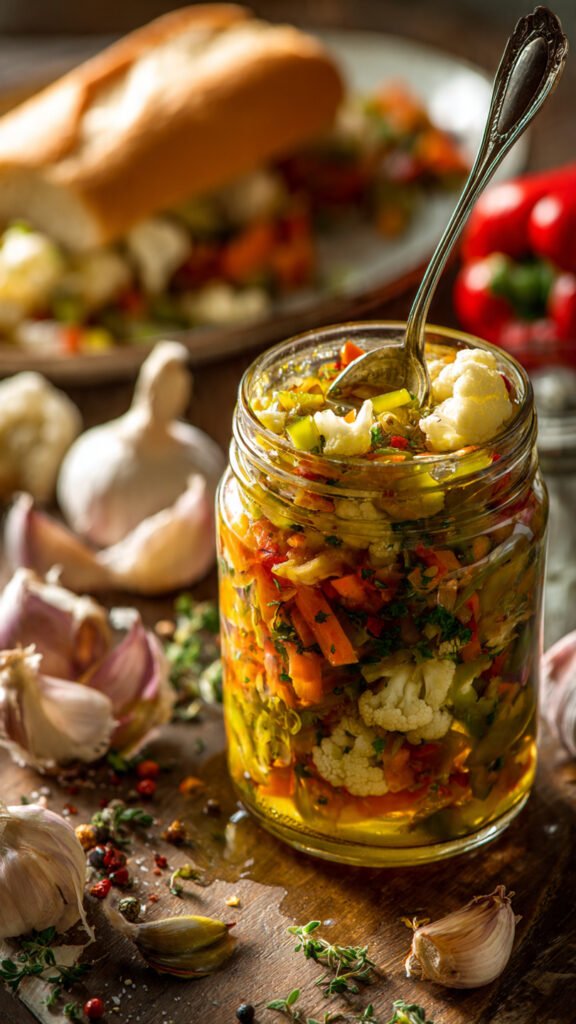
The oil isn’t just there to look pretty; it’s a flavor delivery system that coats your tongue and mellows the sharp bite of the vinegar just enough. When you make it yourself, you get to control that balance. You control the quality of the olive oil. You control the heat level so you aren’t crying at the dinner table (unless you want to be, no judgment).
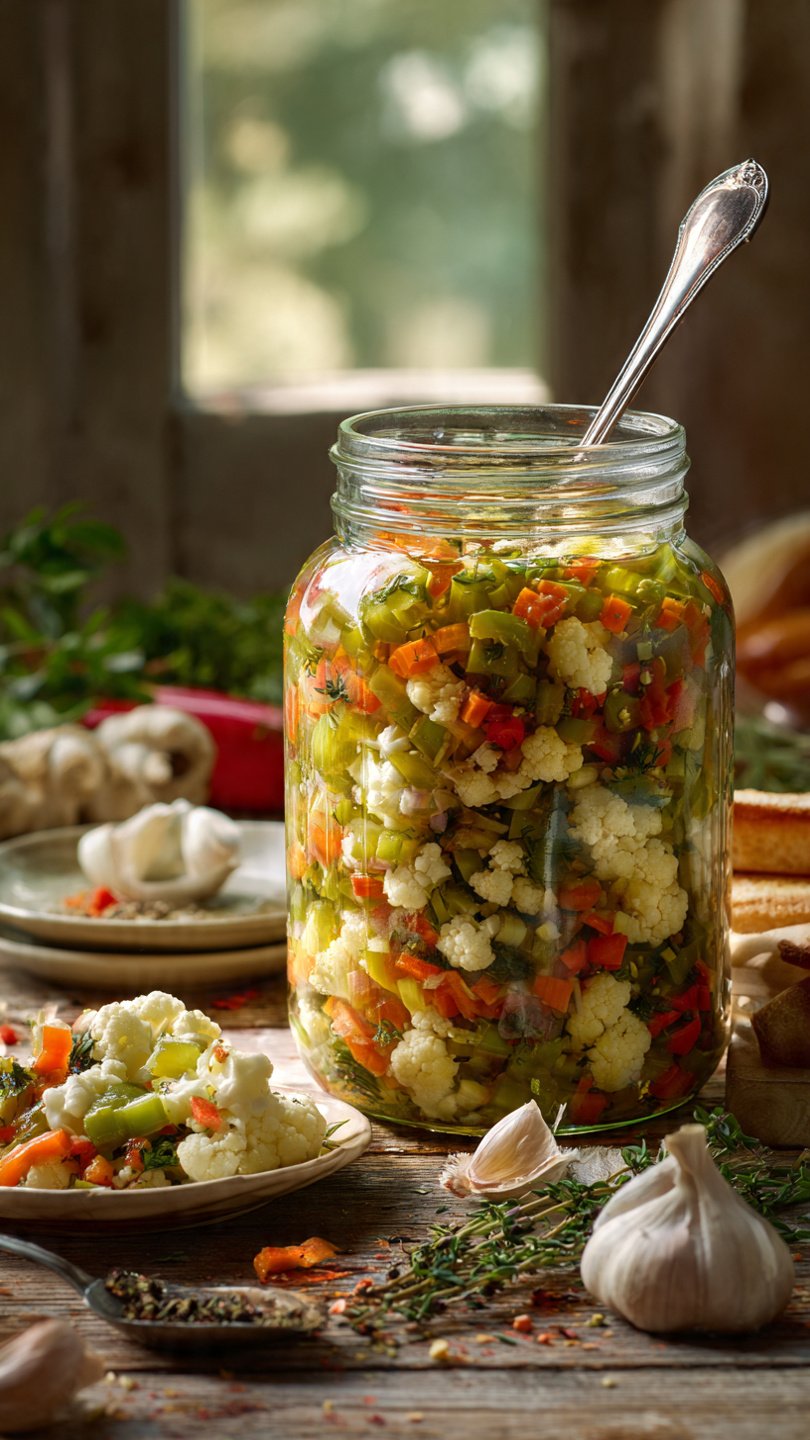
Finally, making this makes you feel like a kitchen wizard. There is something deeply satisfying about opening your fridge and seeing a massive, colorful jar of vibrant vegetables glistening in spiced oil that you created. It’s the ultimate culinary flex to pull this jar out when friends come over for pizza night. You aren’t just serving toppings; you’re serving craftsmanship.
Ingredients You’ll Need
We are making “Chicago Style” giardiniera here, which means the veggies are chopped delicately small, and they hang out in an oil-and-vinegar bath.
The Veggie Squad:
- Cauliflower: ½ of a medium head. This is the backbone of the operation. It holds the crunch the best.
- Carrots: 2 medium ones. Adds sweetness and vibrant orange color.
- Celery: 2 stalks. Essential for that savory, herbal undertone.
- Bell Pepper: 1 red bell pepper. For color and sweetness.
- Sport Peppers or Serranos: This is where the heat lives. For authentic Chicago vibes, use sport peppers. If you can’t find them, serranos or jalapeños work great. Use anywhere from 5 to 15, depending on how brave you are.
The Brine & Marinade Team:
- Kosher Salt: ¼ cup. Do NOT use table salt (iodized salt), or your brine will look cloudy and weird. We need coarse salt to draw out moisture.
- Water: Enough to cover the veggies during the soak.
- White Distilled Vinegar: 1 ½ cups. Keep it simple; fancy vinegars get lost here.
- Garlic: 4–5 cloves, smashed and roughly chopped. Don’t be shy with the garlic.
- Dried Oregano: 2 teaspoons. The quintessential Italian-American herb flavor.
- Celery Seed: ½ teaspoon. Adds a concentrated savory punch.
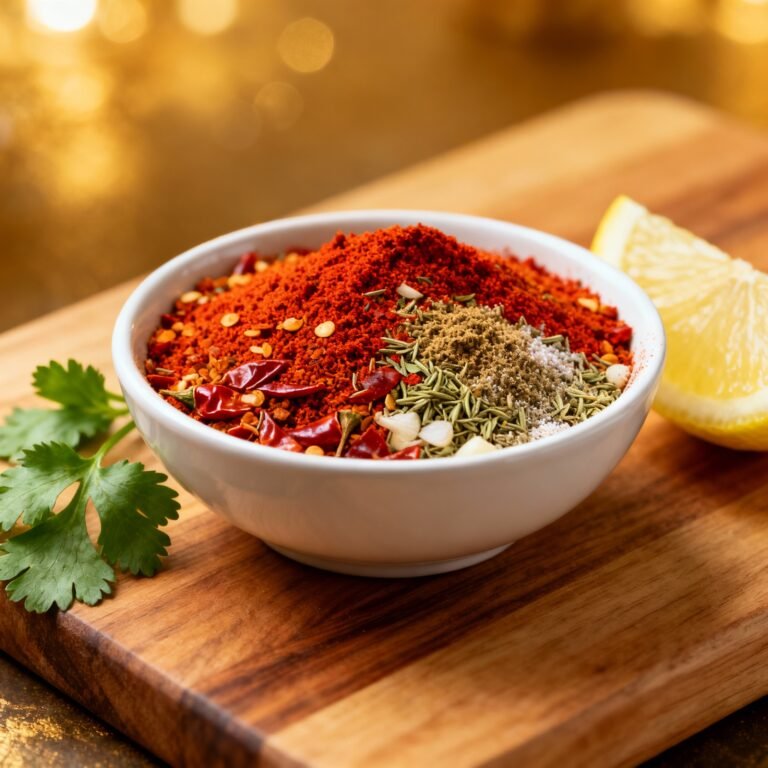
- Red Pepper Flakes: 1 teaspoon (more if you want to sweat).
- Fresh cracked black pepper: ½ teaspoon.
- Olive Oil / Canola Oil blend: About 1 to 1 ½ cups total. I like a 50/50 blend. 100% extra virgin olive oil can sometimes overpower the veggies and solidifies too hard in the fridge. A blend keeps it fluid and lets the veggie flavors shine.
Step-by-Step Instructions
This isn’t hard, but it does require patience. You cannot rush the marinating process, or the flavor gods will punish you with bland pickles.
Step 1: The Great Chop Put on a good podcast, because you’re going to be chopping for a minute. You want to dice all your vegetables (cauliflower, carrots, celery, red peppers, and hot peppers) into small, relatively uniform pieces. Think about the size of a pea or a small marble. Uniformity is key so everything pickles at the same rate. It’s tedious, but a meditative kind of tedious.
Step 2: The Salt Water Spa Treatment Place all your chopped veggies in a large glass or ceramic bowl. Dissolve the ¼ cup of kosher salt into enough cold water to cover the vegetables by about an inch. Pour this salty water over the veggies. Place a plate on top to keep them submerged if they try to float.
Why are we doing this? Science time! This is osmosis at work. The salt is drawing the excess water out of the cells of the vegetables. Less water inside the vegetable means a crunchier final product that won’t get soggy later.
Let them hang out in this saltwater spa on the counter for at least 6 hours, or preferably overnight. Do not skip this.
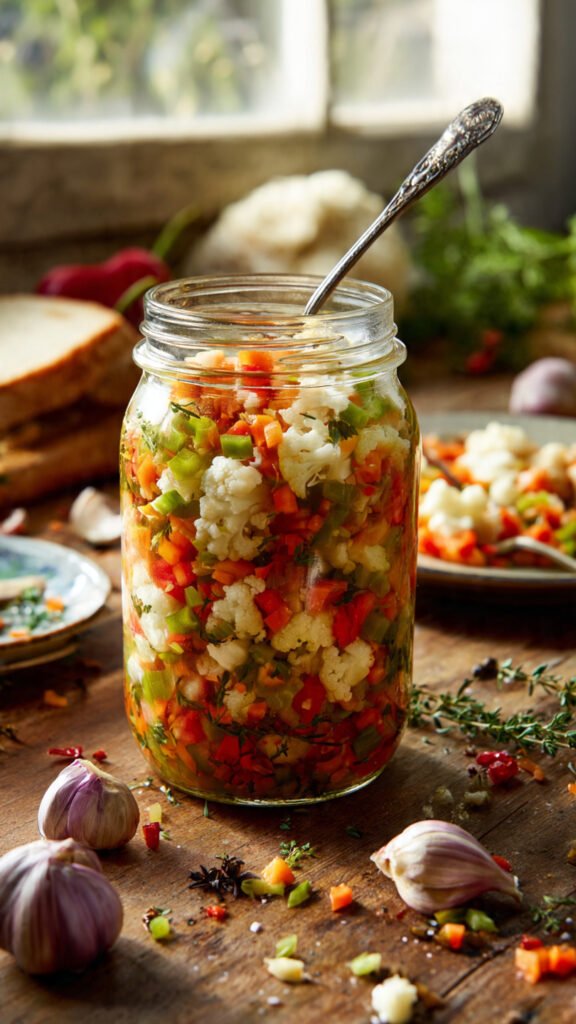
Step 3: The Rinse and Drain After their long soak, drain the vegetables in a colander. Rinse them thoroughly under cold water to get rid of excess surface salt. Give the colander a good shake and let them drain really well for about 15 minutes. We want them as dry as possible before the vinegar hits them.
Step 4: The Flavor Infusion While the veggies are draining, grab a medium saucepan. Combine the white vinegar, chopped garlic, dried oregano, celery seed, red pepper flakes, and black pepper. Bring this mixture just to a simmer over medium heat. Once it simmers, turn off the heat immediately. We aren’t cooking the brine; we are just waking up the dried spices and taking the raw edge off the garlic. Let it cool to lukewarm.
Step 5: The Long Wait (The Hardest Part) Pack your drained vegetables into clean glass jars (quarts or pints work best). Pour the lukewarm vinegar/spice mixture over the vegetables, distributing it evenly among the jars if you used more than one.
Now, pour the oil over the top until the vegetables are completely submerged. You might need to use a butter knife to shimmy down the sides of the jar to release air bubbles.
Seal the jars tightly. Give them a vigorous shake to combine the oil and vinegar layers. Put them in the fridge.
Step 6: Patience, Grasshopper You must wait at least 48 hours before eating this. Ideally, wait 3 to 4 days. The flavors need time to marry, settle down, and get to know each other. If you eat it immediately, it’ll just taste like oily raw vinegar. Trust the process.
Common Mistakes to Avoid
Even though this is easy, I’ve seen good people ruin good vegetables. Don’t be one of them.
- Thinking you’re too good for the salt soak: Listen, I know you want giardiniera now. But if you skip the overnight saltwater soak, your vegetables will release their water into the pickling oil later, watering down the flavor and making the veggies mushy. Don’t do it.
- Using Iodized Table Salt: Just don’t. The additives in table salt can cause the brine to turn cloudy or give the pickles a weird, metallic taste. Stick to Kosher or pickling salt.
- Chopping the chunks too big: We are making a condiment, not a side salad. If the chunks are too huge, they won’t pickle all the way through, and they slide right off your hot dog. Keep it minced and tidy.
- Eating it on Day 1: I know I mentioned this already, but it bears repeating. The flavor transformation that happens between Day 1 and Day 3 is magical. Eating it early is a waste of your own hard work.
Alternatives & Substitutions
Make it your own! This recipe is a sturdy blueprint that can handle some tweaks.
- Change up the Veg: Not a fan of cauliflower? (Weird, but okay). You can swap in broccoli florets, though they tend to get a bit softer. Diced zucchini works too, but it has a shorter shelf life. Some people love adding pitted green olives to the mix for an extra briny punch—add those during Step 5.
- The Vinegar Variable: White distilled vinegar provides that classic, sharp Chicago taste. But if you want something slightly mellower, you could use half white vinegar and half cider vinegar. I’d avoid balsamic; it’ll turn everything a muddy brown color.
- Adjusting the Heat: If you want zero heat, leave out the fresh hot peppers and the red pepper flakes entirely. If you want to hurt yourself, leave the seeds and ribs in your serranos, or toss in a habanero if you’re feeling particularly chaotic today. IMO, a medium heat is best so you can actually taste the other vegetables.
FAQ (Frequently Asked Questions)
How long does this homemade giardiniera recipe last? Since this is a refrigerator pickle (we aren’t water-bath canning it), it needs to live in the fridge. Because of the vinegar and salt, it will happily last for 3 to 4 weeks. Honestly though, if it lasts that long in your house, you aren’t eating enough sandwiches.
Why did my olive oil solidify in the fridge? Science again! Real extra virgin olive oil solidifies at refrigerator temperatures. It’ll look cloudy and thick. This is totally normal and actually a sign of good oil. Just pull the jar out of the fridge about 20 minutes before you want to use it, give it a shake, and it will return to its glorious liquid state. This is also why I like using a canola/olive blend—it solidifies less.
Do I really have to chop everything by hand? Can I use a food processor? Technically, yes, you can pulse it in a food processor. But be careful. It’s very easy to go from “finely chopped” to “vegetable slurry” in about two pulses. Hand-chopping gives you cleaner edges and better texture. Put the effort in; your biceps will thank you.
What do I eat this with? Everything. Italian beef sandwiches are mandatory. It’s incredible on sausage pizza. Mix it into tuna salad to change your life. Put it on scrambled eggs, grilled sausages, nachos, or just eat it straight out of the jar with a spoon at 2 a.m. No judgment here.
Final Thoughts
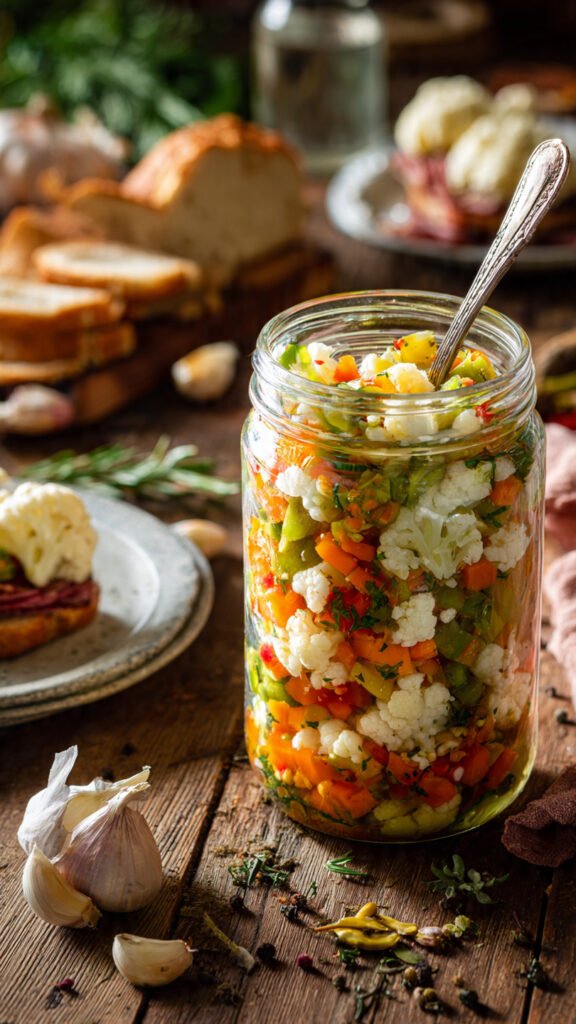
There you have it. You have successfully conquered the art of the spicy, crunchy, oily condiment. This homemade giardiniera recipe is going to ruin you for the store-bought stuff forever, but that’s a burden I’m willing to let you bear.
Be patient during the marinating time, don’t skip the salt soak, and prepare to have the best-smelling fridge in the neighborhood. Now go impress someone—or just yourself—with your new culinary skills. You’ve earned it!