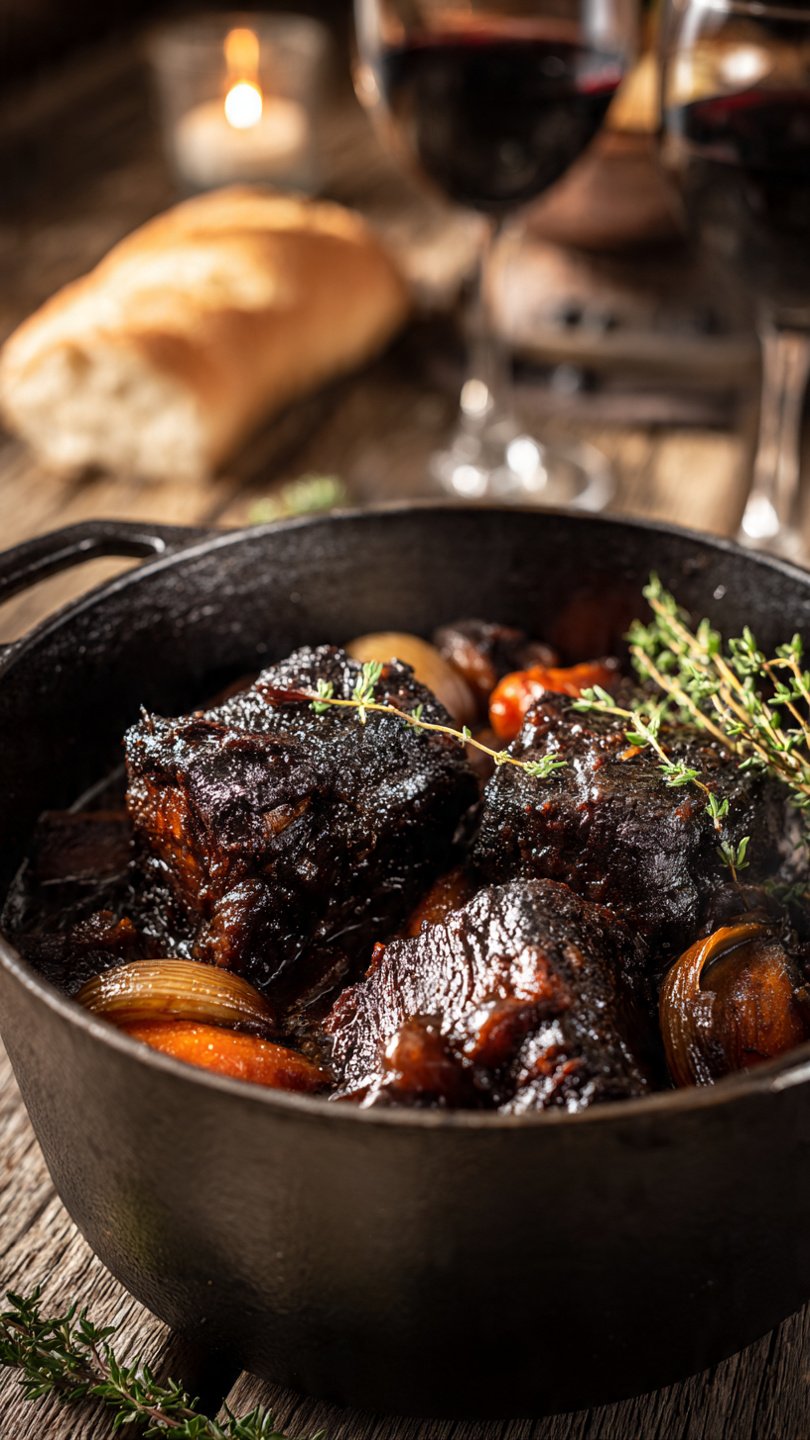
🥩 Melt-in-Your-Mouth Short Ribs Recipe
👩🍳 The Busy Home Cook's Arsenal
Consistently cooking incredible meals for your family doesn't mean spending three hours in the kitchen every night. These are the 5 absolute life-saving appliances and culinary tools that dramatically cut down prep time while guaranteeing restaurant-quality results.
🌪️ Ninja 4-Quart Air Fryer
The machine that completely changed weeknight dinners. It preheats in seconds and cooks frozen vegetables, chicken wings, and battered fish to an incredibly crispy, deep-fried texture using 75% less oil and taking half the time of a traditional oven.
⏱️ Instant Pot Duo 7-in-1 Pressure Cooker
Forget slow cookers that take 8 hours. This legendary appliance aggressively pressure cooks tough cuts of meat into melt-in-your-mouth tender roasts, stews, and perfectly fluffy rice in under 45 minutes, saving you when you forget to defrost dinner.
🔪 Victorinox Fibrox Pro 8" Chef's Knife
A dull knife is dangerous and makes chopping vegetables a miserable chore. This exact blade reigns supreme in professional kitchens because it holds a terrifyingly sharp edge, features a non-slip grip, and costs significantly less than heavy German steel.
🌡️ ThermoPro Instant Read Thermometer
The secret difference between dry, rubbery chicken and juicy perfection. Stop nervously slicing your proteins open to check if they're done—this waterproof digital pen gives you a highly accurate temperature reading in less than three seconds.
🥤 Vitamix 5200 Professional-Grade Blender
Whether you are making silky-smooth breakfast smoothies, pureed soups from scratch, or blending absolutely lump-free sauces, this famously indestructible motor pulverizes anything you throw at it. It literally heats soup from the friction of the blades alone.
So, you’re craving something that tastes like a five-star restaurant meal but you’re currently wearing sweatpants and have zero desire to leave the house? Same. Honestly, that’s my permanent state of being.
Here is the truth: Braised short ribs are the culinary world’s best-kept secret. They look intimidating. They sound fancy. When you order them out, they cost a small fortune. But in reality? They are arguably one of the easiest, most forgiving things you can cook. If you can brown meat and chop an onion, you are 90% qualified to nail this Short Ribs Recipe.
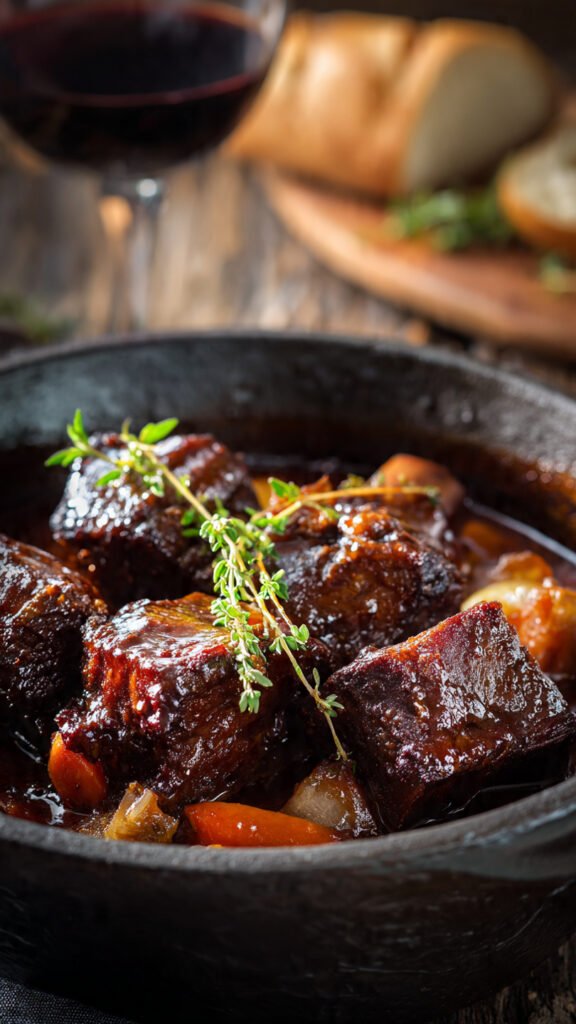
We are talking about rich, fall-off-the-bone beef swimming in a glossy, red wine-infused sauce that basically hugs your soul. Let’s get into it.
Why This Recipe is Awesome
Look, I don’t use the word “life-changing” lightly—mostly because I save it for things like finding comfortable jeans or discovering dry shampoo—but this recipe is actually life-changing. Here is why you are going to be obsessed with it.
1. It’s “Set It and Forget It” Glory Unlike risotto, where you have to stand over the stove stirring until your arm falls off, braising is the lazy cook’s best friend. You do about 20 minutes of active work (the searing and chopping), and then you toss the whole heavy pot into the oven. For the next three hours, you are free to nap, binge-watch a series, or pretend to clean your house while the oven does all the heavy lifting.
2. The “Meat Butter” Texture We need to talk about the texture. Short ribs are high in fat and connective tissue (collagen). When you cook them low and slow, that tough collagen breaks down into gelatin. This transforms the meat into what I affectionately call “meat butter.” It doesn’t just fall off the bone; it practically surrenders. You won’t even need a knife. A spoon will do.
3. The Kitchen Aromatherapy Forget scented candles. There is no candle on earth that smells as good as beef searing in garlic, thyme, and red wine. About an hour into the cooking process, your house will smell so incredible that your neighbors might just “accidentally” stop by to borrow sugar.
4. It’s Impossible to Overcook Okay, technically you could burn it if you left it in for 12 hours, but generally speaking, braising is idiot-proof. Because you are cooking in liquid, the meat stays moist. If you leave it in 30 minutes too long? It just gets more tender. It’s the recipe that forgives you for being distracted.
Ingredients You’ll Need
We aren’t reinventing the wheel here. We are sticking to classic flavors because they work. Here is your shopping list for the ultimate comfort food.
- Bone-In Beef Short Ribs (4-5 lbs): Get the “English style” cut, which are the big, chunky, square-ish ones. Avoid “Flanken style” (thin strips) for this specific recipe—those are for Korean BBQ. Look for ribs with plenty of marbling and a thick cap of meat.
- Salt and Black Pepper: Kosher salt is king here. You need a lot of it.
- Neutral Oil: Vegetable, canola, or grapeseed. Do not use your fancy extra virgin olive oil for searing; it will burn and taste bitter.
- The Aromatics (Mirepoix):
- 2 medium onions: Chopped rough.
- 3 carrots: Peeled and chopped into chunks.
- 3 celery stalks: Chopped.
- Garlic (1 head): Yes, the whole head. Cut it in half horizontally. We aren’t messing around with mincing today.
- Tomato Paste (2 tbsp): This adds that deep, umami richness.
- Red Wine (2 cups): Use a dry red like Cabernet Sauvignon, Merlot, or Pinot Noir. Rule of thumb: If you wouldn’t drink it, don’t cook with it. But you don’t need a $50 bottle; a decent $12 bottle works wonders.
- Beef Broth (2-3 cups): Low sodium is best so you can control the salt level.
- Herbs: Fresh thyme sprigs (a bunch) and 2 dried bay leaves. Rosemary is cool too if you’re feeling fancy.
Step-by-Step Instructions
Alright, apron on. Let’s make magic happen.
1. The Prep and Temper
First things first: take your ribs out of the fridge about 30 minutes before you start. Cold meat hitting a hot pan lowers the pan temperature too fast, which ruins your sear. Pat them dry with paper towels—moisture is the enemy of browning. Season them aggressively with salt and pepper on all sides. Don’t be shy. This is a thick cut of meat; it needs the seasoning.
2. The Sear (Do Not Skip This!)
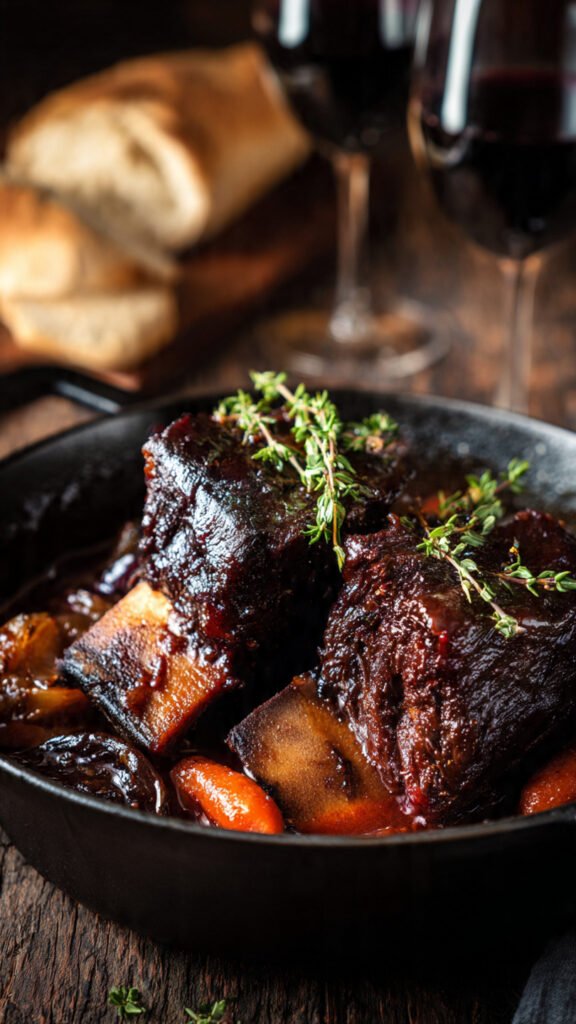
Preheat your oven to 325°F (163°C). Heat 2 tablespoons of oil in a large Dutch oven over medium-high heat. Once the oil is shimmering (almost smoking), gently place the ribs in. Crucial Tip: Do not crowd the pan. If you pack them in like sardines, they will steam instead of sear. Work in batches if you have to. Sear every single side until it is deep, dark brown. This is the Maillard reaction, and it is the foundation of your flavor profile. It should take about 2-3 minutes per side. Remove the ribs and set them aside on a plate.
3. Build the Flavor Base
Pour off all but 2 tablespoons of the rendered beef fat (liquid gold) from the pot. Toss in your onions, carrots, and celery. Cook them over medium heat for about 5-8 minutes until they start to soften and brown. Add the tomato paste and stir it in, letting it cook for a minute until it turns a rusty, dark red color. This cooks out the raw metallic taste of the paste. Toss in the halved garlic head and stir.
4. The Deglaze
Pour in the red wine. It will hiss and steam—this is the drama we live for. Use a wooden spoon to scrape up the brown bits stuck to the bottom of the pot. In the chef world, that’s called fond, and it is pure, concentrated flavor. Let the wine simmer for 5-10 minutes until it reduces by half. This concentrates the wine flavor and burns off the harsh alcohol bite.
5. The Braise
Add the beef broth. Return the short ribs to the pot (along with any juices that pooled on the plate). Tuck in the fresh thyme and bay leaves. Important: The liquid should cover the meat about 3/4 of the way. The tops of the ribs should be peeking out like little meaty islands. If they are fully submerged, you’re boiling them, not braising them. Add more broth or water if needed to hit that level.
6. The Long Nap
Cover the pot with a tight-fitting lid and slide it into the oven. Cook for 2.5 to 3 hours. You’ll know they are done when the meat is pulling away from the bone and shreds effortlessly with a fork. It should be wobbly and tender. If it’s tough, it needs more time. Put it back in. Patience is a virtue, or whatever.
7. The Finish
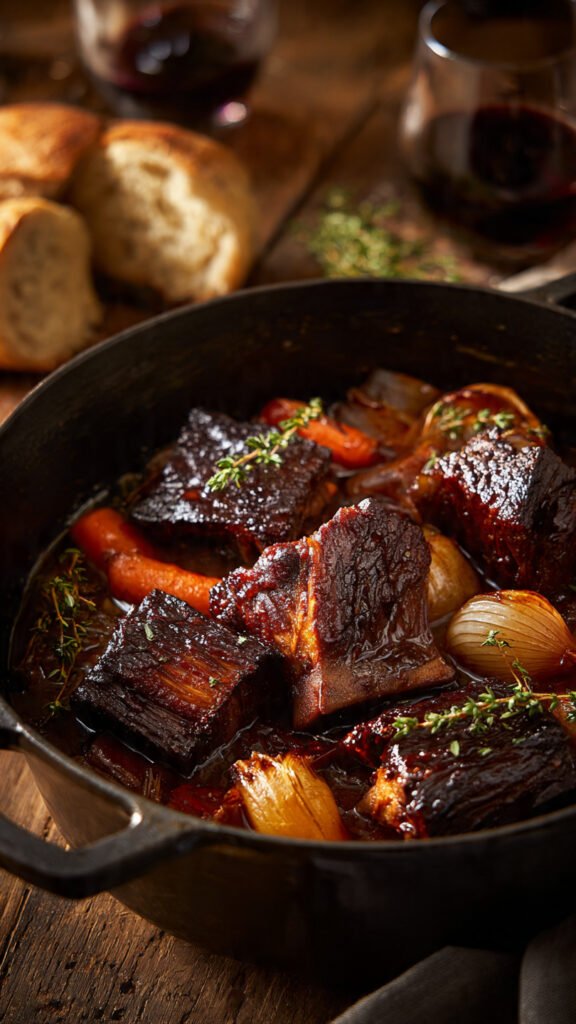
Remove the pot from the oven. Carefully take the ribs out and set them on a serving platter. Pro Move: Strain the sauce. Pour the liquid through a mesh sieve, pressing on the veggies to extract all the juice, then discard the mushy veggies (they gave their life for the sauce). Skim the excess fat off the top of the liquid. Optionally, simmer the strained sauce on the stove for 10 minutes to thicken it into a glaze. Pour that glorious nectar over the ribs.
Common Mistakes to Avoid
Even though this recipe is forgiving, there are a few ways to sabotage your success. Let’s avoid these rookie moves.
- Rushing the Sear: If your meat looks gray, you failed. You want a crust. That crust equals flavor. If you skip this, your sauce will taste one-dimensional and sad.
- Using “Cooking Wine”: Please, for the love of food, do not buy that stuff in the vinegar aisle labeled “Cooking Wine.” It is loaded with salt and preservatives and tastes like regret. Buy a real bottle of wine.
- Trimming the Fat: Leave the fat on the ribs! The fat renders out during the long cook time and bastes the meat from the inside. If you trim it all off, you’ll end up with dry pot roast.
- Boiling Instead of Simmering: If you cook this on the stovetop and let it boil vigorously, the muscle fibers will seize up and get tough. This is why the oven is safer—it maintains a steady, gentle heat.
- Eating Immediately: I know you’re hungry, but let the ribs rest in the juices for 15-20 minutes before serving. It lets the muscle fibers relax and reabsorb moisture.
Alternatives & Substitutions
Cooking is an art, not a rigid set of laws. Here is how you can tweak this Short Ribs Recipe to fit your life.
- No Alcohol? No problem. If you don’t do wine, substitute the red wine with more beef broth and add 2 tablespoons of high-quality balsamic vinegar or Worcestershire sauce. The vinegar provides the acidity that the wine usually would, cutting through the richness of the fat.
- The Meat Swap: Can’t find short ribs? You can use Chuck Roast. Cut a large chuck roast into 3-inch chunks and treat it exactly the same way. It won’t have the bones, but it will still be delicious.
- Slow Cooker Method: Follow steps 1 through 4 on the stove (searing is non-negotiable, FYI). Then transfer everything to a slow cooker. Cook on LOW for 7-8 hours. Do not cook on High; it boils the meat and makes it tough.
- Instant Pot: Sear on “Sauté” mode. Add liquids. Cook on High Pressure for 45-50 minutes, followed by a natural pressure release (NPR) for 15 minutes. IMO, the oven version tastes deeper and richer, but the Instant Pot is great for a weeknight rush.
FAQ (Frequently Asked Questions)
1. Can I make this ahead of time? YES! In fact, you should. Braised dishes often taste better the next day because the flavors have had time to get to know each other. Plus, if you refrigerate it overnight, the fat solidifies at the top, making it super easy to spoon off before reheating.
2. What do I serve with short ribs? You need something to soak up that sauce. Creamy polenta is the classic pairing. Mashed potatoes are the crowd favorite. If you want to be healthy, I guess you could do cauliflower mash, but… why hurt your soul like that?
3. Bone-in or Boneless? Bone-in. Always bone-in. The marrow in the bone dissolves into the sauce, adding richness and body that you just can’t get with boneless cuts. Also, the bone acts as an insulator, helping the meat cook more evenly.
4. My sauce is too thin, what do I do? Don’t panic. Remove the meat, put the pot on the stove over medium-high heat, and simmer it vigorously. The water will evaporate, and the sauce will thicken. If you’re really in a rush, mix 1 teaspoon of cornstarch with a splash of water (slurry) and stir it in.
5. Why are my ribs tough? They simply haven’t cooked long enough. Connective tissue needs time to break down. If they are tough, put the lid back on and give them another 30-45 minutes. Trust the process.
6. Can I use white wine? Technically, yes, but it will completely change the vibe. White wine makes for a lighter, spring-time braise. For that deep, cozy, winter-night feeling, red is essential.
Final Thoughts
There you have it. The secret to looking like a culinary genius with minimal effort. This Short Ribs Recipe is the kind of meal that makes people stop talking and just make happy “mmm” noises while they eat.
Whether you are trying to impress a date, feeding a hungry family, or just treating yourself because you survived another week of adulthood, this dish delivers. Pour yourself a glass of that leftover red wine, put your feet up while the oven does the work, and get ready for a meal you won’t forget.
Now go impress someone—or yourself—with your new culinary skills. You’ve earned it!