Roti Canai Recipe: Flaky Perfection at Home!
👩🍳 The Busy Home Cook's Arsenal
Consistently cooking incredible meals for your family doesn't mean spending three hours in the kitchen every night. These are the 5 absolute life-saving appliances and culinary tools that dramatically cut down prep time while guaranteeing restaurant-quality results.
🌪️ Ninja 4-Quart Air Fryer
The machine that completely changed weeknight dinners. It preheats in seconds and cooks frozen vegetables, chicken wings, and battered fish to an incredibly crispy, deep-fried texture using 75% less oil and taking half the time of a traditional oven.
⏱️ Instant Pot Duo 7-in-1 Pressure Cooker
Forget slow cookers that take 8 hours. This legendary appliance aggressively pressure cooks tough cuts of meat into melt-in-your-mouth tender roasts, stews, and perfectly fluffy rice in under 45 minutes, saving you when you forget to defrost dinner.
🔪 Victorinox Fibrox Pro 8" Chef's Knife
A dull knife is dangerous and makes chopping vegetables a miserable chore. This exact blade reigns supreme in professional kitchens because it holds a terrifyingly sharp edge, features a non-slip grip, and costs significantly less than heavy German steel.
🌡️ ThermoPro Instant Read Thermometer
The secret difference between dry, rubbery chicken and juicy perfection. Stop nervously slicing your proteins open to check if they're done—this waterproof digital pen gives you a highly accurate temperature reading in less than three seconds.
🥤 Vitamix 5200 Professional-Grade Blender
Whether you are making silky-smooth breakfast smoothies, pureed soups from scratch, or blending absolutely lump-free sauces, this famously indestructible motor pulverizes anything you throw at it. It literally heats soup from the friction of the blades alone.
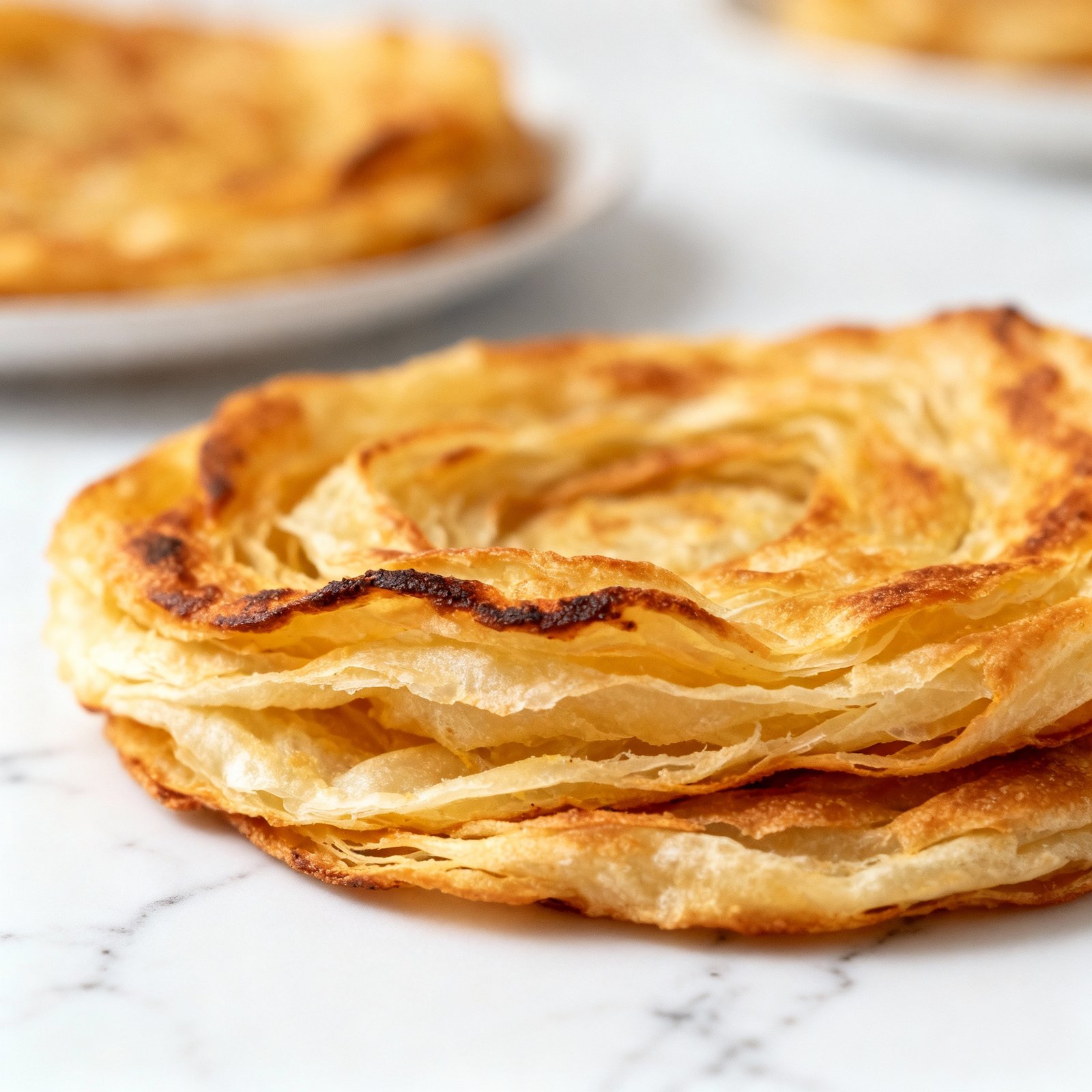
Craving that buttery, flaky goodness of Roti Canai, but don’t have a Mamak stall nearby? Fear not! This recipe brings the authentic taste of Malaysia’s beloved flatbread right to your kitchen. We’ll guide you through each step, from kneading the perfect dough to achieving that signature crispy exterior and soft, layered interior. Get ready to impress your friends and family with this surprisingly easy-to-make Roti Canai!
Why This Recipe Works
This recipe isn’t just another internet find; it’s been meticulously crafted and tested to deliver consistently delicious results. Here’s why it works:
- Proper Hydration: The dough uses the right ratio of water to flour, resulting in a pliable and easy-to-stretch dough.
- Resting is Key: Multiple resting periods allow the gluten to relax, making the dough more elastic and easier to handle. This is crucial for achieving those thin, flaky layers.
- Generous Fat: Ghee (or clarified butter) is used liberally to create richness, flavor, and separation between the layers, resulting in the signature flakiness.
- The Stretch and Fold Technique: This technique develops gluten strength without over-kneading, ensuring a tender and airy texture.
- Hot Pan, Perfect Cook: Cooking the Roti Canai on a hot, oiled pan ensures a crispy exterior and a soft, cooked interior.
Ingredients
- 2 cups (250g) All-Purpose Flour: Use unbleached all-purpose flour for the best results.
- 1 teaspoon Salt: Enhances the flavor of the dough.
- 1 cup (240ml) Warm Water: The temperature is important for gluten development. It should be warm, but not hot.
- 1/4 cup (60ml) Sweetened Condensed Milk: Adds subtle sweetness and richness to the dough.
- 4 tablespoons Ghee (Clarified Butter), melted: For greasing the dough and pan. Ghee adds a distinct flavor, but vegetable oil can be substituted.
- Vegetable Oil, for greasing: To help prevent the dough from sticking during the resting periods.
Instructions
- Combine Dry Ingredients: In a large bowl, whisk together the flour and salt.
- Add Wet Ingredients: Gradually add the warm water and sweetened condensed milk to the dry ingredients, mixing until a shaggy dough forms.
- Knead the Dough: Turn the dough out onto a lightly floured surface and knead for 8-10 minutes, or until smooth and elastic. The dough should be slightly sticky, but manageable.
- First Rest: Lightly grease a bowl with vegetable oil. Place the dough in the bowl, turning to coat. Cover with plastic wrap and let rest for at least 2 hours, or up to overnight, at room temperature. This step is crucial for gluten relaxation.
- Divide the Dough: After the first rest, punch down the dough to release any air. Divide the dough into 6-8 equal portions.
- Shape into Balls: Roll each portion into a smooth ball.
- Second Rest: Place the dough balls on a lightly oiled plate or tray. Brush the tops with melted ghee and cover with plastic wrap. Let rest for another 1-2 hours at room temperature.
- Stretch and Fold: Generously grease a large, clean surface (such as a countertop or a large cutting board) with melted ghee. Take one dough ball and place it on the greased surface. Gently stretch the dough out into a very thin, almost translucent sheet. Be careful not to tear the dough.
- Fold the Dough: Fold one side of the stretched dough towards the center, then fold the opposite side over to meet it. You’ll now have a long strip of folded dough.
- Coil the Dough: Starting from one end, gently roll the folded dough into a coil, like a snail. Tuck the end underneath the coil. This creates the layers.
- Flatten the Coil: Gently flatten the coiled dough with your palm into a disc about 4-5 inches in diameter.
- Third Rest: Place the flattened discs on a lightly oiled plate or tray. Brush the tops with melted ghee and cover with plastic wrap. Let rest for at least 30 minutes. This will relax the dough again, making it easier to cook.
- Cook the Roti Canai: Heat a lightly oiled griddle or frying pan over medium-high heat.
- Stretch (Optional): Before cooking, you can gently stretch the disc further to make it thinner and larger. Be careful not to tear it. If you’re having trouble stretching, skip this step.
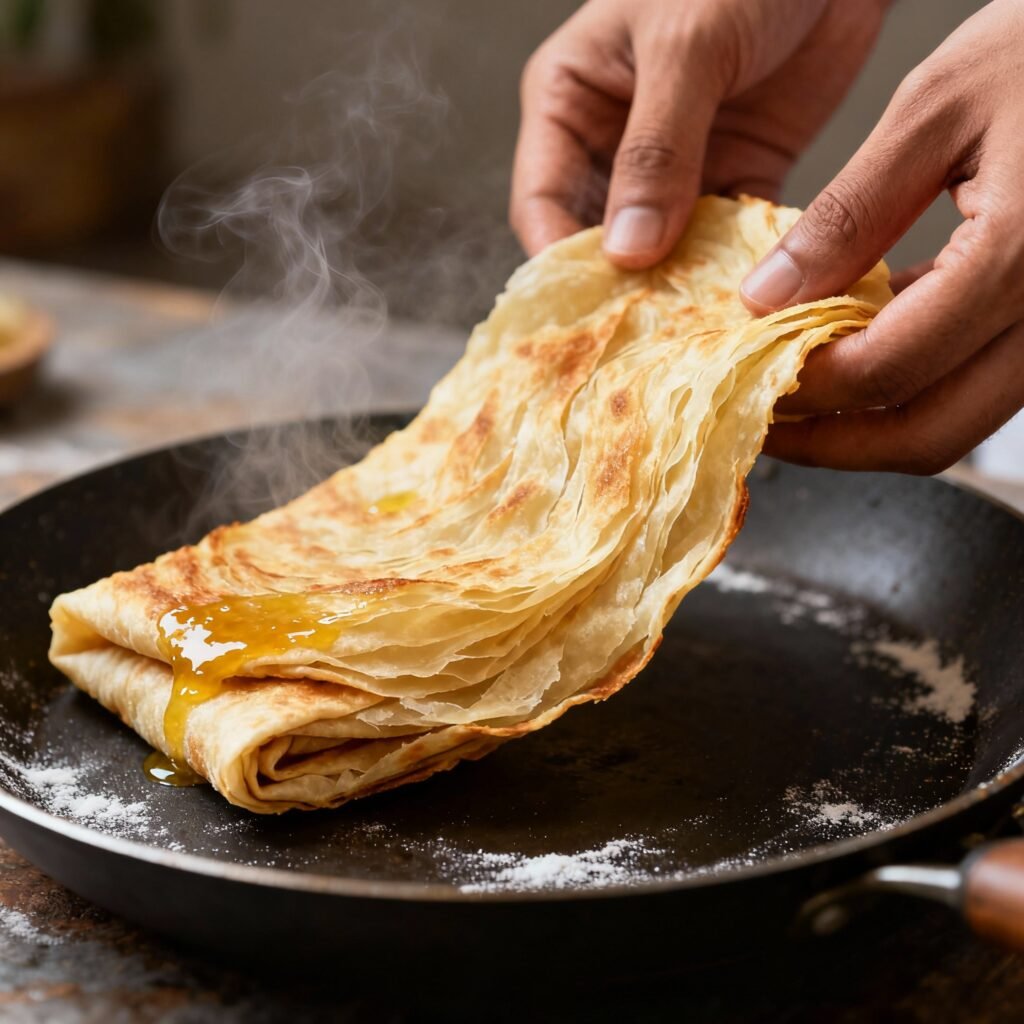
- Cook Until Golden: Place the Roti Canai on the hot pan and cook for 2-3 minutes per side, or until golden brown and crispy. Brush with melted ghee while cooking for extra flavor and crispness.
- Clap and Serve: Immediately after cooking, clap the Roti Canai between your hands to loosen the layers and create a fluffy texture. This is optional but traditional.
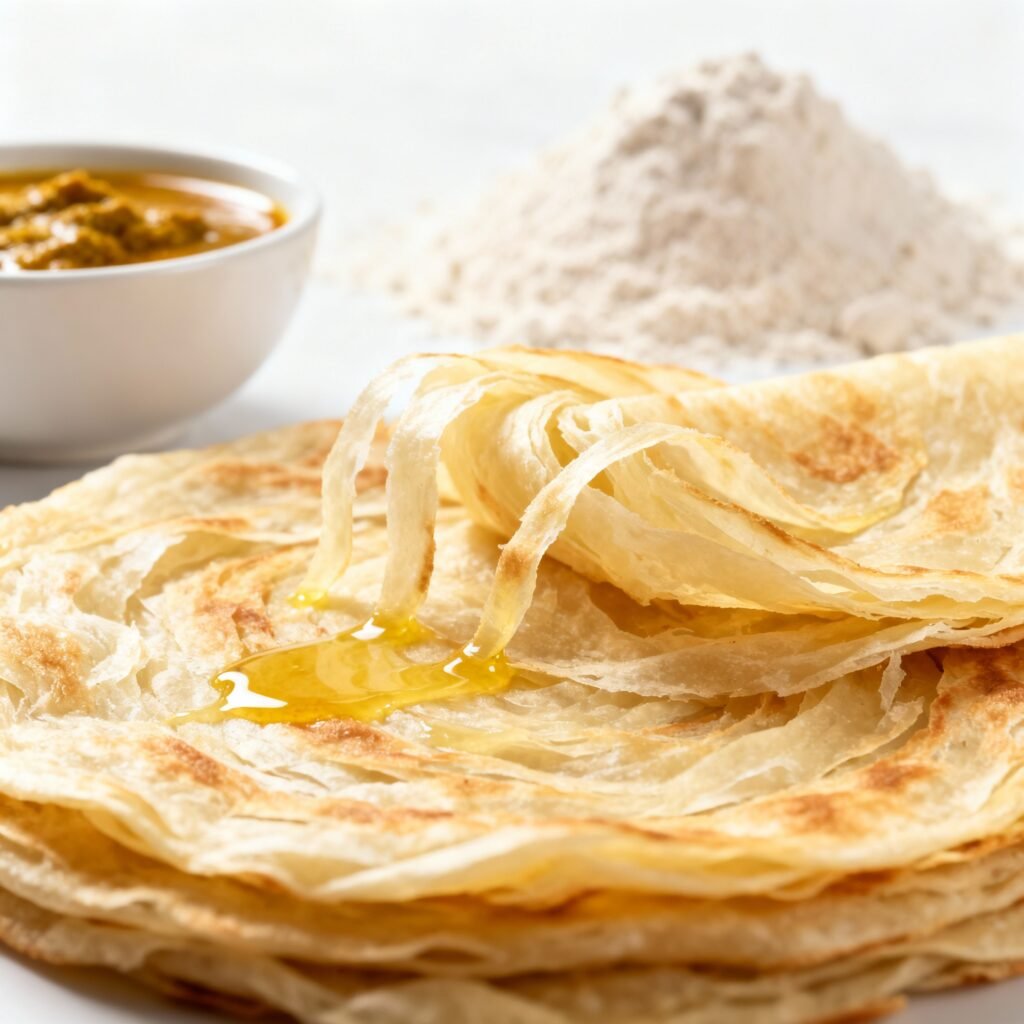
- Serve Immediately: Serve hot with your favorite curry, dhal, or sambal.
Tips for Success
- Don’t Over-Knead: Over-kneading can result in a tough Roti Canai. Knead just until the dough is smooth and elastic.
- Resting is Non-Negotiable: The resting periods are essential for gluten relaxation, which allows the dough to stretch easily and create those beautiful layers. Don’t skip them!
- Be Generous with Ghee: Ghee is key to the flavor and flakiness of Roti Canai. Don’t be afraid to use it liberally.
- Practice Makes Perfect: The stretching and folding technique can be a bit tricky at first. Don’t get discouraged if your first few attempts aren’t perfect. With practice, you’ll get the hang of it.
- Adjust Heat as Needed: If the Roti Canai is browning too quickly, reduce the heat slightly. You want it to cook through without burning.
Storage Instructions
Cooked Roti Canai: Leftover Roti Canai can be stored in an airtight container in the refrigerator for up to 2 days. Reheat in a dry skillet or microwave until warm. They will lose some of their crispness upon refrigeration.
Uncooked Roti Canai: You can freeze the flattened discs of dough before cooking. Wrap each disc individually in plastic wrap and then place them in a freezer bag. They can be stored in the freezer for up to 1 month. When ready to cook, thaw completely in the refrigerator and then cook as directed.
FAQ
Can I use butter instead of ghee?
Yes, you can use butter, but ghee will provide a richer and more authentic flavor. If using butter, make sure it’s unsalted.
Can I use vegetable oil instead of ghee?
Yes, vegetable oil can be used, but the flavor will be different. Ghee contributes significantly to the overall taste of Roti Canai.
My dough keeps tearing when I stretch it. What am I doing wrong?
Make sure you’re resting the dough long enough. Insufficient resting time will prevent the gluten from relaxing, making the dough difficult to stretch. Also, ensure you’re using enough oil on your work surface to prevent sticking.
How do I get the layers to separate properly?
The key is to use plenty of ghee and to stretch the dough as thinly as possible. The resting periods also contribute to the separation of layers.
What can I serve with Roti Canai?
Roti Canai is traditionally served with dhal curry, chicken curry, or sambal. It’s also delicious with just a sprinkle of sugar or dipped in condensed milk.
🍽️ The Entertainer's Presentation Kit
We eat with our eyes first. If you love hosting friends for dinner, drinks, or holiday parties, these 5 elegant serving upgrades instantly transform casual home cooking into a luxurious, highly photogenic fine-dining experience.
🍲 Le Creuset Enameled Cast Iron Dutch Oven
The ultimate flex for a dinner party. You can braise short ribs or bake sourdough bread in the oven, then bring this stunning enameled pot directly to the center of your dining table to serve your guests from its wildly beautiful colored casing.
🍷 RIEDEL Crystal Wine Glass Set
Stop serving good wine in cheap, thick-rimmed glasses. The remarkably thin crystal lip and specifically engineered bowl shapes of these glasses genuinely elevate the aroma and flavor profiles of your favorite vintages, making a $15 bottle taste significantly more expensive.
🧀 Premium Bamboo Charcuterie Board Set
The easiest appetizer strategy ever invented. This massive carved board features hidden slide-out drawers containing stainless steel cheese knives and ceramic ramekins, giving you the perfect canvas to build massive, Instagram-worthy grazing spreads.
✨ Genuine Marble Drink Coasters
A simple, brilliant aesthetic upgrade that protects your expensive furniture. These heavy, elegant real marble coasters with subtle gold accents look incredibly chic tossed around a living room while completely preventing water rings from sweaty cocktails.
🌿 100% Cotton Cloth Dinner Napkins
Throwing away a mountain of paper towels at a dinner party ruins the vibe. Swapping to soft, highly-absorbent, fully machine-washable cloth napkins instantly pulls a tablescape together and makes even a Tuesday night pizza feel like a fancy event.
Conclusion
Making Roti Canai at home might seem daunting at first, but with this recipe and a little practice, you’ll be enjoying flaky, buttery flatbread in no time. The process is rewarding, and the taste is simply irresistible. So gather your ingredients, roll up your sleeves, and get ready to experience the joy of homemade Roti Canai! Enjoy!