Sauerkraut Recipe: Ferment Your Way to Flavor!
Sauerkraut, that tangy, fermented cabbage delight, often conjures images of German sausages and hearty winter meals. But it’s so much more than just a side dish! It’s a probiotic powerhouse, packed with beneficial bacteria that can boost your gut health and overall well-being. And the best part? Making your own sauerkraut at home is incredibly easy and surprisingly rewarding. This recipe will guide you through the process, ensuring you create a delicious and vibrant sauerkraut that will elevate your meals and nourish your body. Forget store-bought versions loaded with preservatives; with just a few simple ingredients and a little patience, you can enjoy the freshest, most flavorful sauerkraut imaginable.
Why This Recipe Works
This sauerkraut recipe is designed for success, even for beginners. Here’s why it works:
- Simple Ingredients: We use just two core ingredients: cabbage and salt. This simplicity allows the natural flavors of the cabbage to shine through and minimizes the risk of unwanted bacteria taking hold.
- Precise Salt Ratio: The salt is crucial. It draws out moisture from the cabbage, creating a brine that inhibits the growth of harmful bacteria while allowing the beneficial lactic acid bacteria to thrive. Our recipe uses a carefully calculated salt ratio for optimal fermentation.
- Anaerobic Environment: Creating an oxygen-free environment is key to successful fermentation. We’ll show you how to pack the cabbage tightly and use weights to ensure it stays submerged in its own brine.
- Time and Temperature: Fermentation takes time, and temperature plays a significant role. We’ll guide you on the ideal temperature range and how to monitor your sauerkraut’s progress.
- Clear Visual Cues: We’ll provide clear visual cues to help you determine when your sauerkraut is ready, ensuring you achieve the perfect balance of tanginess and texture.
Ingredients
- 1 large head of green cabbage (about 3-4 pounds), outer leaves removed
- 2-3 tablespoons of non-iodized salt (sea salt or kosher salt works best)
- Optional: Caraway seeds, juniper berries, garlic cloves (for added flavor)
Instructions
- Prepare the Cabbage: Wash the cabbage thoroughly. Remove the outer leaves (reserve one or two). Quarter the cabbage and remove the core.
- Shred the Cabbage: Using a sharp knife or mandoline, shred the cabbage into thin strips. The thinner the strips, the faster the fermentation process will be.
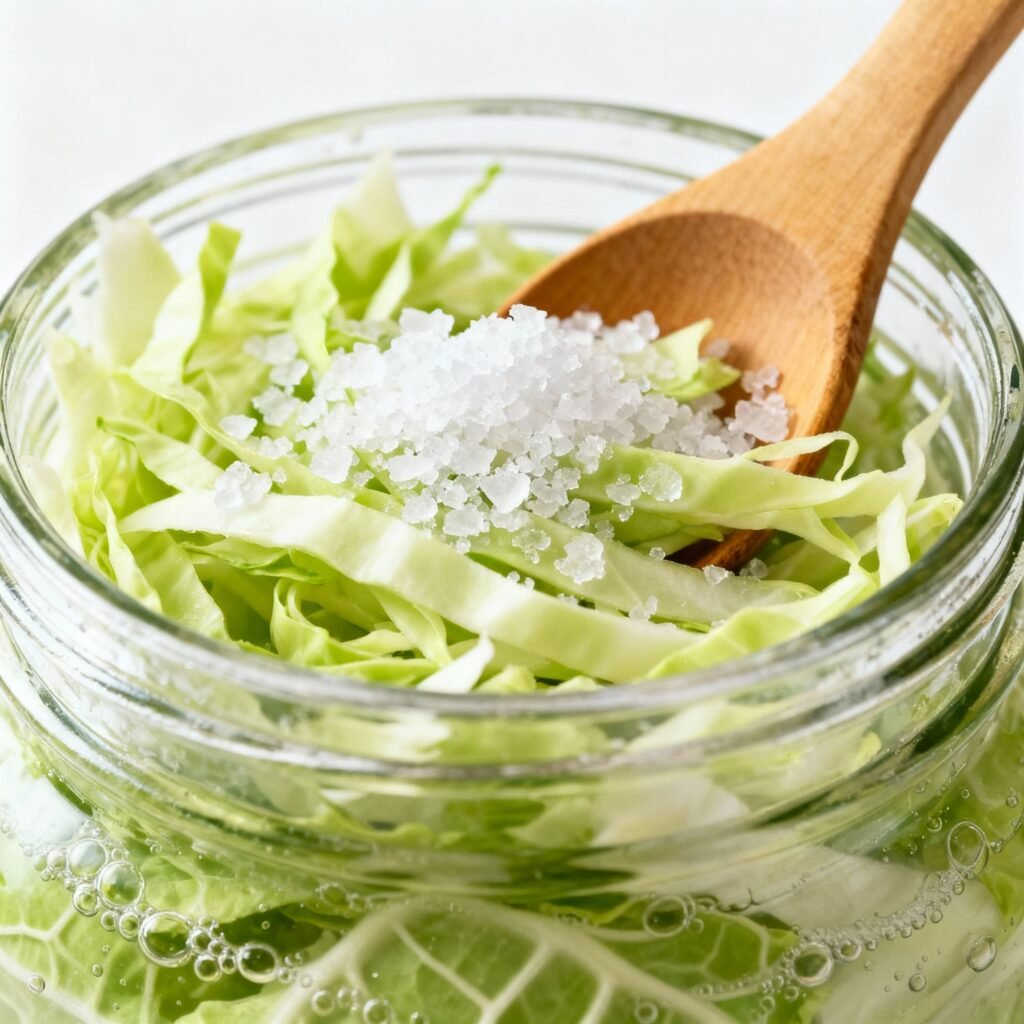
- Salt the Cabbage: Place the shredded cabbage in a large bowl. Sprinkle the salt evenly over the cabbage. If using optional ingredients like caraway seeds, add them now.
- Massage the Cabbage: Using your hands, massage the salt into the cabbage for 5-10 minutes. This process helps break down the cell walls of the cabbage and release its juices, creating the brine necessary for fermentation. You’ll notice the cabbage starting to soften and release liquid.
- Pack the Cabbage: Pack the salted cabbage firmly into a clean, sterilized fermentation vessel. A glass jar (wide-mouth mason jar is ideal) or a ceramic crock works well. Pack the cabbage down tightly with your fist or a wooden spoon to release more juices.
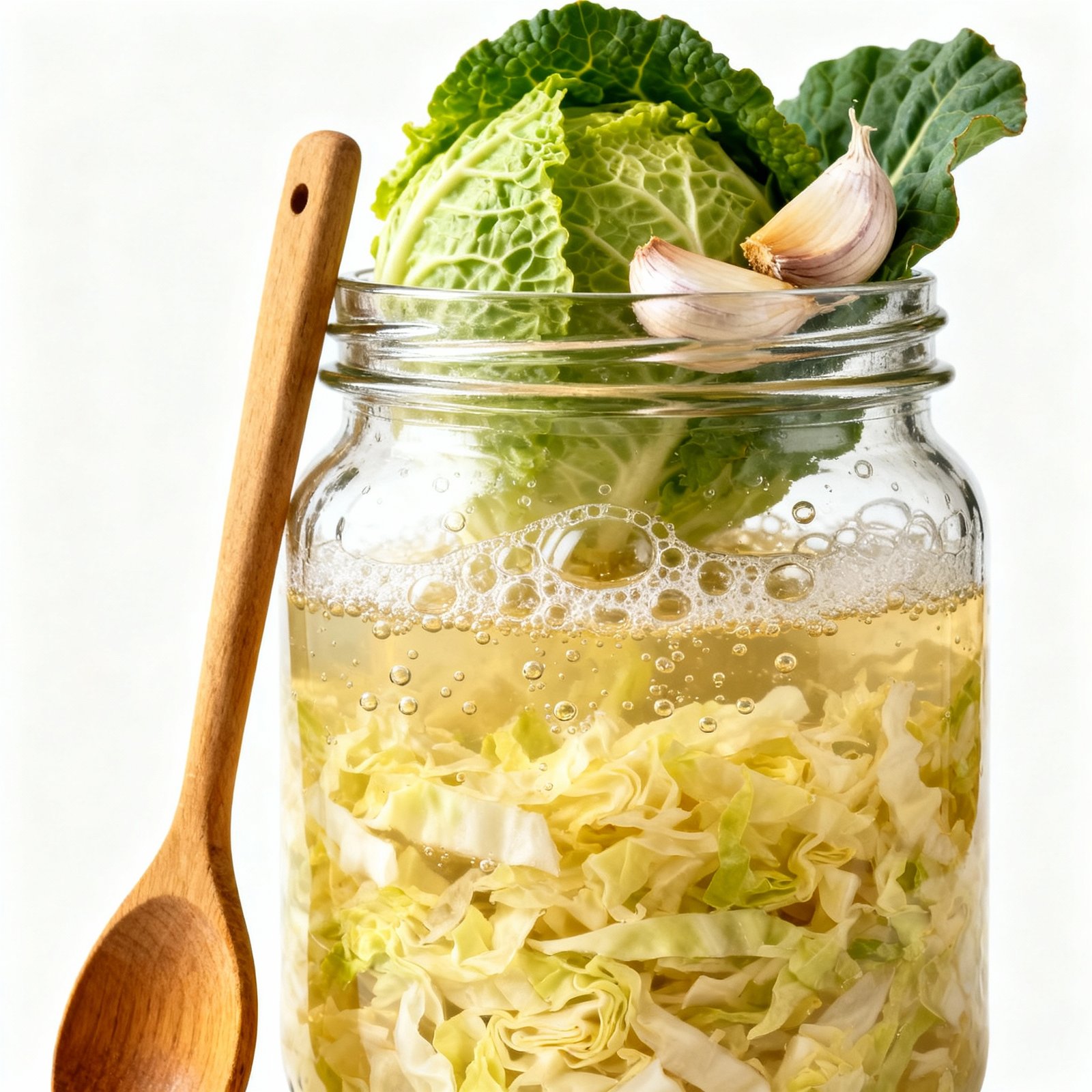
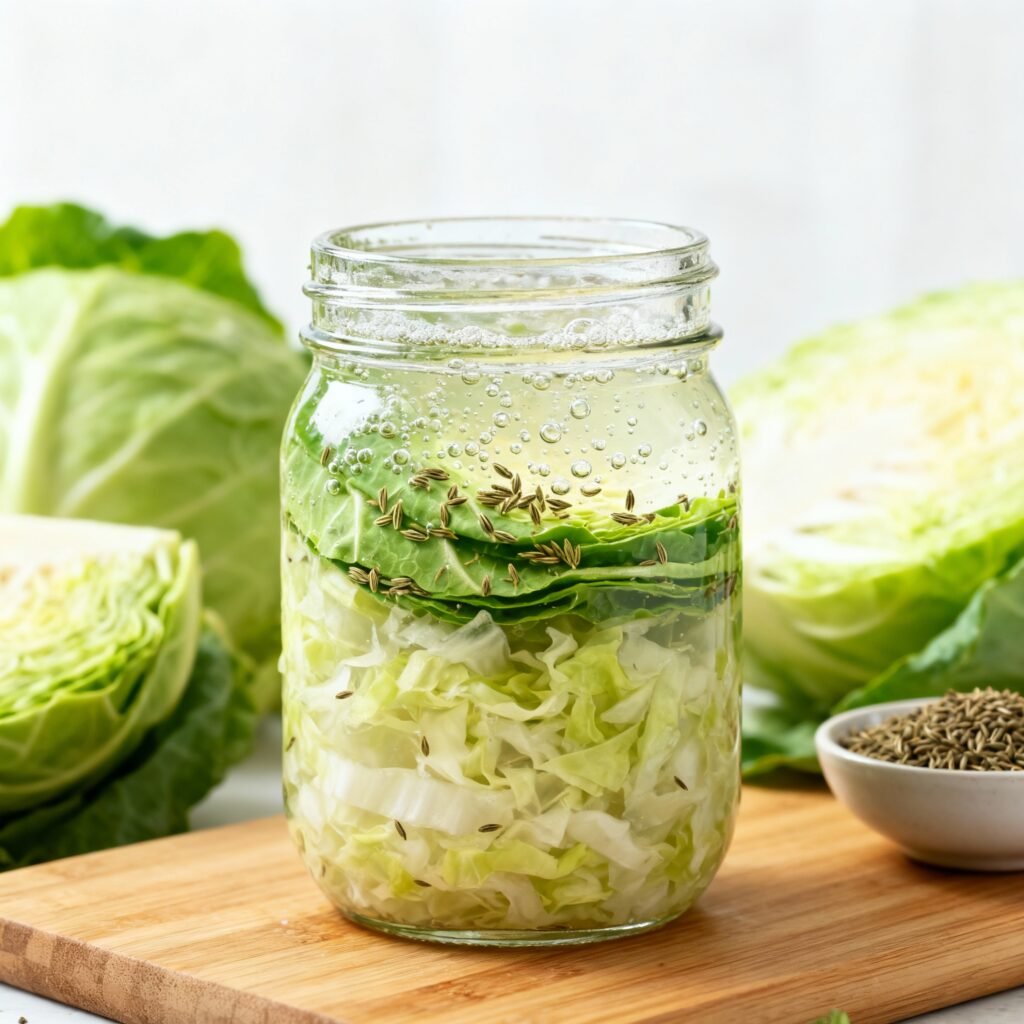
- Submerge the Cabbage: It’s essential that the cabbage is completely submerged in its own brine. If the cabbage is not producing enough liquid, you can add a small amount of filtered water with a pinch of salt to top it off.
- Weight the Cabbage: Place a clean weight on top of the cabbage to keep it submerged. You can use a glass fermentation weight, a smaller jar filled with water, or even a clean, ziplock bag filled with water. Cover the mouth of the jar with the reserved cabbage leaves. This helps prevent any stray pieces of cabbage from floating to the surface and molding.
- Cover and Ferment: Cover the jar loosely with a lid or cheesecloth secured with a rubber band. This allows gases to escape during fermentation while preventing insects from entering.
- Monitor and Maintain: Place the jar in a cool, dark place with a consistent temperature between 65-72°F (18-22°C). Check the sauerkraut daily. You may see bubbles forming, which is a sign that fermentation is happening. If mold appears on the surface, carefully scoop it off. If the mold is extensive, discard the entire batch.
- Taste and Test: After about 7 days, begin tasting the sauerkraut. Use a clean utensil to remove a small amount. The sauerkraut is ready when it has a pleasantly sour and tangy flavor. The fermentation time can vary depending on the temperature and your personal preference. It can take anywhere from 7 to 30 days.
- Refrigerate: Once the sauerkraut has reached your desired level of tanginess, remove the weight and transfer the jar to the refrigerator. This will slow down the fermentation process.
Tips for Success
- Use the Right Salt: Avoid iodized salt, as it can inhibit the fermentation process and affect the flavor of the sauerkraut. Sea salt or kosher salt is recommended.
- Sterilize Your Equipment: Ensure your fermentation vessel and any utensils you use are clean and sterilized to prevent the growth of unwanted bacteria.
- Maintain a Consistent Temperature: A stable temperature is crucial for successful fermentation. Avoid placing your sauerkraut in direct sunlight or near sources of heat.
- Be Patient: Fermentation takes time. Don’t rush the process. Allow the sauerkraut to ferment for the recommended time, and taste it regularly to determine when it’s ready.
- Don’t Be Afraid to Experiment: Once you’ve mastered the basic sauerkraut recipe, feel free to experiment with different flavors. Add spices, herbs, or other vegetables to create your own unique variations.
Storage Instructions
Once fermented, sauerkraut should be stored in the refrigerator. It will continue to ferment slowly in the refrigerator, so the flavor may change slightly over time. Properly stored sauerkraut can last for several months in the refrigerator.
FAQ
Q: What is the white film on top of my sauerkraut?
A: This is likely Kahm yeast, a harmless type of yeast that often forms on the surface of fermented foods. It’s not mold and can be easily scooped off. If you’re concerned, remove it regularly.
Q: My sauerkraut smells bad. Is it spoiled?
A: Sauerkraut will have a distinct sour smell, but it shouldn’t smell rotten or putrid. If the smell is off-putting, or if you see mold that is not just on the surface, it’s best to discard the batch.
Q: Can I use red cabbage instead of green cabbage?
A: Yes, you can use red cabbage to make sauerkraut. The process is the same, but the sauerkraut will have a vibrant purple color.
Q: My sauerkraut is too salty. What can I do?
A: Unfortunately, there’s not much you can do to remove the salt after the fermentation process. Next time, be sure to measure the salt accurately. You can try rinsing the sauerkraut before serving to reduce the saltiness slightly.
Conclusion
Making your own sauerkraut is a simple and rewarding way to enjoy a delicious and healthy fermented food. With just a few basic ingredients and a little patience, you can create a flavorful and probiotic-rich sauerkraut that will enhance your meals and boost your well-being. So, gather your cabbage, grab your salt, and embark on your sauerkraut-making adventure today! You’ll be amazed at how easy and satisfying it is to ferment your way to flavor!