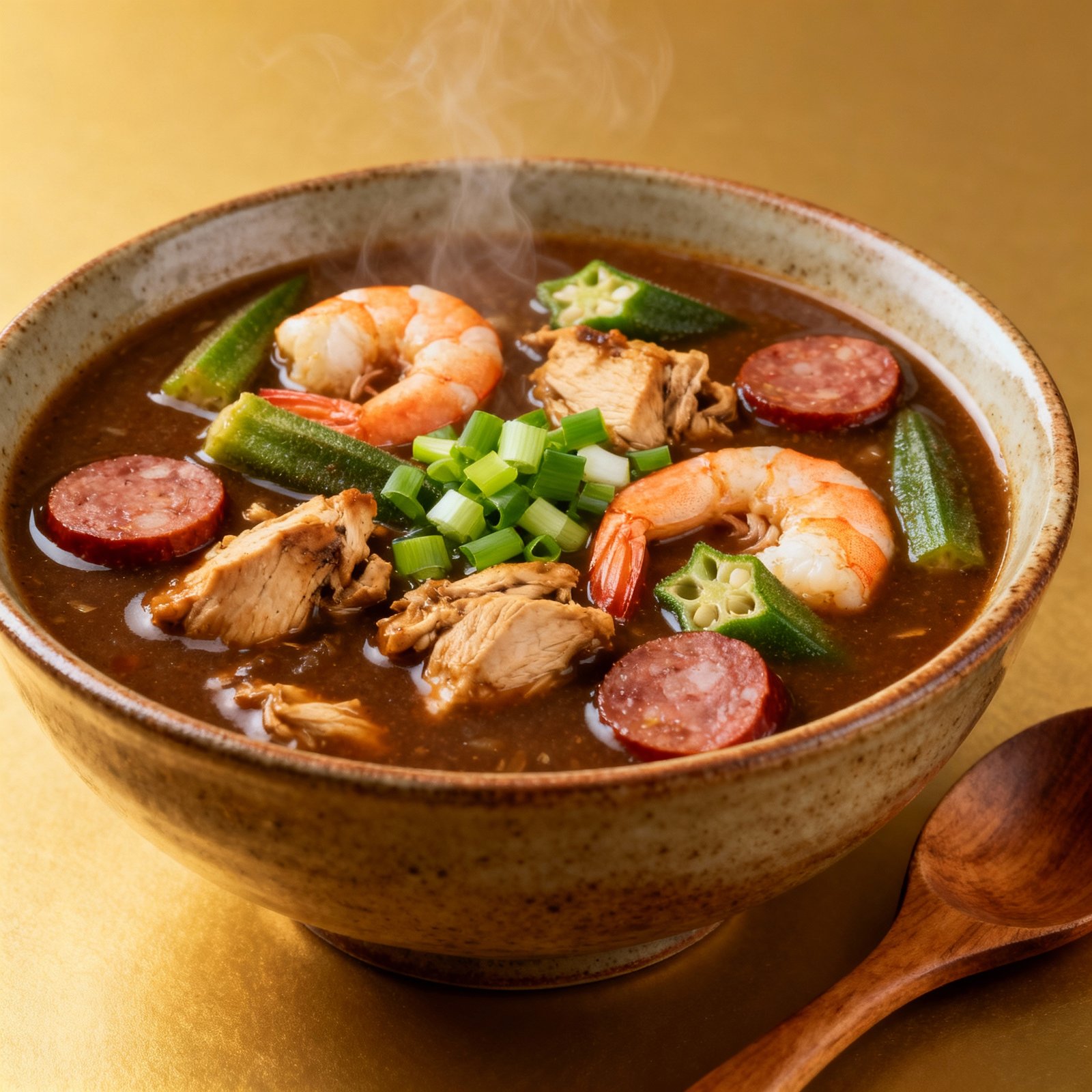
Authentic Gumbo Recipe: A Taste of Louisiana Soul
Gumbo. The very word conjures images of steaming bowls, rich aromas, and the vibrant spirit of Louisiana. More than just a soup or stew, gumbo is a culinary cornerstone, a celebration of culture, and a dish that tells a story with every spoonful. This isn’t just any gumbo recipe; this is a journey into the heart of Creole and Cajun cooking, a step-by-step guide to creating a truly authentic and unforgettable gumbo experience.
Why This Recipe Works
This recipe isn’t just a list of ingredients and instructions; it’s a carefully crafted approach that emphasizes building flavor at every stage. Here’s why it stands out:
- The Roux: We’ll guide you through creating a deep, rich roux – the foundation of any good gumbo. We’ll explain the importance of patience and color development, ensuring a nutty, complex flavor.
- The Holy Trinity: Onions, bell peppers, and celery – the aromatic base of Cajun and Creole cuisine – are sautéed to perfection, releasing their sweetness and building a savory foundation.
- Layered Flavors: From andouille sausage to shrimp, chicken, or even duck, we’ll show you how to incorporate different proteins to create a complex and satisfying gumbo.
- Proper Seasoning: We’ll use a blend of Creole seasoning, cayenne pepper, and other spices to achieve the perfect balance of heat and flavor.
- Time: Gumbo is not a dish to be rushed. This recipe allows for ample simmering time, allowing the flavors to meld and deepen.
Ingredients
- For the Roux:
- 1 cup all-purpose flour
- 1 cup vegetable oil (or other neutral oil)
- The Trinity & Aromatics:
- 1 large onion, chopped
- 1 green bell pepper, chopped
- 2 celery stalks, chopped
- 4 cloves garlic, minced
- Protein:
- 1 pound andouille sausage, sliced
- 1 pound boneless, skinless chicken thighs, cut into bite-sized pieces (or 1 pound shrimp, peeled and deveined – add in the last 30 minutes of cooking)
- Broth & Liquid:
- 8 cups chicken broth (low sodium)
- 1 (14.5 ounce) can diced tomatoes, undrained
- Seasoning:
- 2 tablespoons Creole seasoning (such as Tony Chachere’s)
- 1 teaspoon dried thyme
- 1/2 teaspoon dried oregano
- 1/4 teaspoon cayenne pepper (or more, to taste)
- Salt and black pepper to taste
- Other:
- 1 bay leaf
- Hot sauce, to taste (optional)
- Cooked white rice, for serving
- Chopped green onions, for garnish (optional)
- File powder, for thickening (optional)
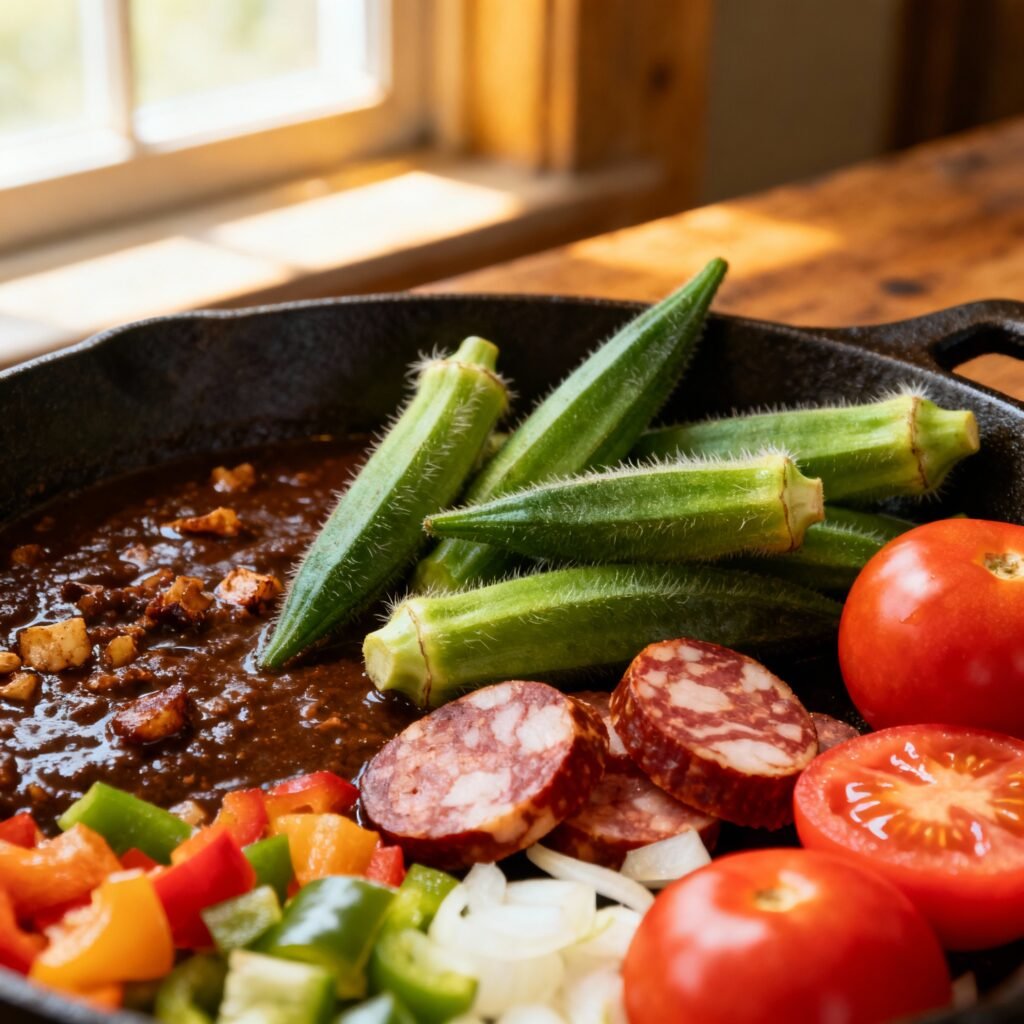
Instructions
- Make the Roux: In a large, heavy-bottomed pot or Dutch oven, heat the oil over medium heat. Gradually whisk in the flour, ensuring there are no lumps. Reduce the heat to medium-low and cook, stirring constantly, until the roux is a deep, chocolate-brown color. This will take about 30-45 minutes. Be patient and stir constantly to prevent burning. A burnt roux will ruin the gumbo. The color should resemble dark chocolate.
- Sauté the Trinity: Once the roux is the desired color, add the onion, bell pepper, and celery to the pot. Sauté until softened, about 8-10 minutes. Add the minced garlic and cook for another minute until fragrant.
- Add Sausage and Chicken: Add the andouille sausage and chicken thighs to the pot. Cook until the chicken is browned on all sides, about 5-7 minutes.
- Deglaze and Simmer: Gradually pour in the chicken broth, scraping up any browned bits from the bottom of the pot. Add the diced tomatoes, Creole seasoning, thyme, oregano, cayenne pepper, bay leaf, salt, and pepper. Bring to a boil, then reduce the heat to low, cover, and simmer for at least 1.5-2 hours, or even longer for a richer flavor. The longer it simmers, the better it gets! Stir occasionally to prevent sticking.
- Adjust Seasoning: After simmering, taste and adjust the seasoning as needed. Add more Creole seasoning, salt, pepper, or cayenne pepper to taste. If using shrimp, add it during the last 30 minutes of cooking.
- Serve: Remove the bay leaf. Serve the gumbo hot over cooked white rice. Garnish with chopped green onions and a dash of hot sauce, if desired. You can also thicken the gumbo with file powder, stirring in a small amount at a time until the desired consistency is reached.
Tips for Success
- Don’t Rush the Roux: The roux is the key to a great gumbo. Take your time and don’t be afraid to cook it until it’s a deep, dark brown.
- Use Quality Ingredients: Fresh vegetables and good-quality sausage will make a big difference in the flavor of your gumbo.
- Taste and Adjust: Seasoning is crucial. Taste the gumbo frequently and adjust the seasoning to your liking.
- Simmer, Simmer, Simmer: The longer the gumbo simmers, the more the flavors will meld and deepen.
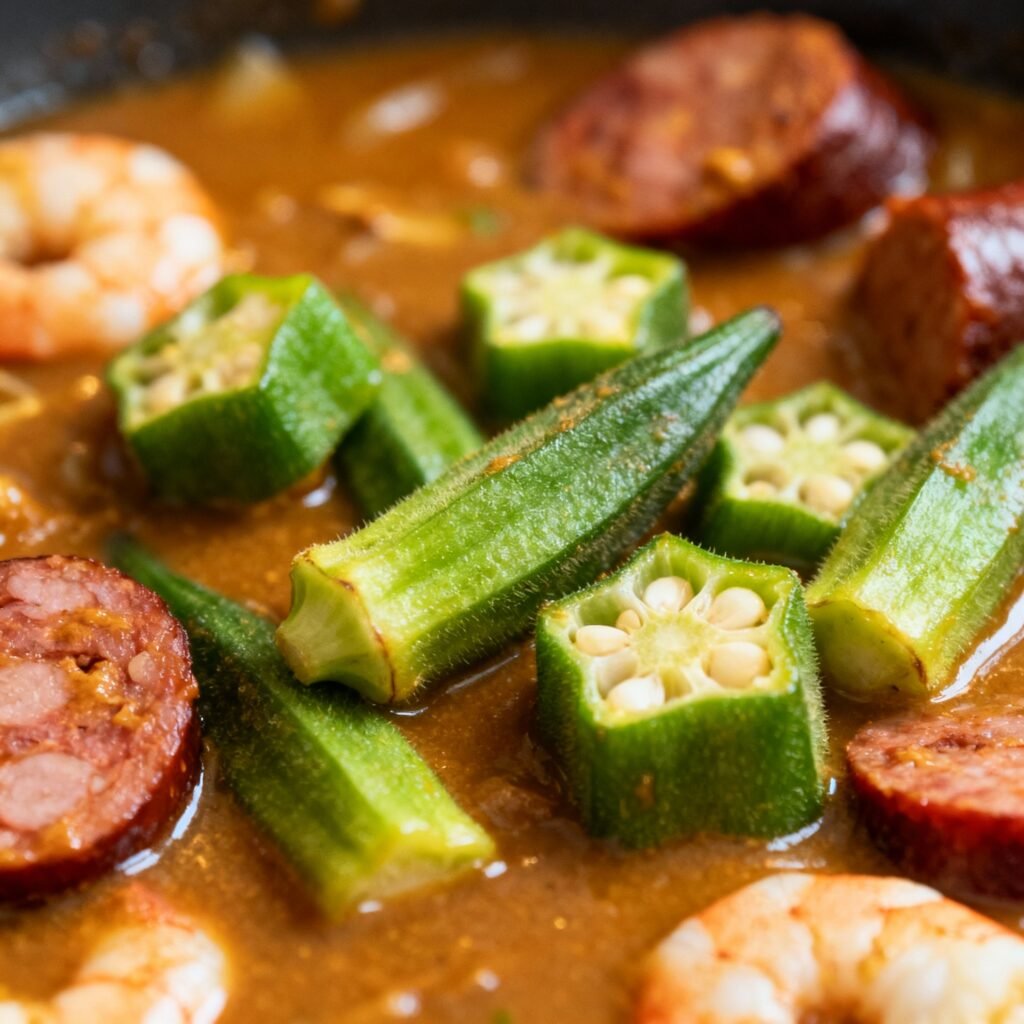
- Don’t Be Afraid to Experiment: This recipe is a guideline. Feel free to add other vegetables, proteins, or spices to create your own unique gumbo. Some people like to add okra, others prefer seafood gumbo. The possibilities are endless!
Storage Instructions
Refrigerate: Allow the gumbo to cool completely before storing it in an airtight container in the refrigerator for up to 3-4 days.
Freeze: Gumbo freezes well. Allow it to cool completely before transferring it to freezer-safe containers. Freeze for up to 2-3 months. Thaw overnight in the refrigerator before reheating.
Reheating: Reheat the gumbo over medium heat on the stovetop, stirring occasionally, until heated through. You may need to add a little broth if it has thickened too much.
FAQ
- Can I use a different type of sausage? Yes, you can use any type of smoked sausage you like. Andouille sausage is traditional, but other options include kielbasa or chorizo.
- Can I make this vegetarian? While traditionally gumbo includes meat, you can create a delicious vegetarian version by omitting the sausage and chicken and adding more vegetables, such as okra, mushrooms, and sweet potatoes. Use vegetable broth instead of chicken broth.
- What is file powder? File powder is ground sassafras leaves, traditionally used as a thickening agent and flavor enhancer in gumbo. It has a slightly earthy flavor. Use sparingly, as it can become bitter if overused.
- Why is my roux lumpy? Lumpy roux is usually caused by adding the flour to the oil too quickly or not stirring constantly. If your roux is lumpy, you can try whisking it vigorously or using an immersion blender to smooth it out.
- Can I make this in a slow cooker? Yes, you can adapt this recipe for a slow cooker. Follow steps 1-3 in a skillet on the stovetop, then transfer everything to a slow cooker. Add the remaining ingredients and cook on low for 6-8 hours or on high for 3-4 hours.
Conclusion
Making authentic gumbo is a labor of love, but the result is well worth the effort. This recipe provides a solid foundation for creating a truly memorable and flavorful gumbo that will transport you to the heart of Louisiana. So, gather your ingredients, put on some zydeco music, and get ready to experience the soulful flavors of gumbo!