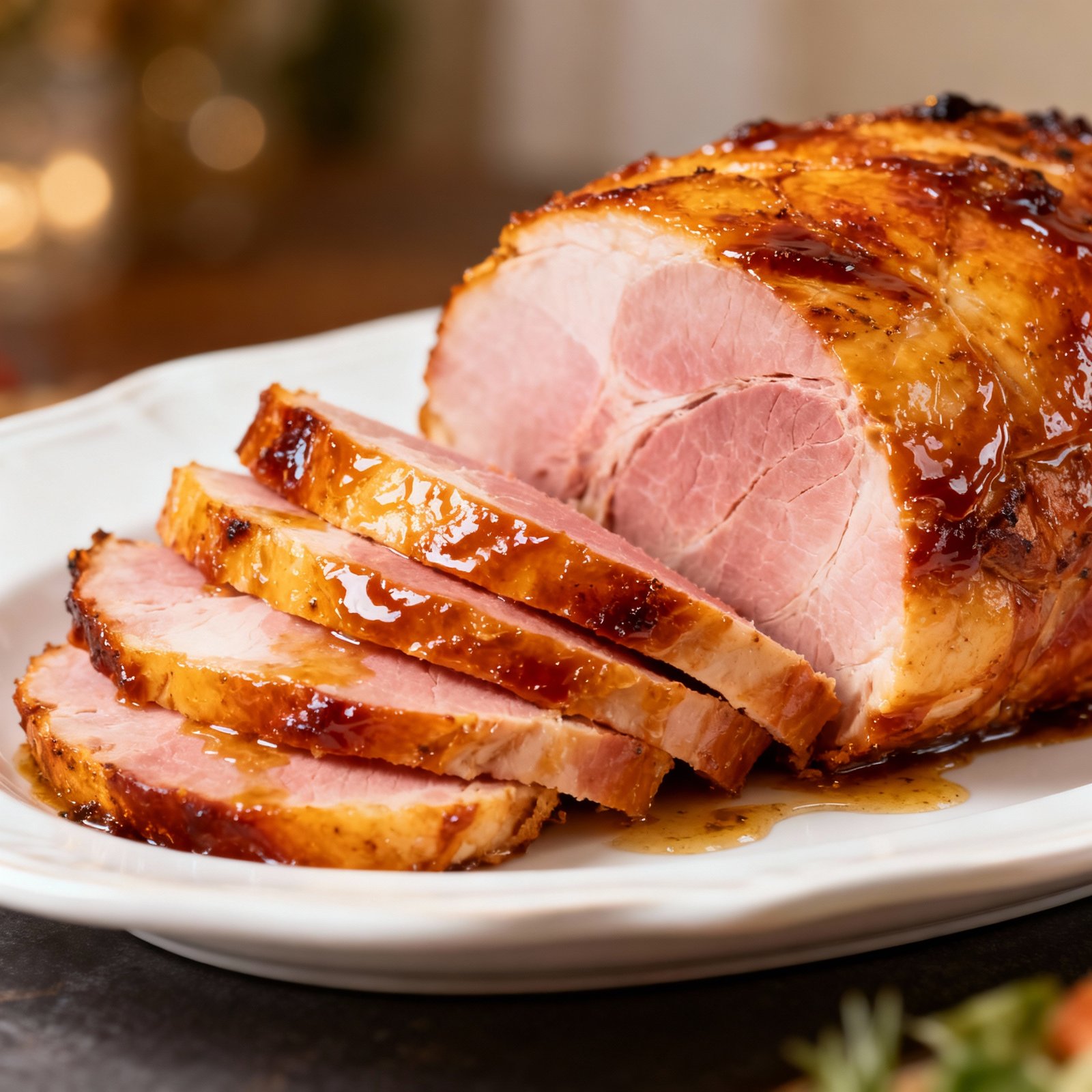
Baked Ham Recipe: The Ultimate Holiday Centerpiece
Is there anything that screams “holiday feast” quite like a perfectly baked ham? The glistening glaze, the savory aroma filling your kitchen, and the tender, juicy slices melting in your mouth – it’s a culinary experience that brings everyone to the table. But baking a ham can sometimes feel intimidating. Fear not! This recipe takes the guesswork out of the process, delivering a show-stopping ham that’s both incredibly delicious and surprisingly easy to make. Whether you’re hosting Thanksgiving, Christmas, Easter, or just a special Sunday dinner, this baked ham will be the star of the show.
Why This Recipe Works
This recipe isn’t just about throwing a ham in the oven and hoping for the best. It’s built on a few key principles that ensure a consistently perfect outcome:
- Proper Ham Selection: We’ll guide you through choosing the right type of ham for your needs, understanding the differences between bone-in and boneless, and fully cooked versus partially cooked.
- Low and Slow Baking: Cooking the ham at a lower temperature for a longer period allows the flavors to develop fully and keeps the ham moist and tender. This prevents the ham from drying out, a common pitfall when baking at higher temperatures.
- A Flavorful Glaze: The glaze is the key to that beautiful, caramelized crust and adds layers of flavor. Our glaze strikes the perfect balance of sweet, savory, and tangy, complementing the natural flavors of the ham. We’ll discuss variations and substitutions to tailor the glaze to your personal preferences.
- Strategic Glazing: Applying the glaze in stages ensures a thick, even coating that adheres beautifully to the ham. This gradual application also prevents the glaze from burning.
- Resting Time: Allowing the ham to rest after baking is crucial for retaining its juices and making it easier to carve.
Ingredients
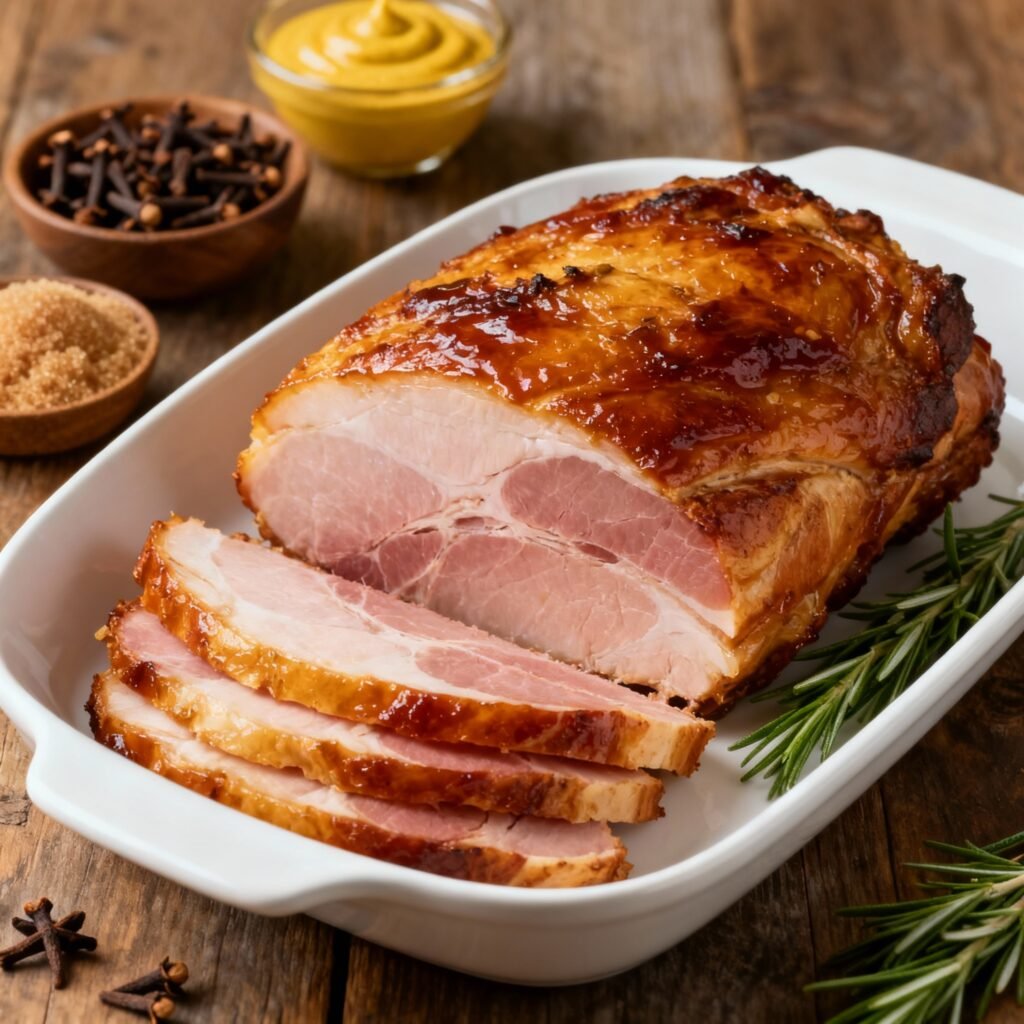
- Ham: 1 (8-10 pound) fully cooked, bone-in or boneless ham. A spiral-cut ham is also acceptable and will speed up the glazing process.
- Brown Sugar: 1 cup, packed. Light or dark brown sugar works well.
- Dijon Mustard: 1/4 cup. Adds a tangy depth to the glaze.
- Honey: 1/4 cup. Provides sweetness and helps the glaze caramelize.
- Apple Cider Vinegar: 2 tablespoons. The acidity balances the sweetness and adds complexity.
- Pineapple Juice: 1/4 cup. Adds sweetness and tropical flavor. Can substitute with orange juice or apple juice.
- Ground Cloves: 1/2 teaspoon. A classic ham spice that adds warmth.
- Water: 1/2 cup. For the baking pan to keep the ham moist.
Instructions
- Preheat the Oven: Preheat your oven to 325°F (160°C).
- Prepare the Ham: Remove the ham from its packaging and pat it dry with paper towels. If your ham has a tough skin, you can score it in a diamond pattern with a sharp knife. Be careful not to cut too deep.
- Prepare the Baking Pan: Place the ham in a large roasting pan. Add 1/2 cup of water to the bottom of the pan. This will help to create steam and keep the ham moist.
- Cover and Bake: Cover the ham tightly with aluminum foil. Bake for 10-12 minutes per pound. For an 8-pound ham, this will be approximately 1 hour and 20 minutes to 1 hour and 40 minutes.
- Prepare the Glaze: While the ham is baking, prepare the glaze. In a saucepan over medium heat, combine the brown sugar, Dijon mustard, honey, apple cider vinegar, pineapple juice, and ground cloves. Bring to a simmer, stirring constantly, until the sugar is dissolved and the glaze is slightly thickened, about 5-7 minutes.
- Glaze the Ham: Remove the ham from the oven and carefully remove the foil. Increase the oven temperature to 425°F (220°C). Brush about one-third of the glaze evenly over the ham.
- Bake and Glaze Again: Return the ham to the oven, uncovered, and bake for 10 minutes. Remove the ham from the oven and brush with another third of the glaze.
- Final Bake and Glaze: Bake for another 10 minutes, then brush with the remaining glaze. Bake for a final 5-10 minutes, or until the glaze is bubbly and caramelized. Keep a close eye on it to prevent burning.
- Rest the Ham: Remove the ham from the oven and let it rest for at least 15-20 minutes before carving. This allows the juices to redistribute, resulting in a more tender and flavorful ham.
- Carve and Serve: Carve the ham against the grain and serve immediately.
Tips for Success
- Use a Meat Thermometer: The best way to ensure your ham is cooked to the proper temperature is to use a meat thermometer. Insert the thermometer into the thickest part of the ham, avoiding the bone. A fully cooked ham is safe to eat when it reaches an internal temperature of 140°F (60°C).
- Don’t Overbake: Overbaking will result in a dry, tough ham. Use a meat thermometer and follow the baking times closely.
- Customize the Glaze: Feel free to experiment with different flavors in your glaze. Try adding a pinch of cayenne pepper for a little heat, or substituting maple syrup for the honey. Other fruit juices, such as orange or cherry, can also be used.
- Use a Roasting Rack: Placing the ham on a roasting rack inside the pan will allow for better air circulation and prevent the bottom of the ham from becoming soggy.
- Save the Ham Bone: Don’t throw away the ham bone! It can be used to make a flavorful ham stock for soups and stews.
Storage Instructions
Leftover ham should be stored in an airtight container in the refrigerator for up to 5 days. You can also freeze leftover ham for up to 2-3 months. Wrap the ham tightly in plastic wrap and then in aluminum foil before freezing.
FAQ
Q: What kind of ham should I buy?
A: This recipe works well with both bone-in and boneless hams. Bone-in hams tend to be more flavorful, while boneless hams are easier to carve. Spiral-cut hams are a convenient option as they are already pre-sliced, making them easier to glaze and serve.
Q: Can I make this recipe ahead of time?
A: While you can’t bake the ham completely ahead of time, you can prepare the glaze a day or two in advance and store it in the refrigerator. This will save you time on the day of your event.
Q: My glaze is burning. What should I do?
A: If your glaze is burning, immediately lower the oven temperature or cover the ham loosely with aluminum foil. You can also try moving the ham to a lower rack in the oven.
Q: Can I use a different type of mustard?
A: Yes, you can substitute other types of mustard, such as stone-ground mustard or yellow mustard, but the flavor will be slightly different. Dijon mustard provides a nice balance of tanginess and flavor.
Q: How do I carve a ham?
A: To carve a bone-in ham, start by slicing a small wedge from the side of the ham. Then, cut along the bone to release the meat. Slice the ham into thin, even slices, working your way around the bone. For a boneless ham, simply slice the ham into thin, even slices.
Conclusion
With this recipe and a few simple tips, you can confidently bake a ham that will impress your family and friends. The combination of a flavorful glaze, low and slow baking, and proper resting time ensures a tender, juicy, and incredibly delicious ham every time. So, gather your ingredients, preheat your oven, and get ready to create a holiday centerpiece that will be remembered for years to come. Enjoy!