Best Ceviche Recipe: The Zesty Secret to Summer
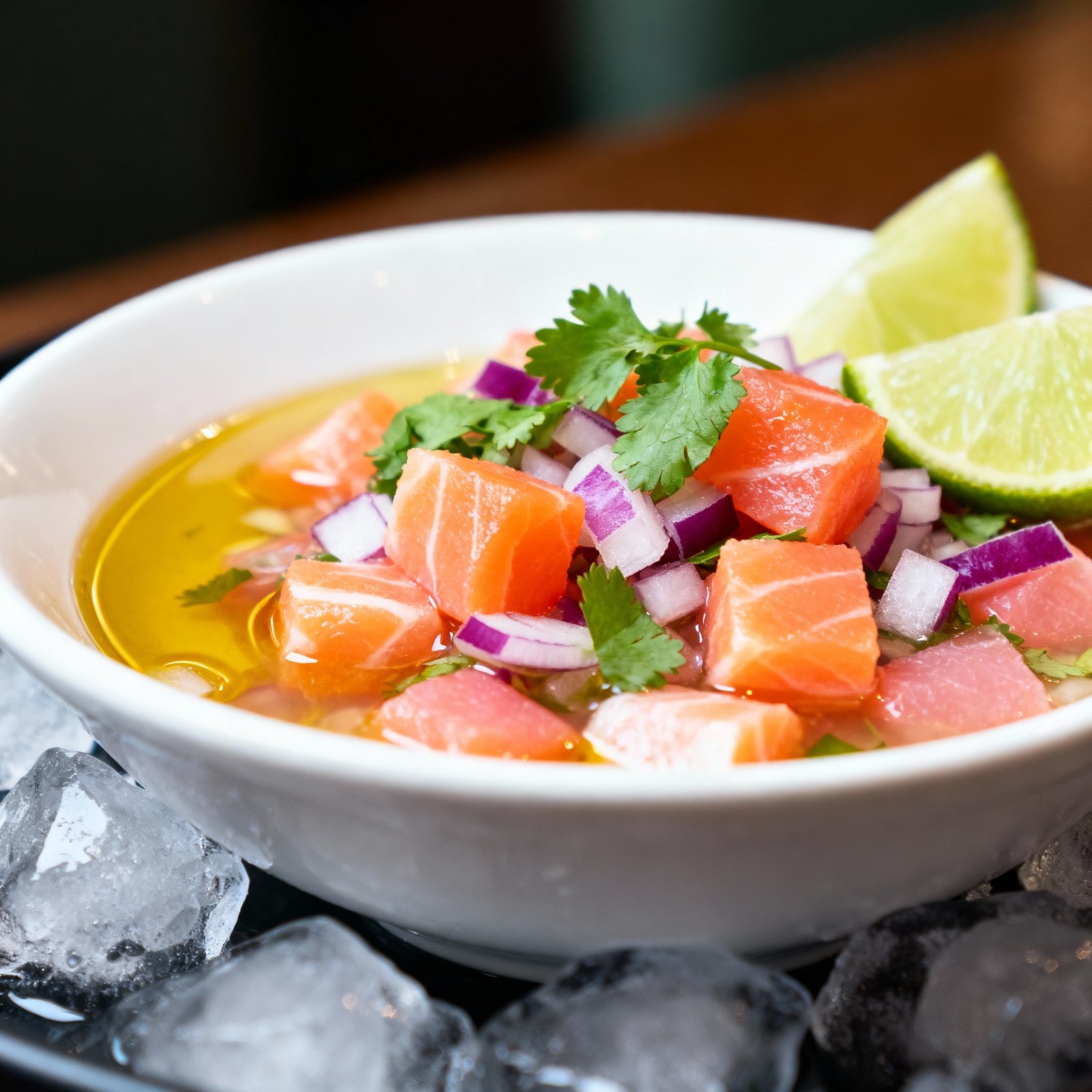
Ceviche. Just the word conjures up images of sun-drenched beaches, icy-cold drinks, and the freshest seafood imaginable. This vibrant and refreshing dish, originating from Latin America, is a culinary masterpiece built on simplicity: raw fish “cooked” in citrus juice, bursting with flavor thanks to the addition of onions, peppers, and herbs. But achieving ceviche perfection isn’t just about throwing ingredients together. It’s about understanding the delicate balance of flavors, the science behind the “cooking” process, and sourcing the absolute best ingredients. This recipe isn’t just good; it’s the *best* ceviche recipe you’ll ever try. We’ve spent years perfecting it, incorporating techniques learned from chefs across Latin America, and we’re ready to share our secrets with you.
Why This Recipe Works
Many ceviche recipes fall short. They might be too sour, too bland, or result in fish that’s either mushy or still too raw. Our recipe avoids these pitfalls by focusing on several key factors:
- Precise Lime Juice Ratio: The amount of lime juice is crucial. Too much, and the fish becomes overly acidic and breaks down too much; too little, and it won’t properly “cook” and could be unsafe to eat. We’ve perfected the ratio to ensure the fish is perfectly tender and flavorful.
- High-Quality Ingredients: This cannot be stressed enough. The quality of your fish and limes directly impacts the final product. Fresh, sustainably sourced fish and juicy, ripe limes are non-negotiable.
- Proper Marinating Time: Marinating time is a balancing act. We’ve found the sweet spot where the fish is cooked through without becoming rubbery.
- Flavor Layering: We don’t just rely on lime juice. We incorporate other flavors like ginger, garlic, and cilantro stems early in the marinating process to build a complex and nuanced flavor profile.
- Temperature Control: Keeping everything ice-cold is essential for both food safety and texture. We use ice baths to maintain the optimal temperature throughout the preparation process.
Ingredients
- 1 pound sushi-grade white fish (such as snapper, sea bass, or halibut), cut into 1/2-inch cubes
- 1 1/2 cups freshly squeezed lime juice (from about 10-12 limes)
- 1/2 cup red onion, thinly sliced
- 1/2 cup cilantro, roughly chopped (stems reserved)
- 1 jalapeño pepper, seeded and finely minced (adjust to taste)
- 1 clove garlic, minced
- 1 teaspoon grated fresh ginger
- 1/2 teaspoon sea salt, plus more to taste
- 1/4 teaspoon freshly ground black pepper
- 1 ripe avocado, diced (for serving)
- Tortilla chips or tostadas (for serving)
- Optional garnishes: Hot sauce, sliced radishes, microgreens
Instructions
- Prepare the Fish: Gently rinse the cubed fish under cold water and pat it dry with paper towels. Place the fish in a non-reactive bowl (glass or stainless steel).
- Infuse the Flavor: Add the minced garlic, grated ginger, cilantro stems, salt, and pepper to the bowl with the fish. Toss gently to combine. These ingredients will infuse the fish with flavor during the initial marinating stage.
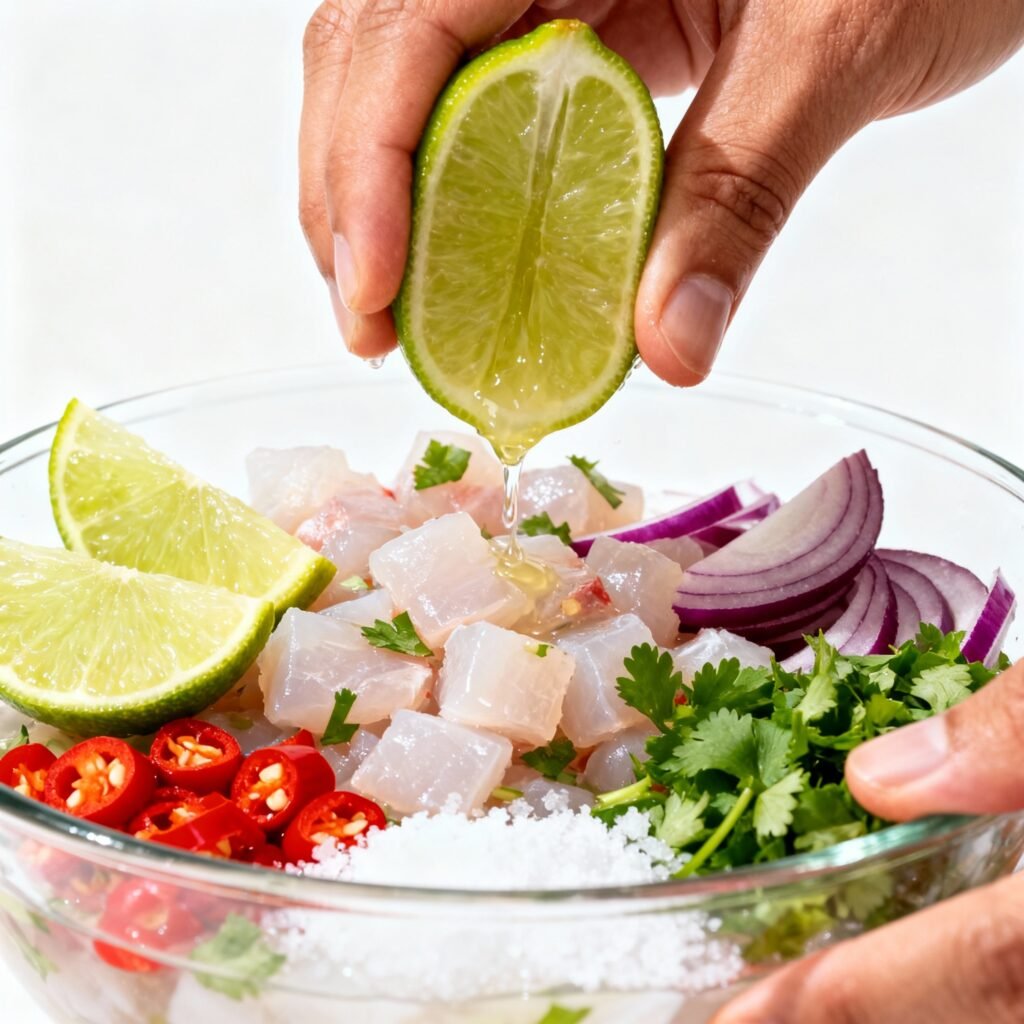
- Marinate with Lime Juice: Pour the freshly squeezed lime juice over the fish, ensuring that all the pieces are submerged. Gently stir to coat.
- Chill and “Cook”: Cover the bowl with plastic wrap, pressing it directly onto the surface of the fish to prevent oxidation. Place the bowl in an ice bath (a larger bowl filled with ice and a little water) and refrigerate for 25-30 minutes. This allows the lime juice to “cook” the fish while keeping it cold and preventing it from becoming mushy.
- Add the Aromatics: After 25-30 minutes, remove the bowl from the refrigerator and ice bath. Drain off about half of the lime juice (this helps prevent it from becoming too acidic). Add the thinly sliced red onion and minced jalapeño to the bowl. Gently stir to combine.
- Final Marinating Time: Cover the bowl again and refrigerate for another 10-15 minutes, or until the fish is opaque and firm to the touch.
- Incorporate Fresh Herbs: Remove the ceviche from the refrigerator. Discard the cilantro stems. Stir in the chopped cilantro. Taste and adjust seasoning with salt and pepper, if needed.
- Serve Immediately: Spoon the ceviche into bowls or onto tostadas. Top with diced avocado and any other desired garnishes. Serve immediately with tortilla chips or tostadas.
Tips for Success
- Source the Freshest Fish: This is the most important tip. Your fish should smell fresh and clean, not fishy. Ask your fishmonger for sushi-grade fish that’s been handled properly.
- Use Freshly Squeezed Lime Juice: Bottled lime juice simply doesn’t compare in terms of flavor. Freshly squeezed lime juice is brighter and more vibrant.
- Don’t Over-Marinate: Over-marinating will result in a mushy texture. Stick to the recommended marinating times.
- Taste as You Go: Adjust the amount of jalapeño to your preferred level of spiciness. Taste the ceviche throughout the marinating process and adjust the seasoning as needed.
- Keep Everything Cold: Maintaining a cold temperature is crucial for both food safety and texture. Use an ice bath during the marinating process.
- Prep Ahead: You can prepare the red onion and jalapeño ahead of time. However, wait to add the lime juice until just before you’re ready to marinate the fish.
Storage Instructions
Ceviche is best consumed immediately after preparation. However, if you have leftovers, they can be stored in an airtight container in the refrigerator for up to 24 hours. Be aware that the texture of the fish will continue to change as it sits in the lime juice, so it will likely be less firm the next day. It’s generally not recommended to freeze ceviche.
FAQ
- Can I use frozen fish? Yes, you can use frozen fish, but it’s essential to thaw it properly in the refrigerator overnight. Make sure the fish is sushi-grade and of high quality.
- What if I don’t like jalapeños? You can substitute another type of pepper, such as serrano or habanero, or omit it altogether.
- Can I use lemon juice instead of lime juice? While you *can* use lemon juice, it will significantly alter the flavor profile. Lime juice is traditional and provides the characteristic ceviche tang.
- I’m allergic to cilantro. What can I substitute? You can substitute parsley or omit the cilantro altogether.
- Is ceviche safe to eat? When prepared properly with sushi-grade fish and fresh ingredients, ceviche is generally safe to eat. However, it’s important to follow food safety guidelines and ensure that the fish is properly “cooked” in the lime juice.
Conclusion
This ceviche recipe is more than just a set of instructions; it’s a gateway to experiencing the vibrant flavors of Latin America. By following these steps and using the freshest ingredients, you can create a truly unforgettable dish that’s perfect for summer gatherings, light lunches, or a refreshing appetizer. So, gather your ingredients, invite some friends, and get ready to enjoy the best ceviche you’ve ever tasted!