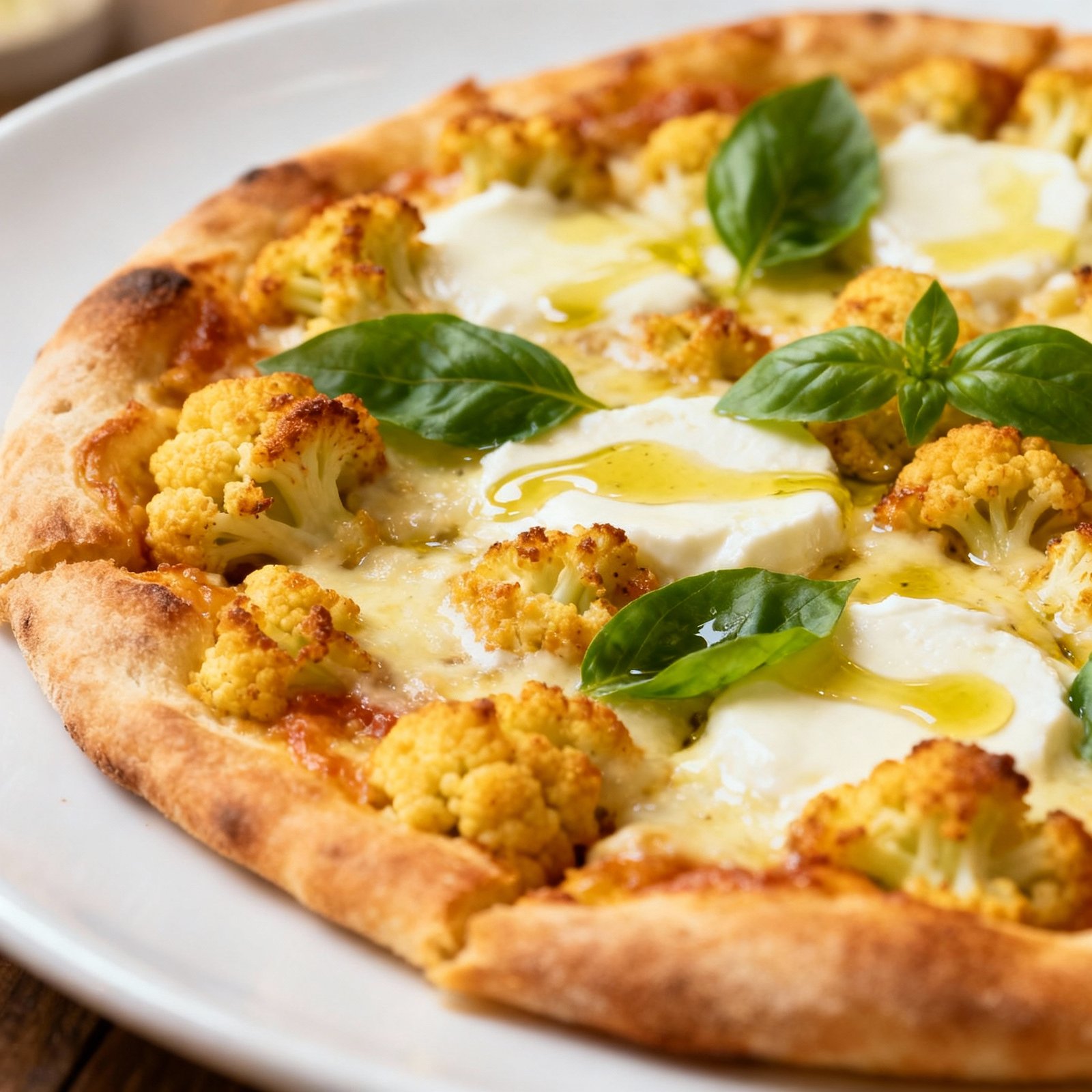
Cauliflower Pizza Recipe: Guilt-Free Deliciousness!
Craving pizza but trying to keep things healthy? Look no further! This cauliflower pizza recipe delivers all the satisfying flavors of your favorite pizza, but with a fraction of the carbs and a boost of nutrients. Forget those soggy, flavorless cauliflower crusts you might have tried before. This recipe creates a surprisingly sturdy and delicious crust that you’ll actually *want* to eat. It’s perfect for gluten-free eaters, low-carb dieters, or anyone simply looking for a healthier alternative to traditional pizza.
Why This Recipe Works
This isn’t your average cauliflower pizza crust. We’ve developed a method that addresses the common pitfalls of cauliflower crusts, resulting in a pizza that’s crispy, flavorful, and holds its shape. Here’s why this recipe stands out:
- Thorough Moisture Removal: The key to a crispy cauliflower crust is removing as much moisture as possible. We achieve this through a combination of steaming/boiling, ricing, and squeezing out excess water using a cheesecloth or clean kitchen towel. This step is absolutely crucial!
- Binding Agents: We use a combination of eggs and mozzarella cheese to bind the cauliflower rice together. The eggs provide structure and help the crust crisp up, while the mozzarella adds flavor and contributes to the overall texture. A touch of Parmesan cheese adds a salty, nutty depth.
- Oven Temperature and Technique: Baking the crust at a high temperature (400°F/200°C) ensures that it crisps up properly. Pre-baking the crust before adding toppings allows it to set and prevents it from becoming soggy under the weight of the toppings.
- Simple, Flavorful Toppings: While you can customize the toppings to your liking, we’ve suggested a classic combination of tomato sauce, mozzarella, and basil that complements the cauliflower crust perfectly.
Ingredients
- For the Cauliflower Crust:
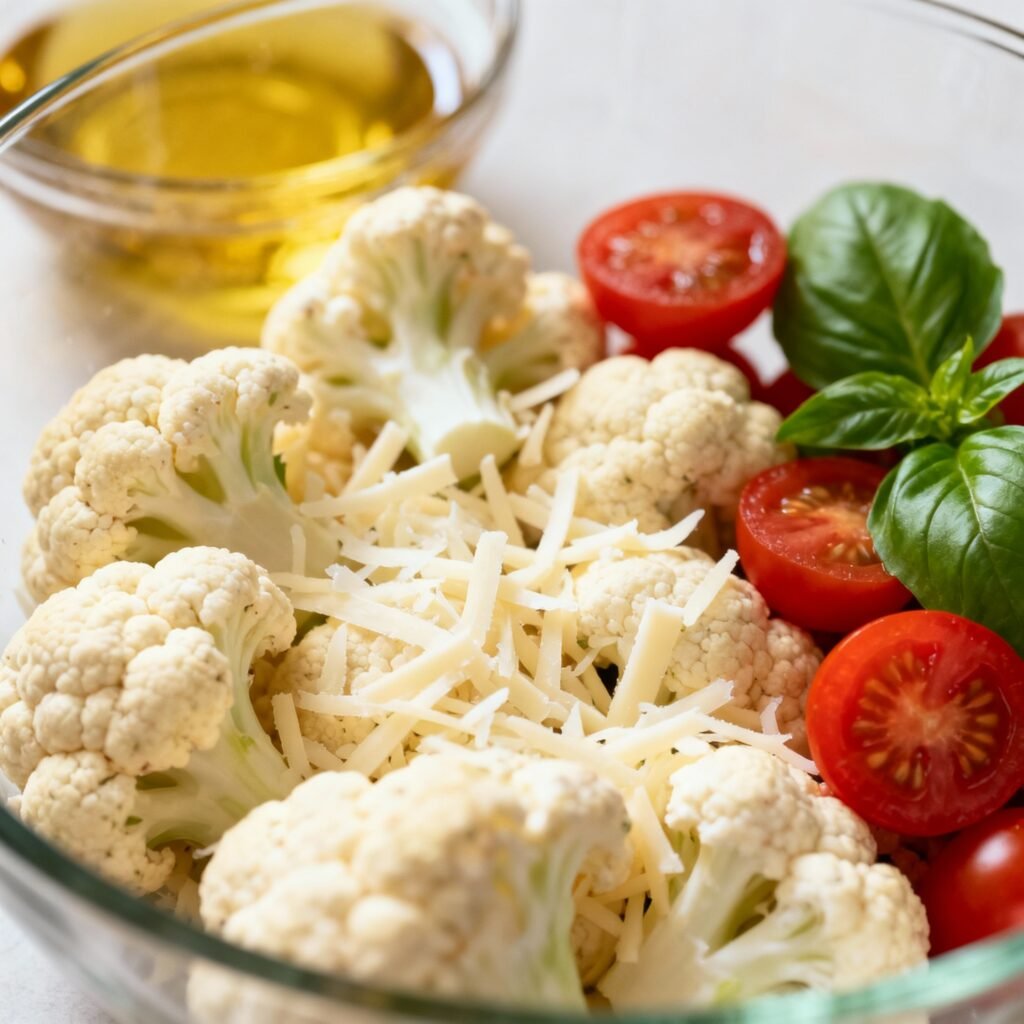
- 1 large head of cauliflower (about 2 pounds), cut into florets
- 1 large egg, lightly beaten
- 1 cup shredded mozzarella cheese
- 1/4 cup grated Parmesan cheese
- 1 teaspoon dried oregano
- 1/2 teaspoon garlic powder
- 1/4 teaspoon salt
- 1/4 teaspoon black pepper
- For the Pizza Toppings:
- 1/2 cup tomato sauce
- 1 1/2 cups shredded mozzarella cheese
- Fresh basil leaves, for garnish (optional)
- Your favorite pizza toppings (pepperoni, mushrooms, olives, etc.)
Instructions
- Prepare the Cauliflower: Bring a large pot of salted water to a boil. Add the cauliflower florets and cook until tender, about 8-10 minutes. Alternatively, steam the cauliflower florets until tender.
- Rice the Cauliflower: Drain the cauliflower well. Using a food processor, pulse the cooked cauliflower until it resembles rice. Be careful not to over-process it into a puree. If you don’t have a food processor, you can use a box grater to rice the cauliflower.
- Remove Excess Moisture: Place the riced cauliflower in a clean cheesecloth or kitchen towel. Squeeze out as much moisture as possible. This is a crucial step for a crispy crust! You may need to do this in batches. The drier the cauliflower, the better the crust will be.
- Make the Crust Dough: In a large bowl, combine the squeezed-out cauliflower rice, egg, mozzarella cheese, Parmesan cheese, oregano, garlic powder, salt, and pepper. Mix well until everything is evenly combined.
- Shape the Crust: Preheat oven to 400°F (200°C). Line a baking sheet with parchment paper. Transfer the cauliflower mixture onto the prepared baking sheet. Shape it into a 12-inch circle, about 1/4 inch thick.
- Pre-bake the Crust: Bake the crust for 20-25 minutes, or until golden brown and slightly firm.
- Add Toppings: Remove the crust from the oven. Spread the tomato sauce evenly over the pre-baked crust. Sprinkle with mozzarella cheese and any other desired toppings.
- Bake the Pizza: Return the pizza to the oven and bake for another 10-15 minutes, or until the cheese is melted and bubbly and the crust is golden brown.
- Serve: Remove the pizza from the oven and let it cool for a few minutes before slicing and serving. Garnish with fresh basil leaves, if desired.
Tips for Success
- Don’t Skip the Moisture Removal: We can’t stress this enough! This is the most important step for achieving a crispy crust. Squeeze, squeeze, squeeze!
- Use Freshly Grated Cheese: Pre-shredded cheese often contains cellulose, which can prevent it from melting properly. Freshly grated cheese will melt more smoothly and evenly.
- Don’t Overload the Crust: Too many toppings can weigh down the crust and make it soggy. Less is more!
- Experiment with Toppings: Feel free to get creative with your toppings! Try different cheeses, vegetables, meats, and sauces.
- Parchment Paper is Your Friend: Using parchment paper prevents the crust from sticking to the baking sheet and makes it easier to transfer the pizza.
- Adjust Baking Time as Needed: Oven temperatures can vary, so keep an eye on the pizza and adjust the baking time accordingly.
Storage Instructions
Leftover cauliflower pizza can be stored in the refrigerator for up to 3 days. To reheat, bake in a preheated oven at 350°F (175°C) for 5-10 minutes, or until heated through. You can also reheat it in a skillet over medium heat or in the microwave, although the crust may not be as crispy.
FAQ
- Can I use frozen cauliflower? While fresh cauliflower is preferred, you can use frozen cauliflower florets. Be sure to thaw them completely and squeeze out as much moisture as possible.
- Can I make this ahead of time? You can prepare the cauliflower crust dough ahead of time and store it in the refrigerator for up to 24 hours. However, it’s best to bake the crust and add the toppings just before serving.
- Can I freeze the cauliflower crust? Yes, you can freeze the pre-baked cauliflower crust. Wrap it tightly in plastic wrap and then in aluminum foil. It can be stored in the freezer for up to 2 months. Thaw completely before adding toppings and baking.
- What if my crust is still soggy? Make sure you’ve removed as much moisture as possible from the cauliflower. You can also try baking the crust for a longer period of time or at a slightly higher temperature.
- Can I use different cheeses? Absolutely! Feel free to experiment with different cheeses, such as provolone, cheddar, or feta.
Conclusion
This cauliflower pizza recipe is a game-changer for anyone looking for a healthier and delicious alternative to traditional pizza. With a few simple steps and some key tips, you can create a crispy, flavorful crust that will satisfy your pizza cravings without the guilt. So go ahead, give it a try and discover your new favorite pizza night staple!