Cilantro Pesto Recipe: Beyond Basil and Bursting with Flavor!
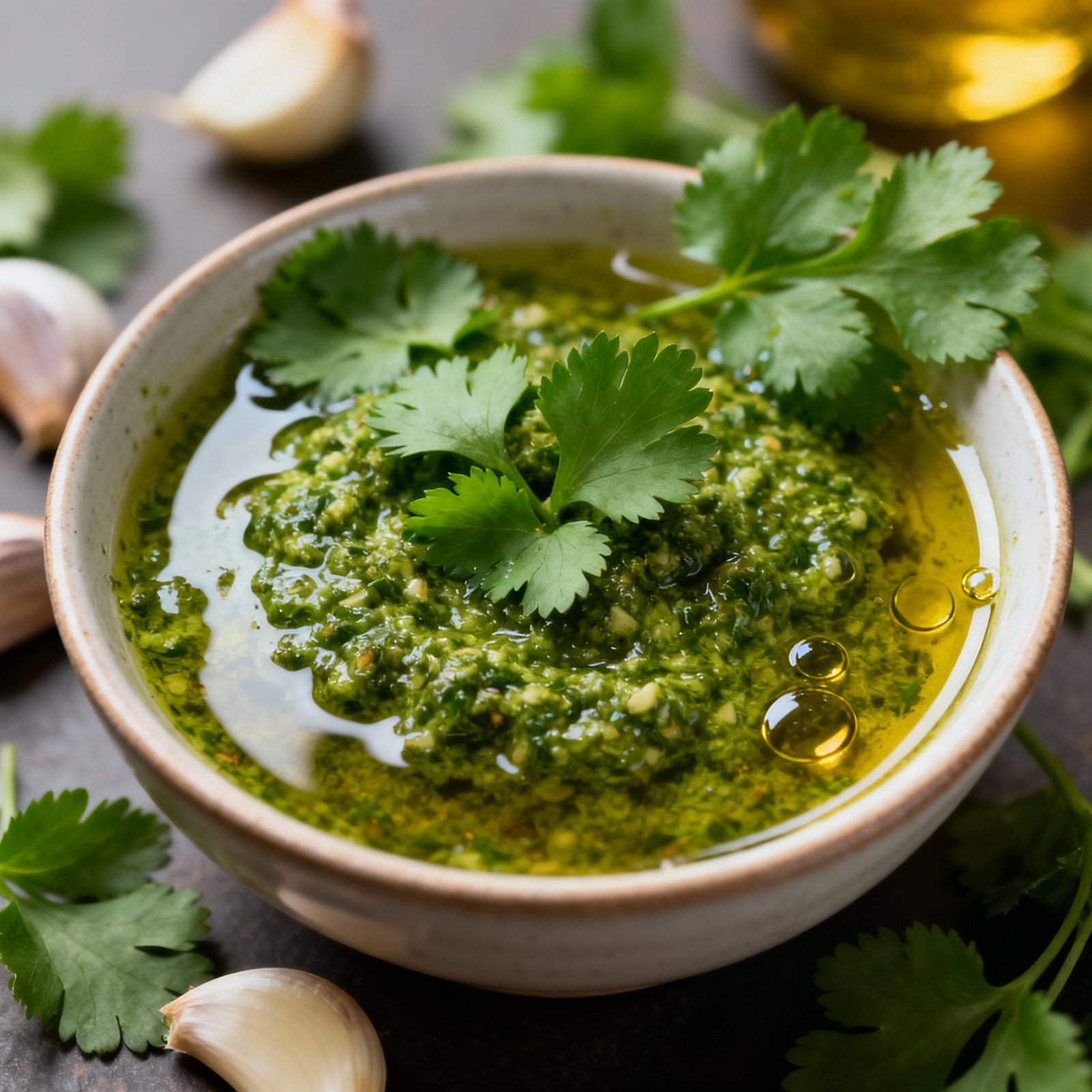
Tired of the same old basil pesto? Ready to shake up your pasta night or add a vibrant kick to your favorite dishes? Then get ready to fall in love with this Cilantro Pesto recipe! This isn’t just a substitute; it’s a delicious alternative that offers a bright, zesty, and slightly spicy twist on the classic. Cilantro, with its unique flavor profile, brings a fresh perspective to pesto, making it a versatile condiment you’ll want to use on everything.
Why This Recipe Works
This cilantro pesto recipe isn’t just about throwing ingredients into a food processor. It’s about achieving the perfect balance of flavors and textures. Here’s why it’s a winner:
- Flavor Harmony: The combination of cilantro, garlic, lime juice, and a touch of spice creates a complex and addictive flavor profile. It’s bright, herbaceous, and slightly tangy, making it incredibly versatile.
- Texture Perfection: We aim for a smooth yet slightly textured pesto. Using a food processor and adding olive oil gradually allows us to control the consistency, preventing it from becoming overly oily or pasty.
- Easy to Customize: This recipe is a fantastic base that you can adapt to your liking. Want it spicier? Add more jalapeño. Need it nuttier? Experiment with different nuts or seeds.
- Quick & Simple: From start to finish, this pesto comes together in under 10 minutes. It’s a perfect weeknight condiment to elevate any meal.
- Freezes Beautifully: Make a big batch and freeze it for later use. You’ll always have a burst of fresh flavor on hand.
Ingredients
Here’s what you’ll need to make this vibrant cilantro pesto:
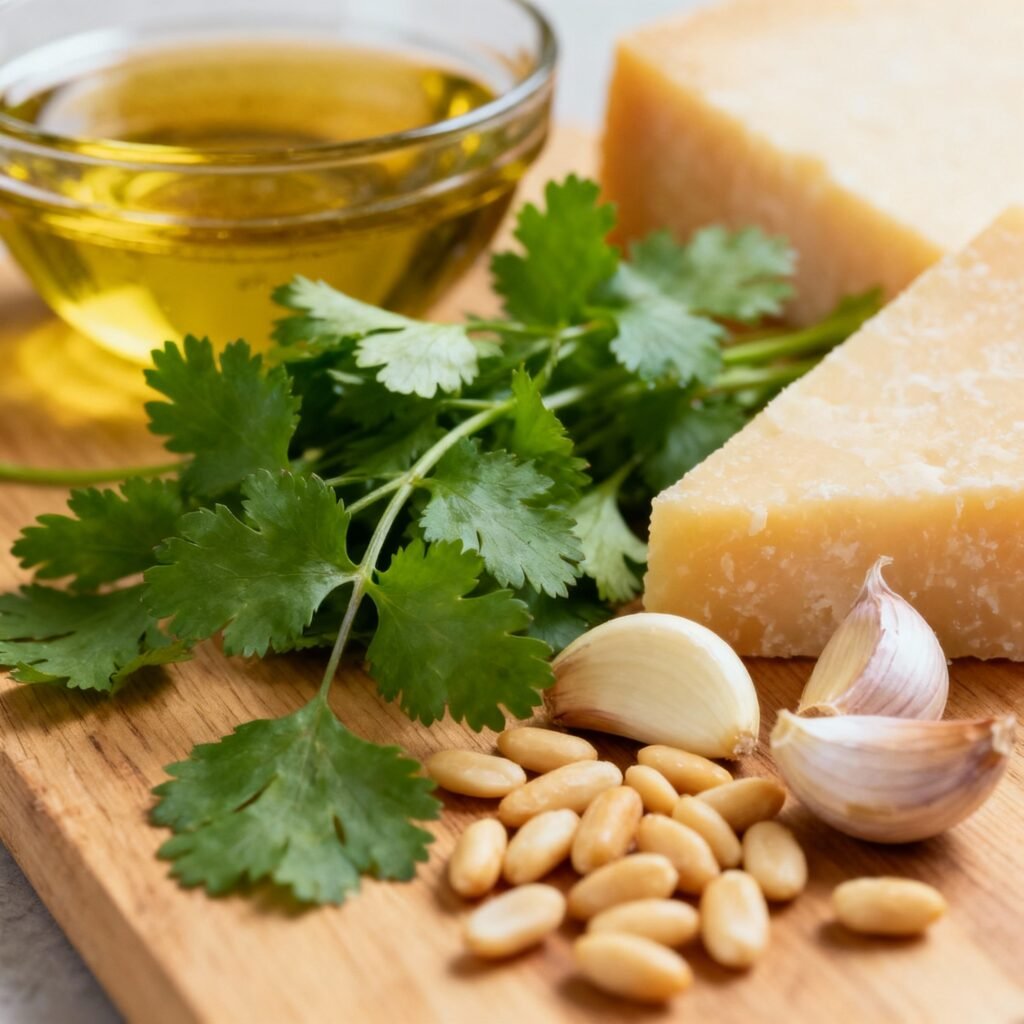
- 2 cups fresh cilantro leaves (packed): Be sure to wash and thoroughly dry the cilantro to prevent a watery pesto. Stems are okay, but the leaves are where the flavor is.
- 1/4 cup pine nuts (or walnuts, pecans, or pepitas): Pine nuts are traditional in pesto, but other nuts or seeds work beautifully. Toasting them lightly enhances their flavor.
- 2 cloves garlic, minced: Adjust to your taste preference. One clove offers a milder flavor, while two provide a more pungent kick.
- 1/4 cup grated Parmesan cheese (or nutritional yeast for vegan): Parmesan adds a salty, umami element. For a vegan option, nutritional yeast provides a cheesy flavor.
- 1/4 cup olive oil, plus more as needed: Use a good quality extra virgin olive oil for the best flavor.
- 1 tablespoon lime juice: The lime juice brightens the flavors and prevents the cilantro from oxidizing too quickly.
- 1/2 jalapeño, seeded and roughly chopped (optional): For a touch of heat. Remove the seeds for a milder flavor or leave them in for a spicier pesto.
- Salt and pepper to taste: Seasoning is crucial! Taste and adjust as needed.
Instructions
Follow these simple steps to create your own delicious cilantro pesto:
- Toast the Nuts (Optional): If using nuts or seeds, toast them in a dry skillet over medium heat for 3-5 minutes, or until lightly golden and fragrant. Watch them carefully as they can burn easily. Allow to cool slightly.
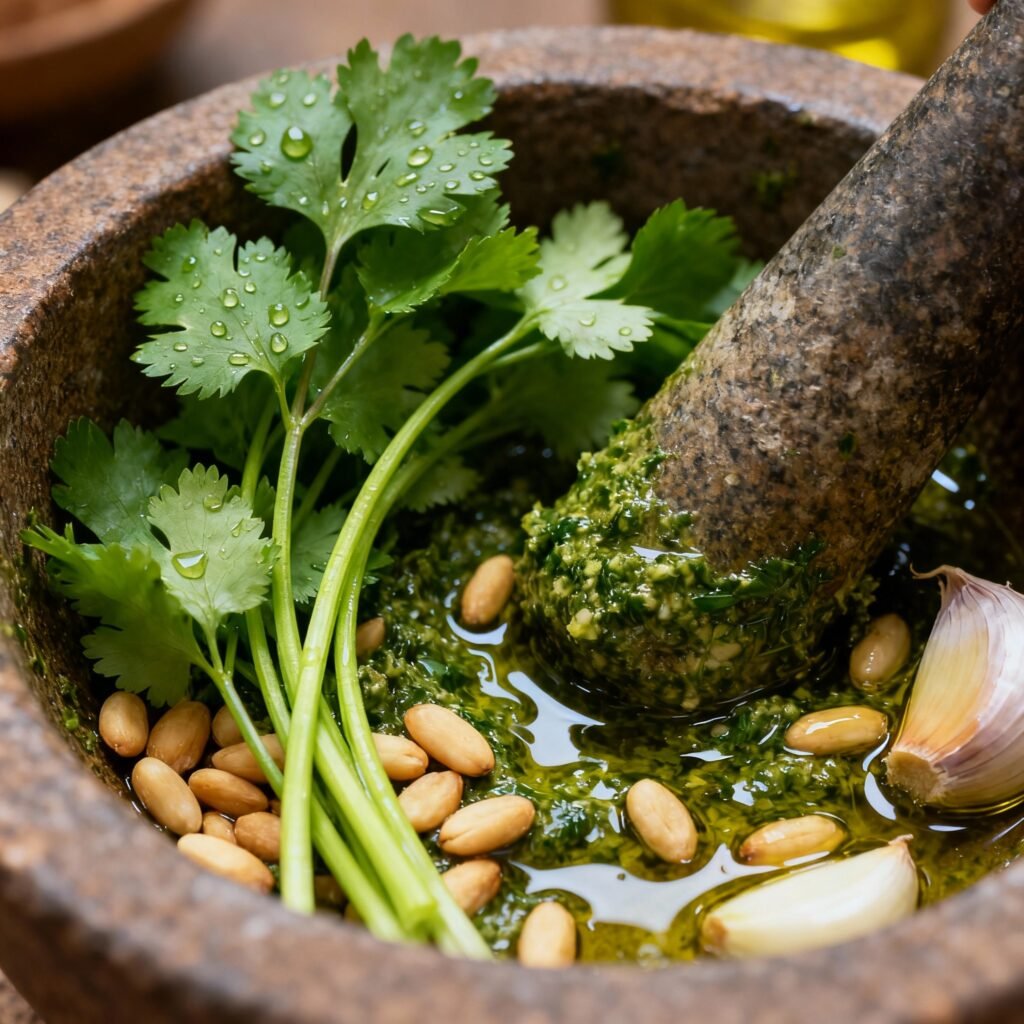
- Combine Ingredients: In a food processor, combine the cilantro, toasted nuts (or seeds), garlic, Parmesan cheese (or nutritional yeast), lime juice, and jalapeño (if using).
- Process Until Coarsely Chopped: Pulse the food processor until the ingredients are coarsely chopped.
- Stream in Olive Oil: With the food processor running, slowly drizzle in the olive oil until the pesto reaches your desired consistency. You may need to scrape down the sides of the bowl occasionally.
- Season to Taste: Season with salt and pepper to taste. Remember that the Parmesan cheese is already salty, so start with a small amount of salt and adjust accordingly.
- Adjust Consistency (If Needed): If the pesto is too thick, add a little more olive oil, one tablespoon at a time, until it reaches your desired consistency. If it’s too thin, add a few more nuts or cheese.
- Serve & Enjoy! Use immediately or store for later.
Tips for Success
Here are a few tips to ensure your cilantro pesto turns out perfectly every time:
- Use Fresh Ingredients: The quality of your ingredients will directly impact the flavor of your pesto. Use fresh cilantro, good quality olive oil, and freshly grated Parmesan cheese.
- Dry the Cilantro Thoroughly: Excess moisture can make your pesto watery. Use a salad spinner or pat the cilantro dry with paper towels before using it.
- Taste as You Go: Seasoning is key! Taste the pesto after each step and adjust the ingredients to your liking.
- Don’t Over-Process: Over-processing can result in a pesto that’s too smooth and pasty. Aim for a slightly textured consistency.
- Add a Pinch of Sugar (Optional): A tiny pinch of sugar can help balance the flavors and enhance the sweetness of the cilantro.
- Consider Lemon Juice: If you don’t have lime juice, lemon juice works as a good substitute.
Storage Instructions
Cilantro pesto is best enjoyed fresh, but it can be stored for later use:
- Refrigerator: Store the pesto in an airtight container in the refrigerator for up to 3-4 days. To prevent browning, drizzle a thin layer of olive oil over the top before sealing the container.
- Freezer: For longer storage, freeze the pesto in ice cube trays. Once frozen, transfer the pesto cubes to a freezer bag or container. This allows you to thaw only what you need. Frozen pesto can be stored for up to 3 months.
FAQ
Here are some frequently asked questions about cilantro pesto:
- Can I make this recipe without nuts? Yes! You can omit the nuts entirely or substitute them with seeds like pepitas (pumpkin seeds) or sunflower seeds.
- Can I make this recipe vegan? Absolutely! Simply substitute the Parmesan cheese with nutritional yeast.
- What can I use cilantro pesto on? The possibilities are endless! Try it on pasta, grilled chicken or fish, tacos, sandwiches, salads, eggs, or even as a dip for vegetables.
- Why did my pesto turn brown? Cilantro pesto can oxidize and turn brown over time. Adding lime juice helps prevent this, but it’s still best to use the pesto as soon as possible. Storing it with a layer of olive oil on top can also help.
- Can I use a blender instead of a food processor? While a food processor is ideal for achieving the right texture, you can use a blender in a pinch. You may need to add more olive oil to help the ingredients blend smoothly.
Conclusion
This Cilantro Pesto recipe is a game-changer. It’s a vibrant, flavorful, and versatile condiment that will elevate your cooking to the next level. Whether you’re looking for a fresh alternative to basil pesto or simply want to add a burst of flavor to your favorite dishes, this recipe is a must-try. So, grab your cilantro, fire up your food processor, and get ready to experience pesto in a whole new way!