🍳 The Best Duck Egg Recipe: Creamy, Rich & Easy
So, you’ve found yourself in possession of some duck eggs. Maybe you impulsively bought them at the farmers market because the carton looked cute, or maybe you’re just trying to be a little “extra” with your Sunday brunch. Either way, welcome to the club. You are about to ruin chicken eggs for yourself forever. Sorry, not sorry.
If you are craving something tasty but too lazy to spend forever in the kitchen, huh? Same. But here is the secret: duck eggs are the cheat code to gourmet cooking. They are bigger, richer, and frankly, they have a bit of an attitude compared to their humble chicken counterparts.
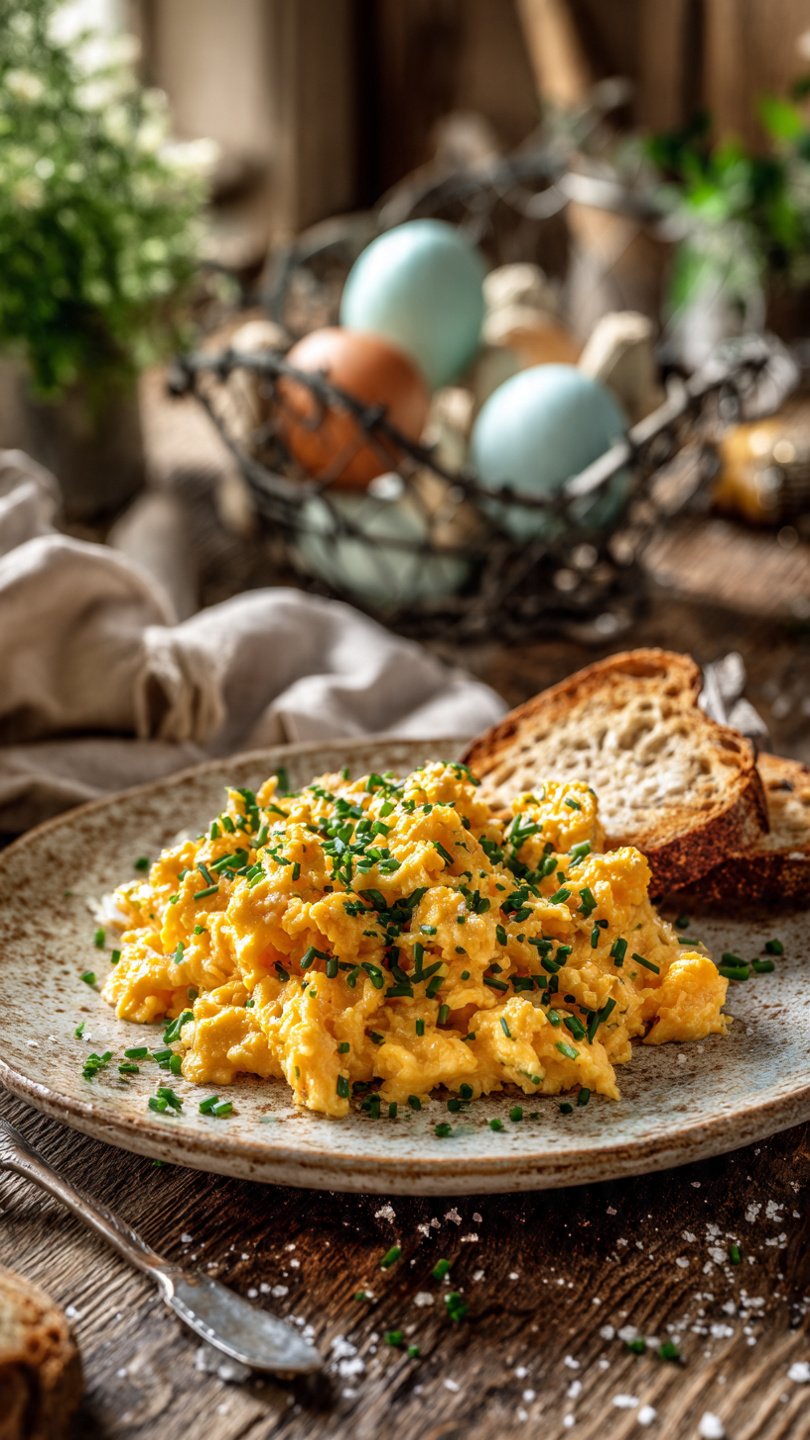
This isn’t just another breakfast tutorial; this is a manifesto on why you need more fat and flavor in your life. We are going to make the Creamiest, Dreamiest Scrambled Duck Eggs you have ever tasted. Put down the cereal box—we have work to do.
Why This Recipe is Awesome
Okay, let’s get real for a second. Why should you care about a duck egg recipe when chicken eggs are sitting right there in your fridge?
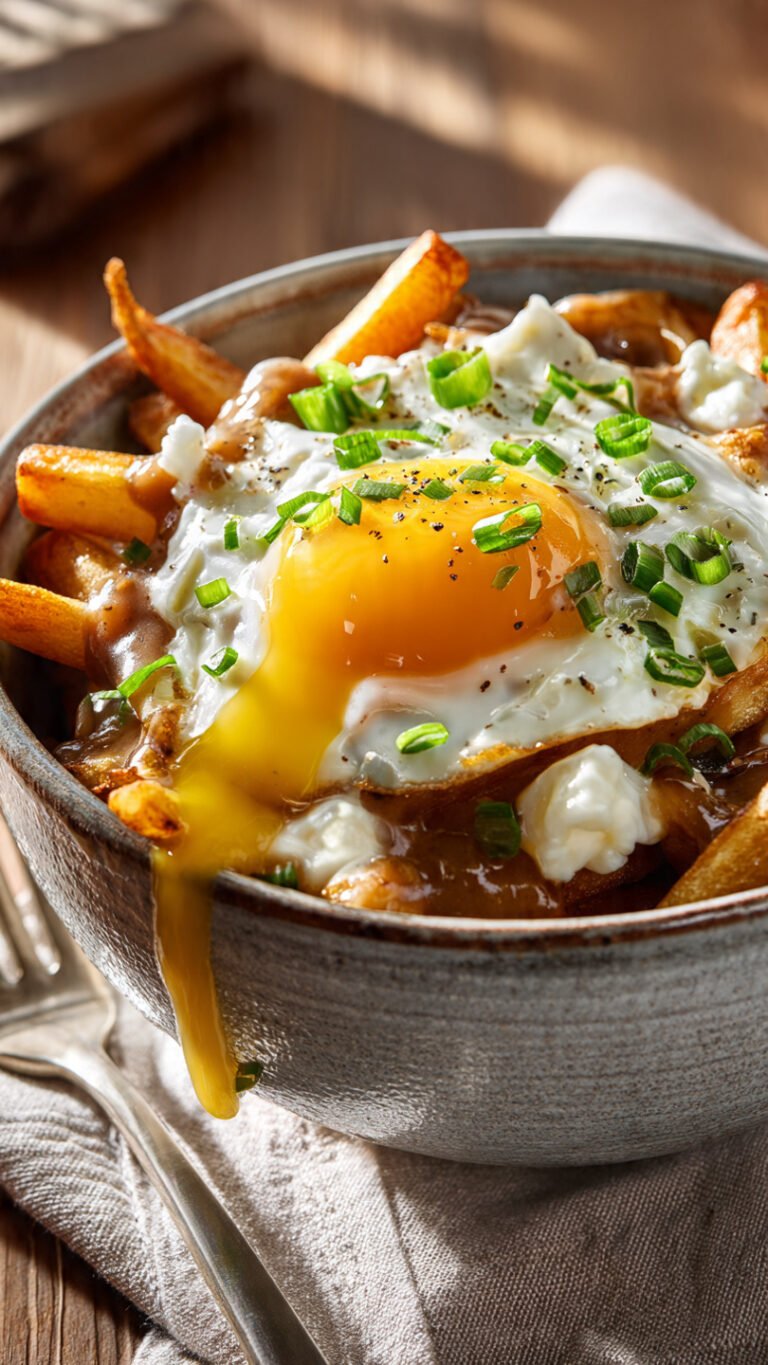
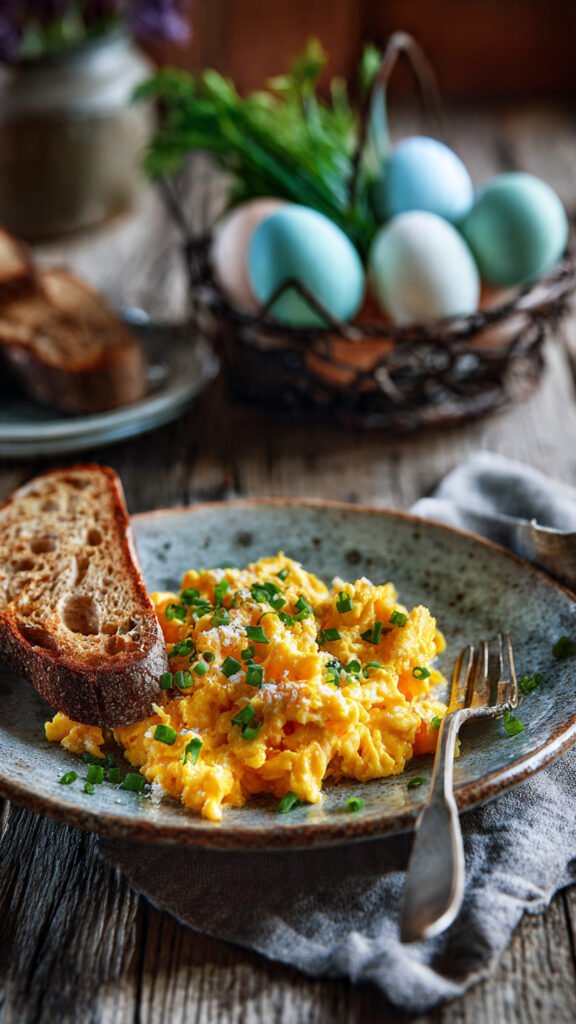
1. The “Yolk” Factor First off, let’s talk about that yolk. If chicken egg yolks are a standard yellow highlighter, duck egg yolks are a deep, sunset orange. They are massive. We are talking about a yolk-to-white ratio that makes pastry chefs weep with joy. Because of this higher fat content, the resulting scramble isn’t just “eggs”—it’s a custard-like experience. It coats your mouth in a way that feels expensive. You know that feeling when you pay $25 for eggs at a brunch spot? This is that feeling, but in your pajamas.
2. It’s Surprisingly Idiot-Proof I know, “duck egg” sounds intimidating. It sounds like something you need a culinary degree to handle without messing up. But honestly? It’s harder to mess these up than regular eggs. Because they have a higher fat content and slightly different protein structure, they hold their shape beautifully. Even if you are a total novice, you can achieve that “soft scramble” look without really trying.
3. The Flavor Profile People always ask, “Do they taste gamey?” The short answer: No, unless you’re buying them from a duck that lived on a diet of swamp mud. A good farm-fresh duck egg tastes like a chicken egg turned up to volume 11. It’s richer, creamier, and has a savory depth that requires very little help from seasonings.
4. You Get to Sound Pretensious (In a Good Way) Let’s be honest, telling your friends or partner, “Oh, I’m just whipping up a quick duck egg recipe with chives,” sounds infinitely cooler than “I’m making eggs.” It’s a low-effort flex, and I am here for it.
Ingredients You’ll Need
You don’t need a pantry full of obscure items. The beauty of this recipe is in the quality of the basics. Here is your shopping list:
- Duck Eggs (3-4 large): Obviously. If you use chicken eggs here, I will know, and I will be disappointed.
- Unsalted Butter (1-2 tbsp): Do not use oil. Oil is for machines and frying potatoes. Eggs need butter. If you have European-style cultured butter, use it.
- Heavy Cream or Crème Fraiche (1 tbsp): Optional, but highly recommended if you want to induce a food coma. Duck eggs are creamy enough on their own, but we aren’t here for “diet food,” are we?
- Fresh Chives (1 small bunch): Finely chopped. The sharp oniony bite cuts through the richness of the yolk.
- Flaky Sea Salt: Regular table salt is fine, but finishing with crunchy flakes makes a difference.
- Freshly Cracked Black Pepper: Use the stuff from the grinder, not the grey dust that’s been sitting in your shaker since 2015.
- Toast (Sourdough or Brioche): You need a vehicle to transport the eggs to your mouth. Make it a sturdy one.
Step-by-Step Instructions
Ready to cook? Let’s do this. Follow these steps, and don’t rush. Good eggs wait for no one, but they also hate high heat.
1. Crack With Confidence Here is the first hurdle: Duck egg shells are thick. They are built like tanks compared to chicken eggs. You can’t just tap it lightly on the counter. Give it a firm, confident whack against a flat surface. If you hesitate, you’ll just shatter the shell. Pour the eggs into a bowl.
2. The Whisking Strategy Add a pinch of salt and your splash of cream (if using) to the bowl. Whisk the eggs vigorously. You really want to break down that albumen (the white part) and incorporate air. Since duck egg whites are thicker and more viscous, you might need to whisk a little longer than you’re used to. You want a uniform, orange liquid gold.
3. Low and Slow (The Golden Rule) Place a non-stick skillet over low heat. Add your butter and let it melt. You want the butter to froth slightly but not brown. If the butter sizzles aggressively when it hits the pan, your heat is too high. Calm down.
4. The Pour and Push Pour your whisked eggs into the pan. Do not walk away. For the first 30 seconds, let them sit just to form a base layer, then use a silicone spatula to gently push the eggs from the edges toward the center. You aren’t chopping them up; you are creating long, sweeping folds.
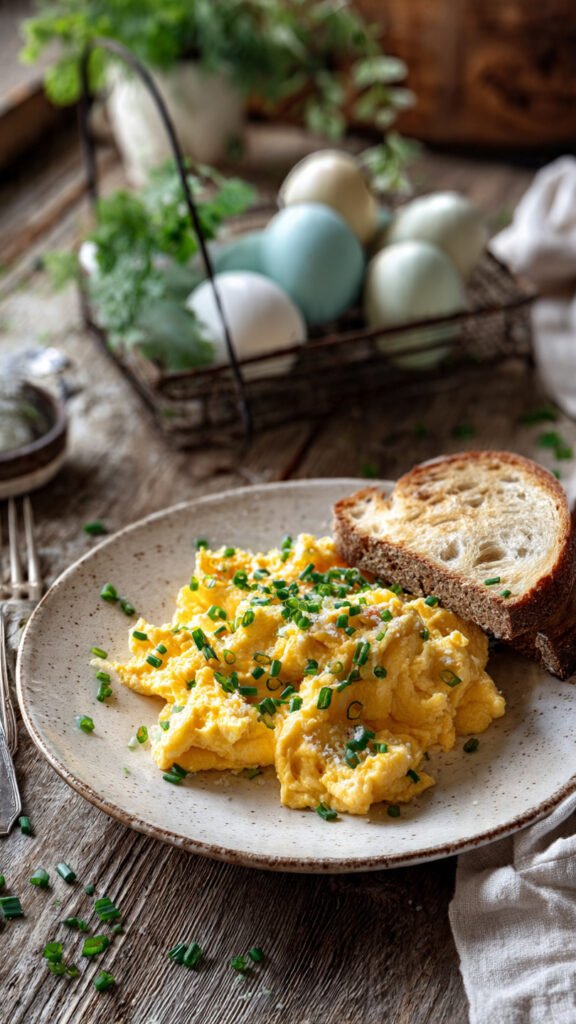
5. Control the Curd Keep pushing the eggs gently. You will notice the curds forming are larger and glossier than chicken eggs. This is the fat doing its magic. This process should take about 3–5 minutes. If it’s cooking faster than that, lift the pan off the burner for a few seconds to cool it down.
6. The “Carry Over” Finish This is the most critical step. When the eggs look about 90% done—meaning they are still slightly wet and look a bit undercooked—take them off the heat immediately. The residual heat in the pan and the eggs themselves will finish cooking them on the way to the plate. If they look done in the pan, they will be rubbery on the plate.
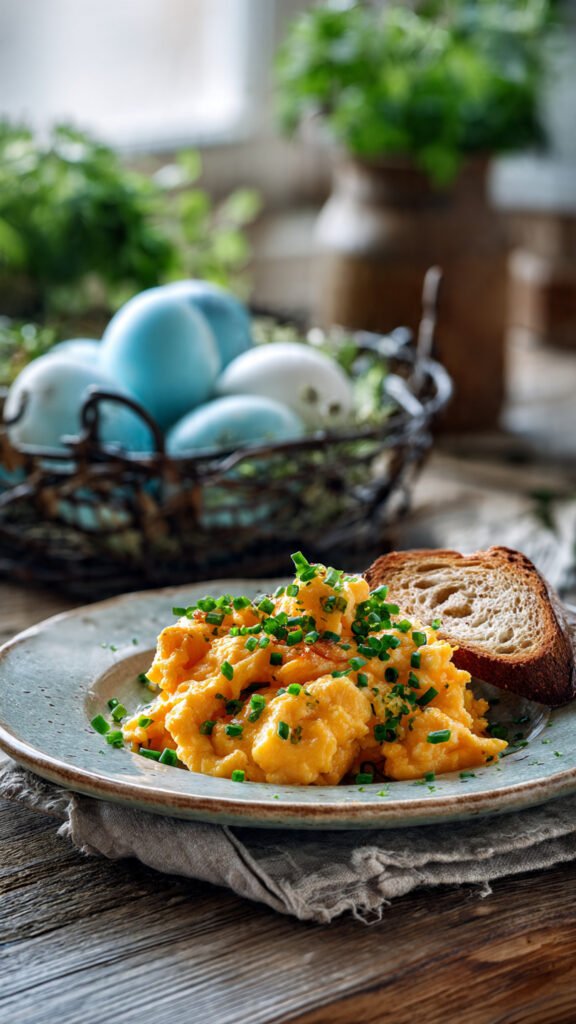
7. Plating Slide those gorgeous, silky folds onto your buttered toast. Sprinkle generously with the chopped chives, a few turns of black pepper, and that flaky salt.
Common Mistakes to Avoid
Even though this is simple, things can go wrong. Here is how to avoid a culinary disaster.
- The “Shell Shock”: As mentioned, the shells are tough. A rookie mistake is not hitting them hard enough, resulting in tiny shell fragments in your bowl. Pro Tip: Crack them into a separate small bowl first before adding them to your mixing bowl. Fishing shell out of slimy egg whites is a nightmare.
- The High Heat Hustle: Thinking you don’t need to preheat the pan or cranking the heat to “High” to get it done faster. This will result in rubbery, tough eggs that squeak when you chew them. Gross. Duck eggs have less water content than chicken eggs, so they rubberize faster if you abuse them with heat.
- Over-seasoning Early: If you add too much salt at the very beginning, it can actually break down the eggs and make them watery (weeping). Add a tiny pinch at the start, but save the heavy seasoning for the end.
- Skimping on the Fat: Listen, duck eggs are fatty, but they still need butter in the pan to slide around. Cooking spray is not invited to this party. IMO, if you aren’t using butter, you’re doing it wrong.
Alternatives & Substitutions
Maybe you want to shake things up, or you realized you forgot to buy chives. No stress.
- The “Spicy Boy” Version: Swap the chives for Chili Crisp or Sriracha. The heat pairs incredibly well with the creamy yolk. Drizzle it over the top right before serving.
- The “Truffle Shuffle”: If you really want to lean into the luxury vibe, add a few drops of white truffle oil or grate some parmesan cheese over the finished eggs. It’s decadent and perfect for a holiday breakfast.
- No Duck Eggs? Okay, if you read this whole article and decided you can’t find duck eggs, you can use chicken eggs. Just use 5 chicken eggs to replace 3 duck eggs to get a similar volume, and add an extra knob of butter to mimic the richness. It won’t be the same, but it’ll be edible.
- Dairy-Free? You can skip the cream. The yolks are rich enough that you don’t strictly need the dairy. Swap butter for a high-quality olive oil for a Mediterranean twist.
FAQ (Frequently Asked Questions)
1. Are duck eggs actually better for you? Well, “better” is subjective, but nutritionally? Yes. They have more protein, more Omega-3 fatty acids, and way more Vitamin B12 than chicken eggs. Basically, they are chicken eggs on steroids (the natural kind).
2. Why are duck eggs so expensive? Ducks are high-maintenance divas. They lay fewer eggs than chickens, they eat more, and they require more space. You are paying for quality and scarcity. Treat them like the luxury item they are.
3. Can I bake with duck eggs? Absolutely! In fact, bakers swear by them. because of the higher protein content, they make cakes loftier and fluffier. Just remember that one duck egg is roughly equal to two small chicken eggs, so adjust your math accordingly.
4. Where on earth do I find them? Check your local Asian grocery stores (they often stock them salted or fresh) or hit up the Saturday farmers market. Some high-end supermarkets like Whole Foods carry them occasionally. Or, you know, make friends with a farmer.
5. Can I eat duck eggs soft-boiled? Yes, and you should! However, be aware that the boiling time is different. Because the shell is thicker, you usually need to boil them for about 6–7 minutes for a runny yolk, compared to the standard 5 minutes for chicken eggs.
6. How long do they last? Because that shell is so thick, it acts as a fortress. Duck eggs can stay fresh in the fridge for up to 6 weeks, which is longer than most relationships I’ve been in.
7. Can I use margarine instead of butter? Well, technically yes, but why hurt your soul like that? Margarine adds water and oil; butter adds flavor and milk solids. Do yourself a favor and stick to the real stuff.
Final Thoughts
Look at you, expanding your culinary horizons! Mastering a duck egg recipe is one of those small life victories that makes you feel like you have your life together, even if your laundry pile says otherwise.
The texture, the color, and the flavor are going to make it very hard for you to go back to standard scrambles. But that’s a risk I was willing to let you take. Whether you are cooking for a date, your family, or just treating yourself because you deserve it, these eggs are a winner.
Now go impress someone—or yourself—with your new culinary skills. You’ve earned it!