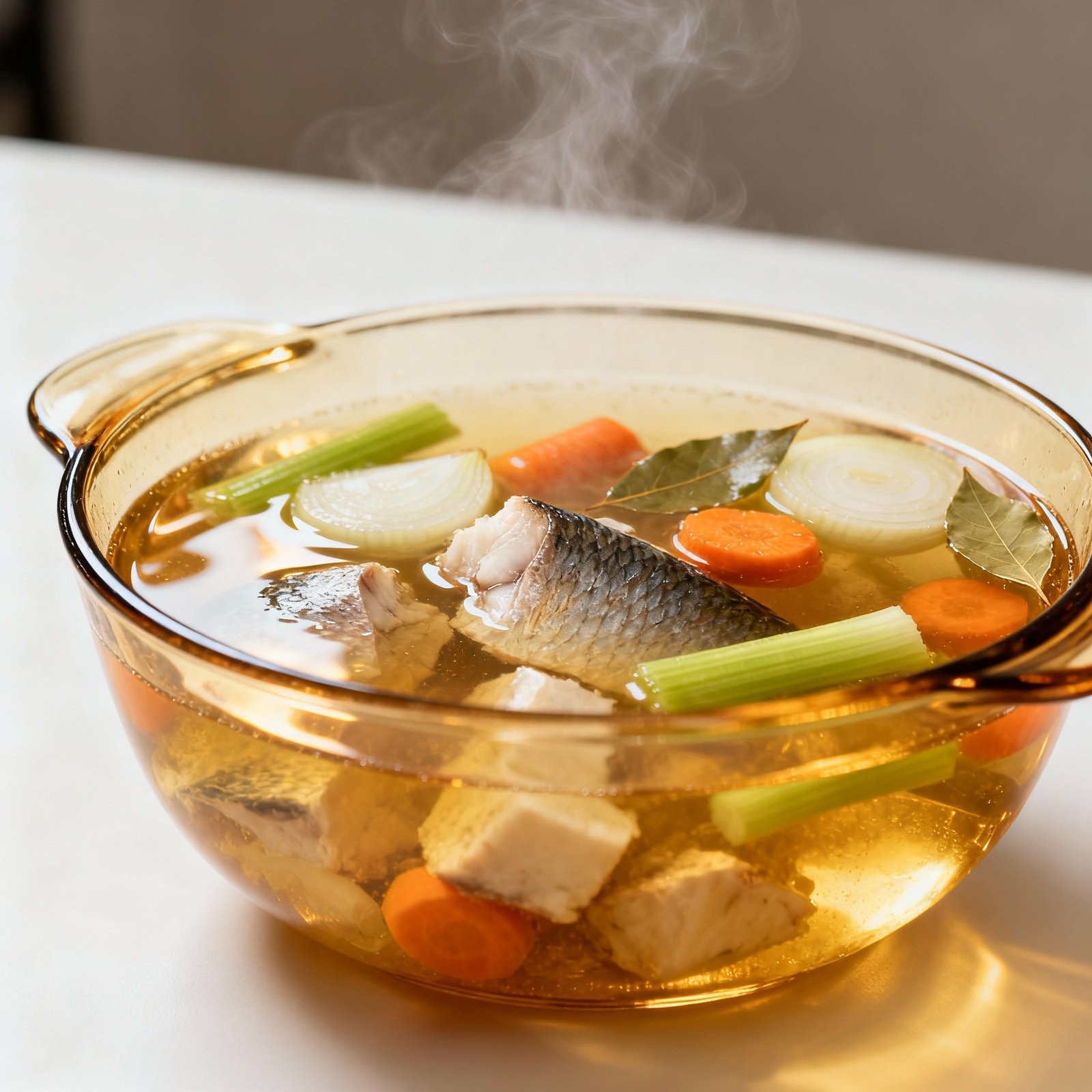
Fish Stock Recipe: The Secret to Unforgettable Seafood Dishes
Imagine the aroma of a rich, deeply flavorful seafood stew simmering on your stove. Or a delicate risotto infused with the essence of the ocean. The secret ingredient that elevates these dishes from ordinary to extraordinary? A phenomenal fish stock. While store-bought options exist, nothing compares to the vibrant, clean taste of homemade. This recipe provides a simple, foolproof method for creating a fish stock that will transform your seafood cooking.
Why This Recipe Works
This recipe focuses on extracting maximum flavor while avoiding common pitfalls that can lead to a bitter or muddy-tasting stock. Here’s why it’s so effective:
- Gentle Simmer: High heat can break down proteins and release undesirable flavors. A gentle simmer ensures a clear, clean-tasting stock.
- Short Cooking Time: Unlike beef or chicken stock, fish stock requires a shorter cooking time. Overcooking will result in a bitter flavor.
- Strategic Use of Aromatics: We use a classic combination of onions, carrots, celery, and parsley stems to build a flavorful base without overpowering the delicate fish flavor.
- Focus on Bones and Heads: Fish bones and heads (especially from white fish) are packed with collagen, which contributes to a rich, silky texture.
- No Oily Fish: Avoid using bones from oily fish like salmon or tuna, as they can impart a strong, overpowering, and sometimes unpleasant flavor.
- Proper Skimming: Regularly skimming off any scum that rises to the surface ensures a clear and pure stock.
Ingredients
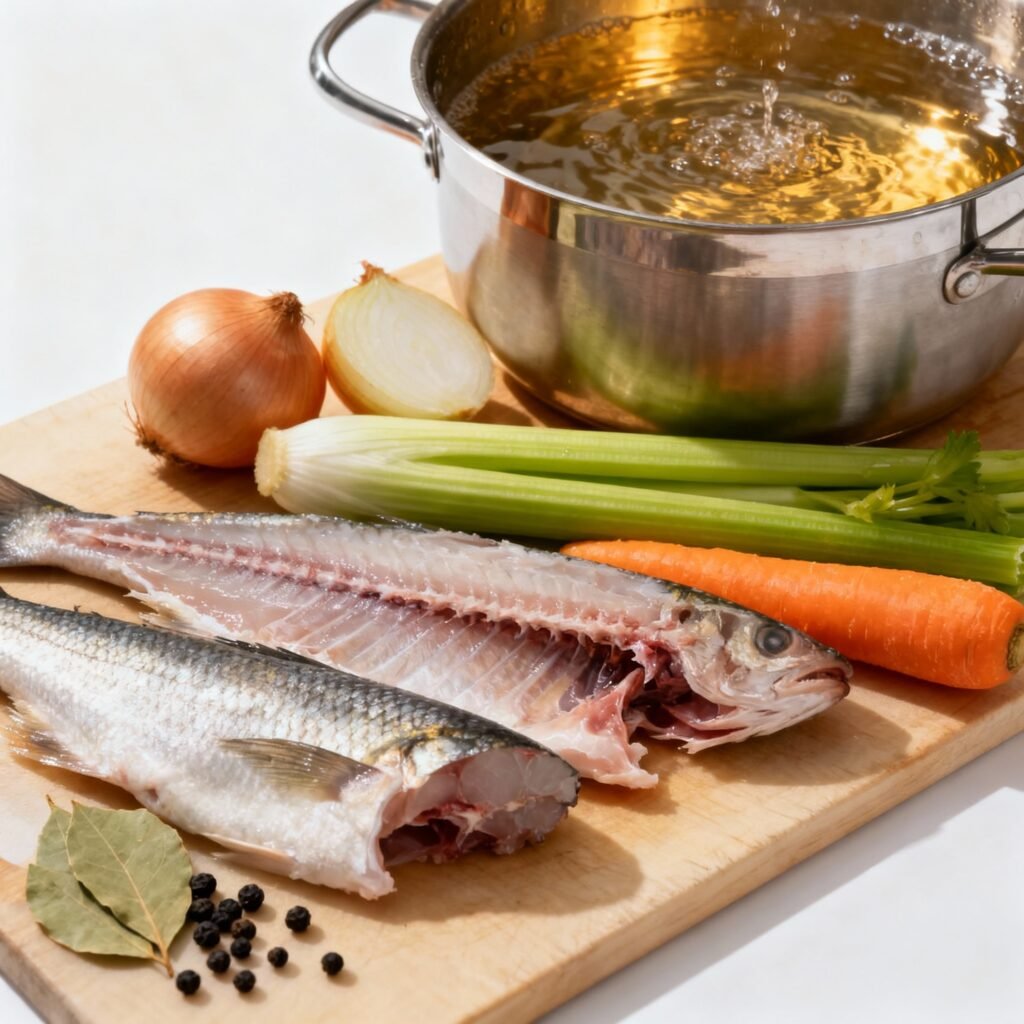
- 2 pounds fish bones and heads (from white fish such as cod, halibut, or flounder), rinsed thoroughly
- 1 large yellow onion, roughly chopped
- 2 carrots, roughly chopped
- 2 celery stalks, roughly chopped
- 4 sprigs fresh parsley, stems included
- 1 teaspoon black peppercorns
- 1 bay leaf
- 8 cups cold water
- 1 tablespoon lemon juice (optional, helps with clarity)
Instructions
- Prepare the Fish Bones: Thoroughly rinse the fish bones and heads under cold running water. Remove any gills, as they can contribute to bitterness. Chop the bones into smaller pieces, if necessary, to fit comfortably in your pot.
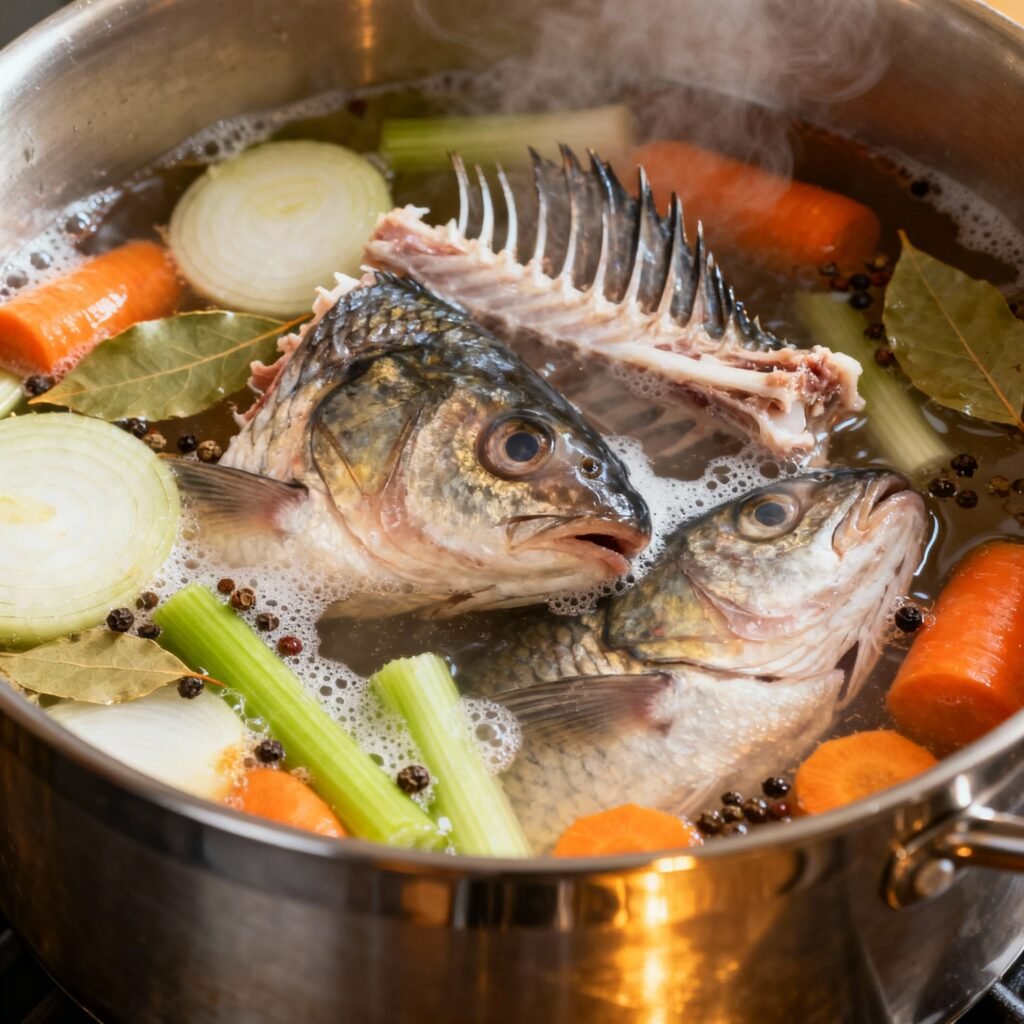
- Combine Ingredients: In a large stockpot or Dutch oven, combine the fish bones, onion, carrots, celery, parsley stems, peppercorns, and bay leaf.
- Add Water: Pour in the cold water, ensuring the bones and vegetables are completely submerged.
- Bring to a Simmer: Bring the mixture to a gentle simmer over medium heat. Once it reaches a simmer, immediately reduce the heat to low.
- Skim the Surface: As the stock simmers, impurities will rise to the surface. Use a fine-mesh skimmer or spoon to carefully remove any scum or foam. Repeat this process several times during the first 30 minutes of simmering.
- Simmer Gently: Continue to simmer the stock, uncovered, for 30-45 minutes. Avoid boiling, as this can make the stock cloudy and bitter.
- Add Lemon Juice (Optional): If desired, add the lemon juice during the last 15 minutes of simmering.
- Strain the Stock: Carefully strain the stock through a fine-mesh sieve lined with cheesecloth (if desired for extra clarity). Discard the solids.
- Cool and Store: Allow the stock to cool completely before storing.
Tips for Success
- Source Fresh Ingredients: The quality of your ingredients directly impacts the flavor of your stock. Use fresh fish bones and vegetables.
- Don’t Overcrowd the Pot: Use a pot large enough to comfortably hold all the ingredients. Overcrowding can prevent even simmering and reduce flavor extraction.
- Use Cold Water: Starting with cold water helps to slowly extract the flavors from the bones and vegetables.
- Avoid Salt: Do not add salt during the cooking process. You can season the stock to taste when you use it in a recipe.
- Consider Roasting the Bones (Optional): For a deeper, richer flavor, you can roast the fish bones in a 400°F (200°C) oven for 15-20 minutes before adding them to the pot. This step is optional but can enhance the overall flavor profile.
- Freeze in Portions: Freeze the stock in convenient portions (e.g., 1-cup or 2-cup containers) for easy use in future recipes.
Storage Instructions
Refrigerator: Fish stock can be stored in an airtight container in the refrigerator for up to 3-4 days.
Freezer: Fish stock can be frozen in an airtight container or freezer-safe bag for up to 3 months. For optimal quality, use within 2 months. Consider freezing in ice cube trays for smaller portions.
FAQ
Can I use shrimp shells to make fish stock?
Yes, shrimp shells can be added to the fish stock for extra flavor. However, be mindful that shrimp shells can sometimes impart a stronger flavor, so use them sparingly.
What if I don’t have fish heads?
Fish heads are not essential, but they do contribute a lot of flavor and collagen. If you don’t have them, you can use all fish bones, or supplement with shrimp shells.
My stock is cloudy. What did I do wrong?
Cloudy stock can be caused by boiling the stock or not skimming off the scum properly. Ensure you are simmering gently and skimming frequently.
Can I use this stock for clam chowder?
Absolutely! This fish stock is an excellent base for clam chowder and other seafood soups and stews.
What’s the best way to thaw frozen fish stock?
The best way to thaw frozen fish stock is in the refrigerator overnight. You can also thaw it quickly in a saucepan over low heat.
Conclusion
Making your own fish stock is a simple yet rewarding process that significantly elevates the flavor of your seafood dishes. With a few basic ingredients and a little patience, you can create a stock that is far superior to anything you can buy in a store. So, grab some fish bones, gather your aromatics, and embark on a culinary adventure that will transform your seafood cooking forever. Enjoy!