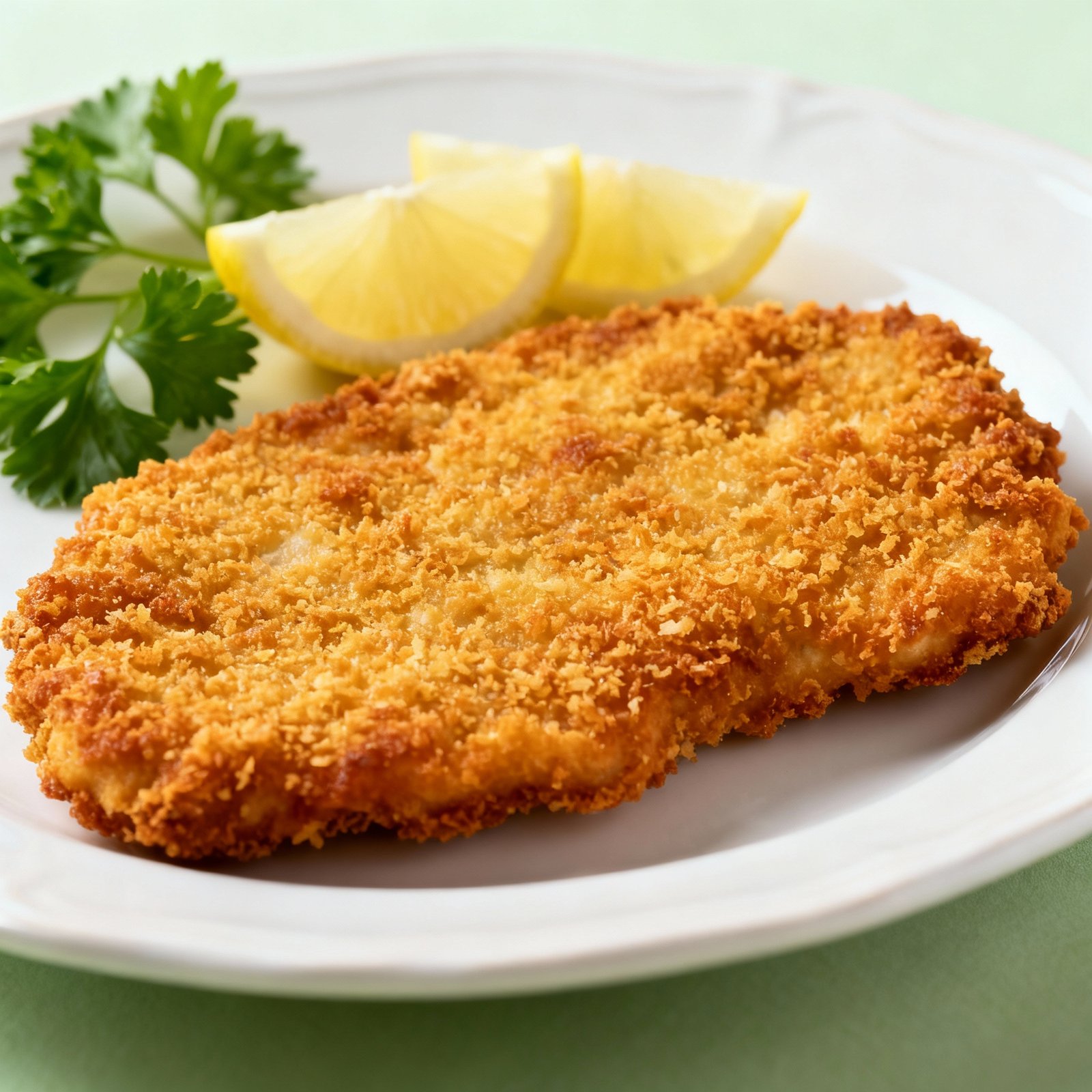
German Schnitzel Recipe: Crispy Perfection in Every Bite!
Imagine sinking your teeth into a golden-brown, perfectly crispy piece of schnitzel, the tender pork or veal practically melting in your mouth. That’s the experience we’re aiming for with this authentic German Schnitzel recipe. Forget the soggy, bland imitations – we’re going straight for the real deal. This recipe delivers a traditional, restaurant-quality schnitzel right in your own kitchen, without needing a plane ticket to Deutschland. Whether you’re a seasoned cook or a kitchen newbie, this guide will walk you through each step, ensuring a schnitzel experience that will have you saying “Wunderbar!”
Why This Recipe Works
This recipe isn’t just a list of ingredients and instructions; it’s a carefully crafted method designed to guarantee success. Here’s why it works:
- Proper Meat Preparation: Thinly pounding the meat is crucial for even cooking and optimal tenderness. We’ll show you the best technique to achieve the ideal thickness without tearing the meat.
- The Perfect Breadcrumb Coating: We use a three-step breading process (flour, egg, breadcrumbs) to create a coating that’s both crispy and adheres beautifully to the meat. The type of breadcrumbs also matters – we recommend using panko breadcrumbs for maximum crunch.
- Correct Cooking Temperature: Maintaining the right oil temperature is essential for achieving that golden-brown color and crispy texture. Too low, and the schnitzel will be greasy; too high, and it will burn before it’s cooked through. We’ll guide you on how to monitor and adjust the temperature.
- Simple, Authentic Flavors: We stick to traditional seasonings that enhance the natural flavor of the meat without overpowering it. A touch of salt, pepper, and perhaps a hint of paprika are all you need.
Ingredients
- 4 boneless pork loin chops (about 4-6 ounces each), or veal cutlets
- 1/2 cup all-purpose flour
- 2 large eggs, lightly beaten
- 1 1/2 cups panko breadcrumbs
- 1 teaspoon salt
- 1/2 teaspoon black pepper
- 1/4 teaspoon paprika (optional)
- 1/2 cup vegetable oil, for frying
- Lemon wedges, for serving
- Fresh parsley, chopped (for garnish)
Instructions
- Prepare the Meat: Place each pork chop or veal cutlet between two sheets of plastic wrap. Using a meat mallet or rolling pin, pound the meat to about 1/4-inch thickness. Be careful not to tear the meat.
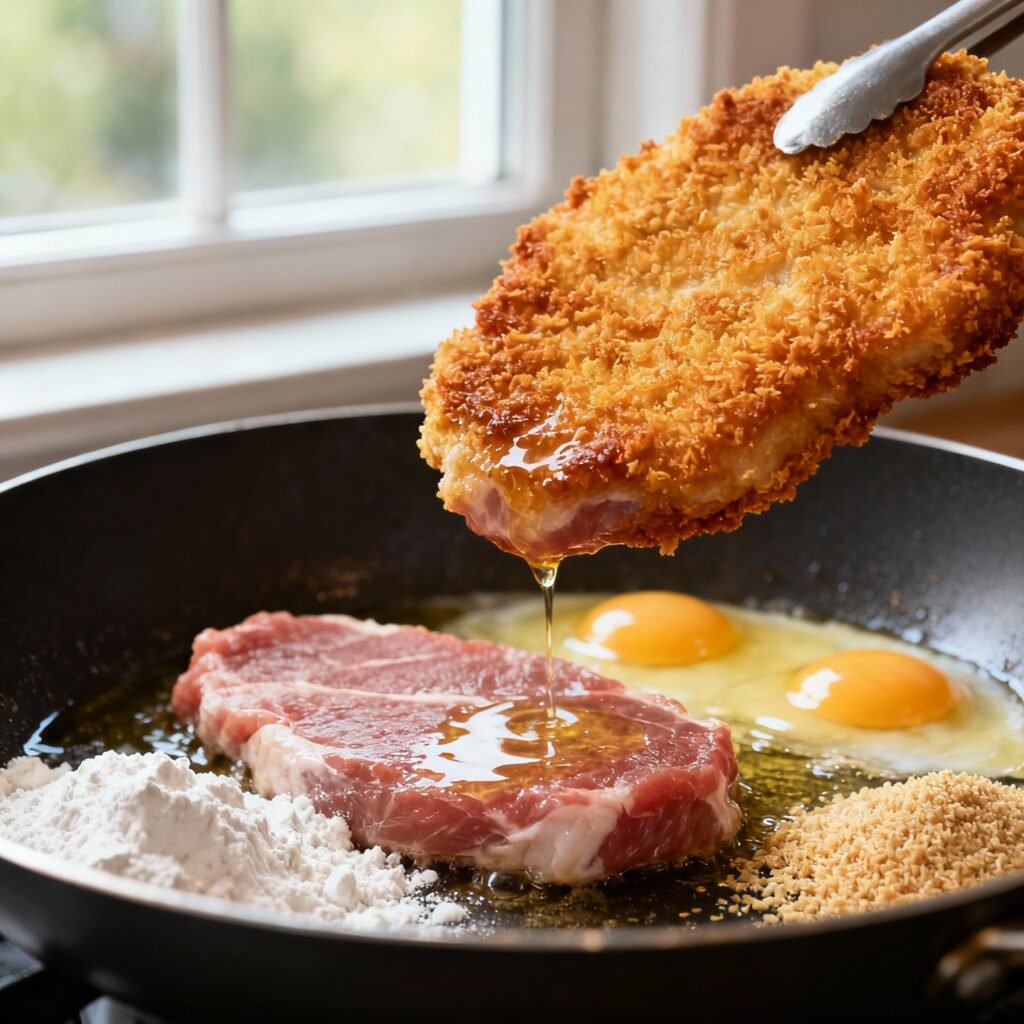
- Set Up the Breading Station: In three separate shallow dishes, place the flour, beaten eggs, and panko breadcrumbs. Season the flour with salt, pepper, and paprika (if using).
- Bread the Schnitzel: Dredge each pounded cutlet in the flour, making sure to coat both sides evenly. Shake off any excess flour.
- Dip in Egg: Dip the floured cutlet into the beaten eggs, ensuring it’s fully coated. Allow any excess egg to drip off.
- Coat in Breadcrumbs: Press the egg-coated cutlet into the panko breadcrumbs, making sure to coat both sides completely. Press firmly to ensure the breadcrumbs adhere well.
- Heat the Oil: In a large skillet, heat the vegetable oil over medium-high heat. The oil should be hot enough that a breadcrumb dropped into it sizzles immediately.
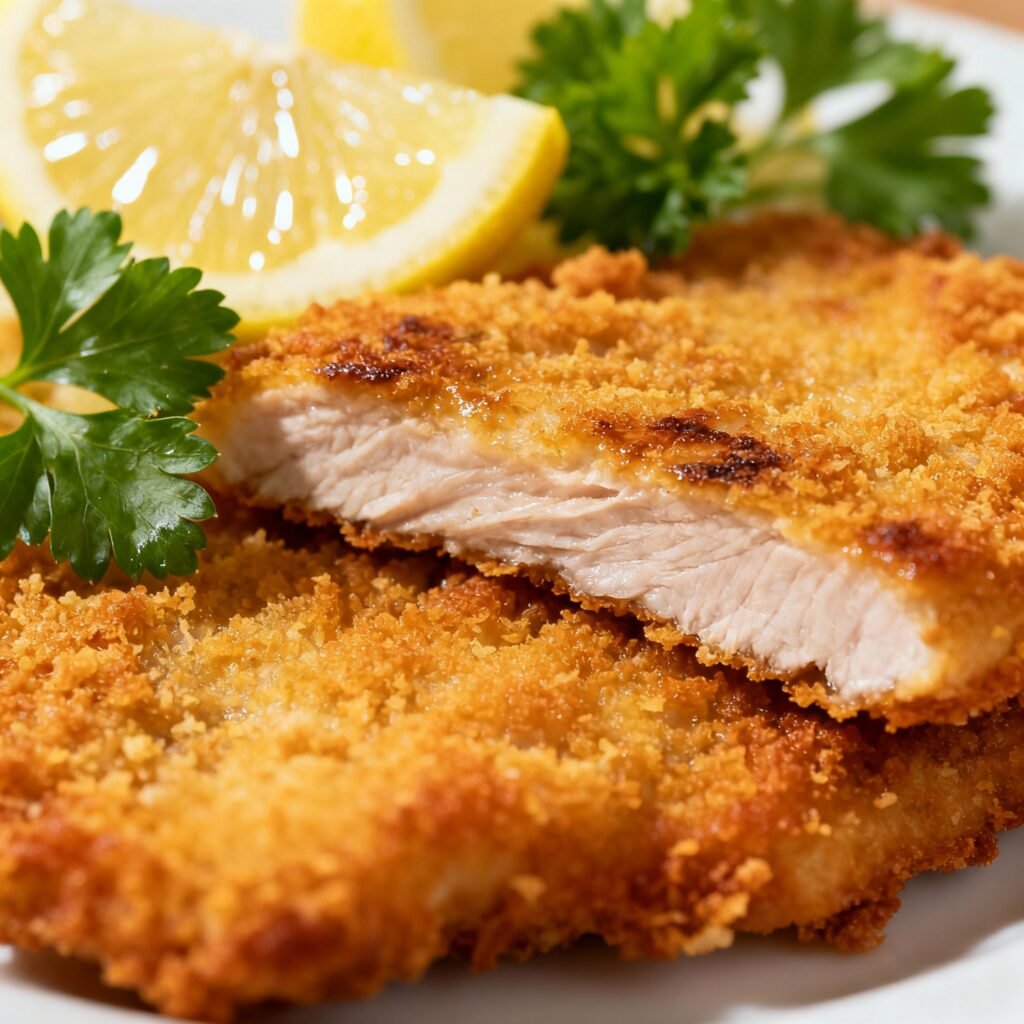
- Fry the Schnitzel: Carefully place the breaded cutlets into the hot oil, being careful not to overcrowd the pan. Fry for about 3-4 minutes per side, or until golden brown and cooked through. The internal temperature should reach 145°F (63°C) for pork and 160°F (71°C) for veal.
- Drain and Serve: Remove the schnitzel from the skillet and place it on a wire rack lined with paper towels to drain excess oil.
- Serve Immediately: Serve the schnitzel immediately with lemon wedges, a sprinkle of fresh parsley, and your favorite sides (such as mashed potatoes, spaetzle, or a simple green salad).
Tips for Success
- Don’t Overcrowd the Pan: Frying too many schnitzels at once will lower the oil temperature and result in soggy schnitzel. Fry in batches if necessary.
- Use Fresh Oil: For the best flavor and crispy texture, use fresh oil for each batch of schnitzel.
- Monitor the Oil Temperature: Use a thermometer to ensure the oil stays at the correct temperature. If it gets too hot, reduce the heat; if it gets too cool, increase the heat.
- Don’t Overcook: Overcooked schnitzel will be dry and tough. Cook until golden brown and cooked through, but not longer.
- Pound Evenly: Ensure you pound the meat evenly to guarantee consistent cooking. Uneven thickness leads to some parts being overcooked while others are undercooked.
- Rest Before Serving: Although best served immediately, letting the schnitzel rest on a wire rack for a minute or two after frying allows excess oil to drain, enhancing the crispness.
Storage Instructions
Leftover schnitzel can be stored in an airtight container in the refrigerator for up to 3 days. To reheat, bake in a preheated oven at 350°F (175°C) for about 10-15 minutes, or until heated through. Reheating in a skillet with a little oil can also help to crisp it up again, but oven reheating is generally preferred to avoid excessive oiliness. Microwaving is not recommended as it will make the schnitzel soggy.
FAQ
- Can I use chicken instead of pork or veal? Yes, you can use boneless, skinless chicken breasts pounded to the same thickness. Adjust cooking time accordingly, ensuring the chicken is cooked through to an internal temperature of 165°F (74°C).
- Can I use regular breadcrumbs instead of panko? While panko breadcrumbs are recommended for their superior crispness, you can use regular breadcrumbs. However, the texture will be slightly different.
- What sides go well with schnitzel? Schnitzel is traditionally served with mashed potatoes, spaetzle, potato salad, red cabbage, or a simple green salad. Lemon wedges are a must!
- Can I freeze schnitzel? Yes, you can freeze cooked schnitzel. Allow it to cool completely, then wrap it tightly in plastic wrap and place it in a freezer bag. It can be stored in the freezer for up to 2 months. To reheat, bake from frozen in a preheated oven at 375°F (190°C) for about 20-25 minutes, or until heated through.
- Why are my breadcrumbs falling off? This usually happens if the meat isn’t properly coated in flour and egg before breading. Ensure each step is thorough and shake off excess flour and egg. Press the breadcrumbs firmly onto the meat.
Conclusion
There you have it – a foolproof recipe for authentic German Schnitzel that’s guaranteed to impress. With its crispy coating and tender meat, this dish is a true comfort food classic. Follow these simple steps and tips, and you’ll be enjoying restaurant-quality schnitzel in the comfort of your own home in no time. Guten Appetit!