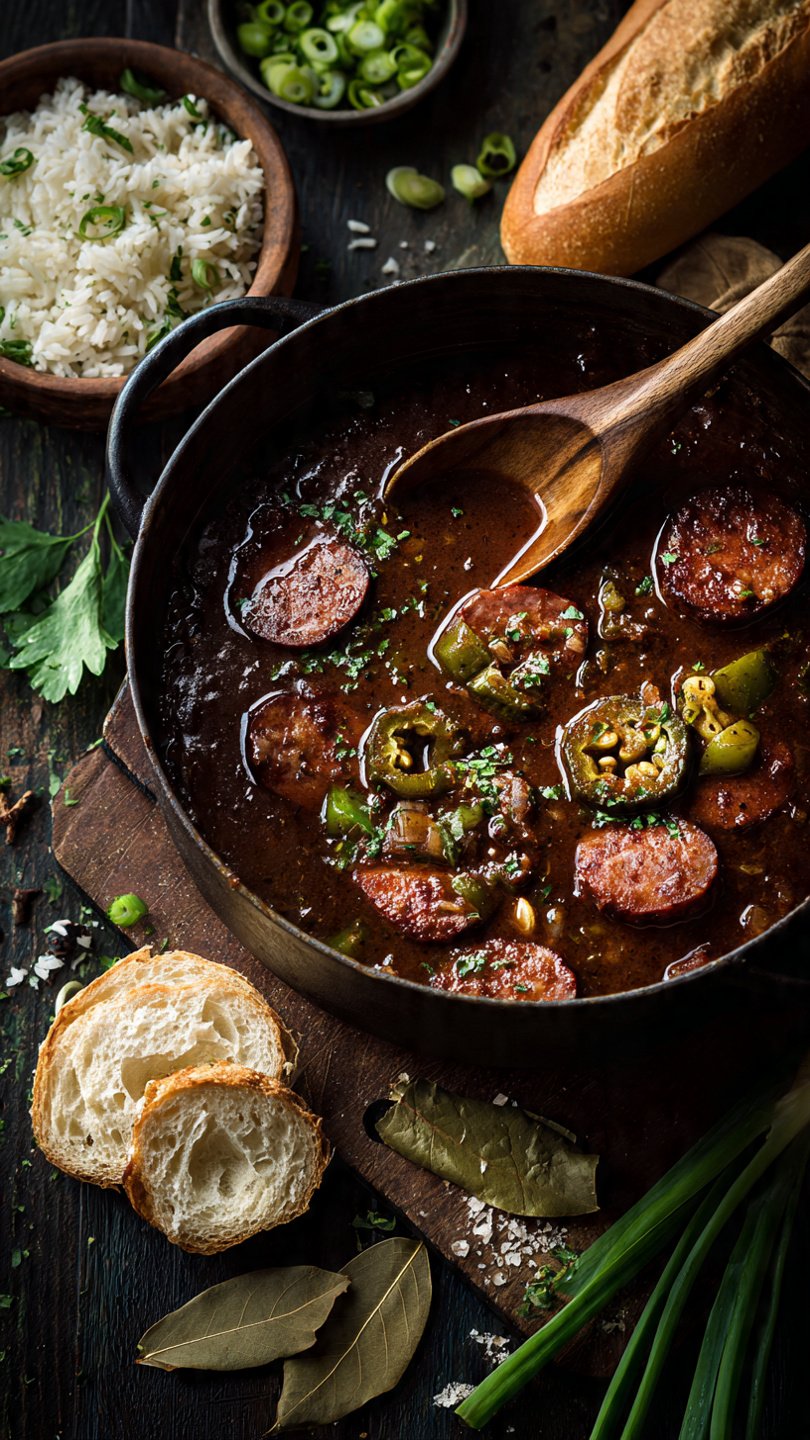
🥘 The Ultimate Gumbo Recipe Okra & Sausage
So you’re craving something tasty but too lazy to spend forever in the kitchen, huh? Same.
Actually, wait. I have to be honest with you right out of the gate. If you clicked on a gumbo recipe expecting a 15-minute meal hack, you might want to back away slowly. Gumbo is not a sprint; it’s a marathon. But it’s the kind of marathon where you don’t have to run, you get to drink beer while you stir, and the finish line is a bowl of liquid gold that makes your soul do a happy dance.
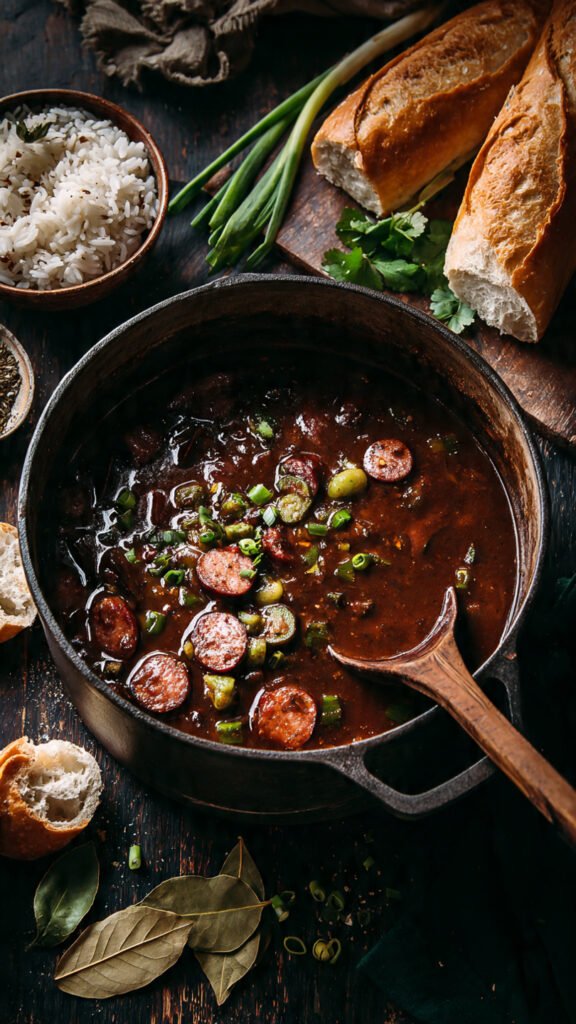
We are talking about the holy grail of Cajun comfort food today. We are talking about the dark roux, the spicy andouille, and—the controversial star of the show—the okra. If you’ve been scared of okra because of the “slime factor,” stick with me. I’m going to show you how to embrace the slime (it’s actually a good thing, promise) and create a stew that tastes like it was made by a grandmother in the Louisiana bayou.
Grab a wooden spoon and maybe a glass of wine. Let’s get weird with some roux.
Why This Recipe is Awesome
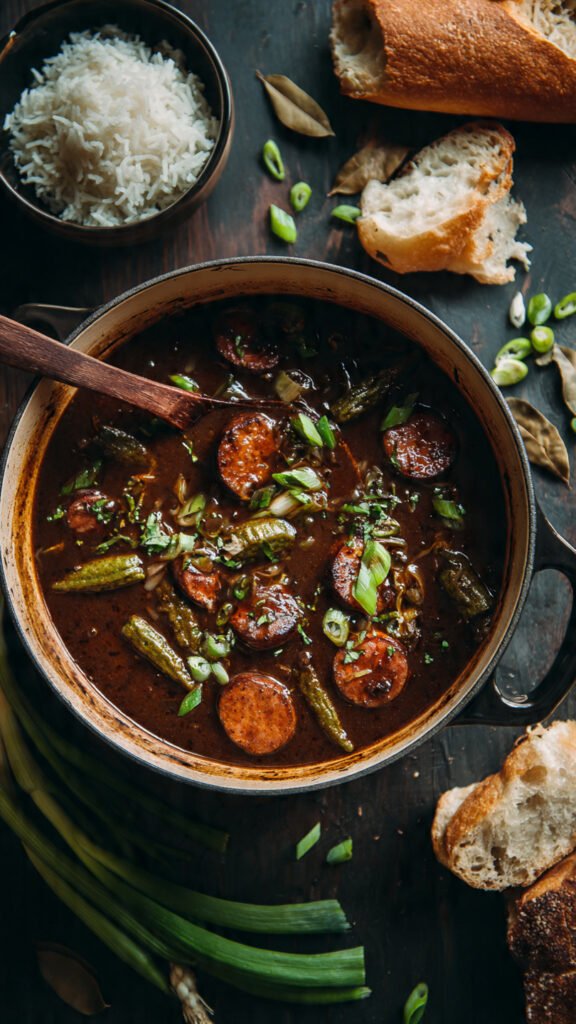
Look, there are a million gumbo recipes out there. Some claim to be “authentic” (a word that starts fights in Louisiana), and others are just vegetable soup with a dusting of paprika. This gumbo recipe with okra strikes the perfect balance. It’s authentic enough to earn a nod of approval from a Cajun, but approachable enough that you won’t burn your house down trying to make it.
Here is why this specific version rocks:
- The “Slime” is a Feature, Not a Bug: A lot of people freak out about okra mucilage (that’s the scientific word for goo). In this recipe, we use that texture to naturally thicken the stew, so it coats every grain of rice perfectly. It’s culinary engineering, basically.
- It’s Idiot-Proof (mostly): The hardest part of gumbo is the roux. I’ve broken it down into such detailed steps that even if you usually burn toast, you’ll nail this.
- Flavor Depth: We aren’t just throwing things in a pot. We are building layers. We sear the sausage. We deglaze. We sweat the veggies. By the time this hits your tongue, you’re tasting history.
- Leftover Magic: You know how pizza is good cold? Gumbo is better the next day. Seriously. The flavors get to know each other overnight in the fridge, get married, and have delicious babies. Making a big batch on Sunday means you eat like a king until Thursday.
This isn’t just dinner; it’s therapy. The rhythmic stirring of the roux is practically meditation, just with more calories and a higher risk of splashing hot oil.
Ingredients You’ll Need
Don’t look at the length of this list and panic. You probably have half of this stuff in your pantry already. If you don’t, well, consider this your excuse to go to the grocery store and buy snacks.
The Foundation (The Roux):
- All-Purpose Flour: Just regular white flour. Nothing fancy.
- Oil: You need an oil with a high smoke point. Vegetable oil, canola oil, or—if you want to be truly authentic and delicious—lard or bacon grease. Do not use olive oil unless you want your gumbo to taste like burnt sadness.
The Holy Trinity (Plus One):
- Onion: Yellow or white, chopped.
- Bell Pepper: Green. It has to be green. Red peppers are too sweet for this.
- Celery: Chopped.
- Garlic: Minced. This is the “plus one.” Some Cajuns say garlic doesn’t belong in the trinity, but I say garlic belongs everywhere.
The Stars:
- Okra: You can use fresh or frozen. Sliced into rounds. This is the thickener and the flavor bomb.
- Andouille Sausage: Sliced into coins. This smoked pork sausage provides that signature kick. If you can’t find Andouille, any good smoked sausage will do (but try to find the real deal).
- Chicken Thighs: Boneless, skinless. Thighs stay juicy after a long simmer. Breast meat turns into rubber in a gumbo, so don’t do it.
The Liquid & Spices:
- Chicken Stock: Low sodium is best so you can control the salt level.
- Cajun Seasoning: A blend like Slap Ya Mama or Tony Chachere’s.
- Bay Leaves: Dried.
- Thyme: Fresh or dried.
- Worcestershire Sauce: Just a dash for umami depth.
- Salt & Black Pepper: To taste.
- Hot Sauce: Tabasco or Crystal. Keep the bottle on the table.
For Serving:
- White Rice: Long-grain. Cooked separately.
- Green Onions: Chopped, for garnish.
Step-by-Step Instructions
Alright, focus. This is where the magic happens. Read through this twice before you turn on the stove. Mise en place (fancy chef speak for “chop your stuff first”) is mandatory here. Once the roux starts, you cannot walk away to chop an onion. The roux is a jealous lover; it demands your undivided attention.
1. Prep Your Life
Chop your onions, celery, and bell peppers. Slice your sausage. Cut your chicken into bite-sized chunks and season them with a little salt and pepper. Slice your okra. Have your stock measured out and ready to pour. Open your beer/wine. You are now ready for battle.
2. Sear the Meats
In a heavy-bottomed pot (a Dutch oven is the MVP here), heat a splash of oil over medium-high heat. Throw in your sliced Andouille sausage. You want to brown it nicely to render out that spicy fat. Remove the sausage with a slotted spoon and set it aside.
- Pro Tip: Don’t wipe the pot! That brown stuff stuck to the bottom is called fond, and it’s pure flavor.
- Add the chicken to the same pot. Sear it until it’s browned on the outside (it doesn’t need to be cooked through yet). Remove the chicken and set it aside with the sausage.
3. The Roux: The Main Event
Turn the heat down to medium. Add your oil (or lard) and flour to the pot. Now, stir.
- The Process: You are going to stir this constantly for anywhere from 20 to 45 minutes. Yes, really.
- The Stages:
- Blonde: Looks like wet sand. Boring. Keep going.
- Peanut Butter: Starting to smell nutty. Getting there.
- Copper Penny: Now we’re talking.
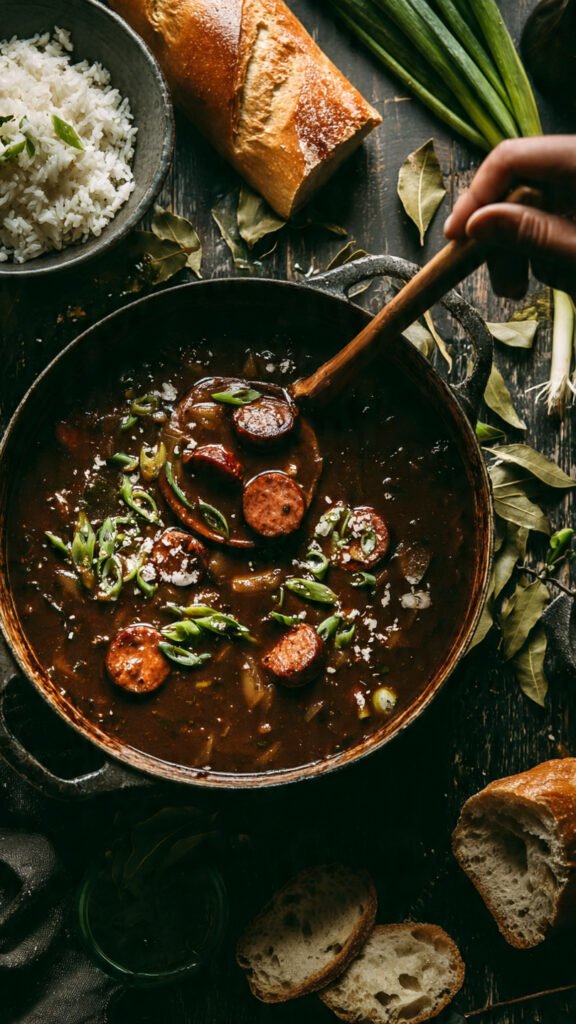
- Dark Chocolate: This is the goal. You want a deep, dark, rich brown color. It should smell like toasted nuts or popcorn.
- Warning: If you see black specks floating in it, you burned it. There is no saving a burnt roux. It will taste like an ashtray. Throw it out, cry a little, and start over.
4. The Sizzle (Stopping the Roux)
As soon as your roux hits that dark chocolate color, immediately dump in the “Holy Trinity” (onion, celery, bell pepper).
- Sensory Note: The mixture will hiss, steam, and seize up like concrete. This is normal! Stir vigorously. The vegetables will stop the flour from cooking further and will start to sweat, releasing their water and loosening the mixture back up. Cook for about 5–7 minutes until the veggies are soft. Add the garlic in the last minute so it doesn’t burn.
5. Build the Stew
Slowly pour in your chicken stock, whisking constantly to ensure the roux dissolves into the liquid without lumps. It will look thin at first—don’t worry.
- Add your browned sausage, chicken, and juices that accumulated on the plate back into the pot.
- Toss in the bay leaves, thyme, Worcestershire sauce, and a healthy tablespoon of Cajun seasoning.
6. The Okra Factor
Now, add your sliced okra.
- The Science of Slime: As the okra simmers, it releases mucilage. In a quick sauté, this can be unappealing, but in a long-simmered gumbo, this “slime” breaks down and acts as a thickening agent, giving the gumbo a silky, rich mouthfeel that you can’t get with just flour.
- Stir it in and bring the pot to a gentle boil.
7. The Long Simmer
Reduce the heat to low. Cover the pot, but leave the lid slightly cracked. Simmer for at least 45 minutes, but honestly? 1 to 2 hours is better.
- Stir occasionally to make sure nothing sticks to the bottom.
- Taste it. Does it need more salt? More heat? Adjust it now.
8. Serve
Ladle the gumbo over a mound of hot white rice. Sprinkle with fresh green onions. Keep the hot sauce bottle nearby for those brave souls who want to sweat.
Common Mistakes to Avoid
Even smart people make bad gumbo. Here is how to avoid being one of them.
- Walking Away from the Roux: I cannot stress this enough. Do not check your email. Do not go to the bathroom. Do not answer the door for the Amazon delivery driver. If you stop stirring for 30 seconds at high heat, the flour burns.
- Using Cold Stock: Adding ice-cold stock to hot roux can sometimes cause the flour to seize up weirdly or lower the temp too drastically. Room temperature or warm stock incorporates smoother.
- Thinking Tomatoes Belong Here: Okay, this is a regional war. Creole gumbo has tomatoes; Cajun gumbo generally does not. This recipe leans Cajun. If you add tomatoes, a grandmother in Lafayette feels a disturbance in the Force. (But hey, it’s your kitchen, do what you want… just don’t tell me).
- Undercooking the Okra: If you rush the simmering time, the okra might still have a “stringy” texture. You need that long simmer to break down the structure so it melts into the stew.
- Adding Filé Powder While Boiling: If you use filé powder (ground sassafras leaves) to thicken or flavor, add it off the heat right before serving. If you boil filé, it turns stringy and gritty.
Alternatives & Substitutions
Maybe you have dietary restrictions, or maybe you just forgot to go to the store. I’ve got you covered.
- No Pork? Swap the Andouille for a smoked turkey sausage or beef sausage. You lose a little fat content, so you might need a pinch more oil in your roux.
- Seafood Lover? You can turn this into a seafood gumbo! Add shrimp and crab meat in the last 10 minutes of cooking (don’t boil them for an hour or they turn to rubber).
- Gluten-Free: This is tricky because the roux is flour-based. You can use a 1:1 Gluten-Free flour blend (rice flour based usually works best). It browns faster than wheat flour, so watch it like a hawk.
- Vegetarian: Use vegetable stock (mushroom stock is great for depth) and omit the meat. Load up on okra, maybe add some kidney beans for protein. It won’t be traditional, but it’ll still be tasty warm soup.
- Don’t Like Okra? First of all, grow up. Just kidding (sort of). If you absolutely hate okra, you can leave it out and use Filé powder at the end to thicken the soup instead.
FAQ (Frequently Asked Questions)
Q: Can I freeze this gumbo recipe with okra? A: Absolutely. In fact, I insist on it. Gumbo freezes beautifully. Put it in an airtight container, and it’ll survive the apocalypse (or at least 3 months) in your freezer. Just reheat it gently on the stove.
Q: My gumbo is too thin! What did I do wrong? A: You probably didn’t use enough roux or okra, or you added too much stock. No panic. Let it simmer longer with the lid off. Evaporation is your friend.
Q: Can I use olive oil for the roux? A: IMO, no. Olive oil has a low smoke point and a strong flavor that fights with the Cajun spices. Use a neutral oil or animal fat. Don’t try to make gumbo “healthy.” It’s not health food; it’s soul food.
Q: Do I have to thaw frozen okra before adding it? A: Nope! Dump it in frozen. It might lower the temp of the pot for a second, but it cooks down just the same.
Q: What is the difference between Gumbo and Jambalaya? A: Great question. Gumbo is a soup/stew served over rice. Jambalaya is a rice dish where the rice is cooked in the pot with the meat and veggies (like Paella).
Q: Can I use butter for the roux? A: Butter burns very fast because of the milk solids. Unless you clarify it (make ghee), stick to oil or lard for a dark roux.
Q: Is it spicy? A: That depends on your Andouille sausage and how heavy-handed you are with the Cayenne. As written, it’s “warm,” not “call the fire department.”
Final Thoughts
Making gumbo is a rite of passage. The first time you watch that flour turn from white to chocolate brown without burning it, you feel a surge of power. It’s primal.
This gumbo recipe with okra is more than just ingredients in a pot; it’s an excuse to slow down. It forces you to stand at the stove, smell the onions browning, and anticipate the meal. So, invite some friends over, put on some jazz or blues, and ladle out big bowls of this stuff.
Now go impress someone—or yourself—with your new culinary skills. You’ve earned it!