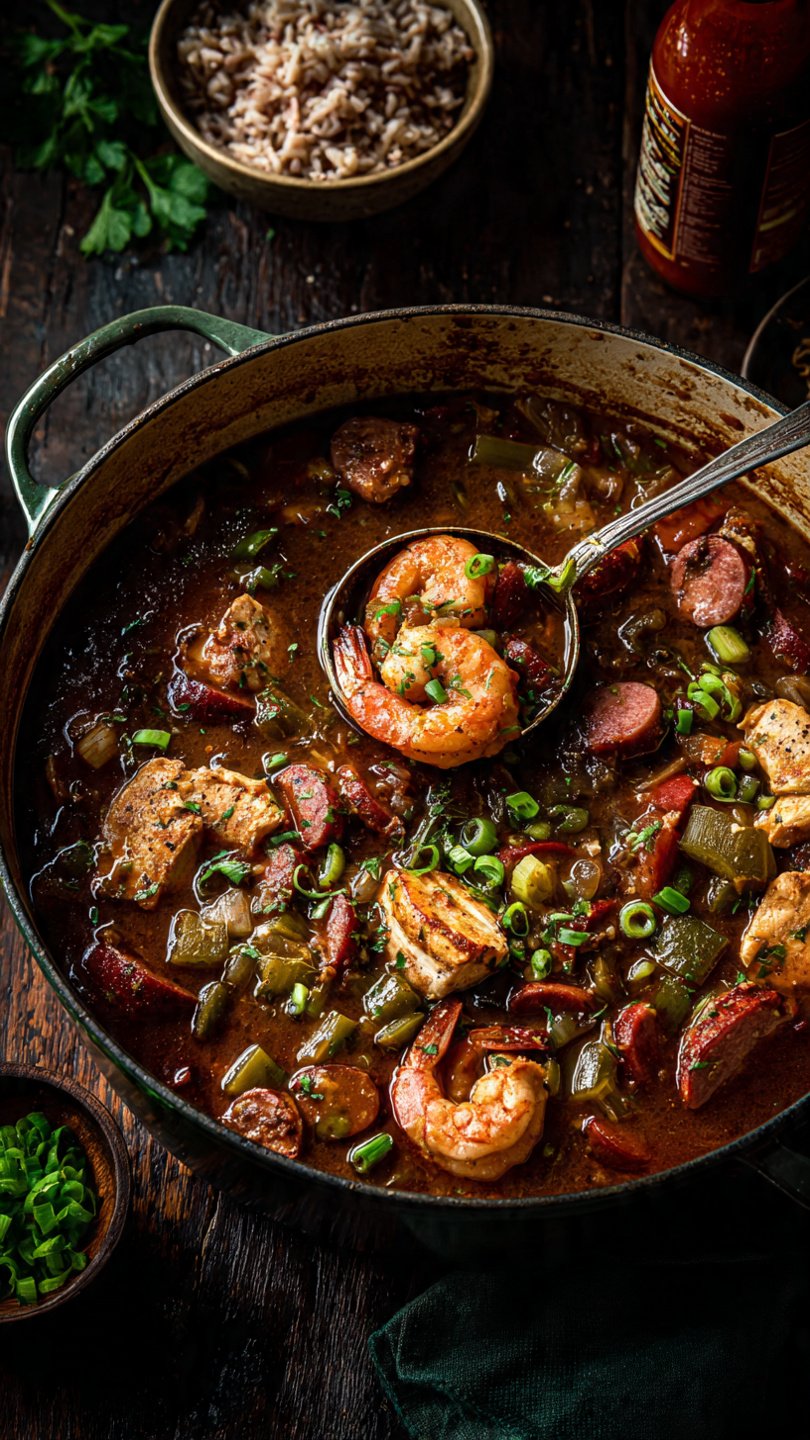
🥣 The Ultimate Healthy Gumbo Recipe (Guilt-Free & Delicious!)
Look, I know what you’re thinking right now. You saw “healthy” and “gumbo” in the same sentence and your brain immediately went, “Nope. Isn’t that illegal in Louisiana?”
I get it. I really do.
Traditionally, a good gumbo starts with a roux that involves an amount of oil that would make a cardiologist faint, followed by several types of delicious, fatty pork products. It’s comfort food at its finest, usually followed by the “itis”—that intense urge to nap immediately after eating.
But here’s the thing: sometimes you crave that deep, smoky, complex flavor of the bayou, but you also want to fit into your jeans tomorrow. You want the soul hug without the sluggish aftermath.
That’s where this recipe comes in. We aren’t making “diet soup” here. This is real-deal gumbo flavor, just engineered to be kinder to your arteries. We’re keeping the Holy Trinity, the spices, and the soulful vibe, but we’re employing a few clever kitchen hacks to lighten the load. So grab your biggest pot, and let’s make some magic happen.
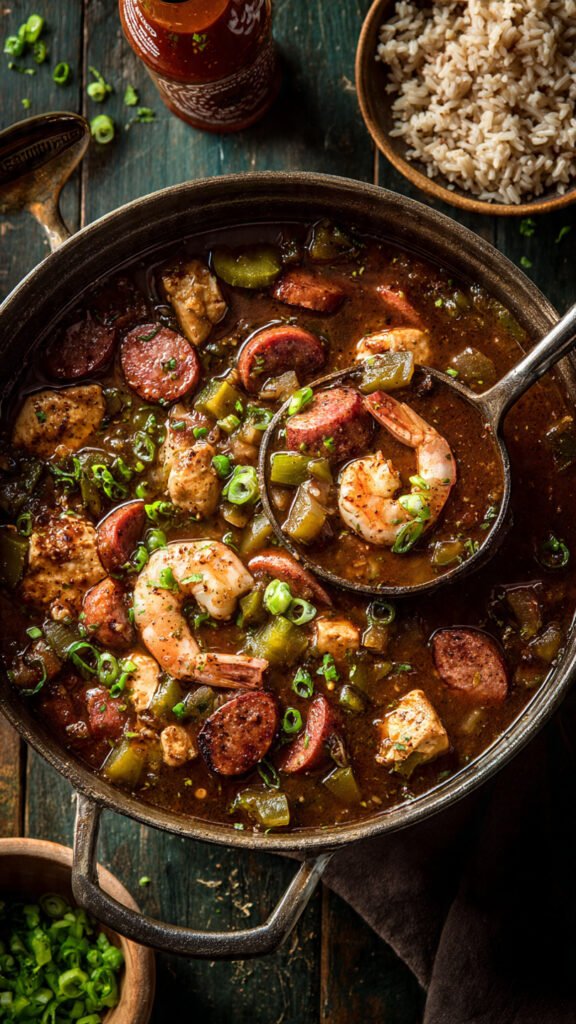
Why This Recipe is Awesome
This isn’t just another stew recipe; it’s a revelation for anyone who loves Southern cooking but is trying to eat a bit cleaner. Here is why this specific version is going to become a staple in your rotation:
The “Cheater” Roux Hack: The soul of any gumbo is the roux—flour browned in fat. A traditional dark roux takes 45 minutes of constant stirring over a hot stove, praying you don’t burn it (which ruins everything) or splash “Cajun napalm” on your hand. It also usually requires a 1:1 ratio of flour to oil. That’s a lot of oil.
We are skipping that drama. In this recipe, we use an oven-baked roux method. By toasting the flour dry in the oven first, we get that nutty, deep flavor and dark color with a fraction of the oil used later. It’s practically foolproof, significantly lower in calories, and you don’t have to stand over the stove sweating bullets.
Volume Eating at Its Best: Because we are cutting back on heavy fats and loading up on the “Holy Trinity” (onions, celery, bell peppers), plus okra and tomatoes, you can eat a huge bowl of this without blowing your daily calorie budget. It’s incredibly satiating because of the fiber and protein density.
Flexible Proteins: While traditional gumbo often relies on fatty smoked sausage and dark meat chicken, this version is incredibly adaptable to leaner options. We use smoked turkey sausage or chicken andouille to get that smoky hit without the grease grease pool, and lean chicken breast that stays tender because it poaches in the flavorful broth. And, of course, plenty of shrimp, which are naturally lean protein powerhouses.
It Tastes Better the Next Day: Like chili or lasagna, gumbo benefits from a night in the fridge. The flavors meld, marry, and deepen. This makes it the ultimate meal-prep champion for the week ahead.
Ingredients You’ll Need
Don’t let the list intimidate you; a lot of this is just spices and veggies. Mise en place (getting everything chopped and ready before you start cooking) is your best friend here.
The Vitals:
- The Roux Base: ½ cup all-purpose flour (to be toasted in the oven) and 2 tablespoons of avocado oil or light olive oil. Yes, that’s really all the oil we need.
- The Liquid Gold: 6–8 cups of high-quality, low-sodium chicken broth. The better your broth tastes on its own, the better your gumbo will be.
The “Holy Trinity” & Friends:
- Onion: 1 large yellow onion, diced.
- Green Bell Pepper: 2 medium ones, diced. Don’t skimp here; they provide crucial flavor base notes.
- Celery: 3 ribs, diced. The unsung hero of savory bases.
- Garlic: 6 cloves, minced. Measure with your heart. If your heart says 8 cloves, listen to it.
- Okra: 2 cups sliced (fresh or frozen). FYI: Okra is a natural thickener. If you are terrified of the “slime factor,” don’t worry, we address that in the cooking method.
The Proteins:
- Smoked Sausage: 12 oz of smoked turkey sausage or chicken andouille, sliced into coins. This brings the smoke factor.
- Chicken: 1 lb boneless, skinless chicken breast or thighs, cut into bite-sized chunks and seasoned lightly with salt and pepper.
- Shrimp: 1 lb medium shrimp, peeled and deveined (tails off is easier for eating).
The Flavor Bomb (Seasonings):
- Cajun/Creole Seasoning: 2–3 tablespoons. Note: If your blend already has salt, go easy on adding extra salt later.
- Dried Thyme: 1 teaspoon.
- Dried Oregano: 1 teaspoon.
- Bay Leaves: 2 whole leaves (the fishing trophies you pull out at the end).
- Cayenne Pepper: ¼ to ½ teaspoon. Adjust depending on how brave you’re feeling.
- Worcestershire Sauce: 1 tablespoon for that umami depth.
Step-by-Step Instructions
1. The Dry Oven Roux (The Game Changer) Preheat your oven to 400°F (200°C). Spread the ½ cup of flour onto a dry baking sheet in an even layer. Bake it for 20 to 35 minutes. Crucial: You need to stir it every 5–7 minutes. You are watching for the color to change from white to a tan, peanut-butter color. It will smell nutty, almost like popcorn. Don’t let it burn! Once it’s toasty, pull it out and let it cool.
2. Brown the Proteins While the flour is doing its thing in the oven, grab a large Dutch oven or heavy-bottomed soup pot. Heat 1 tablespoon of your oil over medium-high heat. Add the sliced turkey sausage and sear until browned. Remove sausage with a slotted spoon and set aside. Add the chicken chunks to the same pot (add a tiny splash more oil if needed) and sear just until the outsides are no longer pink—don’t worry about cooking them all the way through yet. Remove chicken and set aside with the sausage.
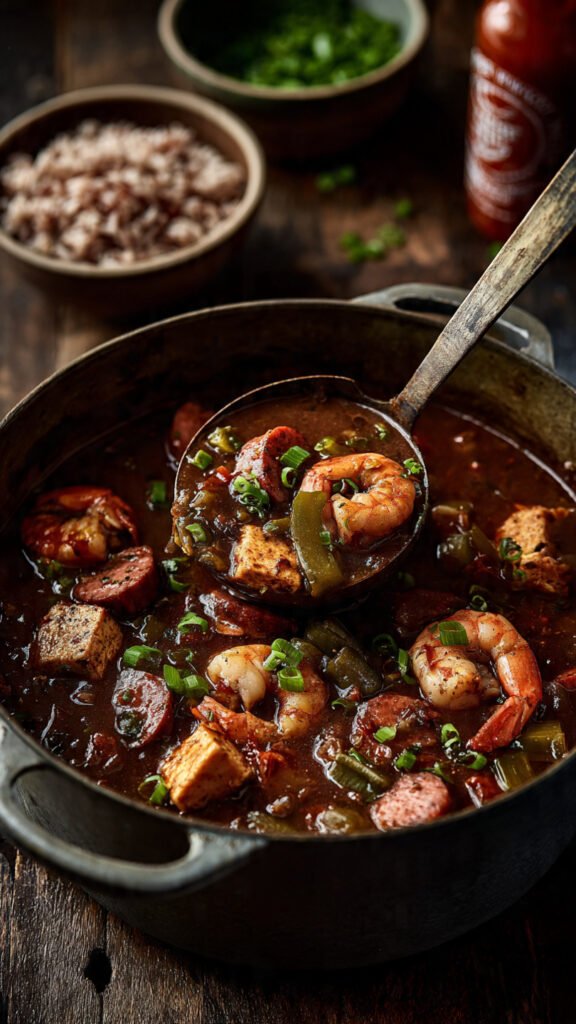
3. Sweat the Trinity Lower the heat to medium. You should have some nice brown bits stuck to the bottom of the pot (that’s called “fond,” and it’s pure flavor). Add the diced onions, bell peppers, and celery. Cook them for about 8–10 minutes, stirring occasionally, until they are soft and translucent. The moisture from the veggies should help lift that tasty fond off the bottom of the pot. Add the minced garlic and cook for 1 more minute until fragrant.
4. Build the Gumbo Base Sprinkle your toasted, cooled oven flour over the softened vegetables. Stir well to coat everything; it will look a bit pasty. Cook for 2 minutes, stirring constantly. Slowly stream in the chicken broth, whisking or stirring vigorously to dissolve the flour mixture so you don’t get lumps.
5. The Simmer Add the browned sausage, the partially cooked chicken, Cajun seasoning, thyme, oregano, Worcestershire sauce, and bay leaves. Bring the pot to a gentle boil, then immediately reduce the heat to low. Cover the pot and let it simmer for at least 30 minutes, preferably 45. This is where the magic happens and the flavors get to know each other.
6. The Finish Line Uncover the pot. Stir in the sliced okra. Simmer uncovered for another 10–15 minutes. The okra will help thicken the gumbo naturally. Finally, stir in the raw shrimp. Cook for just 3–5 minutes—only until the shrimp turn pink and opaque. Do not overcook the shrimp or they will taste like seasoned rubber bands.
7. Serve Fish out the bay leaves. Taste and add salt or more cayenne if needed. Serve over a small scoop of brown rice or cauliflower rice and garnish with green onions.
Common Mistakes to Avoid
Even though we simplified the roux, there are still a few ways things can go sideways. Avoid these rookie moves:
- Burning the Dry Roux: When toasting the flour in the oven, if you smell burnt toast, you’ve gone too far. Burnt flour tastes acrid and bitter, and there is no fixing it. You have to throw it out and start over. Watch it like a hawk during those last few minutes in the oven.
- Adding Shrimp Too Early: I cannot stress this enough. Shrimp cook almost instantly in hot liquid. If you add them at the beginning of the simmer, they will be tough and weird by the time you serve it. They always go in last.
- Using Bland Broth & Water: Since we aren’t relying on pork fat for flavor, the broth is doing heavy lifting here. Do not use water. Use a rich, flavorful chicken or vegetable stock. Taste your stock before you add it; if it tastes like savory dishwater, your gumbo will too.
- Fearing the Okra Slime: Yes, okra can be slimy when cut. But when cooked down in a stew like gumbo, that “slime” (mucilage, scientifically speaking) acts as a wonderful natural thickener and gives gumbo its characteristic silky texture. Embrace it.
Alternatives & Substitutions
This recipe is pretty sturdy and can handle some swaps based on your dietary needs or what’s in your fridge.
- Make it Gluten-Free: You can absolutely use a gluten-free all-purpose flour blend for the oven roux. It toasts up similarly, though the color might not get quite as dark as wheat flour. It still works as a thickener.
- The “I Hate Okra” Variation: If you simply cannot abide okra, leave it out. To compensate for the thickening power you lost, you can stir in 1 to 2 teaspoons of filé powder (ground sassafras leaves) after you have taken the pot off the heat right before serving. Do not cook the filé, or it gets stringy.
- Seafood Lovers: Feel free to add lump crab meat along with the shrimp at the very end. It makes it feel extra fancy.
- Carb Options: To keep it healthy, serve this over brown rice, quinoa, or for the lowest carb option, cauliflower rice. Honestly, it’s thick enough to eat like a stew without any rice at all.
FAQ (Frequently Asked Questions)
Is this technically an authentic gumbo? Define “authentic.” Will a Cajun grandmother clutch her pearls at the oven roux and lack of pork lard? Probably. But does it taste like gumbo, smell like gumbo, and comfort you like gumbo? Absolutely. We are aiming for authentic flavor adapted for modern, healthier life.
Is it spicy? It has a kick, yes. The Cajun seasoning usually has pepper in it, plus the cayenne we add. If you are sensitive to spice, omit the extra cayenne pepper entirely and choose a mild smoked sausage. You can always add hot sauce to your individual bowl later.
How long does it last in the fridge? It lasts up to 4 days in an airtight container in the fridge. As mentioned, it’s even better on day two.
Can I freeze it? Yes! Gumbo freezes beautifully. However, the shrimp texture can sometimes suffer slightly upon reheating. If you know you are making a batch specifically to freeze, consider leaving the shrimp out and adding fresh shrimp when you reheat the base later.
Can I use butter instead of oil? You could, but we are trying to keep the saturated fat down here. Avocado oil or light olive oil are heart-healthier choices that let the other flavors shine.
Final Thoughts
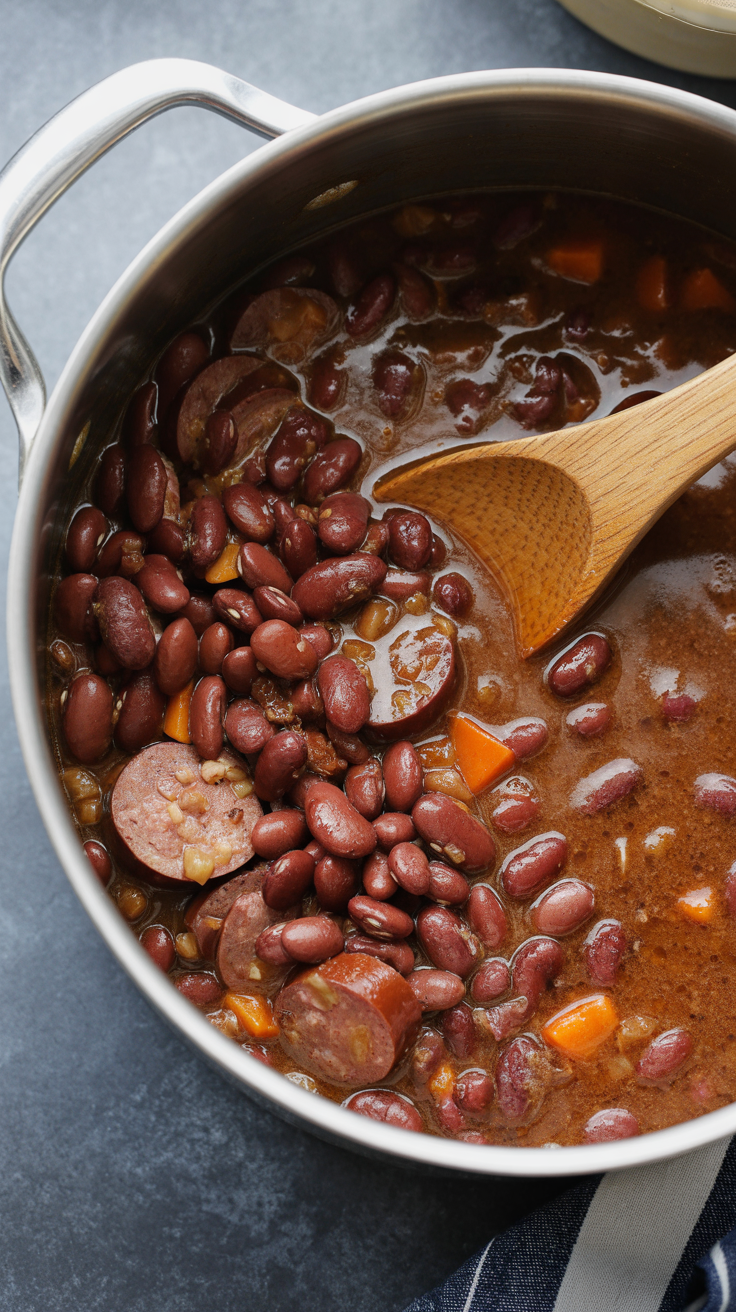
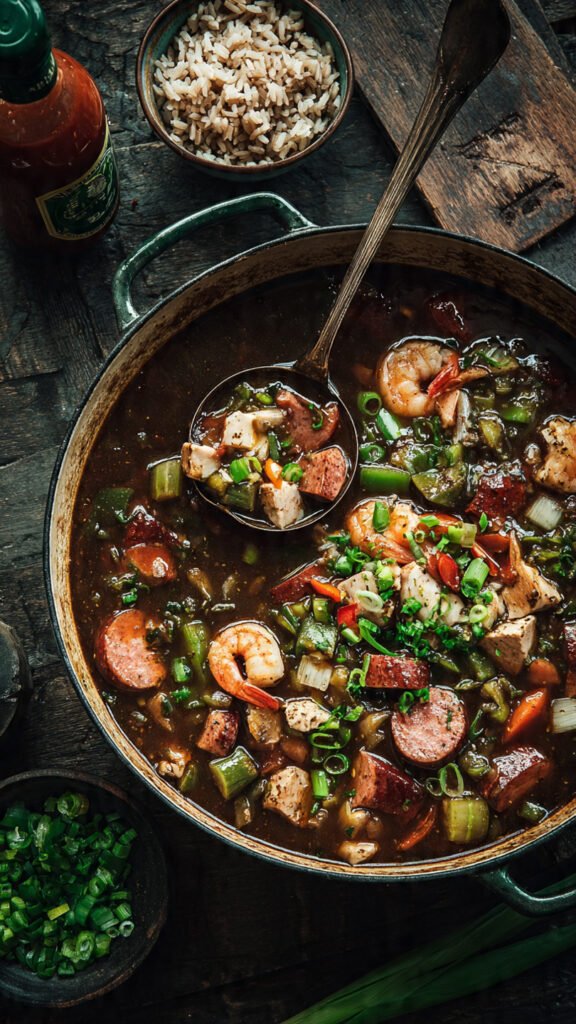
There you have it. A big ol’ pot of Louisiana comfort that won’t derail your health goals. It’s smoky, savory, packed with veggies and lean protein, and honestly fun to make.
Don’t let the long ingredient list scare you off; once everything is chopped, it’s mostly just dumping things into a pot and waiting patiently. Invite some friends over, crack open a cold one (light beer, if we’re sticking to the theme, IMO), and enjoy. Now go impress someone—or just yourself—with your new culinary skills. You’ve earned it!