Italian Focaccia Recipe: The Easiest Way to Bake a Taste of Italy
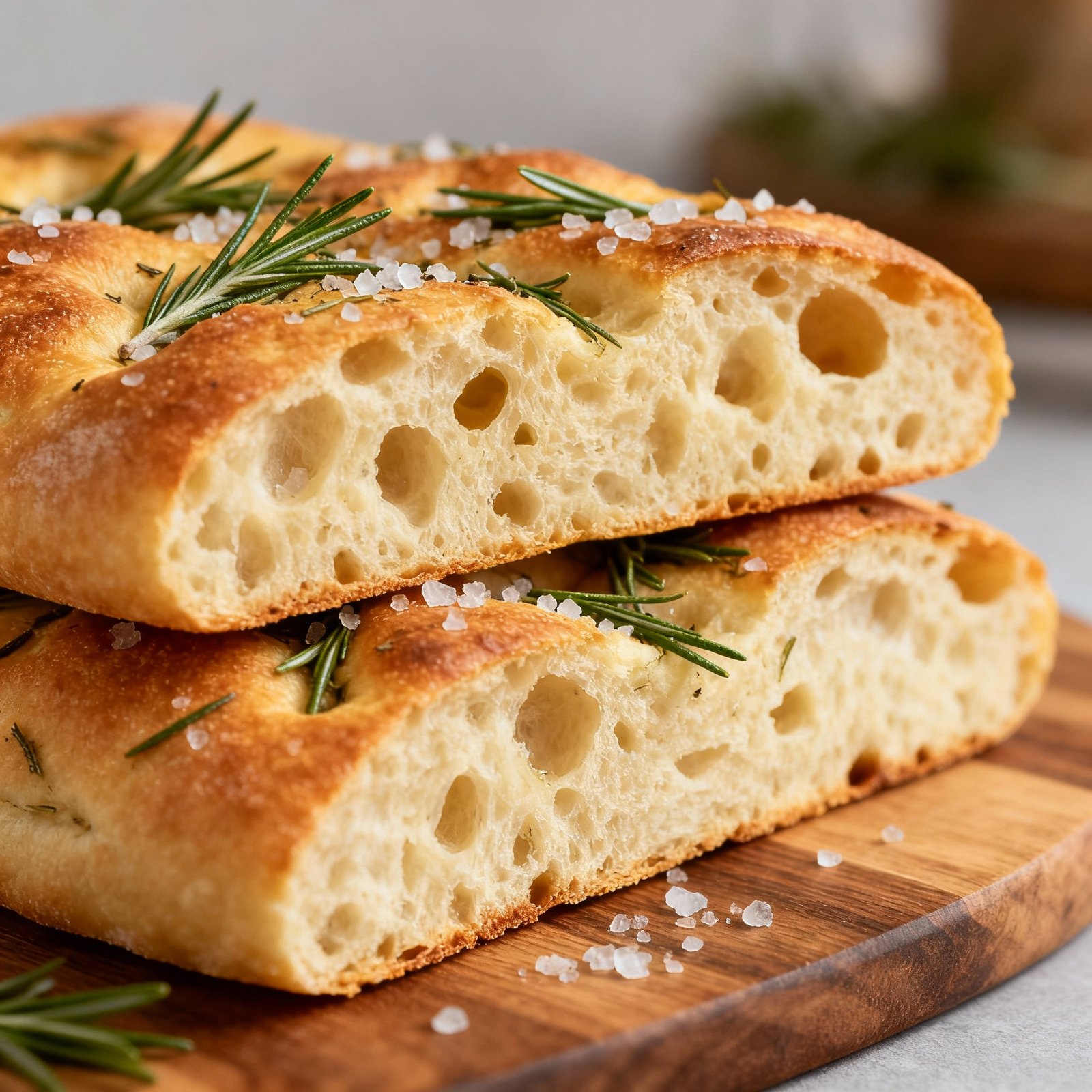
Imagine the aroma of freshly baked bread filling your kitchen, the satisfying crackle of a golden crust, and the soft, airy interior studded with fragrant herbs and glistening olive oil. That’s the magic of focaccia, a simple yet utterly delicious Italian flatbread that’s surprisingly easy to make at home. Forget complicated techniques and long fermentation times; this recipe streamlines the process without sacrificing flavor or texture, bringing a taste of Italy to your table with minimal effort. Whether you’re a seasoned baker or a complete novice, this focaccia recipe will become a go-to for weeknight dinners, weekend gatherings, or simply a delightful afternoon snack.
Why This Recipe Works
This recipe is designed to be approachable and reliable, even for beginner bakers. Here’s why it works so well:
- Simplified Kneading: We minimize the kneading time by utilizing the “stretch and fold” method, which develops gluten gently and effectively, resulting in a light and airy crumb.
- Optimized Hydration: The high hydration level (the ratio of water to flour) contributes to the focaccia’s characteristic open crumb structure and delicate texture.
- Long, Slow Rise: A long, slow rise in the refrigerator allows the dough to develop complex flavors and creates a wonderfully chewy texture. Don’t skip this step!
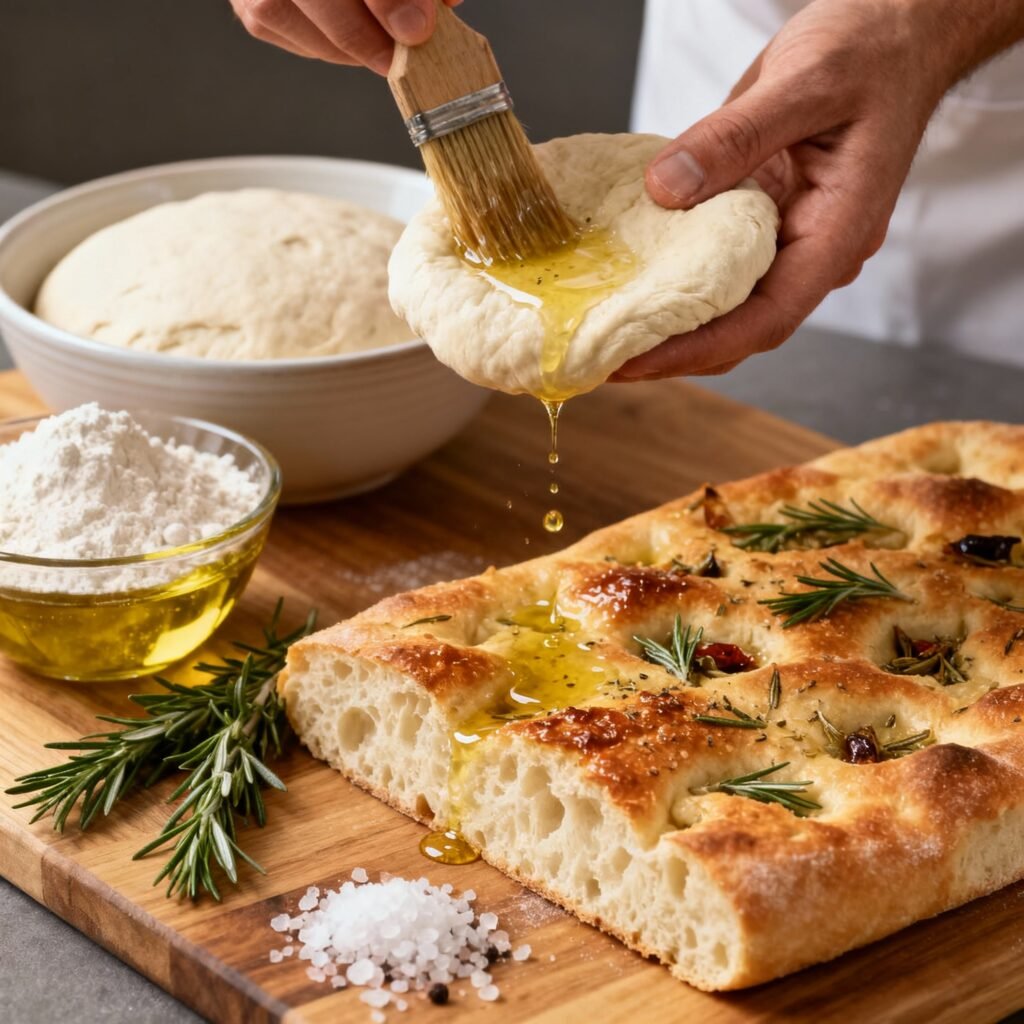
- Generous Olive Oil: Olive oil is key to focaccia’s flavor and texture. We use it liberally throughout the process, ensuring a crispy crust and a rich, satisfying taste.
- Customizable Toppings: The topping options are endless! From classic rosemary and sea salt to roasted vegetables and cheeses, you can customize your focaccia to suit your preferences.
Ingredients
- All-Purpose Flour: 500g (about 4 cups)
- Instant Dry Yeast: 7g (about 2 1/4 teaspoons)
- Warm Water: 400ml (about 1 3/4 cups), lukewarm (around 105-115°F or 40-46°C)
- Olive Oil: 100ml (about 1/2 cup) + more for drizzling
- Salt: 10g (about 2 teaspoons)
- Fresh Rosemary: 2 tablespoons, chopped (or 2 teaspoons dried)
- Coarse Sea Salt: For sprinkling
- Optional Toppings: Cherry tomatoes, olives, red onion, garlic, Parmesan cheese, etc.
Instructions
- Combine Dry Ingredients: In a large bowl, whisk together the flour, yeast, and salt.
- Add Water and Olive Oil: Gradually add the warm water and 50ml (about 1/4 cup) of olive oil to the dry ingredients. Mix with a wooden spoon or your hands until a shaggy dough forms.
- First Rise (Bulk Fermentation): Cover the bowl with plastic wrap or a damp towel and let it rest for 30 minutes.
- Stretch and Fold (First Round): After 30 minutes, lightly wet your hands. Gently grab one side of the dough, stretch it upwards, and fold it over onto itself. Rotate the bowl 90 degrees and repeat the stretch and fold. Do this 4-5 times, until the dough feels slightly tighter.
- Stretch and Fold (Second & Third Rounds): Cover the bowl again and let it rest for another 30 minutes. Repeat the stretch and fold process. Cover and let rest for another 30 minutes, and repeat the stretch and fold again.
- Refrigerate: Cover the bowl tightly and refrigerate for at least 12 hours, or up to 3 days. This long, slow rise develops flavor and texture.
- Prepare the Pan: Generously grease a 9×13 inch baking pan (or a similar size) with olive oil.
- Shape the Dough: Gently pour the dough into the prepared pan. It will be very sticky and may not fill the entire pan.
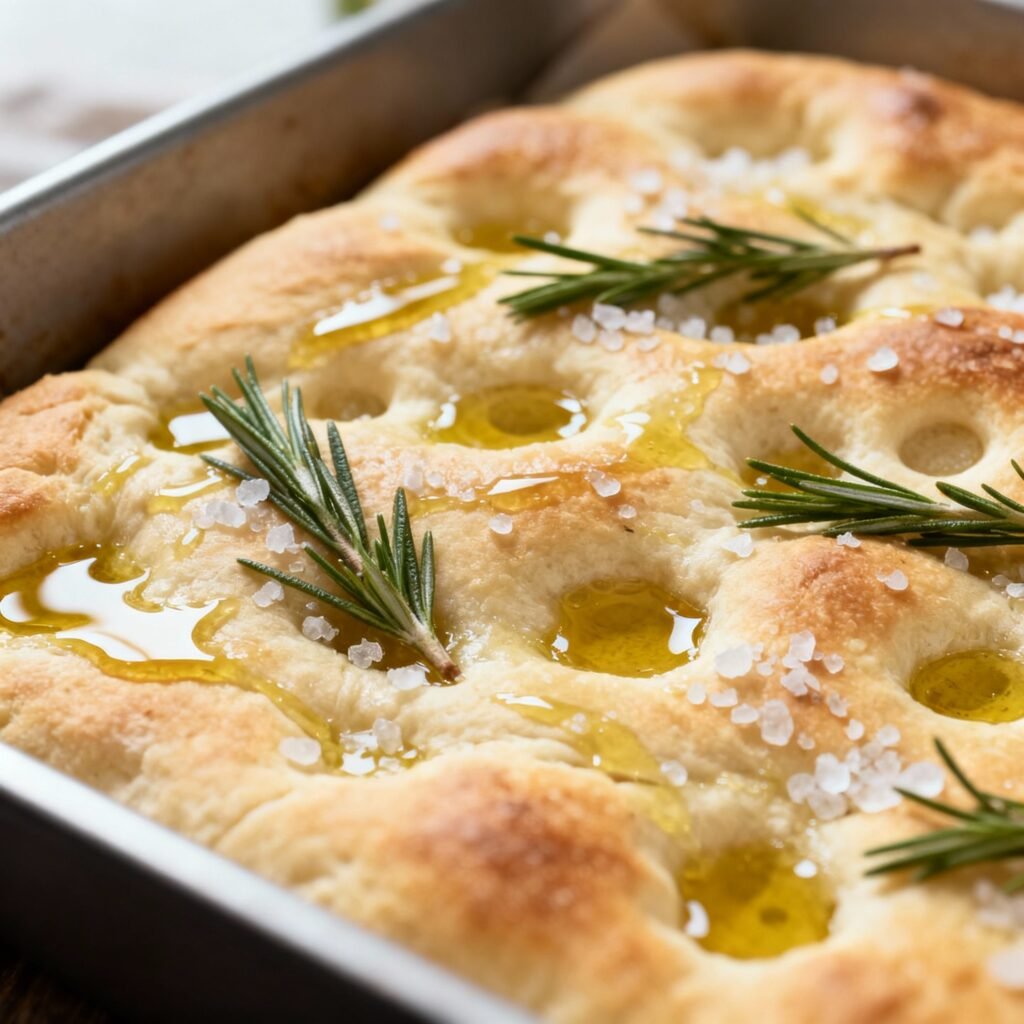
- Second Rise (Proofing): Drizzle the remaining 50ml (about 1/4 cup) of olive oil over the dough. Using your fingertips, gently dimple the dough all over, pressing down to create indentations. This is what gives focaccia its characteristic texture. If using toppings, press them into the dough now. Sprinkle with fresh rosemary and coarse sea salt. Cover loosely with plastic wrap and let it rise at room temperature for 1-2 hours, or until the dough has nearly doubled in size.
- Preheat Oven: Preheat oven to 450°F (232°C).
- Bake: Bake for 20-25 minutes, or until the focaccia is golden brown and the bottom sounds hollow when tapped.
- Cool and Serve: Let the focaccia cool in the pan for a few minutes before transferring it to a wire rack to cool completely. Slice and serve warm or at room temperature.
Tips for Success
- Use High-Quality Olive Oil: The flavor of the olive oil will shine through in the finished focaccia, so use a good quality extra virgin olive oil.
- Don’t Over-Knead: The stretch and fold method is gentle and effective. Over-kneading can result in a tough focaccia.
- Be Patient with the Rise: The long, slow rise is crucial for developing flavor and texture. Don’t rush it!
- Dimple Generously: The dimples not only look beautiful but also create pockets for the olive oil to pool, resulting in a crispy, flavorful crust.
- Adjust Baking Time: Baking times may vary depending on your oven. Keep an eye on the focaccia and adjust the baking time as needed.
- Experiment with Toppings: Get creative with your toppings! Try different herbs, vegetables, cheeses, and spices.
Storage Instructions
Focaccia is best enjoyed fresh, but it can be stored at room temperature in an airtight container for up to 2 days. To refresh day-old focaccia, lightly toast it in a toaster oven or under the broiler.
FAQ
- Can I use bread flour instead of all-purpose flour? While all-purpose flour is recommended for this recipe, bread flour can be used. It will result in a slightly chewier focaccia.
- Can I use active dry yeast instead of instant dry yeast? Yes, but you will need to proof the active dry yeast in warm water for 5-10 minutes before adding it to the flour.
- Can I make this recipe gluten-free? This recipe is not designed to be gluten-free. You would need to use a gluten-free flour blend and adjust the recipe accordingly.
- Can I freeze focaccia? Yes, focaccia can be frozen. Wrap it tightly in plastic wrap and then in aluminum foil. It can be frozen for up to 2 months. Thaw at room temperature before reheating.
- Why is my focaccia dense? A dense focaccia can be caused by several factors, including not enough yeast, not enough rising time, or over-kneading.
Conclusion
This Italian focaccia recipe is a testament to the beauty of simple ingredients and straightforward techniques. With minimal effort, you can create a delicious and satisfying bread that’s perfect for any occasion. So, gather your ingredients, preheat your oven, and get ready to experience the joy of baking your own slice of Italy. Buon appetito!