🧞♂️ Jini Dosa Recipe: Cheesy, Spicy Mumbai Street Food at Home!
Let’s be real for a second. You’re here because you’re craving something outrageously delicious, slightly chaotic, and covered in cheese. You want that specific hit of spicy, buttery, carb-loaded goodness that only Indian street food can provide, but you currently lack the motivation to put on real pants and leave the house.
I feel you. I am you.
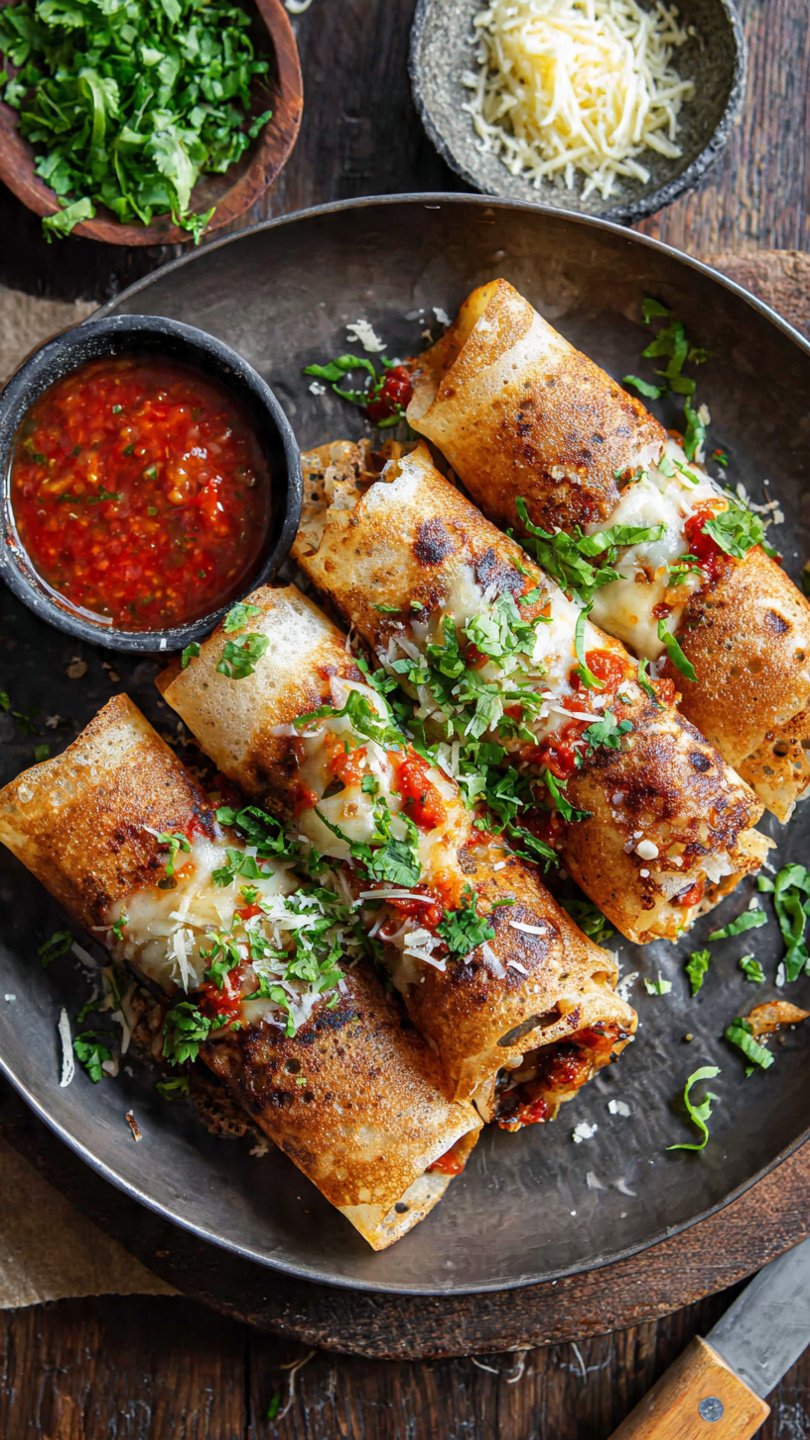
Enter the Jini Dosa. If you’ve never had it, imagine if a crispy masala dosa and a spicy veggie pizza had a very beautiful, very cheesy baby. It’s legendary on the streets of Mumbai for a reason. It’s colorful, it stands up vertically on the plate (fancy!), and it tastes like pure joy.
The best part? It looks incredibly impressive but is actually ridiculously fun and easy to make at home. Let’s get messy.
Why This Recipe is Awesome
Okay, besides the obvious fact that it involves melted cheese and butter, why should you commit to making this specific jini dosa recipe?
First off, it’s a texture bomb. We are aiming for that holy grail of dosa engineering: an impossibly crispy bottom layer that somehow supports a gooey, saucy, molten interior of veggies and cheese. When you bite into one of those little rolls, you get the crunch, followed immediately by the rich, spicy filling. It’s addictive.
Secondly, it’s the ultimate “clean out the fridge” meal disguised as gourmet street food. Got half a capsicum looking sad in the crisper drawer? A lonely carrot? Toss ’em in. This recipe is incredibly forgiving. The robust flavors of Schezwan sauce and garam masala will tie everything together beautifully.
Thirdly, it’s astonishingly fast—if you cheat a little. If you have store-bought dosa batter ready to go (no judgment here, we love convenience), you can have a restaurant-quality meal on the table in under 20 minutes. It’s faster than ordering takeout, and honestly, way more satisfying because you get to take the credit.
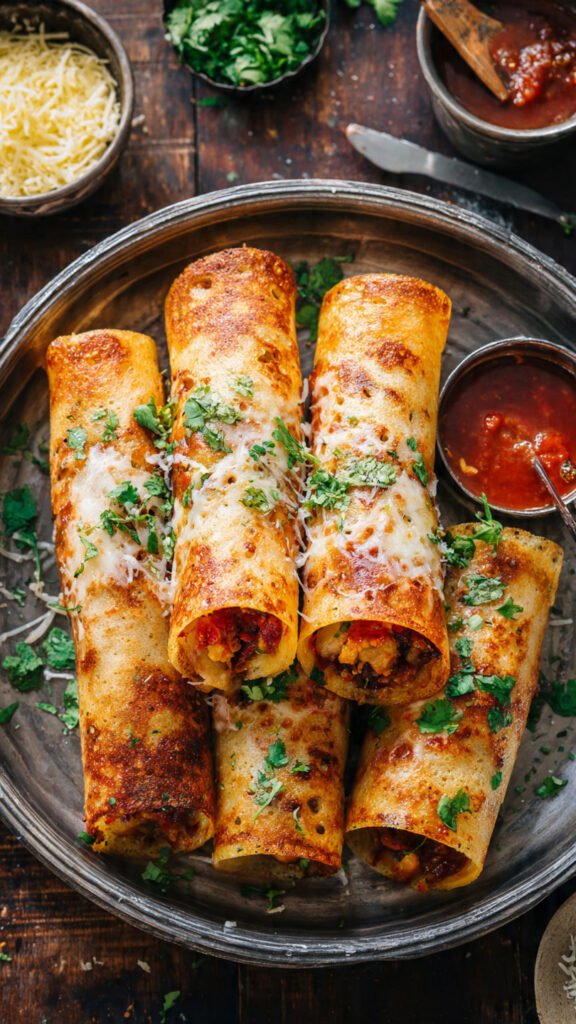
Finally, there’s the visual drama. Unlike a standard dosa that just lies there flat on a plate, the Jini Dosa is rolled tightly and cut into standing pillars. It looks like culinary architecture. Serving this to friends or family makes you look like a seasoned pro who just casually whipped up some Mumbai magic. You don’t have to tell them it was actually kind of easy.
Ingredients You’ll Need
Don’t let the list intimidate you; you probably have half this stuff already. We are building flavor layers here.
The Foundation
- Dosa Batter: You need about 2-3 cups. You can use homemade fermented batter if you’re feeling ambitious, or just grab a bag from the Indian grocery store. Pro Tip: Ensure it’s at room temperature before cooking for the best spread.
The Flavor Explosion (The Veggie Mash)
- Butter: Salted. Lots of it. Don’t look at me like that; this is street food, not spa food. You’ll need about 2-3 tablespoons just for cooking the filling on the dosa.
- Onion: 1 medium, finely chopped. The finer the chop, the better it melts into the sauce.
- Cabbage: ½ cup, finely shredded or grated. It adds a nice crunch and volume.
- Capsicum (Bell Pepper): ½ cup, finely chopped. Green is traditional, but throw in red or yellow for color if you’re feeling fancy.
- Carrot: ½ cup, grated. Adds a subtle sweetness to balance the spice.
- Boiled Potato: 1 medium, mashed. This is the binder that holds the saucy veggies together so they don’t spill out when you roll it.
The Sauces & Spices
- Schezwan Sauce: 2-3 tablespoons. This is non-negotiable. It provides the signature fiery kick and garlicky depth. Adjust based on your spice tolerance.
- Tomato Ketchup: 1-2 tablespoons. It adds tang and sweetness to cut through the heat.
- Pav Bhaji Masala: 1 teaspoon. The secret weapon. It gives it that authentic Mumbai street aroma. If you don’t have it, garam masala works in a pinch, but Pav Bhaji masala is better.
- Salt: To taste. Remember the butter, cheese, and sauces are already salty.
The Toppings
- Cheese: A generous amount of processed cheese (like Amul) or mozzarella, grated. Measure with your heart.
- Coriander leaves: A handful, finely chopped, for freshness.

Step-by-Step Instructions
Ready to channel your inner street vendor? You need to move somewhat quickly once the batter hits the pan, so have all your veggies chopped and sauces open right next to your stove.
- Heat the Tawa: Get your non-stick tawa or cast-iron skillet nice and hot over medium heat. To test if it’s ready, sprinkle a few drops of water on it; they should sizzle and evaporate immediately. If using cast iron, grease it lightly with oil first.
- Spread the Batter: Pour a ladleful of batter into the center of the hot tawa. Using the back of the ladle in a continuous circular motion, spread the batter outwards to form a thin, large circle. Drizzle a teaspoon of oil or butter around the edges to help it crisp up.
- The Flavor Dump: Once the top of the dosa looks dry (about 30-45 seconds), drop a big knob of butter right in the center. Immediately add the chopped onions, cabbage, capsicum, grated carrot, and mashed potato directly on top of the melting butter.
- Sauce it Up: Dollop the Schezwan sauce and tomato ketchup right onto the veggie pile. Sprinkle the Pav Bhaji masala and a pinch of salt over everything.
- The “Mash and Mix”: This is the crucial Mumbai technique. Using a potato masher or a sturdy flat spatula, vigorously mash and mix the veggies, butter, and sauces directly on the surface of the cooking dosa. You want to basically cook a quick veggie curry right on top of the crepe. Spread this mixture evenly over the entire surface of the dosa.
- The Cheese Blizzard: Turn the heat to low so the bottom doesn’t burn. Grate a mountain of cheese all over the spicy veggie layer. Sprinkle chopped coriander on top. Let it sit for a minute until the cheese is gloriously melted and bubbly.
- The Roll and Cut: Once the cheese is melted and the bottom of the dosa is golden brown and crispy, carefully lift one edge. Tightly roll the dosa from one side to the other, like a cigar.
- Serve: Transfer the long roll to a cutting board. Using a sharp knife, cut the roll into 3 or 4 equal cylindrical pieces. Stand them upright on a plate. Serve immediately, maybe with extra Schezwan sauce on the side if you’re a maniac for heat.
Common Mistakes to Avoid
Listen, I’ve messed this up so you don’t have to. Avoid these rookie moves.
- The Cold Tawa: If your pan isn’t hot enough before pouring the batter, the dosa won’t spread properly; it’ll just drag around into a sad, clumpy mess. It also won’t get crispy.
- Overloading the Dosa: It’s tempting to put all the veggies in, but if the filling is too thick, you won’t be able to roll it tight, and it will explode when you try to cut it. Keep the layer relatively thin.
- Chopping Veggies Too Big: You want a saucy, cohesive filling. Big chunks of onion or capsicum won’t cook down fast enough on the tawa and will tear the dosa when you roll it. Finely chopped or grated is the way to go.
- Skimping on Butter: I know, health and whatever. But butter is what fries the veggies and creates that rich flavor profile. If you use too little, the filling tastes dry. Live a little.
- Waiting Too Long to Roll: You must roll it while it’s hot and pliable. If you let it cool on the tawa, it becomes brittle and will crack when you try to roll it.
Alternatives & Substitutions
- Vegan Version: Totally doable. Swap the butter for oil or vegan butter, and use a dairy-free meltable cheese alternative. The Schezwan sauce does most of the heavy lifting flavor-wise anyway.
- No Schezwan Sauce? Okay, it won’t be exactly the same, but you can use a mix of red chili sauce and lots of minced garlic, or even Sriracha if you’re desperate.
- Veggies: Hate capsicum? Leave it out. Love corn? Toss some boiled sweet corn in there. Finely chopped paneer is also a stellar addition for extra protein.
- Batter: If you don’t have dosa batter, some people actually make this using a thin besan (gram flour) cheela batter. It’s a different taste, but still delicious.
FAQ (Frequently Asked Questions)
Can I use leftover dosa batter that’s slightly sour? Absolutely. Honestly, slightly sour batter makes the crispiest dosas. The tangy flavor actually plays really well against the rich, spicy filling. It’s a win-win.
My dosas are sticking to the pan. Help! Is your pan non-stick? If yes, the coating might be worn out. If you are using cast iron or steel, it needs to be seasoned properly. Try rubbing an onion half dipped in oil over the hot tawa before pouring the batter; it’s an old grandma trick that works wonders.
Can I prep the veggie filling beforehand? Technically, yes. You could sauté the veggies and sauces in a separate pan and just spread it on the dosa. But, you lose the magic of the veggies cooking in the butter right on the dosa crepe, which infuses the batter with flavor. The street food method is the “cook-on-top” method for a reason.
Is this spicy? Uh, yeah. “Schezwan” is in the ingredient list. But you control the heat! Dial back the Schezwan sauce and up the ketchup if you want it milder. The cheese also helps tame the fire.
Why is it called Jini Dosa? Nobody knows for sure, but the leading theory is that when cut and stood upright, the little rolls look like tiny towers or structures that a “Jini” (Genie) might conjure up. It’s a cute story, so let’s roll with it.

Final Thoughts
There you have it. The roadmap to carbohydrate nirvana. This jini dosa recipe is one of those dishes that looks incredibly complex but is surprisingly forgiving. It’s messy, it’s loud with flavor, and it’s exactly the kind of food you need when you want to treat yourself.
Don’t stress about getting the perfect round shape or the tightest roll on your first try. Even an ugly Jini Dosa tastes fantastic. So crack open a cold drink, fire up that tawa, and get ready for a cheesy, spicy Mumbai feast right in your own kitchen. You’ve earned this indulgence.