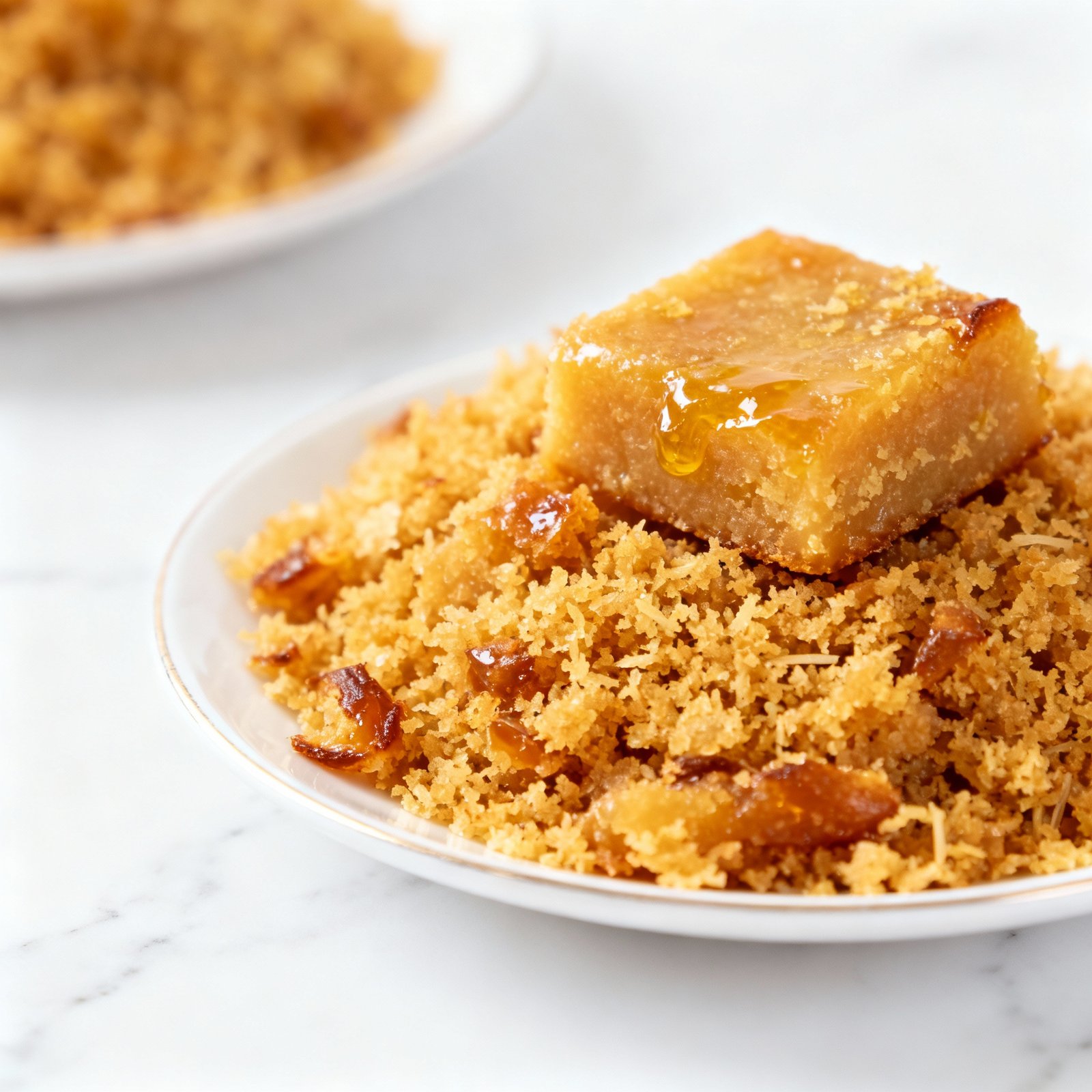
Kada Prasad Recipe: The Divine Sweetness You Can Make at Home
Kada Prasad, that melt-in-your-mouth, divinely sweet offering, is more than just a dessert. It’s an experience, a blessing, and a staple in Sikh Gurdwaras (temples). The simple aroma of ghee, wheat flour, and sugar transforming into this luscious treat evokes feelings of warmth, comfort, and spiritual connection. If you’ve ever tasted Kada Prasad, you know the feeling – a sense of peace washes over you with each spoonful. Now, you can recreate this sacred dish in your own kitchen and share its goodness with your loved ones.
This recipe is designed to guide you through each step, ensuring you achieve the perfect consistency and authentic taste. Don’t be intimidated by the simplicity of the ingredients; the key lies in the technique and a little bit of devotion. So, let’s embark on this culinary journey and bring the divine sweetness of Kada Prasad into your home.
Why This Recipe Works
This Kada Prasad recipe is meticulously crafted to deliver consistently delicious results. Here’s why it works so well:
- Precise Ratios: The 1:1:1:2 ratio of wheat flour, ghee, sugar, and water is crucial for achieving the perfect texture. Deviation from these ratios can lead to a dry, sticky, or overly sweet prasad.
- Careful Roasting: Roasting the wheat flour in ghee is the heart of the recipe. This step is done slowly and patiently, allowing the flour to develop a nutty aroma and a beautiful golden-brown color, which contributes significantly to the final flavor.
- Gradual Addition of Water: Adding boiling water gradually and stirring continuously prevents lumps from forming and ensures a smooth, velvety texture.
- Consistent Stirring: Constant stirring throughout the cooking process is essential to prevent sticking and burning, ensuring even cooking and a uniform consistency.
- Simmering for Perfection: Simmering the mixture after adding the sugar allows the flavors to meld together, creating a harmonious and balanced sweetness.
Ingredients
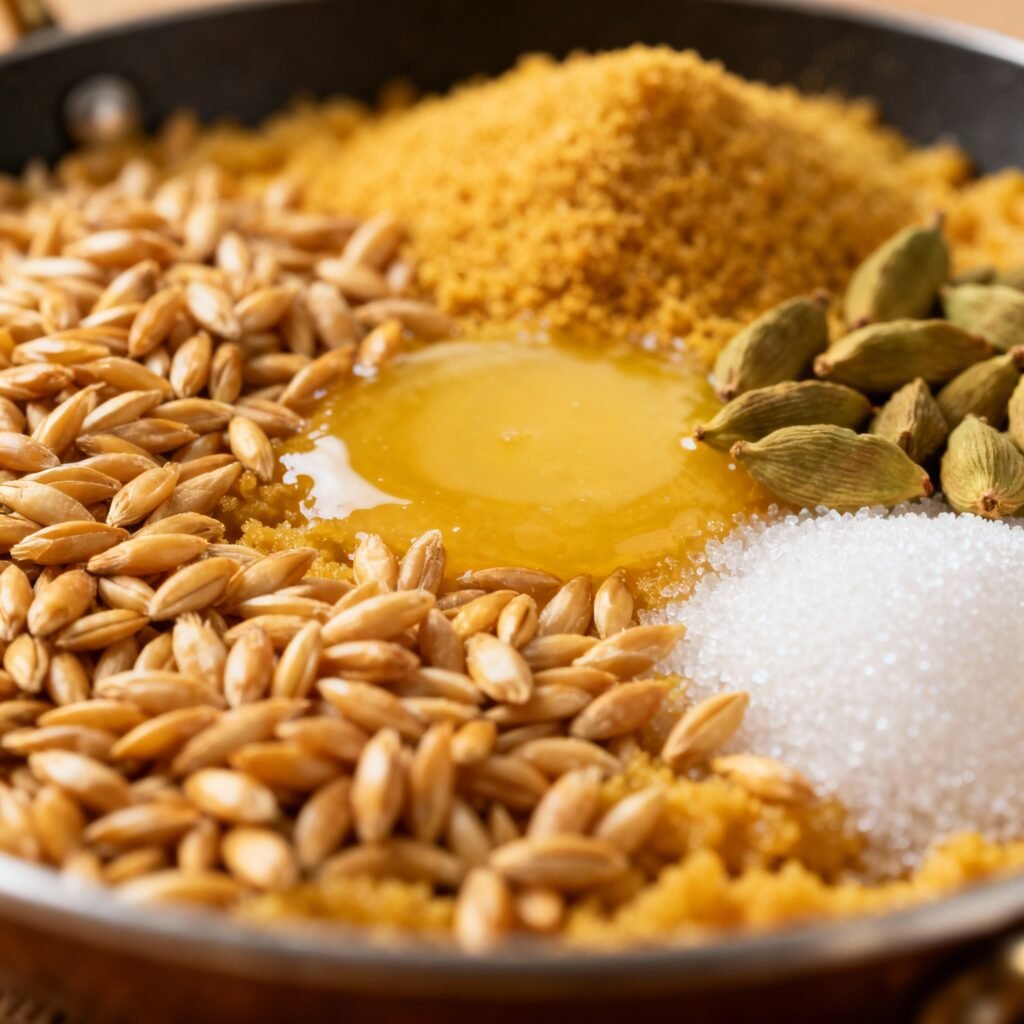
- 1 cup whole wheat flour (atta): Use high-quality whole wheat flour for the best flavor and texture.
- 1 cup ghee (clarified butter): Ghee is essential for the rich, aromatic flavor. Use good quality ghee.
- 1 cup granulated sugar: Adjust the sweetness to your preference, but the 1:1 ratio works well for most palates.
- 2 cups water: Boiling water is key to preventing lumps and ensuring a smooth texture.
Instructions
- Prepare the Water: Bring 2 cups of water to a rolling boil in a saucepan. Keep it hot and ready.
- Melt the Ghee: In a heavy-bottomed pan or kadhai (wok), melt the ghee over medium heat.
- Roast the Flour: Add the whole wheat flour to the melted ghee. Reduce the heat to low-medium and begin roasting the flour.
- Continuous Stirring: Stir continuously and diligently to prevent the flour from sticking or burning. The flour will gradually absorb the ghee and start to clump together.
- Patience is Key: Continue roasting the flour for about 20-25 minutes, or until it turns a light golden-brown color and emits a nutty aroma. This step requires patience and constant stirring. The color change is your visual cue, and the aroma is your sensory cue.
- Adding the Boiling Water: Once the flour is properly roasted, very carefully pour the boiling water into the pan. Be cautious as the mixture will sputter and steam vigorously.
- Stir Vigorously: Immediately start stirring vigorously to incorporate the water into the flour mixture. Continue stirring until all the water is absorbed and the mixture forms a smooth, lump-free paste.
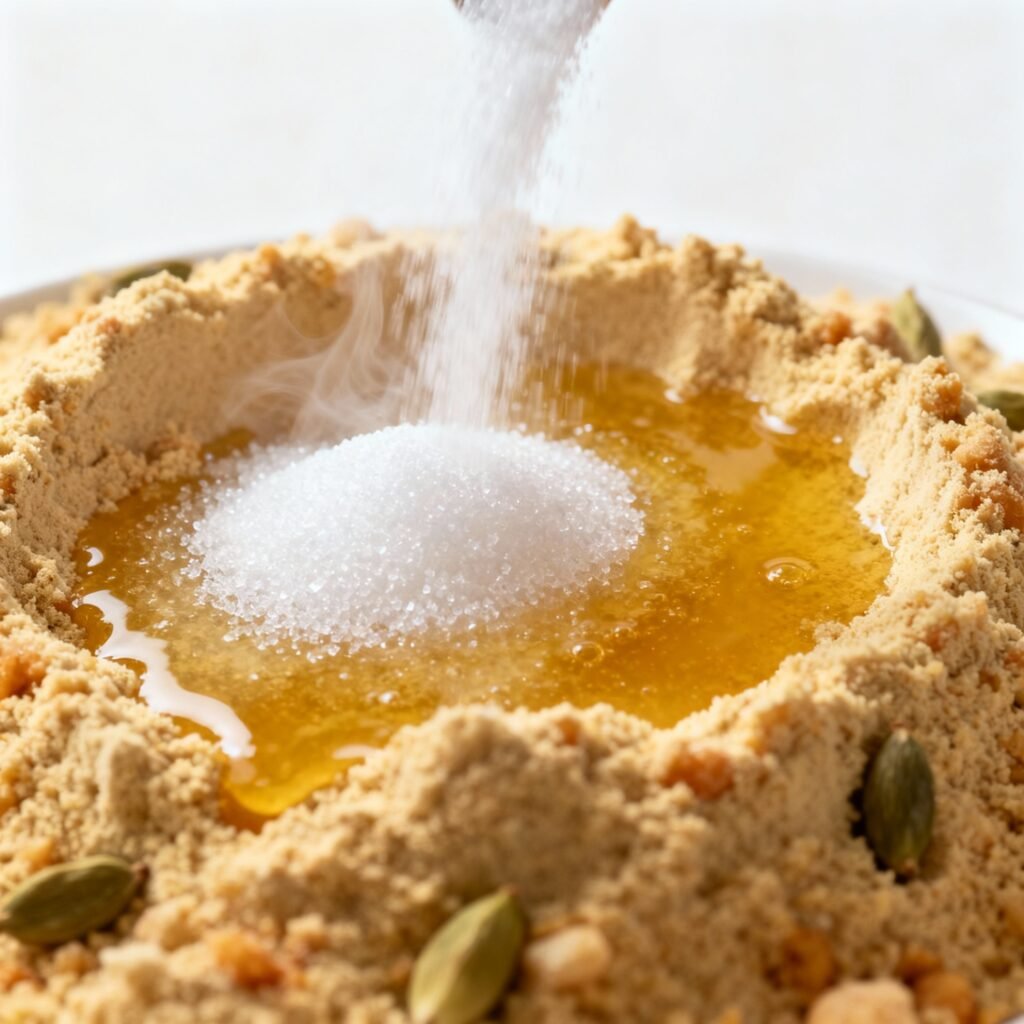
- Add the Sugar: Add the granulated sugar to the mixture.
- Continue Cooking and Stirring: Continue stirring constantly until the sugar dissolves completely and the mixture starts to thicken and come together. The ghee will begin to separate from the mixture.
- Simmer for Perfection: Reduce the heat to low and continue simmering for another 5-7 minutes, or until the Kada Prasad reaches a halwa-like consistency. It should be thick and glossy, and the ghee should be visibly separating from the sides of the pan.
- Serve Warm: Serve the Kada Prasad warm. It is traditionally served with reverence and a sense of gratitude.
Tips for Success
- Use a Heavy-Bottomed Pan: A heavy-bottomed pan or kadhai will help distribute the heat evenly and prevent the flour from burning.
- Don’t Rush the Roasting Process: The roasting of the flour is the most crucial step. Don’t rush it. Roast the flour slowly and patiently until it achieves the right color and aroma.
- Keep the Water Boiling: Keeping the water boiling hot is essential for preventing lumps when you add it to the roasted flour.
- Stir Continuously: Constant stirring is key to preventing sticking, burning, and lump formation.
- Adjust Sweetness to Taste: While the 1:1 ratio of sugar is generally preferred, you can adjust the sweetness to your liking.
- Use Good Quality Ghee: The quality of the ghee will significantly impact the flavor of the Kada Prasad. Use the best quality ghee you can find.
- Devotion and Intention: While technically not a tip, approaching the preparation with a sense of devotion and positive intention will undoubtedly enhance the experience and the final result.
Storage Instructions
Kada Prasad is best enjoyed fresh and warm. However, if you have leftovers, you can store them in an airtight container in the refrigerator for up to 2-3 days. Reheat gently on the stovetop or in the microwave before serving.
FAQ
Q: Can I use all-purpose flour instead of whole wheat flour?
A: While you can, it’s not recommended. Whole wheat flour provides the authentic flavor and texture of Kada Prasad. All-purpose flour will result in a different taste and consistency.
Q: Can I use brown sugar instead of granulated sugar?
A: Yes, you can use brown sugar. It will add a slightly different flavor and color to the Kada Prasad. However, granulated sugar is traditionally used.
Q: My Kada Prasad is too dry. What did I do wrong?
A: This could be due to several reasons: not enough ghee, over-roasting the flour, or not adding enough water. Next time, ensure you use the correct ratios and don’t over-roast the flour.
Q: My Kada Prasad is too sticky. What did I do wrong?
A: This could be due to adding too much water or not roasting the flour enough. Ensure the flour is properly roasted and use the correct amount of water.
Q: Can I add nuts or other flavorings to Kada Prasad?
A: Traditionally, Kada Prasad is made with only the four basic ingredients. However, you can experiment with adding a pinch of cardamom powder or a few chopped nuts for a personal touch. Be mindful that this will deviate from the traditional recipe.
Conclusion
Making Kada Prasad is a rewarding experience that connects you to a rich tradition and a sense of spiritual connection. By following this recipe and paying attention to the details, you can create a truly divine treat that will be cherished by all who taste it. So, gather your ingredients, prepare your heart, and embark on this culinary journey to bring the warmth and sweetness of Kada Prasad into your home. Enjoy the process, and remember that the most important ingredient is love!