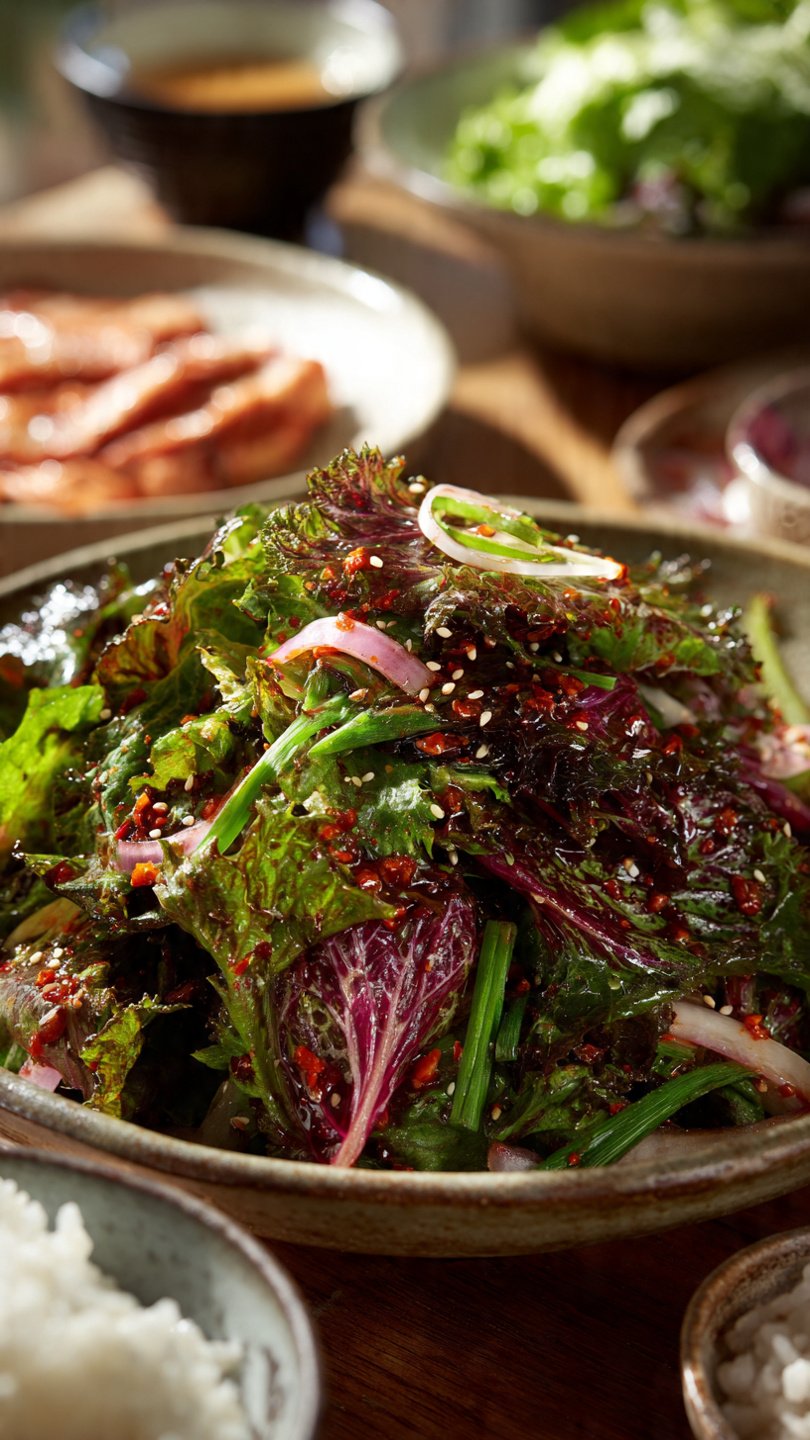
🥗 Spicy Korean Salad Recipe (5-Minute Geotjeori!)
Okay, let’s be real for a second. When someone says “let’s have salad tonight,” your immediate reaction is probably a polite nod while internally screaming out of sheer boredom. I get it. Most salads are sad piles of watery iceberg lettuce drowning in bottled ranch. But today? Today we are absolutely nuking that stereotype. We’re making a Korean salad—specifically, a fresh Geotjeori style salad—that is so punchy, vibrant, and addictive, you might actually forget that you’re eating vegetables.
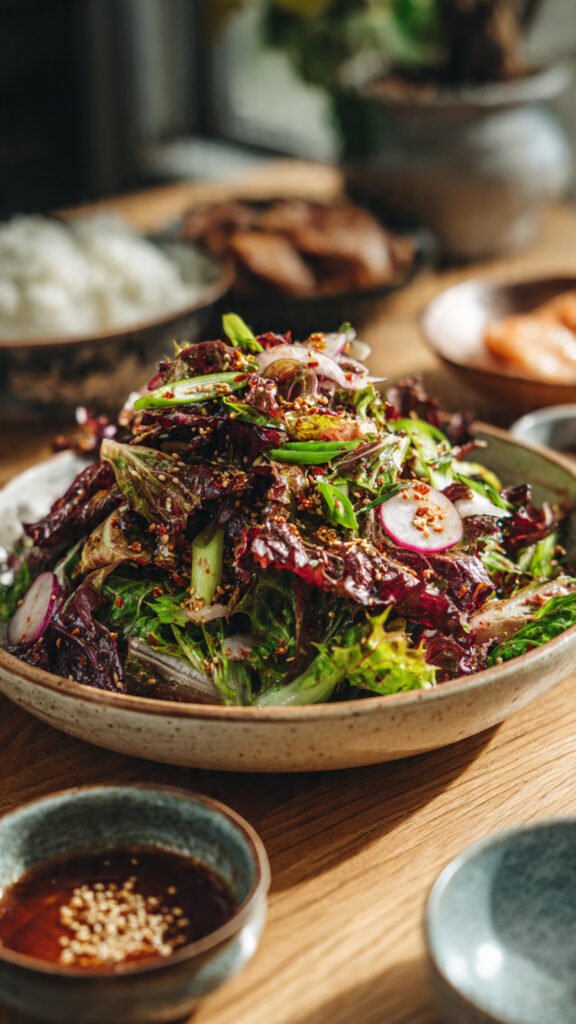
Why This Recipe is Awesome
If you’ve ever been to a Korean BBQ restaurant, you know the drill. You’re happily stuffing your face with glorious, fatty pork belly, and then a waiter drops a silver bowl of lightly dressed, reddish-looking greens onto the table. You take a bite, and suddenly, the grease is cut through by this bright, savory, slightly spicy explosion of flavor. That’s this salad.
This isn’t just another side dish; it’s a game-changer. Here’s why you need this specific Korean salad recipe in your life ASAP:
It’s the Ultimate Flavor Balancer: In Korean cuisine, balance is everything. This salad is the master of hitting every single taste bud simultaneously. It’s savory (thanks, soy sauce), it’s tangy (hello, vinegar), it’s got a nutty aroma that fills the kitchen (we love you, sesame oil), and it has just the right amount of kick to keep things interesting. It’s basically a party in your mouth, and everyone’s invited.
It Takes Five Minutes, Seriously: Look, I love cooking, but some days my energy levels are hovering around “ordering pizza from the couch.” This recipe is for those days. There’s no cooking involved. No pots, no pans, no waiting for water to boil. If you can rip a piece of lettuce and stir a spoon, you are overqualified to make this. It is supremely idiot-proof—even I haven’t managed to mess it up yet.
It Wakes Up Boring Meals: Got some leftover roasted chicken that’s looking a bit dry? Serve it with this salad. Made some instant ramen and want to feel like a responsible adult? Throw this salad on the side. It has enough personality to carry even the blandest Tuesday night dinner on its back.
It’s “Geotjeori” Style (The Fresh Stuff): A quick little culture nugget for you: This type of salad is often called sangchu-geotjeori (sangchu meaning lettuce). Unlike traditional kimchi which is fermented for days or weeks, geotjeori means “fresh kimchi” or “quick kimchi.” It’s meant to be made fresh right before you eat it, preserving the crisp texture of the vegetable while still delivering that signature Korean flavor punch.
Ingredients You’ll Need
We aren’t dealing with anything wildly obscure here, but a few specific items are non-negotiable if you want it to taste authentic.
- Red Leaf or Green Leaf Lettuce: Do not, I repeat, DO NOT use iceberg lettuce here. It’s too watery and has zero flavor. You need softer, leafy greens with lots of nooks and crannies to grab onto that glorious dressing.
- Soy Sauce: The salty, umami backbone of the operation. Use regular soy sauce, not the dark, syrupy kind.
- Rice Vinegar: This provides the essential tang. In a pinch, apple cider vinegar works, but rice vinegar has a milder, sweeter acidity that just fits better.
- Sesame Oil: This is the aroma bomb. Toasted sesame oil is non-negotiable in Korean cuisine. FYI: If you open the bottle and it doesn’t smell like heaven, buy a new bottle.
- Sugar (or Honey/Maple Syrup): You need just a touch of sweetness to balance out the salty soy and sour vinegar. It won’t make the salad sweet; it just rounds out the harsh edges.
- Gochugaru (Korean Red Chili Flakes): Okay, this is the star player. This isn’t the same as the cayenne pepper or crushed red pepper flakes sitting in your spice rack. Gochugaru is vibrant red, slightly fruity, smoky, and has a much gentler, warmer heat. You can find it at any Asian market or easily online.
- Garlic: Because are we really cooking if we aren’t using garlic? Mince it super fine so no one bites into a raw chunk.
- Toasted Sesame Seeds: For texture and that final nutty finish.
- Green Onion (Scallion): Adds a nice fresh bite.
Step-by-Step Instructions
Okay, chef. Let’s assemble this masterpiece. It goes fast, so try not to blink.
1. Prep Your Greens (The Crunch Factor) Wash your lettuce thoroughly. Now, this is crucial: you must dry it completely. Use a salad spinner if you have one, or pat it down with paper towels like it’s a delicate newborn baby. Why? If the lettuce is wet, the oil-based dressing will slide right off, and you’ll end up with a sad, watery puddle at the bottom of the bowl. Once dry, tear the leaves by hand into bite-sized pieces. Don’t use a knife; tearing helps the edges grab the dressing better.
2. The Aromatics Base Finely chop your green onions. If you want to add thinly sliced yellow or red onion for an extra kick (highly recommended), slice them paper-thin now. Pro Tip: If raw onion is too intense for you, soak the sliced onions in ice water for 10 minutes, then drain well. This removes that harsh “bite” and leaves just the sweet crunch.
3. The Magic Potion (The Dressing) In a small mixing bowl, combine the soy sauce, rice vinegar, sugar (or honey), minced garlic, sesame oil, and the star of the show, the Gochugaru. Give it a vigorous whisk with a fork. Watch as the chili flakes hydrate in the liquid, turning the dressing a deep, vibrant, glossy red. It should smell incredibly savory and nutty. Dip your pinky in and taste it. It should taste too strong—salty, tangy, and spicy all at once. That’s perfect; it needs to be strong to dress all those plain leaves.
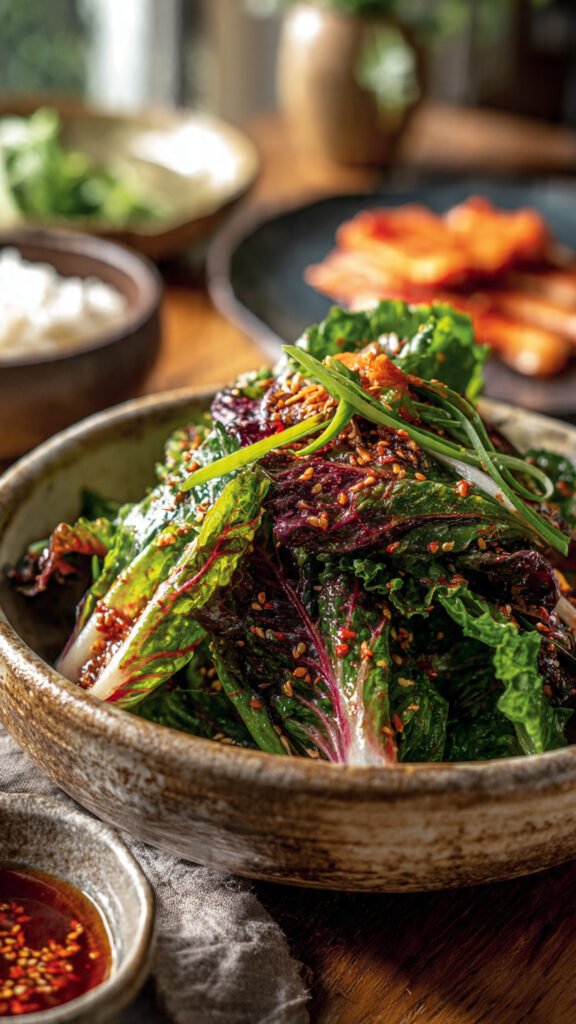
4. The Gentle Toss (Geotjeori Technique) Place your torn lettuce and onions in the biggest mixing bowl you own. Pour that gorgeous red dressing over the top. Add the toasted sesame seeds. Now, wash your hands thoroughly and get in there. Using your hands is better than tongs because you can be gentler. Very lightly toss the leaves, lifting from the bottom and turning them over so they get coated without bruising them. You want them dressed, not beaten up.
5. Serve Immediately! This Korean salad recipe is not a meal prep situation. The acid and salt in the dressing will start wilting the lettuce the second they make contact. It goes from crisp perfection to soggy sadness in about 20 minutes. So, dress it right before you put it on the table and eat up!
Common Mistakes to Avoid
Even though this is easy, there are a few ways to derail the flavor train.
- Using Cayenne Instead of Gochugaru: I cannot stress this enough. If you sub 1:1 cayenne pepper for Korean chili flakes, you will create inedible fire lettuce. Gochugaru is milder and fruitier. If you absolutely must sub, use paprika mixed with a tiny pinch of cayenne, but it won’t be the same.
- Drowning the Lettuce: You want the leaves lightly coated, not swimming. Start with about three-quarters of the dressing, toss, and add the rest only if needed.
- Thinking You Can Make It Ahead: Rookie mistake. As mentioned above, this salad waits for no one. It’s a “make it and eat it” deal.
- Using Wet Lettuce: Seriously, dry your greens. Wet lettuce equals flavorless salad. Don’t do it to yourself.
Alternatives & Substitutions
This recipe is pretty flexible once you have the base dressing down. Here’s how you can riff on it.
- Switch up the Greens: While red leaf lettuce is traditional, this dressing rocks on romaine hearts for extra crunch, or even spring mix if you’re feeling delicate. It’s also amazing tossed with thinly sliced cucumbers instead of lettuce.
- Make it gluten-free: Just swap the regular soy sauce for Tamari or coconut aminos. Easy peasy.
- Adjust the Heat: The amount of Gochugaru listed makes a medium-spicy salad. If you’re nervous about heat, cut the amount in half. If you’re a fire-breathing dragon, double it. IMO, more is better, but you do you.
- Add More Veggies: Feel free to toss in julienned carrots, thinly sliced radishes, or even some perilla leaves (kkannip) if you can find them at the Asian market. They add an amazing, unique minty-basil flavor.
FAQ (Frequently Asked Questions)
Can I use normal red pepper flakes from the pizza place? You can, but your soul might cry a little. They are mostly just heat and seeds, lacking that vibrant color and smoky, sweet flavor of Korean chili flakes. It’s worth buying the real stuff; a bag lasts forever in the freezer.
What on earth do I serve this with? Everything! Obviously, it’s perfect with grilled meats like steak, pork belly, or chicken. But it’s also great alongside fried rice, roasted fish, or honestly, just sitting atop a bowl of plain steamed white rice with a fried egg.
Is this recipe vegan? Yes, absolutely! As long as you use sugar or maple syrup instead of honey, it’s 100% plant-based and vegan-friendly.
Why does my salad taste bitter? You might have used too much toasted sesame oil (it can become bitter in large quantities), or your lettuce might just be old. Also, make sure your garlic isn’t burnt if you decided to get creative and sauté it first (don’t do that for this recipe, raw is best here).
Can I use lemon juice instead of vinegar? Technically yes, you’ll get acidity. But lemon brings a distinct citrus flavor that changes the vibe completely. Rice vinegar gives it that authentic Asian restaurant taste you’re probably looking for.
Final Thoughts
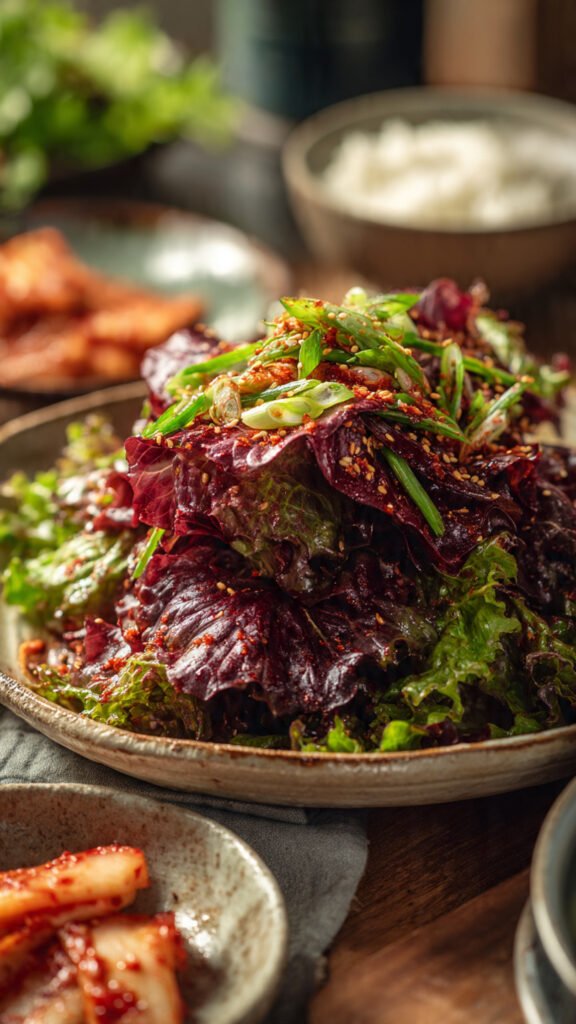
See? I told you salad didn’t have to be boring. This Korean salad recipe is practically a magic trick—turning plain leaves into something you actually crave with almost zero effort. It’s fresh, it’s fiery, and it’s about to become your new weeknight staple.
Now go impress someone—or just impress yourself—with your new culinary skills. You’ve earned it!