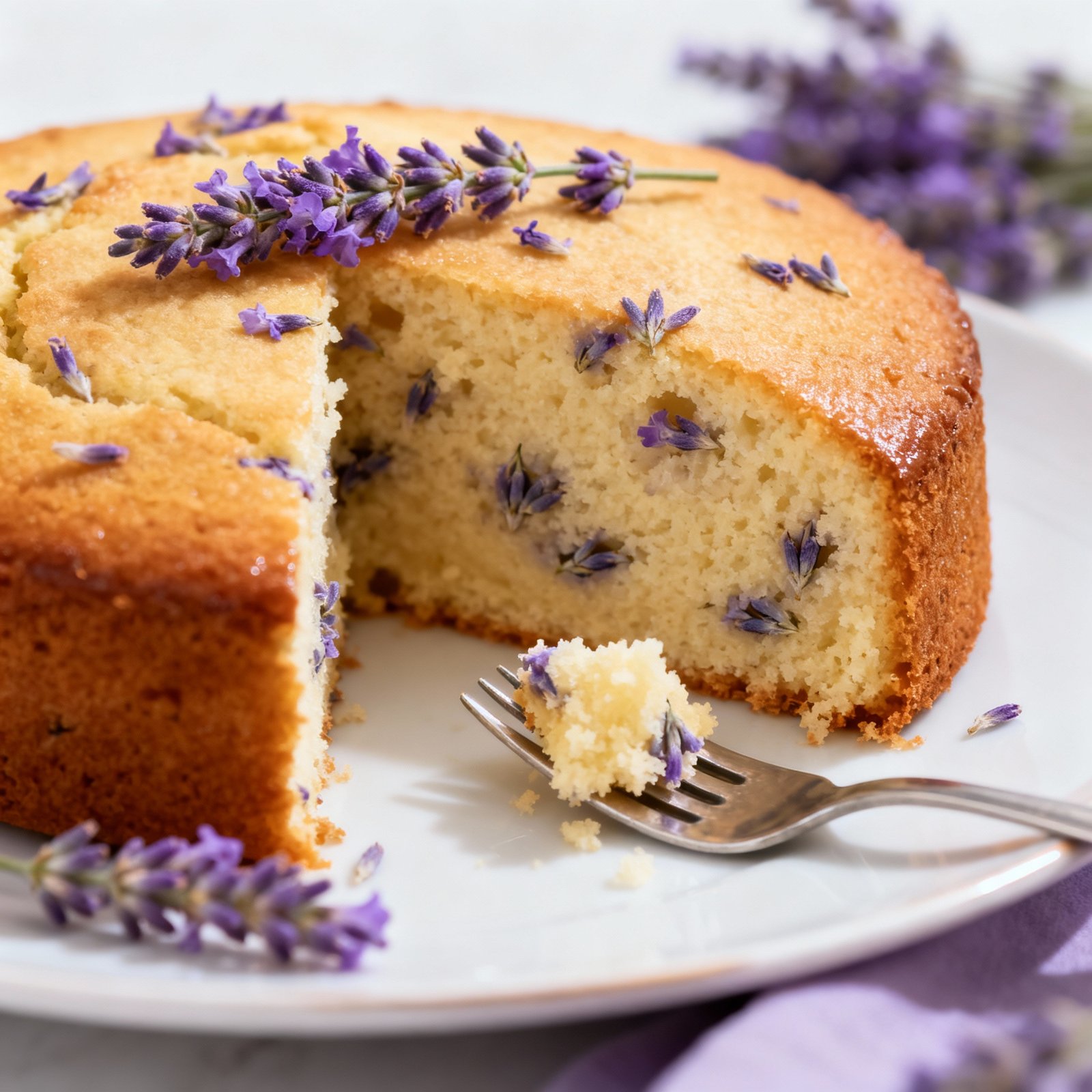
Lavender Cake Recipe: Aromatic Bliss in Every Bite
Imagine a cake so delicate, so fragrant, it transports you to a sun-drenched field of lavender in Provence. This isn’t just any cake; it’s an experience. Our lavender cake is a symphony of floral notes and buttery sweetness, a perfect treat for afternoon tea, a special occasion, or simply when you need a little bit of magic in your day. Forget those overly sweet, artificial lavender-flavored products. This recipe uses culinary lavender to create a subtle, sophisticated flavor that will tantalize your taste buds and leave you wanting more. Get ready to bake a cake that’s as beautiful as it is delicious!
Why This Recipe Works
This lavender cake recipe isn’t just about throwing ingredients together and hoping for the best. It’s carefully crafted to ensure a moist, tender crumb and a balanced lavender flavor that isn’t overpowering. Here’s why it works:
- Infused Sugar: We start by infusing sugar with culinary lavender. This extracts the essential oils and creates a base of flavor that permeates the entire cake. It’s far superior to simply adding dried lavender directly to the batter, which can result in a gritty texture and uneven flavor distribution.
- Buttermilk: Buttermilk adds moisture and tenderness to the cake, creating a delicate crumb that melts in your mouth. The acidity also helps to activate the baking soda, resulting in a light and airy texture.
- Cake Flour: Using cake flour, which has a lower protein content than all-purpose flour, ensures a soft and tender cake. If you don’t have cake flour, you can substitute it by using all-purpose flour but removing two tablespoons per cup and replacing it with cornstarch.
- Creaming Method: The creaming method, where butter and sugar are creamed together until light and fluffy, incorporates air into the batter, which is essential for a light and airy cake.
- Gentle Mixing: Overmixing the batter can develop the gluten in the flour, resulting in a tough cake. We emphasize gentle mixing to keep the cake tender.
Ingredients
- For the Lavender Sugar:
- 1 cup granulated sugar
- 2 tablespoons culinary lavender buds, dried
- For the Cake:
- 1 cup (2 sticks) unsalted butter, softened
- 1 ½ cups lavender sugar (from above)
- 3 large eggs
- 1 teaspoon vanilla extract
- 2 ½ cups cake flour
- 1 teaspoon baking powder
- ½ teaspoon baking soda
- ¼ teaspoon salt
- 1 cup buttermilk
- For the Lavender Glaze (Optional):
- 1 cup powdered sugar
- 2-3 tablespoons milk
- ½ teaspoon lavender extract (optional, for extra lavender flavor)
Instructions
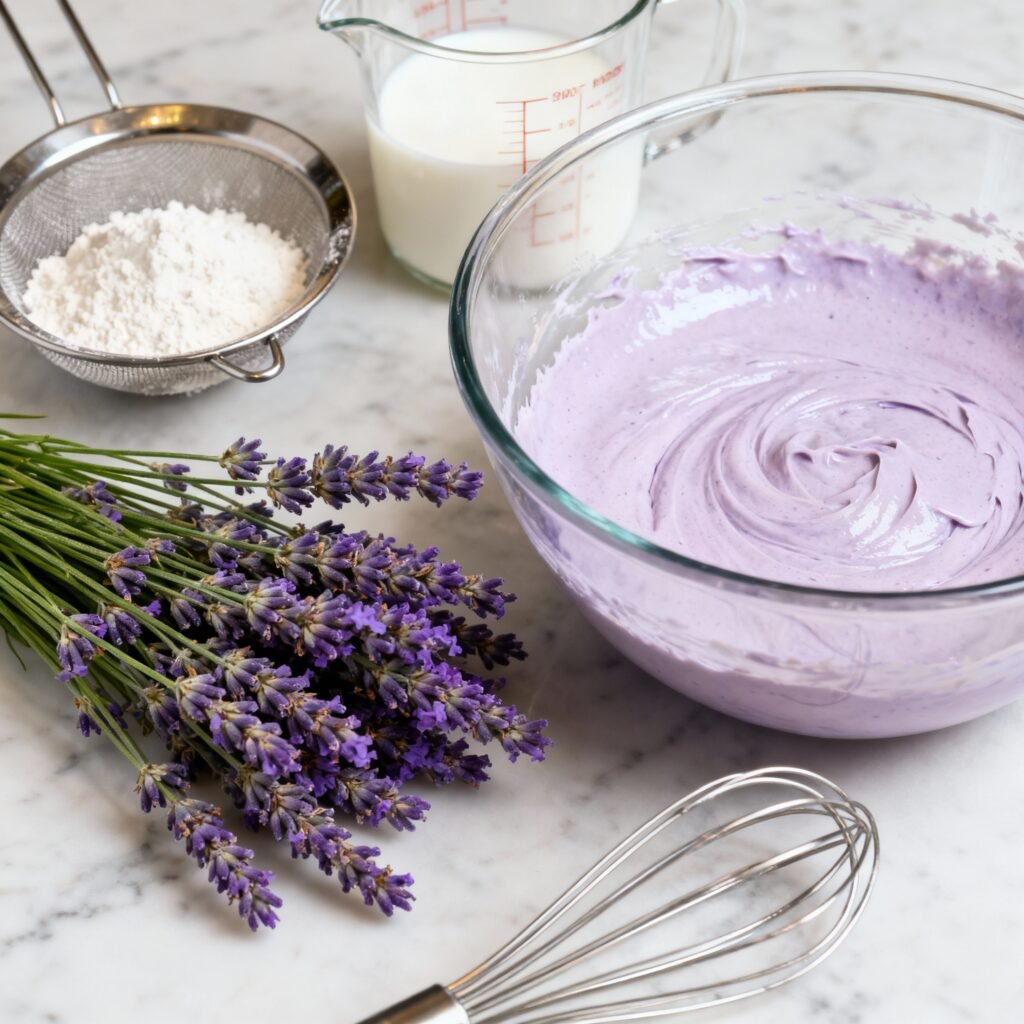
- Prepare the Lavender Sugar: In a food processor, combine the granulated sugar and culinary lavender buds. Pulse until the lavender is finely ground and evenly distributed throughout the sugar. This process releases the lavender’s essential oils, infusing the sugar with its delicate flavor.
- Cream Butter and Sugar: In a large bowl, cream together the softened butter and lavender sugar until light and fluffy. This will take about 3-5 minutes using an electric mixer. The mixture should be pale and airy.
- Add Eggs and Vanilla: Beat in the eggs one at a time, mixing well after each addition. Stir in the vanilla extract.
- Combine Dry Ingredients: In a separate bowl, whisk together the cake flour, baking powder, baking soda, and salt.
- Alternate Wet and Dry Ingredients: Gradually add the dry ingredients to the wet ingredients, alternating with the buttermilk. Begin and end with the dry ingredients. Mix until just combined. Be careful not to overmix.
- Prepare Baking Pan: Grease and flour a 9-inch round cake pan. You can also line the bottom with parchment paper for easy removal.
- Pour Batter into Pan: Pour the batter into the prepared cake pan and spread evenly.
- Bake: Bake in a preheated oven at 350°F (175°C) for 30-35 minutes, or until a wooden skewer inserted into the center comes out clean.
- Cool: Let the cake cool in the pan for 10 minutes before inverting it onto a wire rack to cool completely.
- Prepare Glaze (Optional): While the cake is cooling, prepare the lavender glaze. In a small bowl, whisk together the powdered sugar and milk until smooth. Add lavender extract, if using.
- Glaze the Cake: Once the cake is completely cool, drizzle the lavender glaze over the top. Let the glaze set before serving.
Tips for Success
- Use Culinary Lavender: It’s crucial to use culinary lavender buds, which are specifically grown for consumption. Other types of lavender may have a bitter or unpleasant taste.
- Don’t Overbake: Overbaking will result in a dry cake. Start checking for doneness around 30 minutes.
- Cool Completely Before Glazing: Glazing a warm cake will cause the glaze to melt and run off. Ensure the cake is completely cool before adding the glaze.
- Adjust Lavender Flavor: If you prefer a stronger lavender flavor, you can add a few drops of lavender extract to the batter or the glaze. However, be careful not to add too much, as it can become overpowering.
- Room Temperature Ingredients: Using room temperature butter and eggs helps to create a smoother batter and a more even texture.
Storage Instructions
Store the lavender cake in an airtight container at room temperature for up to 3 days. You can also freeze the cake for up to 2 months. Wrap the cake tightly in plastic wrap and then in aluminum foil before freezing. Thaw the cake overnight in the refrigerator before serving.
FAQ
- Can I use all-purpose flour instead of cake flour? Yes, you can. For every cup of cake flour, use 1 cup of all-purpose flour, remove 2 tablespoons, and add 2 tablespoons of cornstarch.
- Where can I buy culinary lavender? Culinary lavender can be found online at specialty spice shops or from reputable lavender farms.
- Can I make this cake gluten-free? Yes, you can substitute the cake flour with a gluten-free flour blend. Make sure to use a blend that is designed for baking cakes.
- Can I make this into cupcakes? Absolutely! Simply reduce the baking time to 18-22 minutes, or until a toothpick inserted into the center comes out clean.
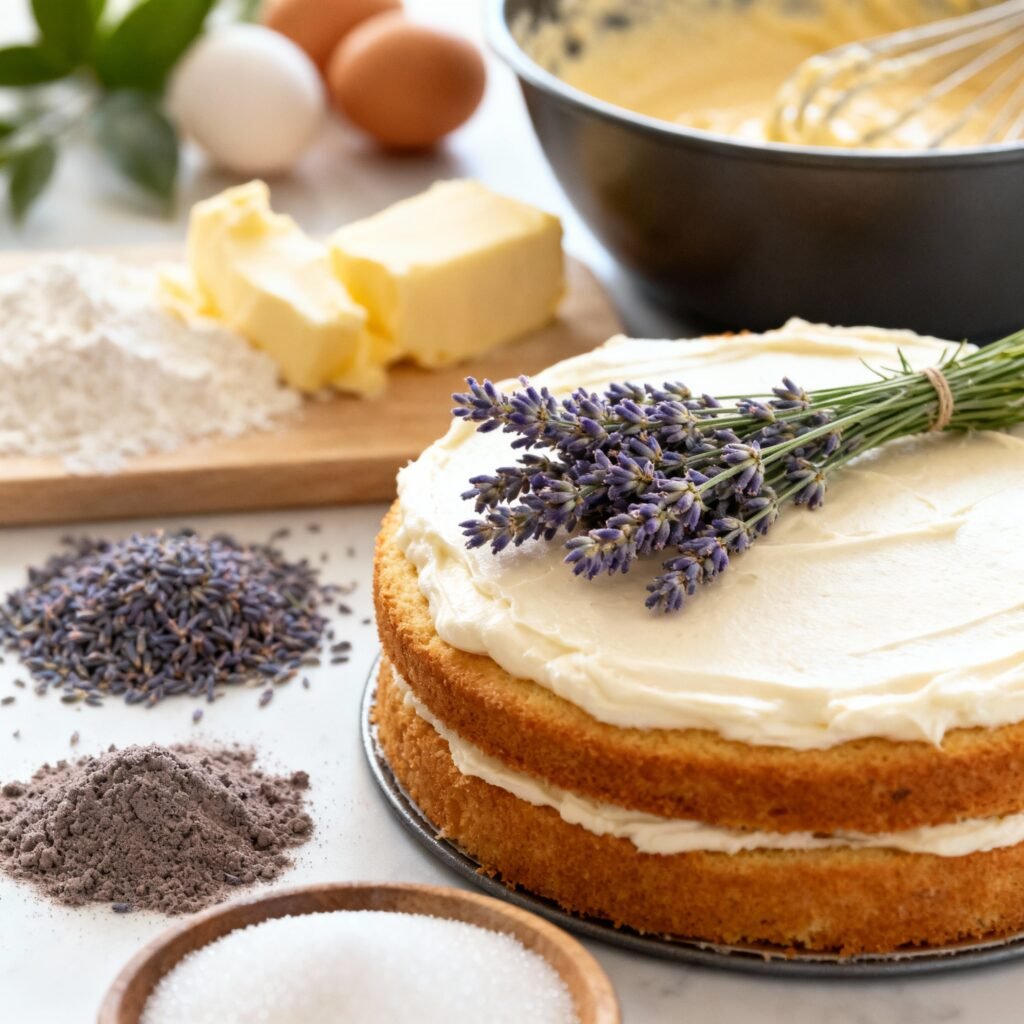
- What kind of frosting would go well with this cake? A simple buttercream frosting, a cream cheese frosting, or even a lemon curd would complement the lavender flavor beautifully.
Conclusion
This lavender cake recipe is more than just a dessert; it’s an invitation to indulge in a moment of tranquility and aromatic delight. The subtle floral notes, the tender crumb, and the beautiful presentation make it a showstopper for any occasion. So, gather your ingredients, preheat your oven, and get ready to experience the magic of lavender in every bite. Happy baking!