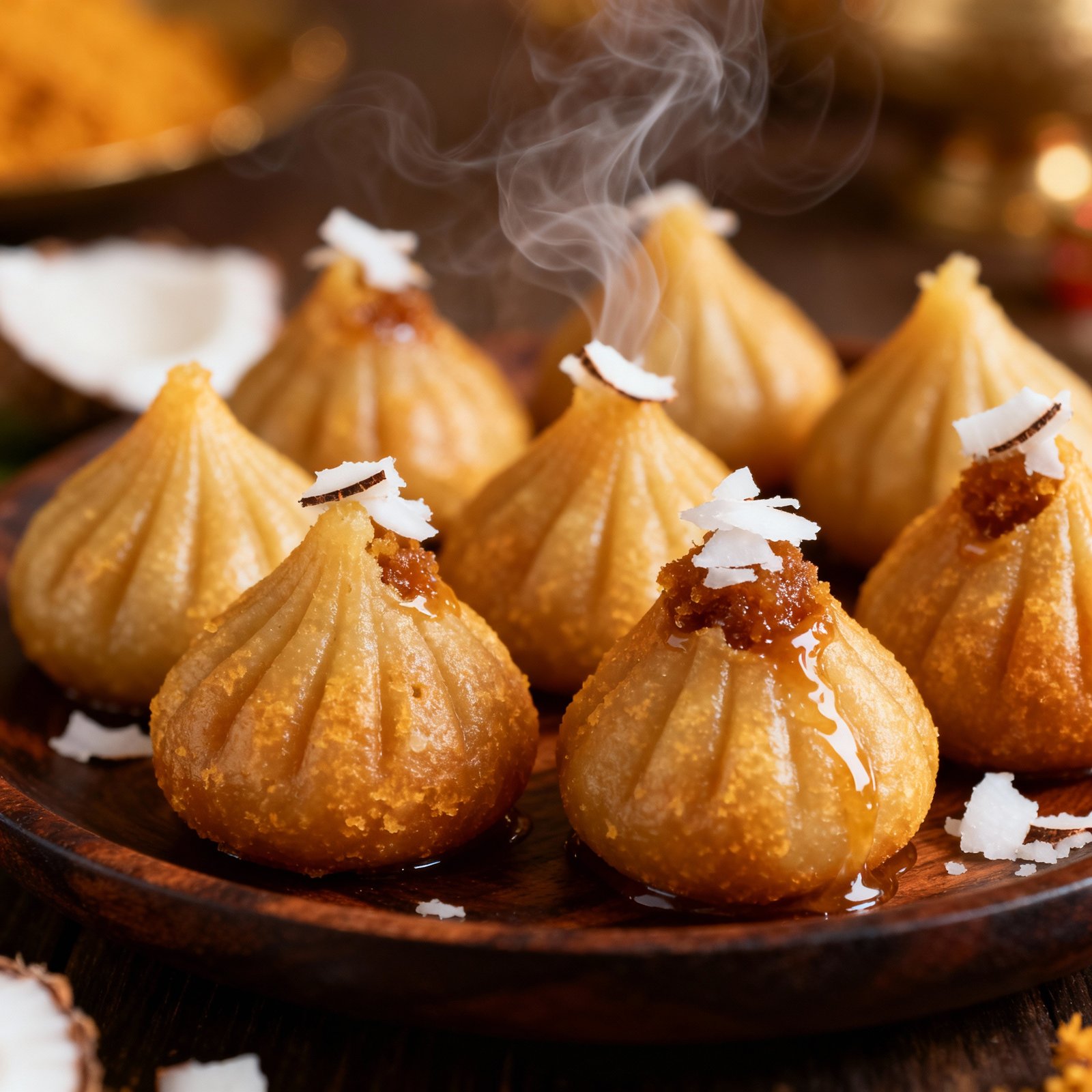
Modak Recipe Ganesha: The Perfect Offering for Bappa!
The air crackles with excitement, the streets are adorned with vibrant decorations, and the aroma of delicious sweets fills every home. Yes, it’s Ganesh Chaturthi season! And what’s Ganesh Chaturthi without Modak, Lord Ganesha’s favorite sweet? This steamed dumpling, with its sweet coconut and jaggery filling, is a quintessential offering, a symbol of devotion, and simply put, utterly delicious. While there are many variations, this recipe focuses on the classic Ukadiche Modak – the traditional steamed rice flour modak that is both authentic and incredibly satisfying. Get ready to embark on a culinary journey to create the perfect Modak for Bappa and your loved ones!
Why This Recipe Works
This recipe is meticulously crafted to ensure you achieve soft, perfectly shaped, and flavorful Modaks every time. Here’s why it stands out:
- Precise Measurements: We provide exact measurements for the rice flour and water ratio, crucial for achieving the right dough consistency. Too much water and the dough becomes sticky; too little, and it cracks easily.
- Proper Steaming Technique: We emphasize the importance of proper steaming, ensuring the Modaks are cooked through without becoming soggy.
- Flavor Balancing: The balance of jaggery and coconut is carefully considered, resulting in a filling that is sweet but not cloying, with a delightful coconutty aroma.
- Detailed Instructions: Each step is explained in detail, making it easy for even novice cooks to follow.
- Troubleshooting Tips: We include common mistakes and how to avoid them, ensuring a successful outcome.
Ingredients
- For the Dough (Ukad):
- 1 cup Rice Flour (fine variety, preferably Modak flour)
- 1 cup Water
- 1 teaspoon Ghee (clarified butter)
- Pinch of Salt
- For the Filling (Puran):
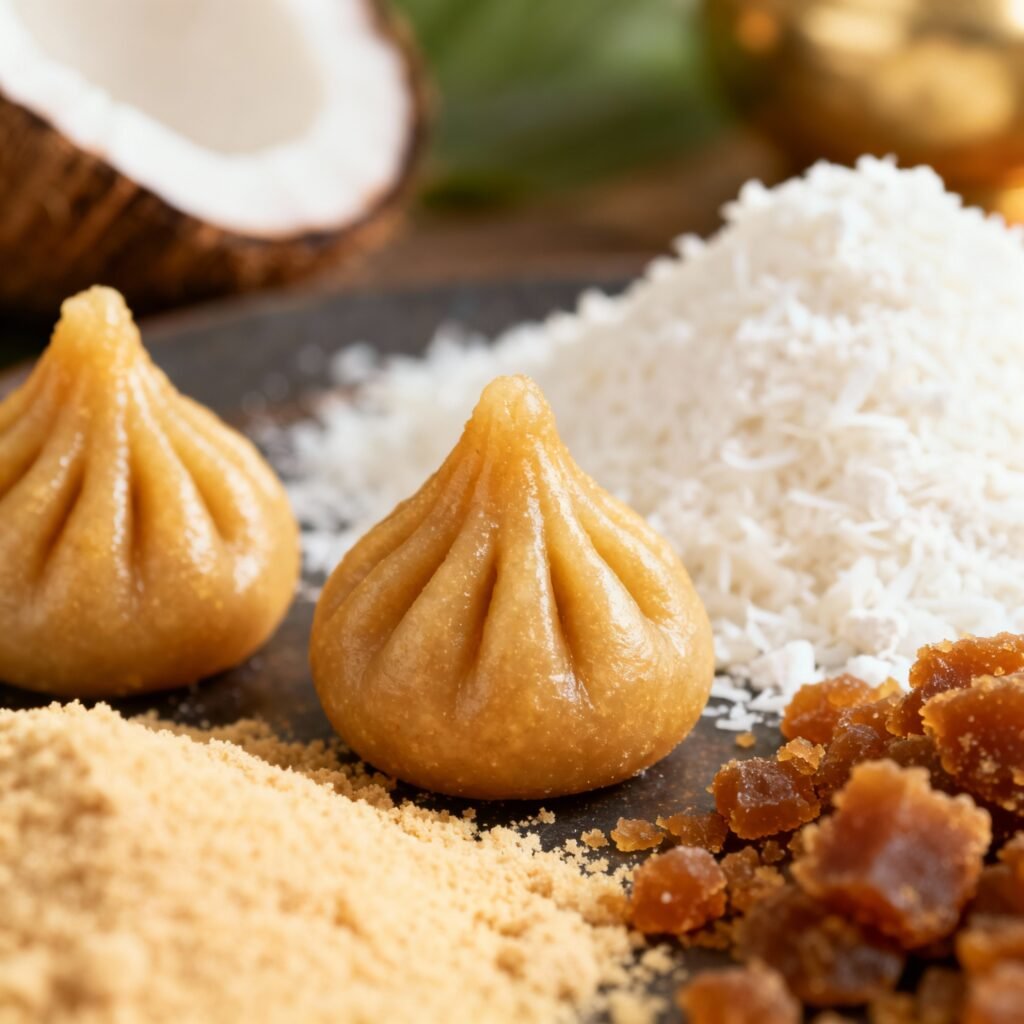
- 1 cup Fresh Grated Coconut
- ¾ cup Jaggery (grated or powdered)
- ½ teaspoon Cardamom Powder
- ¼ teaspoon Nutmeg Powder (optional)
- 1 tablespoon Ghee (clarified butter)
Instructions
- Prepare the Filling (Puran):
- Heat ghee in a pan over medium heat.
- Add the grated coconut and jaggery to the pan.
- Cook, stirring continuously, until the jaggery melts and the mixture thickens. This usually takes about 8-10 minutes. Be careful not to burn the jaggery.
- Stir in the cardamom powder and nutmeg powder (if using).
- Remove from heat and let the filling cool completely.
- Prepare the Dough (Ukad):
- In a heavy-bottomed pan, bring the water to a rolling boil along with the ghee and salt.
- Reduce the heat to low.
- Add the rice flour all at once and stir vigorously with a wooden spoon or spatula.
- Continue stirring until the flour absorbs all the water and forms a smooth, non-sticky dough. This may take about 2-3 minutes.
- Cover the pan with a lid and let the dough rest for 5 minutes. This allows the flour to steam and become more pliable.
- Shape the Modaks:
- Grease your hands with a little ghee.
- Take a small portion of the dough (about the size of a lime).
- Knead the dough lightly to make it smooth and pliable.
- Flatten the dough into a small disc using your fingers or a small rolling pin.
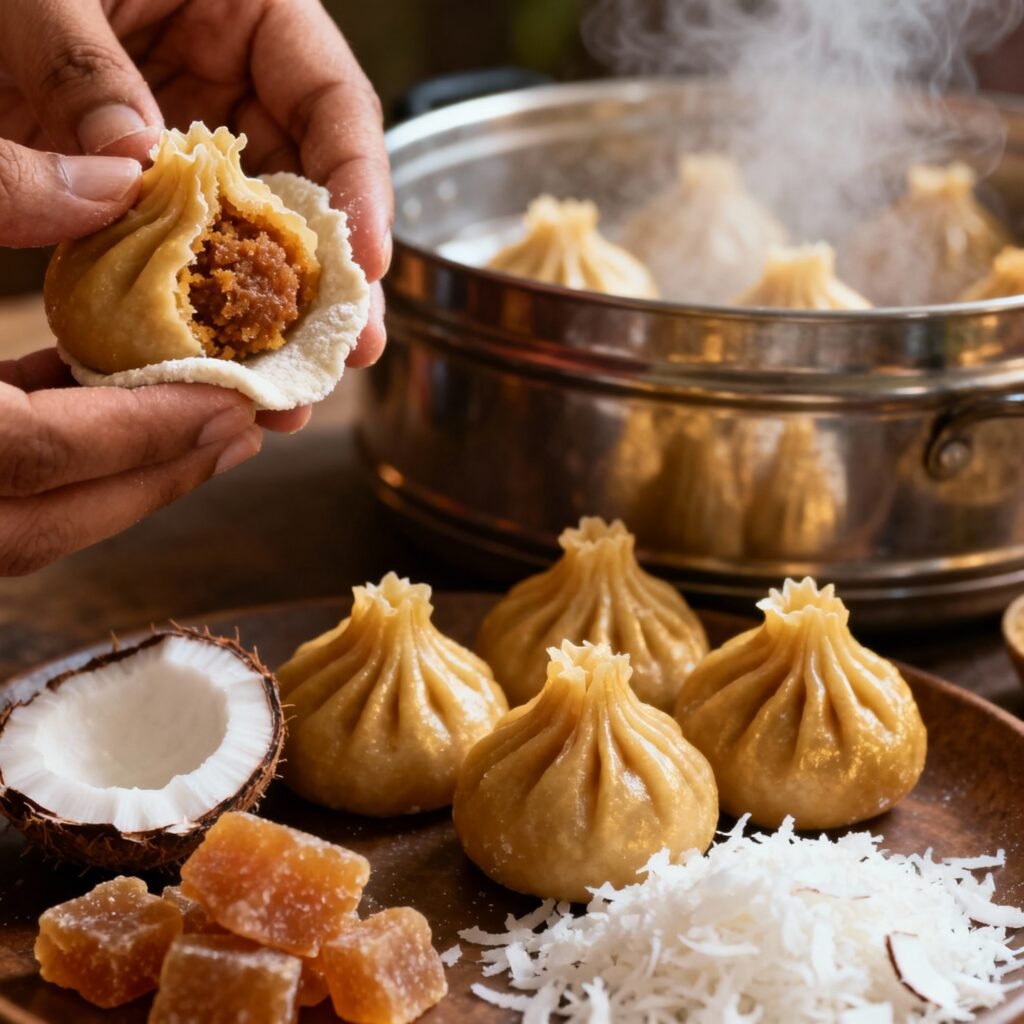
- Using your fingers, gently create a bowl shape, thinning the edges. Aim for a uniform thickness to prevent cracks.
- Place a spoonful of the coconut-jaggery filling in the center of the bowl.
- Bring the edges of the dough together to form pleats. Pinch the pleats together to seal the filling completely. The number of pleats is traditionally around 5-7.
- Shape the top of the Modak into a pointed cone.
- Repeat the process with the remaining dough and filling.
- Steam the Modaks:
- Line a steamer with a muslin cloth or banana leaf. This prevents the Modaks from sticking.
- Arrange the Modaks in the steamer, leaving some space between them.
- Steam the Modaks for 10-15 minutes, or until they appear glossy and cooked through.
- Remove the Modaks from the steamer and let them cool slightly before serving.
- Offer to Lord Ganesha and Enjoy!
Tips for Success
- Use High-Quality Rice Flour: The quality of the rice flour significantly affects the texture of the Modak. Opt for a fine variety, specifically labeled as “Modak flour” if available.
- Don’t Overcook the Filling: Overcooked filling can become hard and dry. Cook it just until the jaggery melts and the mixture thickens.
- Knead the Dough Properly: Kneading the dough lightly after resting is crucial for making it pliable and preventing cracks.
- Shape the Modaks Carefully: Thin and even edges are key to preventing cracks during steaming.
- Don’t Overcrowd the Steamer: Overcrowding can lead to uneven cooking. Steam the Modaks in batches if necessary.
- Check for Doneness: The Modaks are done when they appear glossy and slightly translucent.
Storage Instructions
Modaks are best enjoyed fresh. However, you can store them in an airtight container in the refrigerator for up to 2-3 days. Reheat them gently by steaming for a few minutes before serving.
FAQ
Q: My Modaks are cracking during steaming. What am I doing wrong?
A: Cracking can be caused by several factors: the dough being too dry (add a little more water next time), the dough not being kneaded properly, or the edges of the Modak being too thick. Ensure you follow the instructions carefully and pay attention to the dough consistency.
Q: Can I use store-bought coconut?
A: While fresh grated coconut is highly recommended for the best flavor and texture, you can use unsweetened desiccated coconut. However, you may need to adjust the amount of water in the filling to achieve the desired consistency.
Q: Can I add other ingredients to the filling?
A: Absolutely! You can add chopped nuts like almonds or cashews, or even a pinch of saffron for added flavor and aroma.
Q: Can I make Modaks ahead of time and freeze them?
A: Yes, you can freeze uncooked Modaks. Place them on a baking sheet lined with parchment paper and freeze until solid. Then, transfer them to an airtight container and store in the freezer for up to a month. Steam them directly from frozen, adding a few extra minutes to the steaming time.
Conclusion
Making Modaks for Ganesh Chaturthi is a labor of love, a tradition passed down through generations. While it might seem daunting at first, this recipe breaks down the process into manageable steps, ensuring a delightful and rewarding experience. So, gather your ingredients, put on your favorite music, and get ready to create these delectable treats for Bappa and your loved ones. Happy Ganesh Chaturthi!