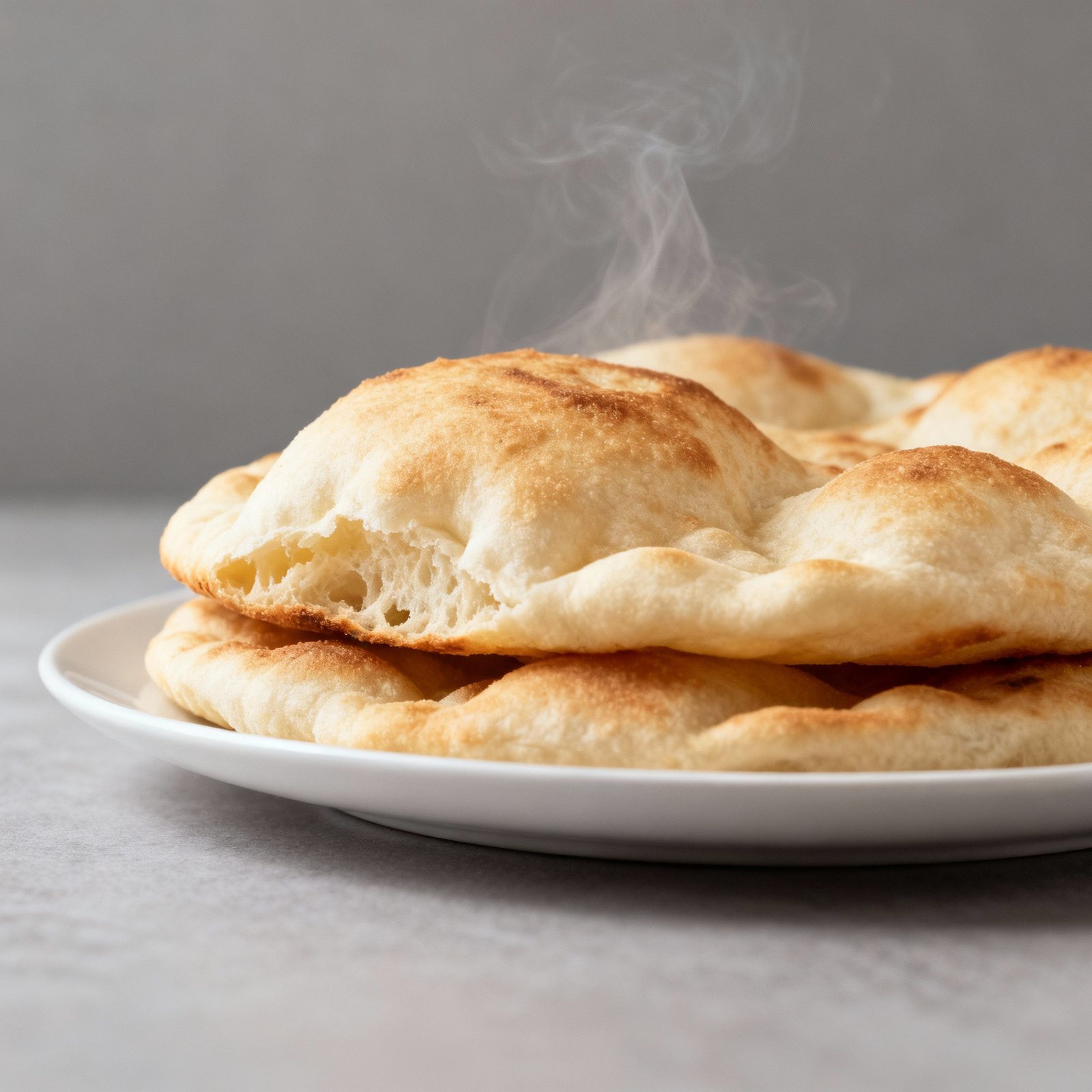
Nan Roti Recipe: Soft, Pillowy Perfection at Home!
Craving that authentic, fluffy flatbread that perfectly complements your favorite curries and stews? Look no further! This nan roti recipe brings the taste of the tandoor to your kitchen, delivering soft, pillowy bread that’s surprisingly easy to make. Forget ordering takeout – with a few simple ingredients and this foolproof guide, you’ll be whipping up restaurant-quality nan roti in no time. Get ready to impress your family and friends with your newfound baking skills!
Why This Recipe Works
This recipe isn’t just another collection of instructions; it’s a carefully crafted formula designed for success. Here’s why it works:
- Yeast Activation: We start with a proper proofing of the yeast. This ensures the dough rises beautifully, creating that signature airy texture.
- Resting Time: The resting periods are crucial. They allow the gluten to relax, resulting in a soft, pliable dough that’s easy to handle and produces tender nan roti.
- Yogurt’s Magic: Yogurt adds moisture and tang, contributing to both the flavor and the soft texture of the nan.
- High Heat Cooking: While we might not have a traditional tandoor, using a hot cast iron skillet (or even a pizza stone) mimics the intense heat necessary for that characteristic char and puffy texture.
- Ghee or Butter Finish: A generous brushing of melted ghee or butter after cooking adds richness and a beautiful sheen, making the nan roti irresistible.
Ingredients
- 2 cups (250g) all-purpose flour, plus more for dusting
- 1 teaspoon active dry yeast
- 1 teaspoon sugar
- ¾ cup (180ml) warm water (105-115°F or 40-46°C)
- 2 tablespoons plain yogurt
- 1 tablespoon vegetable oil
- ½ teaspoon salt
- 2 tablespoons melted ghee or butter, for brushing
- Optional: chopped cilantro or nigella seeds for garnish
Instructions
- Activate the Yeast: In a small bowl, combine the warm water, sugar, and yeast. Stir gently and let it sit for 5-10 minutes, or until foamy. This indicates the yeast is active and ready to use.
- Combine Dry Ingredients: In a large bowl, whisk together the flour and salt.
- Add Wet Ingredients: Pour the yeast mixture, yogurt, and vegetable oil into the bowl with the dry ingredients.
- Mix the Dough: Use a wooden spoon or your hands to mix the ingredients until a shaggy dough forms.
- Knead the Dough: Turn the dough out onto a lightly floured surface and knead for 5-7 minutes, or until it becomes smooth and elastic. If the dough is too sticky, add a little more flour, one tablespoon at a time.
- First Rise: Place the dough in a lightly oiled bowl, turning to coat. Cover the bowl with plastic wrap or a clean kitchen towel and let it rise in a warm place for 1-1.5 hours, or until doubled in size.
- Punch Down the Dough: Gently punch down the dough to release the air.
- Divide the Dough: Divide the dough into 6-8 equal portions.
- Shape the Nan Roti: On a lightly floured surface, roll each portion into an oval or teardrop shape, about ¼ inch thick. You can use your fingers to stretch and shape the dough if desired.
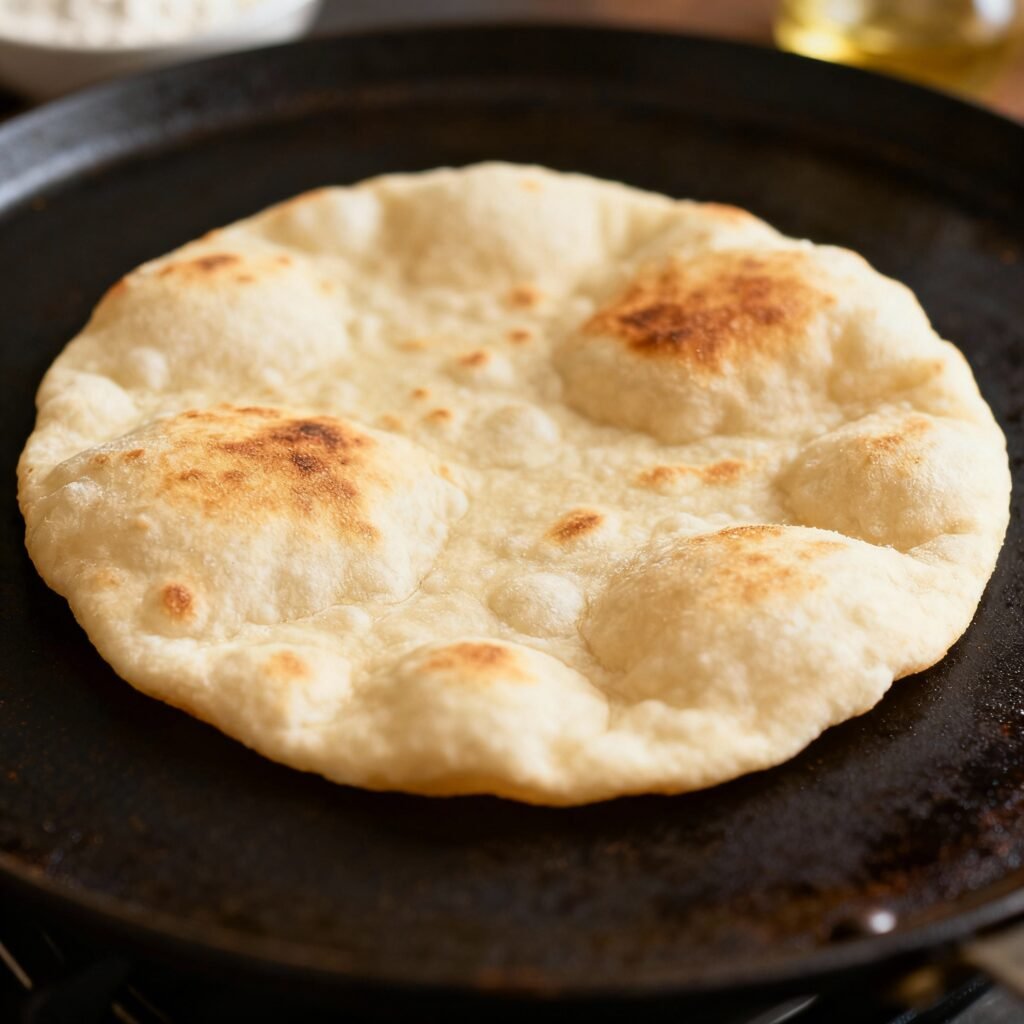
- Cook the Nan Roti: Heat a cast iron skillet or griddle over medium-high heat until very hot. You can also use a pizza stone in the oven preheated to 500°F (260°C).
- Cook on the Stovetop: Place one nan roti on the hot skillet. Cook for 1-2 minutes, or until bubbles start to form and the bottom is lightly browned. Flip and cook for another 1-2 minutes, or until the other side is browned. If using a cast iron pan, you can briefly hold the nan roti directly over a gas flame for a charred effect, being careful not to burn it.
- Cook in the Oven (Pizza Stone): Carefully place the shaped nan roti on the preheated pizza stone. Bake for 2-3 minutes, or until puffed up and lightly browned.
- Brush with Ghee or Butter: Immediately brush the cooked nan roti with melted ghee or butter.
- Garnish (Optional): Sprinkle with chopped cilantro or nigella seeds, if desired.
- Serve Immediately: Serve the nan roti warm with your favorite curry, stew, or dip.
Tips for Success
- Water Temperature is Key: Ensure the water is warm (105-115°F or 40-46°C) but not too hot, as excessive heat can kill the yeast.
- Don’t Over-Knead: Over-kneading can result in tough nan roti. Knead until the dough is smooth and elastic, but not overly stiff.
- Resting is Important: Give the dough adequate time to rise. This allows the gluten to relax, resulting in a softer texture.
- Use a Hot Surface: A hot skillet or pizza stone is crucial for achieving the characteristic char and puffy texture.
- Don’t Overcook: Overcooking will result in dry, hard nan roti. Cook just until lightly browned and puffed up.
- Experiment with Flavors: Feel free to add other herbs and spices to the dough, such as garlic, ginger, or cumin.
- Consider a Tawa: A tawa (Indian griddle) is ideal for making nan roti. If you have one, use it!
Storage Instructions
Room Temperature: Leftover nan roti can be stored at room temperature in an airtight container for up to 2 days. Reheat gently in a skillet or microwave before serving.
Freezer: For longer storage, you can freeze the nan roti. Wrap each nan roti individually in plastic wrap and then place them in a freezer-safe bag. Freeze for up to 2 months. Thaw completely before reheating.

FAQ
Q: Can I use bread flour instead of all-purpose flour?
A: Yes, you can use bread flour. It will result in a slightly chewier texture. You may need to adjust the amount of water slightly.
Q: Can I make this recipe without yogurt?
A: While yogurt contributes to the flavor and texture, you can substitute it with an equal amount of milk or water. However, the result will be slightly different.
Q: My dough is too sticky. What should I do?
A: Add a little more flour, one tablespoon at a time, until the dough is no longer sticky but still soft.
Q: My nan roti isn’t puffing up. What am I doing wrong?
A: Make sure your skillet or pizza stone is hot enough. Also, ensure the yeast is active and the dough has risen properly.
Q: Can I cook the nan roti in the oven without a pizza stone?
A: Yes, you can use a baking sheet, but the texture will be slightly different. Preheat the baking sheet in the oven before placing the nan roti on it.
Conclusion
This nan roti recipe is your ticket to creating authentic, delicious flatbread right in your own kitchen. With its simple ingredients and easy-to-follow instructions, you’ll be enjoying soft, pillowy nan roti with your favorite meals in no time. So, gather your ingredients, get ready to knead, and prepare to be amazed by the incredible flavor and texture of homemade nan roti. Happy baking!