Onion Bread Recipe: Better Than Bakery!
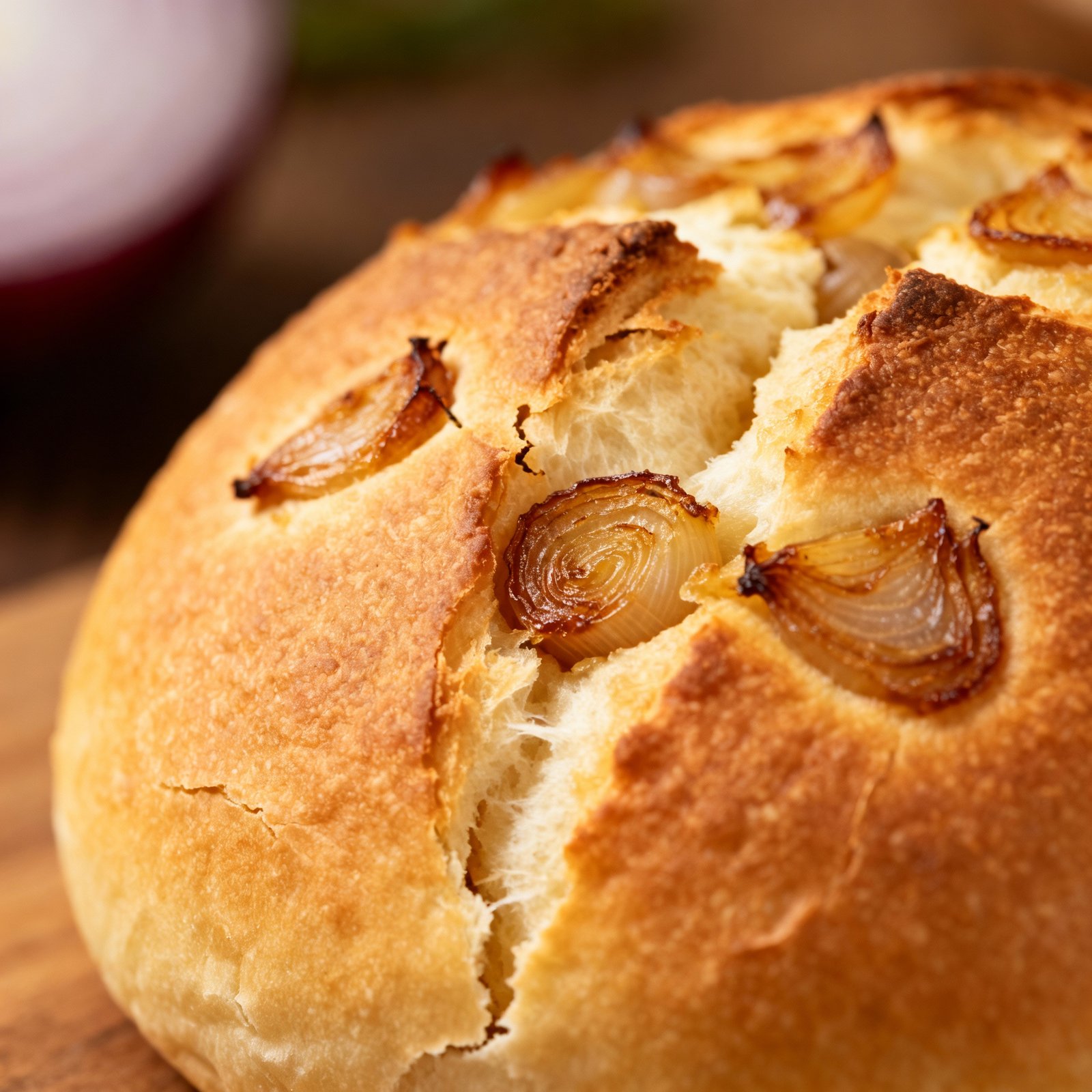
Imagine sinking your teeth into a warm, fragrant slice of onion bread, the savory aroma filling your kitchen. This isn’t just any bread; it’s a symphony of sweet caramelized onions, a hint of garlic, and the comforting texture of homemade goodness. Forget the bakery – this onion bread recipe is surprisingly easy to make at home and tastes infinitely better. Prepare yourself for rave reviews and requests for the recipe!
Why This Recipe Works
This onion bread recipe isn’t just about throwing some onions into dough. It’s about technique and understanding the interplay of flavors. Here’s why it works so well:
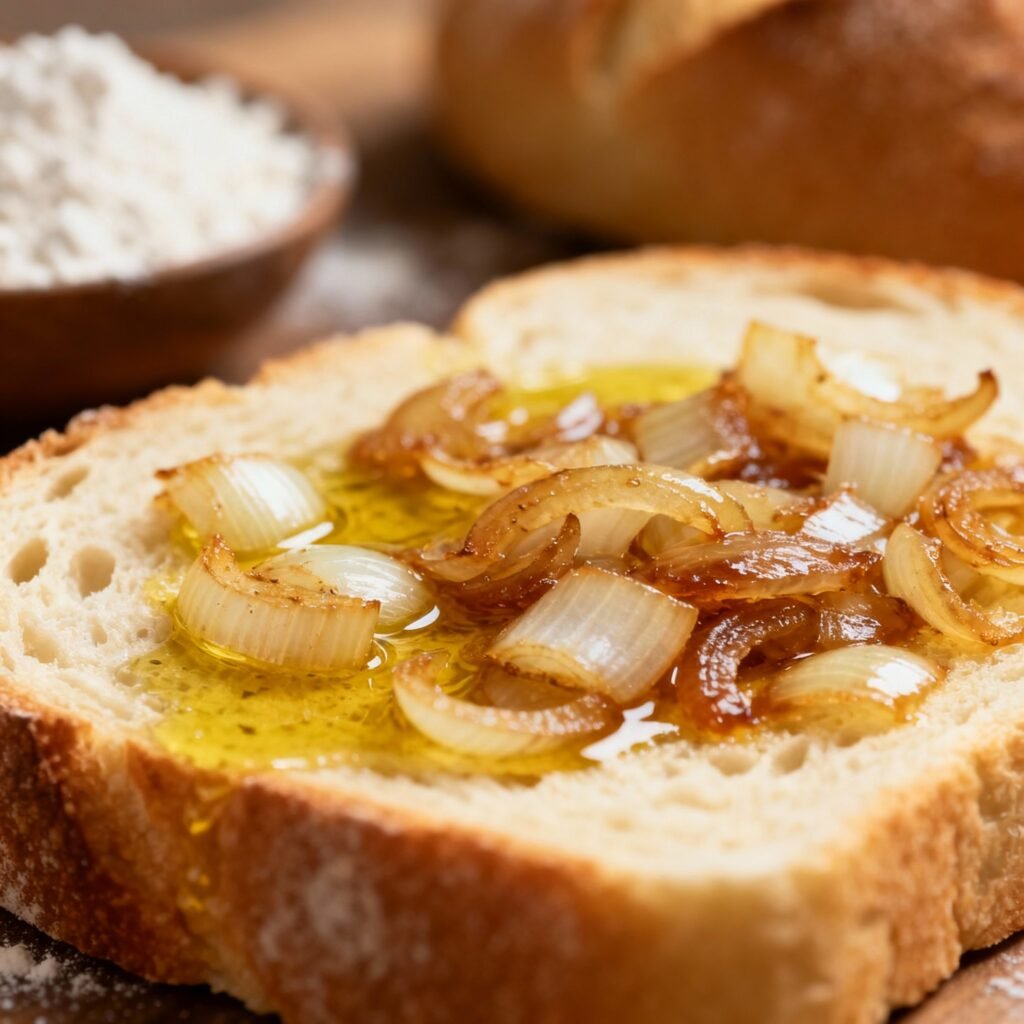
- Caramelized Onions: The heart and soul of this bread. Caramelizing the onions properly – low and slow – draws out their natural sugars, creating a deep, rich sweetness that’s essential for the flavor profile. We’re not just using raw or sautéed onions; we’re developing complex flavors.
- Yeast Activation: Ensuring the yeast is active is crucial for a light and airy loaf. We provide clear instructions on how to proof your yeast, eliminating any guesswork.
- Proper Kneading: Kneading develops the gluten in the flour, giving the bread its structure and chewiness. We guide you on how to knead by hand or using a stand mixer for optimal results.
- Strategic Onion Incorporation: The caramelized onions are added at the right stage of kneading to ensure they are evenly distributed throughout the dough without inhibiting gluten development.
- Double Rise: Allowing the dough to rise twice allows for maximum flavor development and a light, airy texture. Patience is key!
- Garlic Infusion: A touch of garlic powder enhances the savory notes of the onion without overpowering the sweetness.
Ingredients
- 3 cups (360g) All-Purpose Flour, plus more for dusting. Bread flour can also be used for a chewier texture.
- 1 ¼ cups (300ml) Warm Water (105-115°F / 40-46°C). This is crucial for activating the yeast.
- 2 ¼ teaspoons (7g) Active Dry Yeast (1 packet).
- 1 tablespoon (15ml) Olive Oil, plus more for greasing the bowl.
- 1 tablespoon (12g) Granulated Sugar. Feeds the yeast and adds a touch of sweetness.
- 1 ½ teaspoons (9g) Salt. Enhances the flavor and controls yeast activity.
- 2 large Yellow Onions, thinly sliced. Yellow onions offer a good balance of sweetness and pungency.
- 2 tablespoons (30ml) Butter. For caramelizing the onions.
- ½ teaspoon Garlic Powder. Enhances the savory flavor.
- Optional: 1 tablespoon chopped fresh Rosemary or Thyme. Adds an herbaceous note.
- Optional: Egg wash (1 egg beaten with 1 tablespoon water) for a shiny crust.
Instructions
- Proof the Yeast: In a large bowl, combine the warm water and sugar. Sprinkle the yeast over the top and let it sit for 5-10 minutes, until foamy. This indicates that the yeast is active.
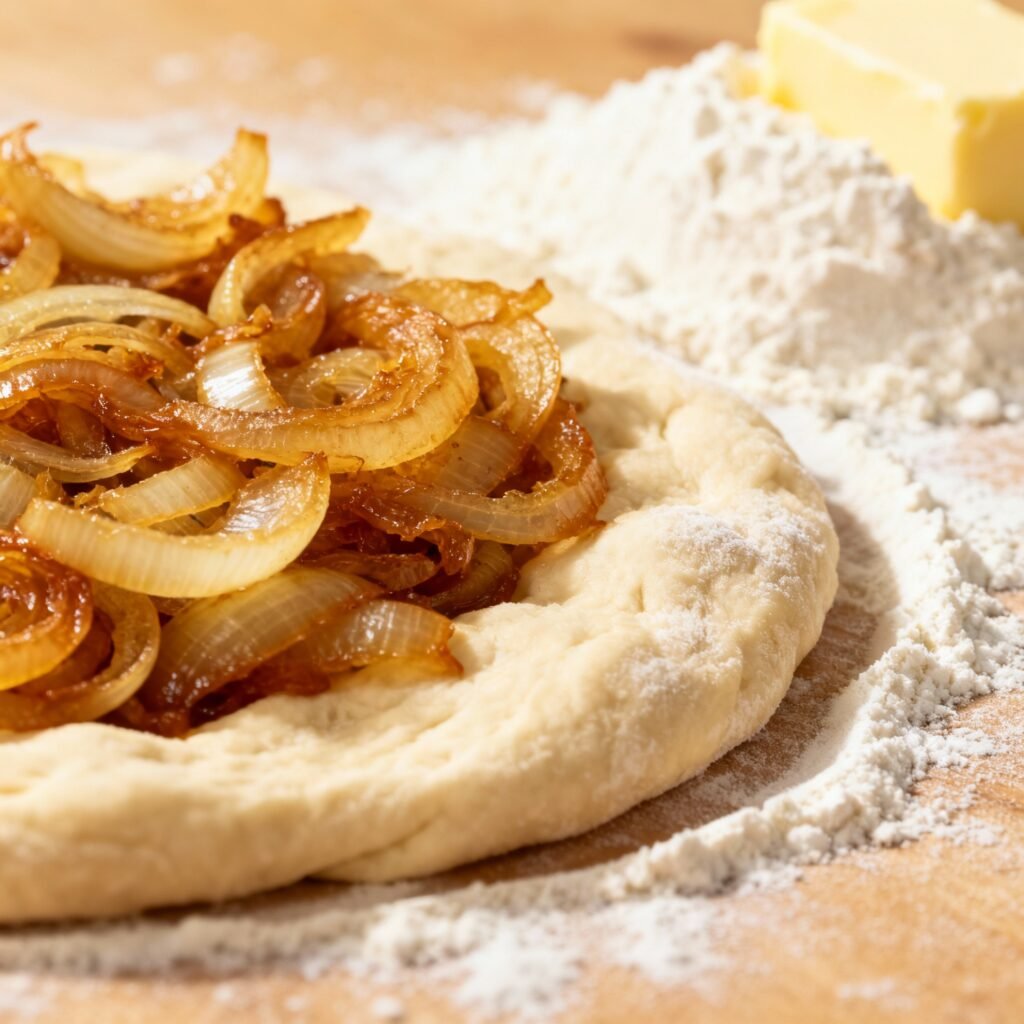
- Caramelize the Onions: While the yeast is proofing, melt the butter in a large skillet over medium-low heat. Add the sliced onions and cook, stirring occasionally, for 30-45 minutes, or until they are deeply golden brown and caramelized. Stir in the garlic powder during the last 5 minutes of cooking. Remove from heat and let cool slightly.
- Combine Ingredients: Add the olive oil, salt, and 2 cups of flour to the yeast mixture. Mix until a shaggy dough forms.
- Knead the Dough: Gradually add the remaining 1 cup of flour, kneading until the dough is smooth and elastic. You can knead by hand on a lightly floured surface for 8-10 minutes, or using a stand mixer with a dough hook for 5-7 minutes. The dough should be slightly tacky but not sticky.
- Incorporate the Onions: Gently knead the cooled caramelized onions into the dough, ensuring they are evenly distributed.
- First Rise: Grease a large bowl with olive oil. Place the dough in the bowl, turning to coat. Cover with plastic wrap or a clean kitchen towel and let rise in a warm place for 1-1.5 hours, or until doubled in size.
- Shape the Dough: Punch down the dough to release the air. Turn it out onto a lightly floured surface. Shape the dough into a round or oval loaf.
- Second Rise: Place the shaped loaf on a baking sheet lined with parchment paper. Cover loosely with plastic wrap or a clean kitchen towel and let rise for another 30-45 minutes, or until almost doubled in size.
- Preheat Oven: Preheat oven to 375°F (190°C).
- Prepare for Baking: If desired, brush the top of the loaf with egg wash for a shiny crust. You can also score the top of the loaf with a sharp knife or razor blade.
- Bake: Bake for 30-35 minutes, or until the loaf is golden brown and sounds hollow when tapped on the bottom.
- Cool: Let the bread cool on a wire rack for at least 30 minutes before slicing and serving.
Tips for Success
- Don’t Rush the Caramelization: The key to great onion bread is deeply caramelized onions. Don’t be tempted to turn up the heat; low and slow is the way to go.
- Use a Thermometer: Ensure your water is the correct temperature for activating the yeast. Too hot, and you’ll kill the yeast; too cold, and it won’t activate properly.
- Adjust Flour as Needed: The amount of flour needed may vary depending on the humidity and the type of flour used. Add flour gradually until the dough is smooth and elastic but not sticky.
- Warm Environment for Rising: Find a warm, draft-free place for the dough to rise. This could be a slightly warmed oven (turned off), a sunny windowsill, or a warm corner of your kitchen.
- Don’t Overbake: Overbaking will result in a dry loaf. Check the bread for doneness by tapping on the bottom. It should sound hollow.
Storage Instructions
To keep your onion bread fresh:
- Room Temperature: Store the cooled bread in a bread bag or airtight container at room temperature for up to 3 days.
- Freezer: For longer storage, slice the bread and wrap it tightly in plastic wrap and then in a freezer bag. Freeze for up to 2 months. Thaw at room temperature before serving. You can also reheat individual slices in a toaster or oven.
FAQ
Q: Can I use a different type of onion?
A: Yes, you can use other types of onions, such as sweet onions or red onions. Keep in mind that the flavor will vary slightly. Sweet onions will result in a sweeter bread, while red onions will add a slightly sharper flavor.
Q: Can I use instant yeast instead of active dry yeast?
A: Yes, you can use instant yeast. You don’t need to proof instant yeast; simply add it directly to the flour mixture.
Q: Can I make this recipe gluten-free?
A: While it’s possible to adapt this recipe to be gluten-free, it will require significant adjustments to the ingredients and techniques. You’ll need to use a gluten-free flour blend and potentially add xanthan gum to help bind the dough. The texture and flavor will also be different from the traditional recipe.
Q: My dough isn’t rising. What could be the problem?
A: Several factors can affect dough rising. Make sure your yeast is active, the water is the correct temperature, and the environment is warm enough. Also, check the expiration date on your yeast.
Q: Can I add cheese to this recipe?
A: Absolutely! Adding cheese would be a delicious addition. Consider adding shredded cheddar, Gruyere, or Parmesan cheese to the dough during the last few minutes of kneading or sprinkling it on top before baking.
Conclusion
This onion bread recipe is a labor of love, but the results are well worth the effort. The aroma alone will fill your kitchen with warmth and anticipation. Whether you’re serving it alongside soup, using it for sandwiches, or simply enjoying a slice on its own, this homemade onion bread is sure to become a family favorite. So, preheat your oven, gather your ingredients, and get ready to experience the joy of baking your own better-than-bakery onion bread!