🧅 The Ultimate Spice-Bomb Onion Sabji Recipe (Easy & Cheap!)
Look, let’s be real. Sometimes you open the fridge and it’s basically a barren wasteland. You’re hungry, you’re tired, and the idea of chopping twenty different vegetables makes you want to order takeout for the third time this week. I get it. TBH, I live in that state most of the time.
But before you open that delivery app, check your pantry. Do you have onions? Do you have a few basic spices hiding in the back of the cupboard? Yes?
Congratulations, you have dinner.
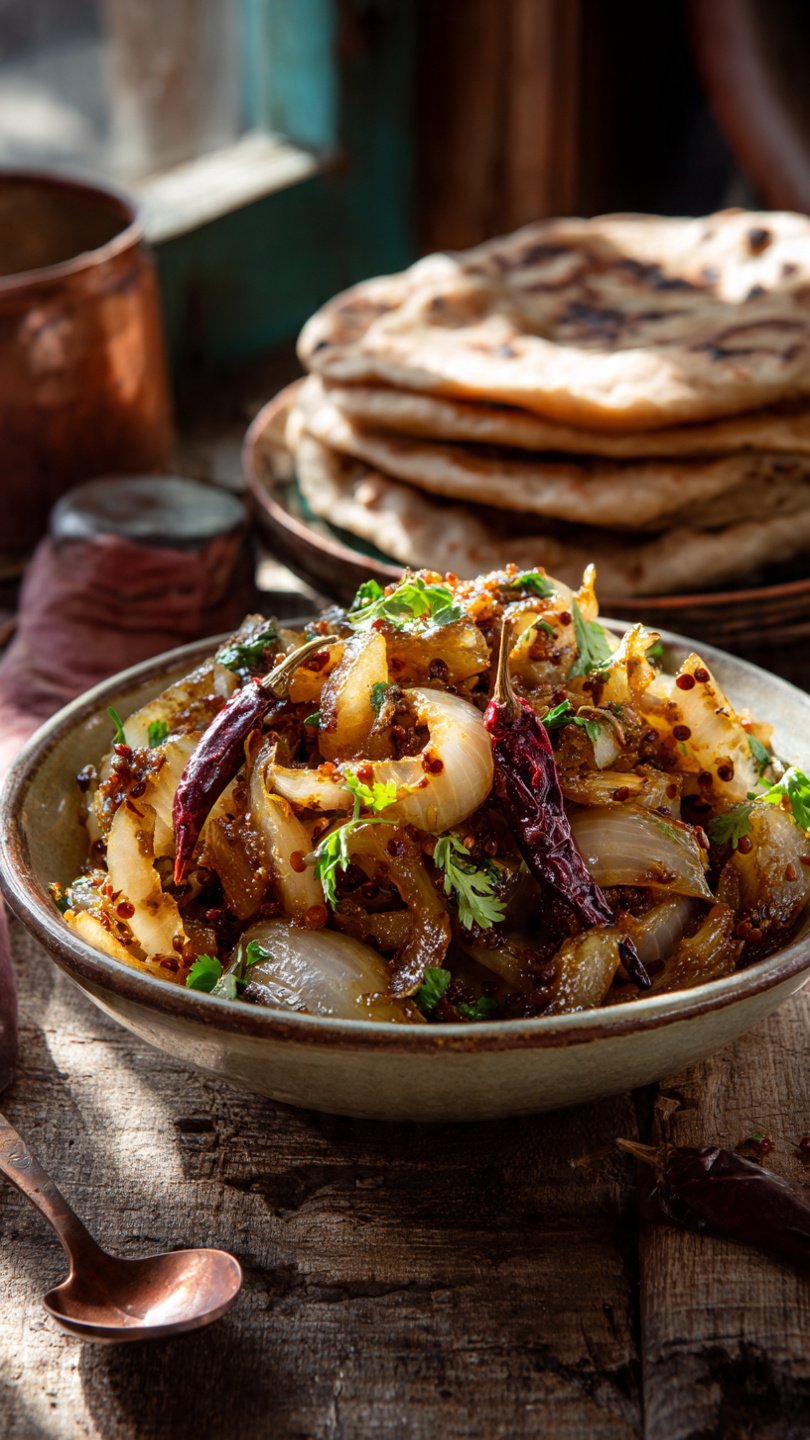
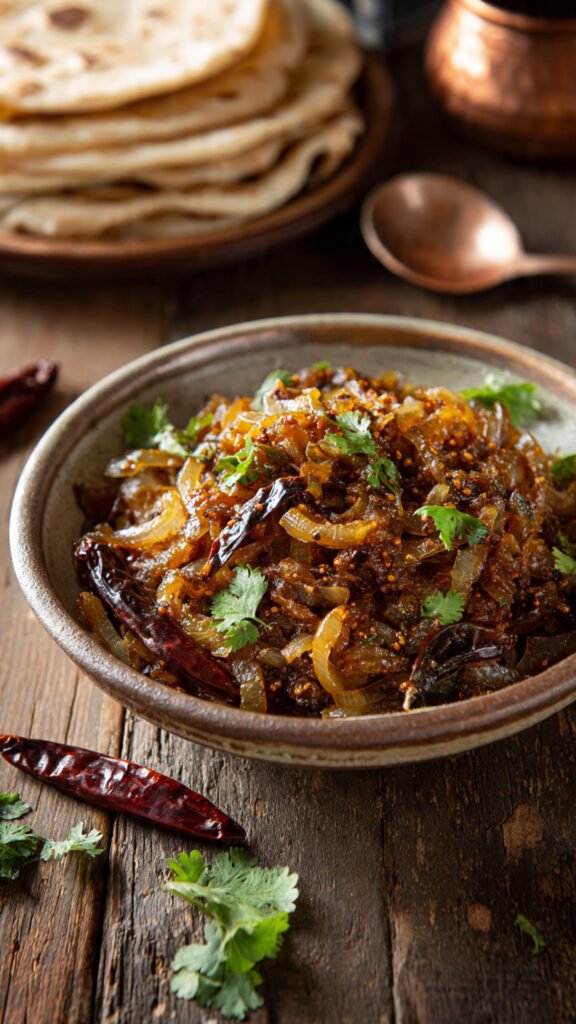
We are making Onion Sabji. It’s the ultimate “rescue recipe.” It turns the humble, often tear-inducing onion into a sweet, spicy, tangy, caramelized masterpiece that tastes way more complicated than it actually is. It’s basically magic. Let’s cook.
Why This Recipe is Awesome
Okay, I know what you’re thinking. “Onion curry? Seriously? Is that even a meal?”
Yes, seriously. And oh my gosh, yes, it is a meal.
If you’ve only ever used onions as a background player—the thing you sauté before the real ingredients go in—prepare to have your mind blown. In this recipe, the onion is the main character, the superstar, the Beyoncé of the pan.
Here’s why this recipe will become your new weeknight bestie:
It’s incredibly cheap. We are talking cents per serving here. Onions are one of the most affordable ingredients on the planet. If you are trying to stretch a budget until payday, this recipe is an absolute lifesaver that doesn’t taste like “struggle food.”
The flavor transformation is insane. Raw onions are sharp, pungent, and aggressive. But when you cook them down slowly with fat and spices, something beautiful happens. The natural sugars come out to play (hello, caramelization), creating a deep, savory sweetness. When you hit that sweetness with earthy cumin, spicy chili, and tangy mango powder, it creates a complex flavor profile that is addictive.
It’s fast-ish, but mostly inactive. While you can’t rush caramelized onions (more on that later), you also don’t have to babysit them constantly. You slice, you temper spices, you toss it all in, and then you just let the heat do its thing while you scroll through your phone or pour a glass of wine.
It’s wildly versatile. Eat it with roti or chapati like a traditionalist. Scoop it up with naan. Pile it on top of plain rice. Heck, I’ve put leftovers in a grilled cheese sandwich, and I have zero regrets. It’s vegan (if you use oil instead of ghee), gluten-free, and just generally crowd-pleasing.
Ingredients You’ll Need
Don’t panic. You probably have 90% of this stuff already. If you don’t, a quick trip to any basic grocery store will sort you out.
- Onions: You need a lot. Like, an alarming amount. 4 to 5 large ones. They shrink down a lot when cooked. Red onions are best here for their flavor depth and color, but white or yellow work too.
- Cooking Fat: About 3 tablespoons. You need enough to coat the onions so they caramelize rather than steam.
- Pro Tip: Use mustard oil for that authentic, punchy North Indian flavor (make sure to heat it until it smokes first). Otherwise, ghee (clarified butter) is incredible for richness, or just plain vegetable oil works fine for a vegan version.
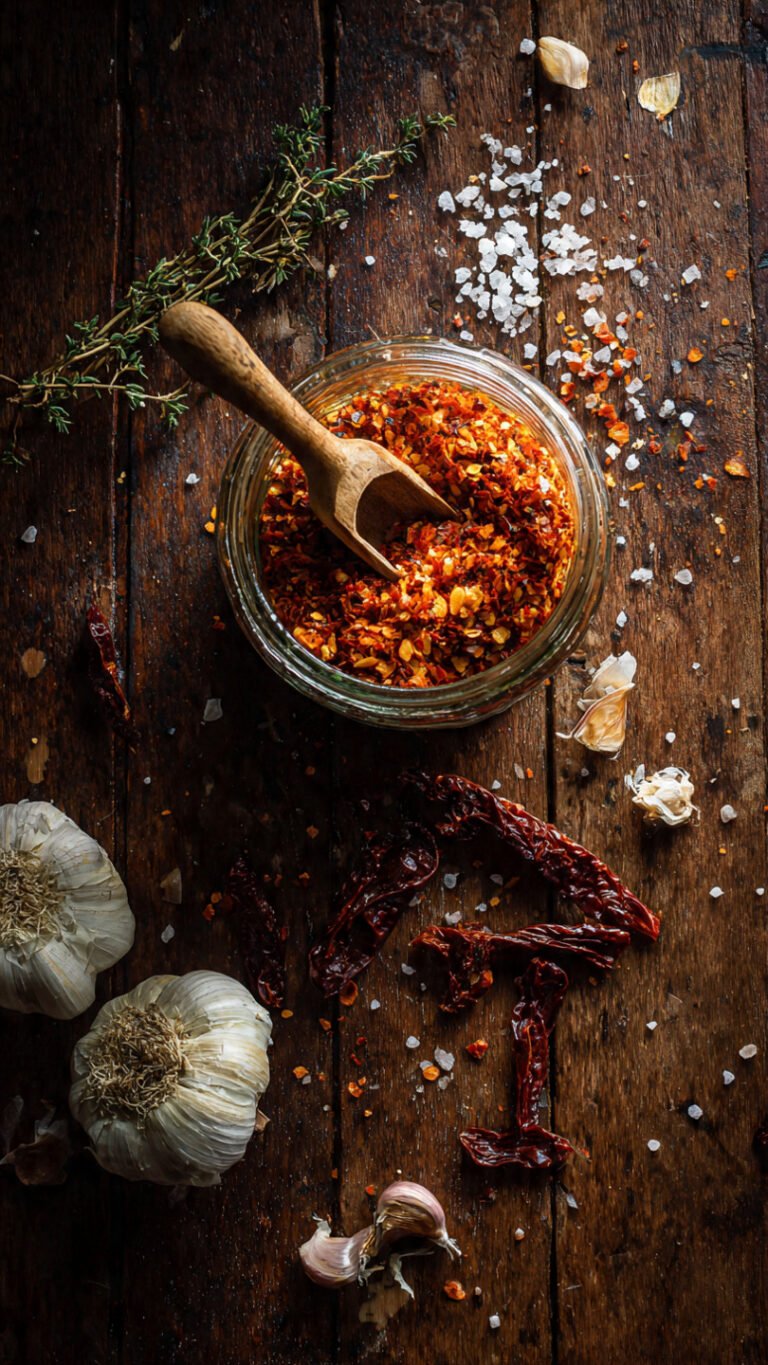
- Cumin Seeds (Jeera): 1 teaspoon. The earthy backbone of the dish.
- Mustard Seeds (Rai): 1/2 teaspoon. For that essential little nutty pop.
- Curry Leaves (Optional but highly recommended): A sprig. If you have access to fresh curry leaves, use them. Their aroma is unbeatable. If not, don’t stress, skip ’em.
- Green Chilies: 1 or 2, slit lengthwise. Adjust according to your bravery level.
- Ginger-Garlic Paste: 1 tablespoon. The dynamic duo of flavor. Freshly smashed is best, but the jarred stuff is totally fine (no judgment here).
- Turmeric Powder (Haldi): 1/2 teaspoon. For that gorgeous golden color and anti-inflammatory goodness.
- Kashmiri Red Chili Powder: 1 to 2 teaspoons. This gives vibrant red color without setting your mouth on fire. If you’re using regular cayenne, cut the amount in half unless you want to cry.
- Coriander Powder (Dhaniya): 1 tablespoon. This adds texture and a lemony, floral aroma.
- Amchur Powder (Dry Mango Powder): 1 teaspoon. This is crucial. Do not skip the acid source! The tangy amchur cuts through the sweetness of the caramelized onions.
- Substitute: If you can’t find amchur, use a tablespoon of thick tamarind paste or a generous squeeze of fresh lemon juice at the very end.
- Salt: To taste.
- Fresh Cilantro: A handful, chopped, for garnishing and pretending we are fancy chefs.
Step-by-Step Instructions
Ready to make your kitchen smell amazing? Let’s do this.
1. The Prep Work Peel those onions. Now, slice them. You want slices that are medium-thick—not paper-thin (they’ll turn to mush) and not giant wedges (they’ll take forever to cook). Think about 1/4 inch thick half-moons. You’re going to look at the pile of sliced onions and think, “That is way too much onion.” Trust me, it’s not.
2. The Tempering (The “Tadka”) Heat your oil or ghee in a large, heavy-bottomed pan or skillet over medium heat. Science Note: We need hot fat to bloom the spices. When the oil is shimmering, toss in the mustard seeds. Wait for them to crackle and pop aggressively—this releases their nutty aroma. Immediately add the cumin seeds and let them sizzle for about 10 seconds until fragrant.
3. Aromatics Assemble If using curry leaves, throw them in now (stand back, they will splatter!). Add the slit green chilies and the ginger-garlic paste. Sauté this for about 30 to 60 seconds. You just want the raw smell of the garlic to disappear. Your kitchen should already smell incredible at this point.
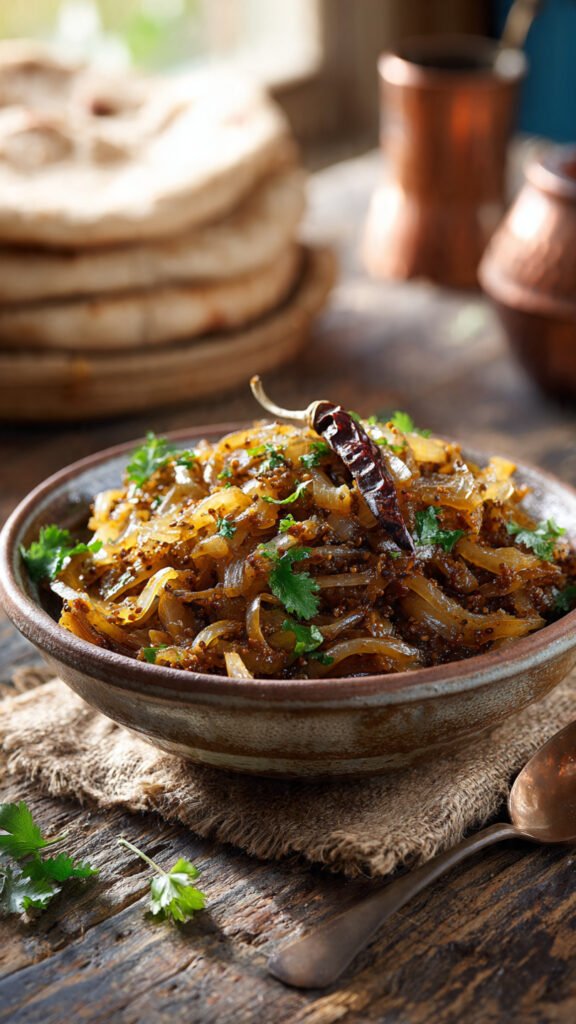
4. enter The Onions Dump in that mountain of sliced onions. Stir well to coat every single slice in that beautiful, spice-infused oil.
5. The Sweat Session Add the salt and turmeric powder now. Why now? Salt draws moisture out of the onions, helping them cook down faster and preventing them from burning right away. The turmeric gets a head start on staining everything glorious yellow.
Stir everything together. Turn the heat down to medium-low. Cover the pan with a lid. Let them cook for about 8–10 minutes. They will sweat in their own juices and become translucent and soft.
6. The Caramelization (Patience, Grasshopper) Remove the lid. The onions should be soft and pinkish. Now comes the important part: developing flavor. Continue cooking uncovered on medium-low heat. Stir every couple of minutes. You are waiting for the onions to turn from pale pink to a lovely golden-brown color. This might take another 10–15 minutes depending on your pan and stove.
Do not rush this. If you crank the heat, you’ll get burnt edges and raw centers. We want slow, sultry caramelization.
7. The Spice Dump Once the onions are golden and look significantly reduced in volume, it’s time for the flavor bomb. Lower the heat to low so the powdered spices don’t burn.
Add the red chili powder and coriander powder. Give it a massive stir. Cook this for 2–3 minutes. You want the raw edge of the spice powders to cook off, integrating into the oily onion mixture. The oil should start separating slightly from the masala.
8. The Finishing Touch Stir in the Amchur powder (dry mango powder). This is the magic moment where the flavors balance out. Cook for one final minute. Taste it. Does it need more salt? More tang? Adjust it now.
Turn off the heat. Throw in that handful of fresh cilantro. Stir, serve, and prepare to be obsessed.
Common Mistakes to Avoid
Look, this recipe is pretty forgiving, but there are a few ways to derail the onion train.
- Slicing the onions too thin: If you use a mandoline on the thinnest setting, you’re making onion jam, not sabji. We want some texture left, a little bit of bite.
- Skimping on the oil: I know, I know, health and wellness and all that. But onions are sponges. If you don’t use enough fat, they will stick to the pan and burn instead of frying and caramelizing. Live a little; use the oil.
- Burning the spices: Powdered spices (like chili and coriander) burn incredibly fast in hot oil, turning bitter. Always turn the heat down before adding the powdered spices.
- Skipping the acid: I’ll say it again: if you don’t add amchur, lemon, or tamarind, the dish will just taste sickly sweet. You need that sour punch to balance the onion sugars. It’s non-negotiable, IMO.
Alternatives & Substitutions
This recipe is a blank canvas. Feel free to get weird with it.
- Make it “Dry” or “Gravy”: The recipe above makes a semi-dry, stir-fry style sabji. If you want a gravy, you can add two pureed tomatoes right after the ginger-garlic paste step, cook them down, and then add a little water at the end.
- The “Besan” Variation: This is very popular in parts of India. When you add the dry spices (step 7), add 2 tablespoons of Besan (gram flour/chickpea flour) as well. Roast it along with the spices for a few minutes. It adds a nutty flavor and thickens the masala beautifully.
- Bulking it up: Want more veggies? Add some sliced capsicum (bell peppers) about halfway through the onion cooking process. A handful of green peas tossed in at the end works great too.
- Spice Tolerance: If you are cooking for kids or people who think black pepper is spicy, omit the green chilies entirely and use only a tiny pinch of regular paprika instead of red chili powder.
FAQ (Frequently Asked Questions)
Q: Can I really eat a bowl of just onions? A: Yes. And after one bite, you won’t be asking this question anymore. You’ll be asking for seconds.
Q: Why do I need so many onions? A: Have you ever cooked spinach? You know how a whole bag turns into one tablespoon of cooked greens? Onions are similar. They are mostly water. They shrink dramatically when cooked down. 4-5 large onions will barely feed 3 people once caramelized.
Q: Can I use onion powder instead of fresh onions? A: Absolutely not. Do not pass go, do not collect $200. That’s an entirely different vibe. This recipe is about the texture and natural sugars of fresh onions.
Q: How long does this last in the fridge? A: It stores amazingly well in an airtight container for up to 4–5 days. In fact, it often tastes better the next day because the flavors have had time to mingle. It’s perfect for meal prep.
Q: Can I freeze it? A: Technically, yes. But the texture of the onions will get a bit softer when thawed. It still tastes good, but fresh is definitely better.
Q: What’s the best way to serve this? A: My personal favorite is scooped up with a hot, flaky paratha. But it’s excellent stuffed inside a toasted bun (like an Indian-style sloppy joe), mixed into plain rice with a dollop of yogurt on the side, or even as a side dish to grilled meats.
Final Thoughts
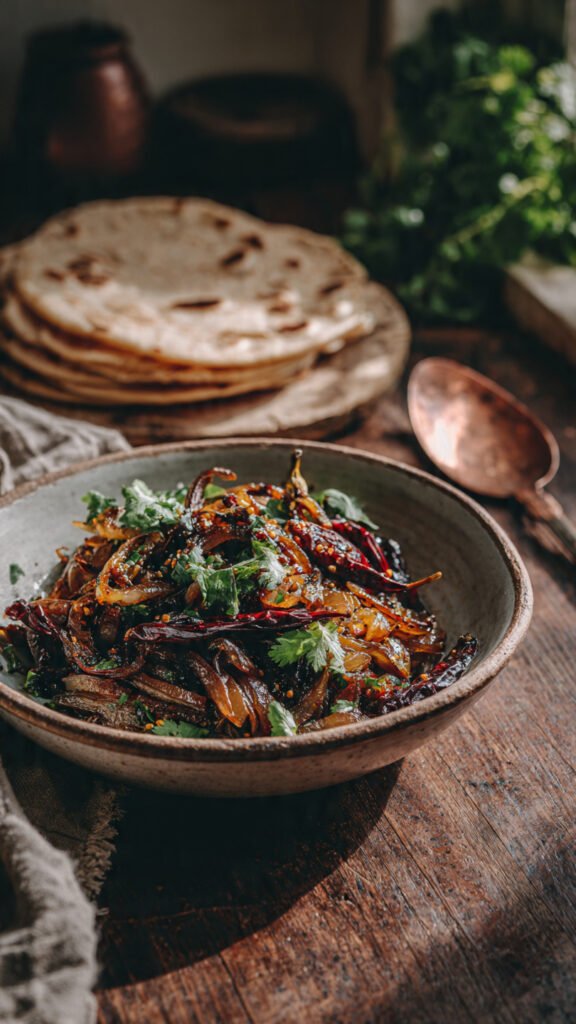
See? That wasn’t so hard. You took a pantry staple that usually makes you cry and turned it into a sweet, savory, tangy bowl of comfort.
This Onion Sabji recipe is proof that you don’t need expensive ingredients or hours of time to make something genuinely delicious. It’s humble cooking at its best.
Now go impress someone—or just yourself—with your new culinary skills. You’ve earned it! And hey, if you eat the whole pan standing over the stove, your secret is safe with me.