🍊 The Ultimate Pancit Palabok Recipe: Flavorful & Festive Noodles
Look, sometimes you want a meal that just screams “I have my life together,” even if your laundry pile is currently judging you from across the room. You want something vibrant, something packed with textures, and something that looks way harder to make than it actually is.
Enter Pancit Palabok.
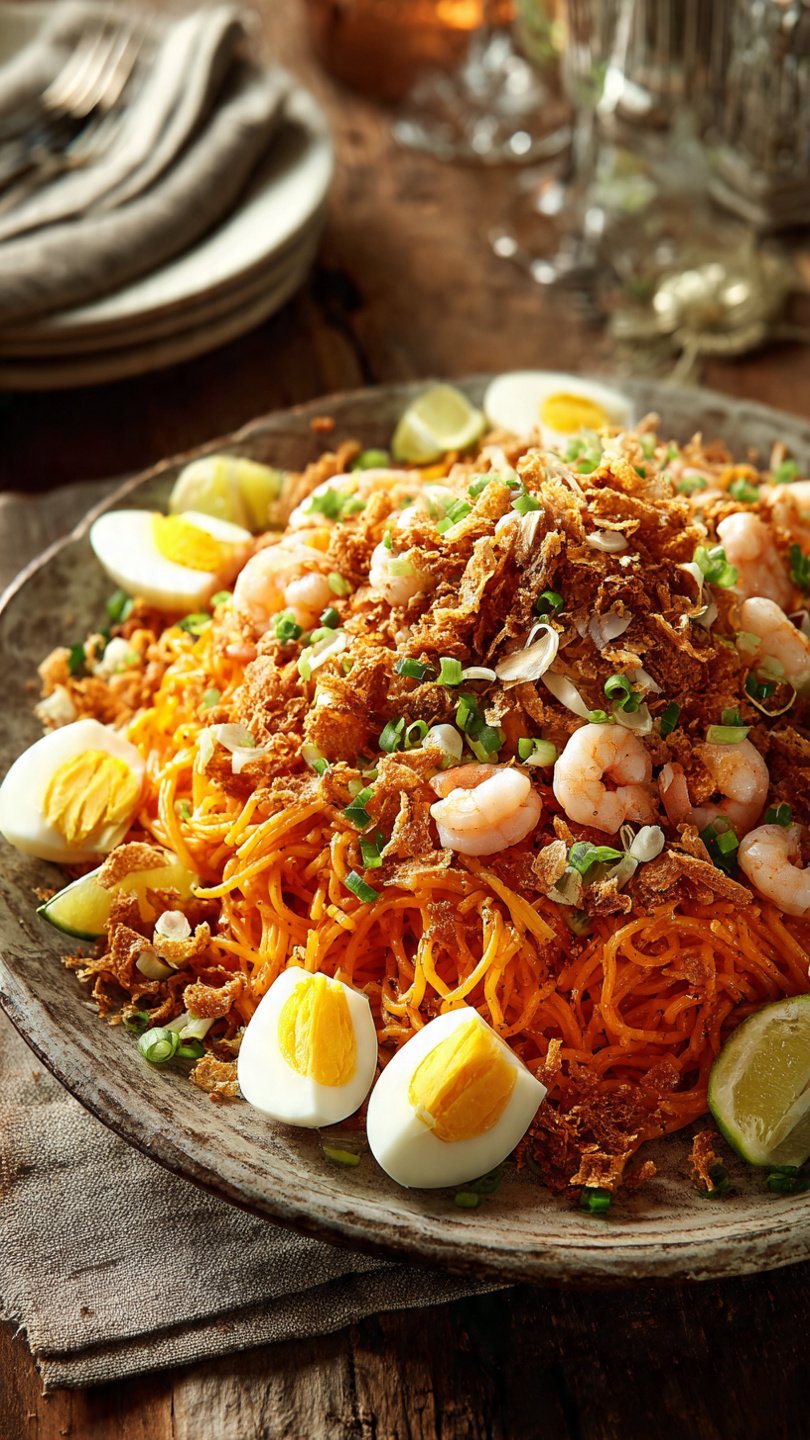
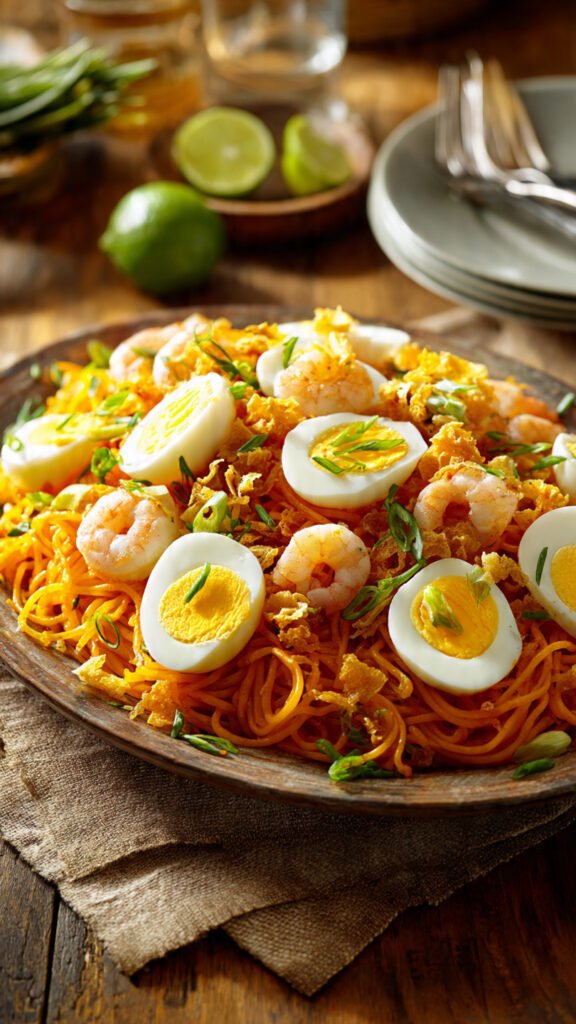
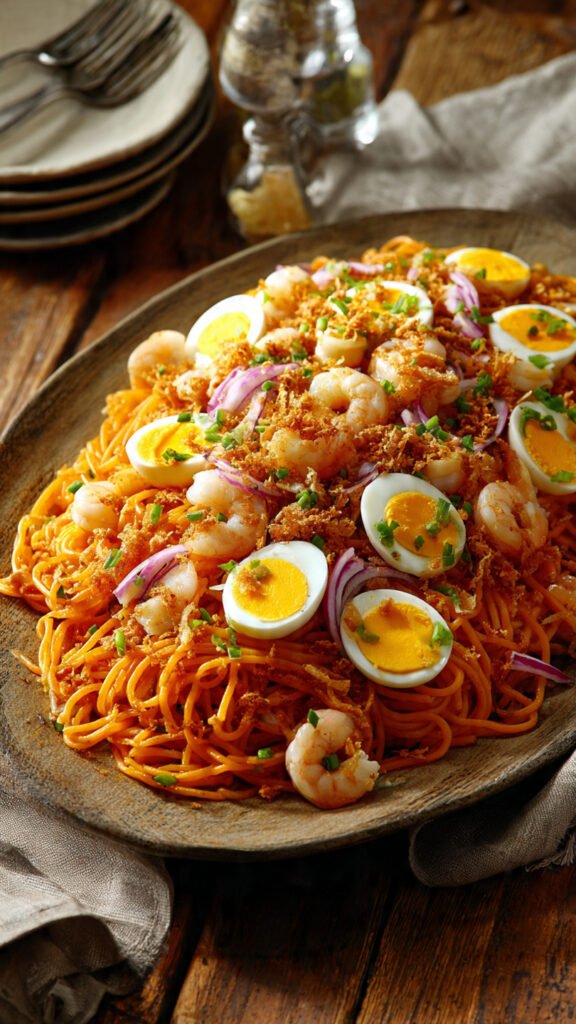
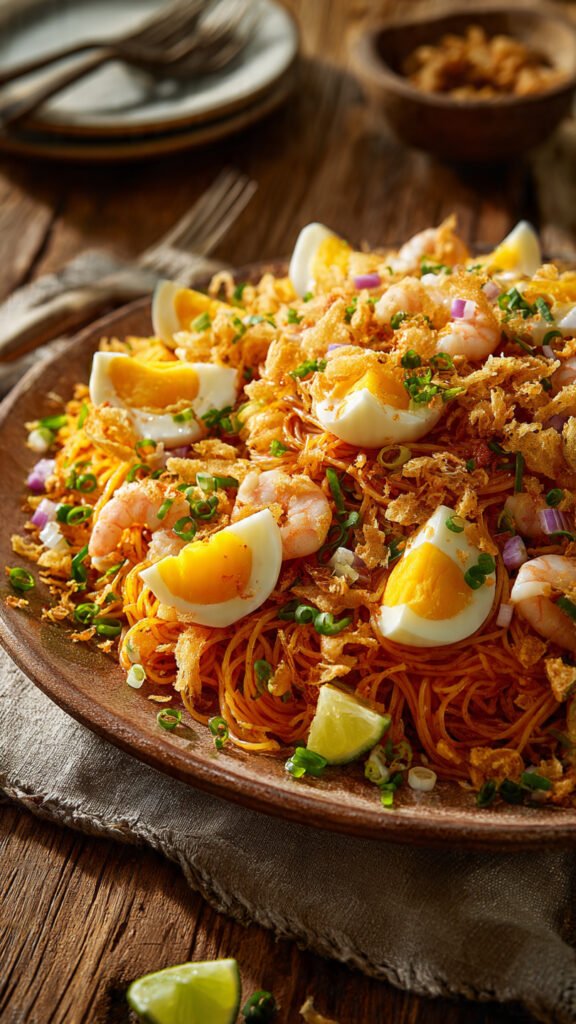
If you’ve never had it, imagine delicate rice noodles smothered in a rich, savory, bright orange shrimp sauce, and then absolutely buried under an avalanche of crunchy pork rinds, smoky fish flakes, hard-boiled eggs, and snappy shrimp. It’s a fiesta on a plate. It’s traditionally served at Filipino celebrations, but hey, surviving a Tuesday is cause for celebration enough, right?
Let’s make some magic happen.
Why This Recipe is Awesome
Okay, I’m going to level with you. Pancit Palabok has a reputation for being “high maintenance.” And yeah, if you compare it to making a peanut butter sandwich, it is. There are toppings to chop, a sauce to thicken, and noodles to soak.
But here’s why this specific recipe is worth the effort (and why it’s totally idiot-proof, because even I didn’t mess it up the first time).
The Flavor Profile is Insane This isn’t boring pasta. Palabok hits every single taste bud receptor you have. The sauce is deeply savory and briny thanks to shrimp broth. Then you get the smoky punch from tinapa (smoked fish flakes), the salty crunch of crushed chicharon (pork rinds), and finally, the sharp, acidic zing of freshly squeezed calamansi juice that cuts through all the richness. It’s a balancing act that your mouth will thank you for.
It’s All About Texture I don’t know about you, but I hate one-note textures. If my food is just “soft,” I’m bored. Palabok is a textural playground. You have the slippery, tender bite of the rice noodles, the velvety thickness of the sauce, the chew of the shrimp, and then—the pièce de résistance—the explosive crunch of the chicharon topping. It’s extremely satisfying to eat.
The Visual “Wow” Factor That orange color! It’s stunning. It comes from annatto (atsuete) seeds, not radioactive cheese dust. When you bring a platter of this to a potluck, people assume you spent hours slaving away. You don’t have to tell them you spent most of that time listening to a podcast while peeling shrimp. It looks impressive, editorial, and frankly, beautiful.
You Control the Chaos When you order this at a restaurant, sometimes they skimp on the toppings. Not here. You are the master of your own destiny. Want double the garlic? Do it. Want a mountain of chicharon so high you can’t see the noodles? I support your life choices.
Ingredients You’ll Need
Don’t let this list intimidate you. It’s mostly toppings. We break this down into three parts: the noodles, the sauce, and the “bling” (toppings).
The Basics & The Noodles
- Bihon Noodles (Rice Sticks): You need about 8oz (half a standard package). These are the thin ones. Don’t get the thick udon-style noodles; it just won’t vibe right.
- Annatto (Atsuete) Seeds or Powder: This is crucial for that iconic orange color. It doesn’t add a ton of flavor, but without it, your palabok will look sad and beige.
- Oil: Vegetable or canola oil for frying garlic and extracting that annatto color.
The Orange Flavor-Bomb Sauce
- Shrimp Broth: The soul of the dish. Pro-tip: If you are peeling fresh shrimp for the topping, boil the heads and shells in water for 15 minutes, then strain. That’s liquid gold. If you’re lazy (no judgment), use water mixed with a good quality shrimp bouillon cube.
- Ground Pork: Just a little bit to bulk up the sauce and add savory depth.
- Fish Sauce (Patis): The salt of Southeast Asia. Essential for funky, salty goodness.
- Cornstarch: Our thickener. We aren’t making soup here; we need a gravy that clings to every noodle strand.
The Bling (Toppings Parade)
- Shrimp: Boiled or sautéed until pink and snappy. Don’t overcook them into rubber erasers.
- Tinapa Flakes (Smoked Fish): Do not skip this. It adds a smoky dimension that defines palabok. You can buy smoked fish at Asian markets and flake the meat off, or sometimes find jars of pre-flaked tinapa.
- Chicharon (Pork Rinds): Get a bag and take out your aggression on it. Crush them up into coarse crumbs. The crunchy texture is non-negotiable.
- Hard-Boiled Eggs: Sliced into rounds or wedges.
- Fried Garlic Bits: The more, the better. Measure this with your heart, not a spoon.
- Green Onions: Finely chopped for a pop of freshness and color contrast.
- Calamansi (or Lime/Lemon wedges): The final acid acid that brightens everything up. It’s mandatory squeezing before eating.
Step-by-Step Instructions
Alright, put on your favorite apron and let’s do this. This is a game of mise en place—which is fancy French talk for “chop everything before you start cooking so you don’t have a panic attack halfway through.”
Phase 1: Prep Your Life Away
- Soak the Noodles: Place your bihon noodles in a large bowl of warm water. Let them hang out for about 15–20 minutes until they are pliable and solid white. You don’t want them mushy, just bendy. Drain them well and set aside.
- Make Annatto Oil (If using seeds): Heat about ¼ cup of oil in a small pan over medium heat. Add 2 tablespoons of annatto seeds. Let them sizzle gently for a few minutes until the oil turns a deep, vibrant orange-red. Important: Do not burn the seeds or the oil will taste bitter. Strain out the seeds and keep that gorgeous oil. (If using powder, skip this; you’ll just add powder to the sauce later).
- Prepare All Toppings: This is your moment of zen. Peel and cook the shrimp. Boil and slice the eggs. Crush the chicharon. Flake the smoked fish. Chop the green onions. Fry the garlic until golden brown and crispy. Having these ready in little bowls will make you feel like you’re on a cooking show.
Phase 2: The Sauce Boss
- Sauté the Base: In a large wok or deep skillet, heat a tablespoon of regular oil. Sauté some minced garlic and onion until fragrant. Toss in the ground pork and cook until browned and no longer pink.
- Build the Liquid: Pour in your shrimp broth (about 4–5 cups). Bring it to a gentle simmer. Add a tablespoon or two of fish sauce. Taste it. It should taste savory and shrimp-forward.
- Color It Up: If you made annatto oil, drizzle about 3 tablespoons in now. Watch the broth turn that incredible sunset orange. If using annatto powder, dissolve a teaspoon in a little warm water first, then dump it in.
- The Thickening (Science Time!): In a small bowl, mix 4 tablespoons of cornstarch with ½ cup of cold water. Whisk it until smooth—this is a slurry. Crucial: Never dump dry cornstarch straight into hot liquid unless you want lumpy sadness. Slowly pour the slurry into the simmering sauce while stirring constantly.
- Consistency Check: Keep stirring. The sauce will transform from a thin broth to a glossy, thick gravy within a minute or two. You want it thick enough to coat the back of a spoon heavily. If it’s too thin, make a tiny bit more slurry and add it. Too thick? Splash in a little water. Turn off the heat.
Phase 3: Assembly & Glory
- Cook the Noodles Final Step: Bring a separate large pot of water to a rolling boil. Dunk your pre-soaked noodles in for literally 1 minute. Maybe 2 minutes. Test a strand—it should be tender but still have a slight bite (al dente). Drain them immediately. Do not overcook these, or they turn into paste.
- The Layering: This is art class. On a large platter, lay down your bed of cooked noodles.
- Sauce It: Pour that glorious orange sauce generously over the noodles. Don’t be shy; drown them a little. Use tongs to gently toss so every strand gets coated.
- Decorate: Now, go crazy with the toppings. Arrange the shrimp, egg slices, crushed chicharon, tinapa flakes, fried garlic, and green onions over the top. Make it look pretty. Place calamansi or lemon wedges around the edge of the platter.
Common Mistakes to Avoid
Look, I’ve made these mistakes so you don’t have to. Learn from my failures.
- The Mushy Noodle Incident: Leaving the noodles in the boiling water too long. Rice noodles cook fast. If you overcook them, they break apart into a sad, porridge-like mess when you toss them with the sauce. Seriously, 60 seconds in boiling water is usually enough for pre-soaked noodles.
- The Lumpy Sauce Disaster: As mentioned, dumping dry cornstarch into hot broth. You will spend the next 20 minutes trying to fish out gelatinous balls of powder. Always make a cold water slurry first. FYI.
- Skipping the Smoked Fish: You might think, “Eh, I don’t have tinapa, I’ll just leave it out.” Don’t. It’s a primary flavor component. It’s like making pizza without cheese. It’s just not the same.
- Forgetting the Acid: Eating palabok without squeezing calamansi or lemon over it is a crime. The richness of the sauce and pork needs that acidic cut to wake up the flavors. It tastes flat without it.
Alternatives & Substitutions
Don’t have an Asian supermarket nearby? We can make some adjustments.
- Annatto/Atsuete: If you absolutely cannot find seeds or powder, you can use a little bit of paprika and turmeric for color, but the flavor won’t be quite traditional. IMO, it’s worth ordering annatto online if you can.
- Tinapa (Smoked Fish): If you can’t find smoked fish at all, you can try adding a dash of liquid smoke to the sauce, or using finely crumbled smoked bacon as a topping instead. It won’t be authentic, but it will still be tasty.
- Calamansi: This tiny Philippine lime is the gold standard. If you can’t find it fresh (or frozen juice packets), regular lime wedges are the best substitute. Lemon works too in a pinch.
- Shrimp Broth: If peeling shrimp sounds like torture, just use a high-quality chicken broth and add an extra shrimp bouillon cube to amp up the seafood flavor.
FAQ (Frequently Asked Questions)
Q: Can I make this ahead of time for a party? A: Yes and no. You can make the sauce a day ahead and keep it in the fridge (it will turn into a weird jelly blob, but it melts back down when heated). You can prep all the toppings ahead of time. But do not cook the noodles or assemble the dish until you are ready to serve. The noodles will soak up all the sauce and turn into a brick if left sitting too long.
Q: Is Pancit Palabok spicy? A: Not traditionally, no. It’s savory, smoky, and citrusy. If you want heat, feel free to chop up some Thai chilies and sprinkle them on top, you rebel.
Q: Why is my sauce pale instead of bright orange? A: You probably didn’t use enough annatto. Next time, use more seeds when making your oil, or add another teaspoon of powder. We want vibrant sunset vibes here.
Q: Can I use regular pasta like spaghetti? A: Look… technically, physics will allow it. But spiritually? Why would you do that to yourself? The texture will be completely wrong. Stick to the rice noodles.
Q: How do I reheat leftovers? A: If it’s already mixed, leftovers are tricky because the noodles get soggy. Your best bet is a microwave in short bursts, adding a splash of water to loosen it up. It won’t be as glorious as day one, but it’s still edible.
Final Thoughts
See? That wasn’t so bad. Sure, it used every bowl in your kitchen for the toppings, but look at that masterpiece you just created. Pancit Palabok is a labor of love, but the payoff is huge.
It’s colorful, it’s complex, and it’s deeply comforting. Now go impress someone—or just impress yourself while eating it in your sweatpants on the couch. You’ve earned it!