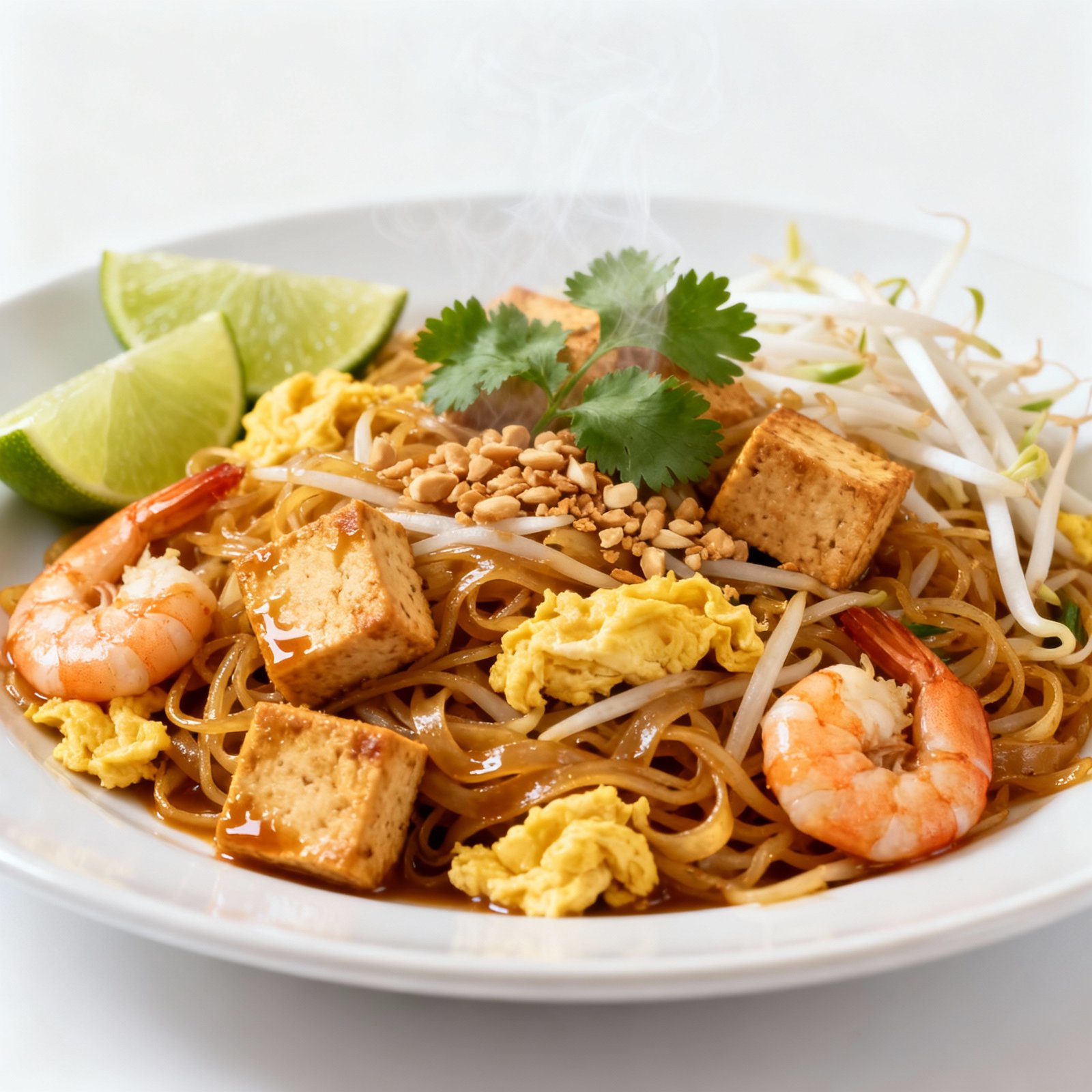
Pad Thai Recipe: Authentic Flavor, Made Easy!
Craving the vibrant, tangy, and slightly sweet flavors of authentic Pad Thai? You’re in the right place! This recipe delivers restaurant-quality Pad Thai right in your own kitchen. Forget takeout – with a few simple steps and readily available ingredients, you can create a dish that’s bursting with flavor and guaranteed to impress. We’ll guide you through each step, ensuring a perfect balance of sweet, sour, and savory in every bite. Get ready to experience the real taste of Thailand!
Why This Recipe Works
This recipe isn’t just another Pad Thai recipe; it’s crafted for success. Here’s why it works so well:
- Authentic Flavor Profile: We use a balanced blend of tamarind paste, fish sauce, palm sugar (or brown sugar as a substitute), and lime juice to create the signature Pad Thai sauce. This combination provides the essential sweet, sour, salty, and umami notes that define the dish.
- Easy-to-Follow Instructions: The steps are clearly outlined and easy to understand, even for beginner cooks. We break down each stage of the cooking process, so you know exactly what to do and when.
- Ingredient Substitutions: While we recommend using authentic ingredients for the best results, we also provide suggestions for substitutions if certain items are difficult to find. This makes the recipe accessible to everyone, regardless of location or pantry staples.
- Perfect Noodle Texture: We emphasize the importance of properly soaking the rice noodles to achieve the ideal tender yet slightly chewy texture. Overcooked noodles can ruin the dish, so we provide specific instructions to prevent this.
- Customizable: This recipe serves as a fantastic base. Feel free to add your favorite protein, vegetables, or spice level to personalize it to your liking.
Ingredients
- Rice Noodles: 8 ounces dried flat rice noodles (about 1/4 inch wide)
- Protein: 8 ounces shrimp (peeled and deveined), chicken (thinly sliced), or tofu (firm or extra-firm, cubed)
- Eggs: 2 large eggs, lightly beaten
- Garlic: 2 cloves, minced
- Shallot: 1 medium, thinly sliced
- Bean Sprouts: 2 cups fresh bean sprouts
- Chinese Chives (Garlic Chives): 1/2 cup, cut into 1-inch pieces (optional, but highly recommended)
- Peanuts: 1/4 cup, roasted and chopped
- Lime Wedges: For serving
- Pad Thai Sauce:
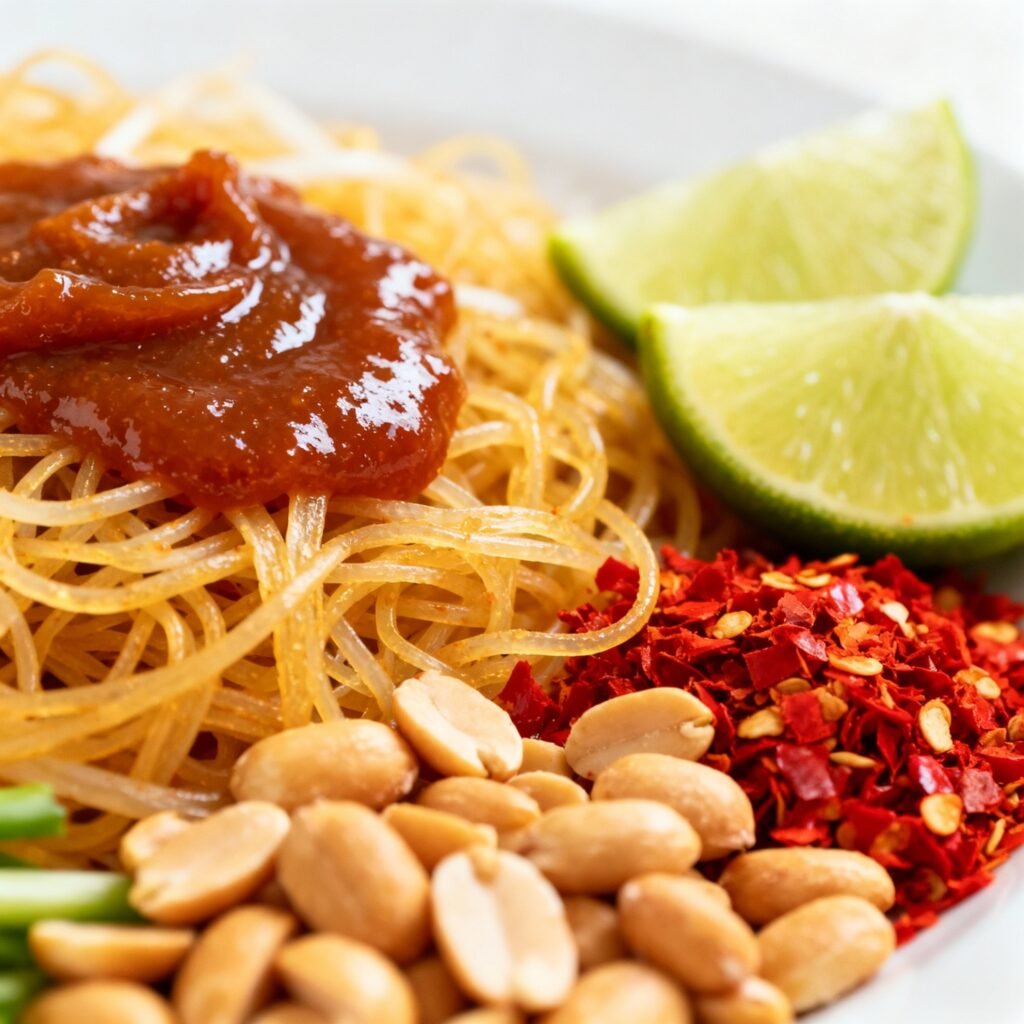
- Tamarind Paste: 3 tablespoons
- Fish Sauce: 3 tablespoons
- Palm Sugar: 3 tablespoons (or brown sugar as a substitute)
- Lime Juice: 2 tablespoons
- Water: 2 tablespoons
- Chili Garlic Sauce (optional): 1 teaspoon, or to taste
- Oil: 2 tablespoons vegetable oil or peanut oil
Instructions
- Prepare the Noodles: Place the dried rice noodles in a large bowl and cover with hot (not boiling) water. Soak for 30-45 minutes, or until the noodles are pliable but still firm to the touch. Drain well and set aside. The soaking time may vary depending on the thickness of the noodles, so check them frequently.
- Make the Pad Thai Sauce: In a small bowl, whisk together the tamarind paste, fish sauce, palm sugar (or brown sugar), lime juice, water, and chili garlic sauce (if using). Stir until the sugar is dissolved. Taste and adjust the seasoning as needed. You may want to add a little more lime juice for extra tanginess or brown sugar for sweetness.
- Cook the Protein: Heat 1 tablespoon of oil in a large wok or skillet over medium-high heat. Add the shrimp, chicken, or tofu and cook until cooked through. Remove from the wok and set aside.
- Sauté the Aromatics: Add the remaining 1 tablespoon of oil to the wok. Add the minced garlic and sliced shallot and cook for about 30 seconds, or until fragrant. Be careful not to burn the garlic.
- Scramble the Eggs: Push the garlic and shallot to one side of the wok. Crack the eggs into the wok and scramble them lightly.
- Combine and Cook: Add the soaked rice noodles to the wok and toss to combine with the eggs, garlic, and shallot. Pour the Pad Thai sauce over the noodles and toss to coat evenly. Cook for 2-3 minutes, stirring constantly, until the noodles are heated through and the sauce has thickened slightly.
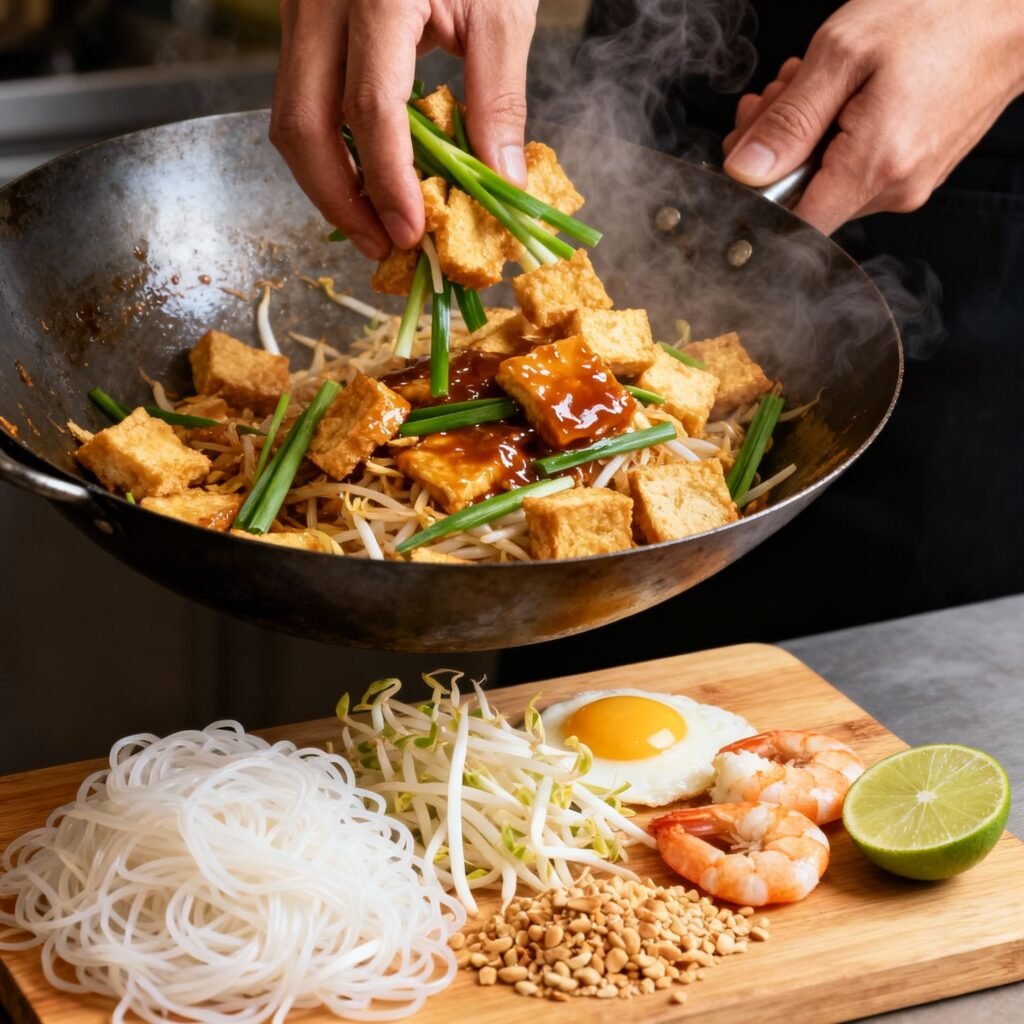
- Add the Protein and Vegetables: Add the cooked shrimp, chicken, or tofu back to the wok. Add the bean sprouts and Chinese chives (if using) and toss to combine. Cook for another minute, or until the bean sprouts are slightly wilted.
- Serve: Divide the Pad Thai among serving plates. Garnish with chopped peanuts and a lime wedge. Serve immediately.
Tips for Success
- Don’t Overcook the Noodles: This is the most common mistake when making Pad Thai. Overcooked noodles become mushy and unappetizing. Make sure to soak the noodles until they are pliable but still firm, and avoid overcooking them in the wok.
- Prepare All Ingredients in Advance: Pad Thai cooks quickly, so it’s important to have all of your ingredients prepped and ready to go before you start cooking. This includes soaking the noodles, chopping the vegetables, and making the sauce.
- Use a Wok: A wok is ideal for making Pad Thai because it distributes heat evenly and allows you to toss the ingredients easily. If you don’t have a wok, a large skillet will work as well.
- Adjust the Sauce to Your Taste: The Pad Thai sauce is the heart of the dish, so it’s important to get the flavor just right. Taste the sauce after you make it and adjust the seasoning as needed. You may want to add more lime juice for tanginess, brown sugar for sweetness, or chili garlic sauce for heat.
- Don’t Overcrowd the Wok: If you’re making a large batch of Pad Thai, it’s best to cook it in batches to avoid overcrowding the wok. Overcrowding can lower the temperature of the wok and prevent the noodles from cooking properly.
Storage Instructions
Leftover Pad Thai can be stored in an airtight container in the refrigerator for up to 2 days. Reheat in a wok or skillet over medium heat, adding a splash of water if necessary to prevent the noodles from drying out. Keep in mind that the noodles may become slightly softer upon reheating.
FAQ
Q: Can I use different types of noodles?
A: While flat rice noodles are traditional for Pad Thai, you can experiment with other types of rice noodles. However, the texture and cooking time may vary, so adjust accordingly.
Q: Can I make Pad Thai vegetarian or vegan?
A: Yes! Simply substitute tofu for the shrimp or chicken and use a vegetarian fish sauce substitute (or omit it and add a bit more soy sauce and salt). Ensure your tamarind paste doesn’t contain any animal products.
Q: Where can I find tamarind paste?
A: Tamarind paste can usually be found in Asian grocery stores or in the international aisle of well-stocked supermarkets. You can also purchase it online.
Q: Can I add other vegetables to Pad Thai?
A: Absolutely! Feel free to add your favorite vegetables, such as carrots, broccoli, or bell peppers. Just be sure to cook them before adding them to the wok, as they may take longer to cook than the noodles.
Q: My Pad Thai is too dry. What can I do?
A: Add a little more water or chicken broth to the wok and toss to combine. This will help to loosen the noodles and create a more saucy consistency.
Conclusion
Congratulations! You’ve just learned how to make authentic and delicious Pad Thai at home. With its vibrant flavors, satisfying textures, and customizable ingredients, this dish is sure to become a new favorite. So gather your ingredients, fire up your wok, and get ready to experience the taste of Thailand. Enjoy!