🥕 The Crunchiest Quick Pickle Carrots Recipe (Better Than Store-Bought!)
So, you’re staring into your crisper drawer. There’s a bag of carrots in there that you bought with “healthy lifestyle” intentions three weeks ago. They aren’t bad, per se, but they’re looking a little uninspired. You could eat them raw and be sad, or you could turn them into the most addictive, tangy, crunchy condiment known to man.
If you’re craving something tasty but are too lazy to spend forever in the kitchen, you’ve come to the right place. This pickle carrots recipe is the culinary equivalent of a glow-up. We are taking humble, boring root vegetables and giving them a spa day in a vinegar bath until they emerge as zesty, snappy perfection. Let’s get into it before I get too hungry.
Why This Recipe is Awesome
Look, I’m not going to sell you a bridge here. It’s pickled carrots. But there is a reason why every cool sandwich shop and trendy taco truck has a jar of these sitting on the counter.
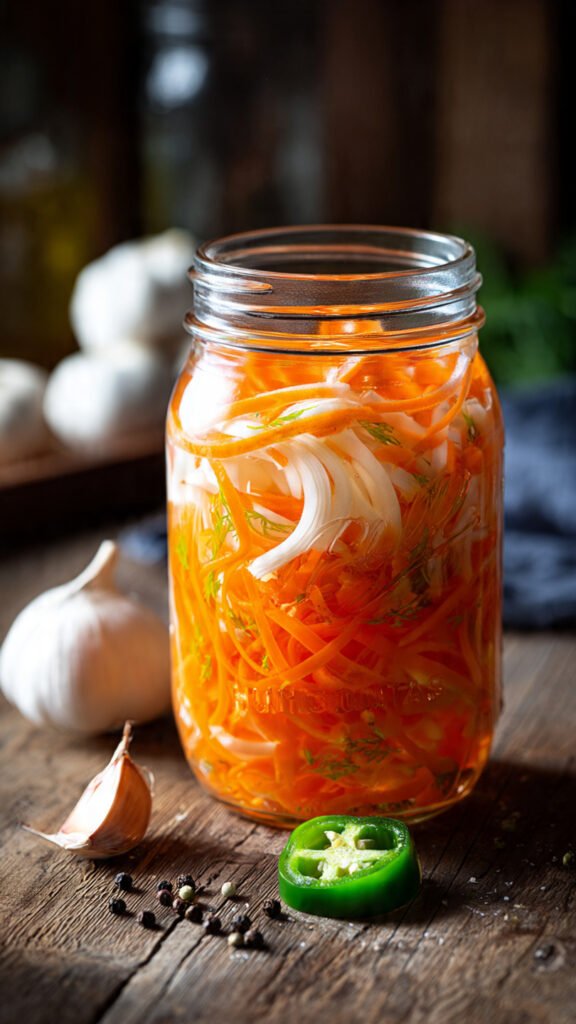
1. It’s Idiot-Proof (Mostly) I have burned water. I have ruined toast. But this? This is hard to mess up. Unless you accidentally use soap instead of vinegar, you are going to come out of this looking like a pro. It’s a “Quick Pickle” (or refrigerator pickle), which means we aren’t messing around with canning baths, pressure cookers, or the risk of botulism. We are just making tasty brine and pouring it over veggies.
2. The “Snap” Factor There is a specific sensory joy in biting into a properly pickled carrot. It’s not mushy (gross). It has a distinct snap that echoes in your skull, followed by a rush of sour, sweet, and salty. It cuts through rich foods like fatty pork belly, grilled cheese, or that third slice of pizza you definitely didn’t need but ate anyway.
3. It Lasts Forever-ish Okay, not forever. But these bad boys will hang out in your fridge for weeks, ready to save a boring salad or elevate a hot dog at a moment’s notice. It’s meal prep for people who hate meal prep.
4. It’s Dirt Cheap Carrots are essentially the cheapest vegetable in existence. Vinegar, sugar, and salt? Pennies. You are making a gourmet-tasting condiment for the price of gum.
Ingredients You’ll Need
We aren’t reinventing the wheel here. You probably have 90% of this in your pantry right now. If you don’t, a quick run to the store won’t bankrupt you.
- Carrots (1 lb / 450g): The star of the show. Regular orange carrots work best. You can use the fancy rainbow ones if you want to feel superior, but they all taste the same once pickled.
- Daikon Radish (Optional but encouraged): If you want that authentic Vietnamese Do Chua (Banh Mi pickle) vibe, go 50/50 carrots and daikon. If you can’t find daikon, just stick to all carrots. No stress.
- Rice Vinegar (1 Cup): This is crucial. Rice vinegar is milder and slightly sweeter than distilled white vinegar. FYI: If you only have white vinegar, mix it with a little water so it doesn’t burn your esophagus.
- Water (1 Cup): Warm enough to dissolve the sugar.
- White Sugar (½ Cup): Yes, sugar. Don’t look at me like that. You need the sweetness to balance the aggressive acidity of the vinegar. It won’t taste like dessert, I promise.
- Kosher Salt (1 tbsp): For flavor and to help draw a tiny bit of moisture out.
- Garlic (1-2 cloves, smashed): Optional, but garlic makes everything better.
- Whole Peppercorns (1 tsp): Adds a subtle earthy heat.
- Jalapeño (Optional): If you like to live dangerously.
Step-by-Step Instructions
Alright, put on some music or a podcast. This won’t take long, but we want to do it right.
1. The Prep Work (The Most Important Part) Wash and peel your carrots. Now, here is where you choose your own adventure.
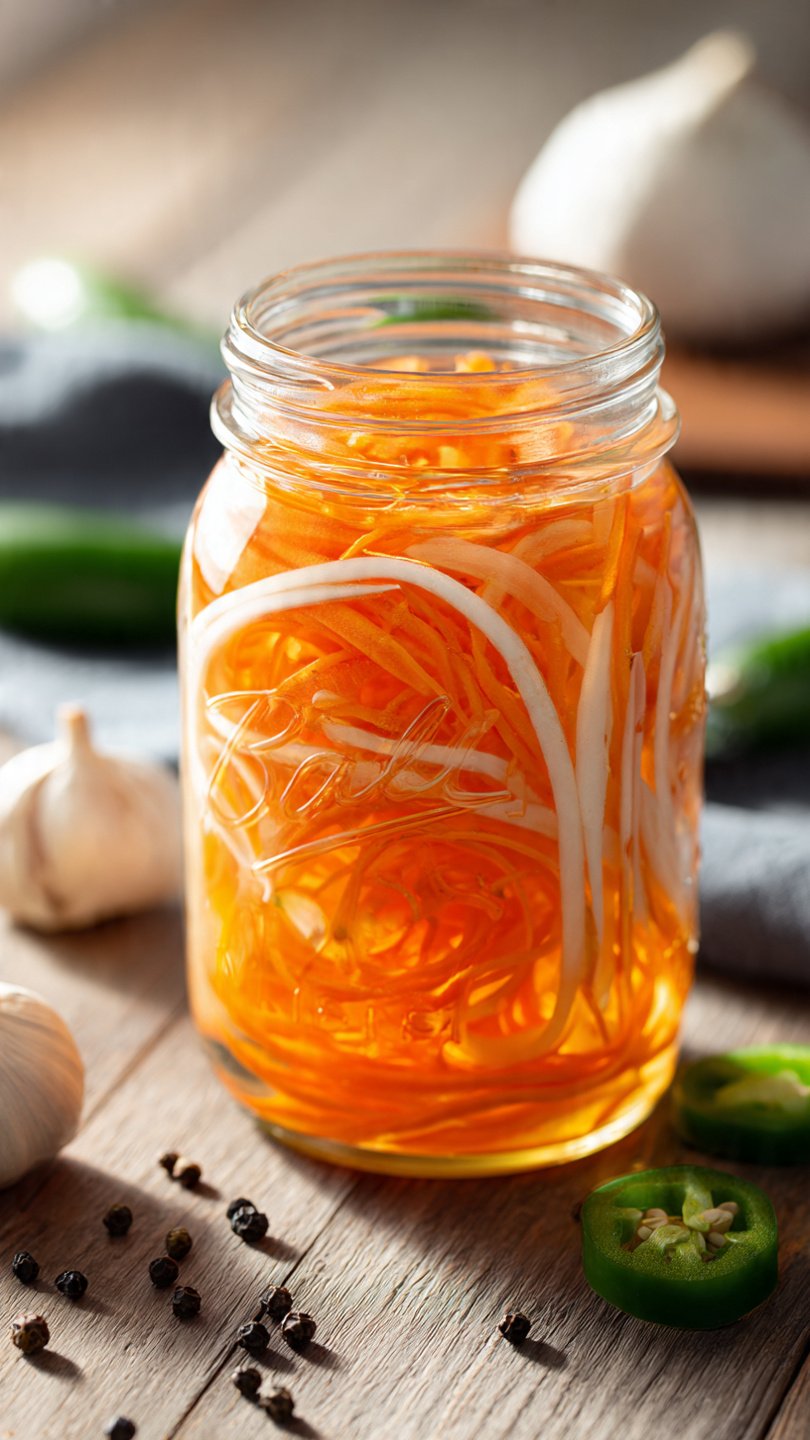
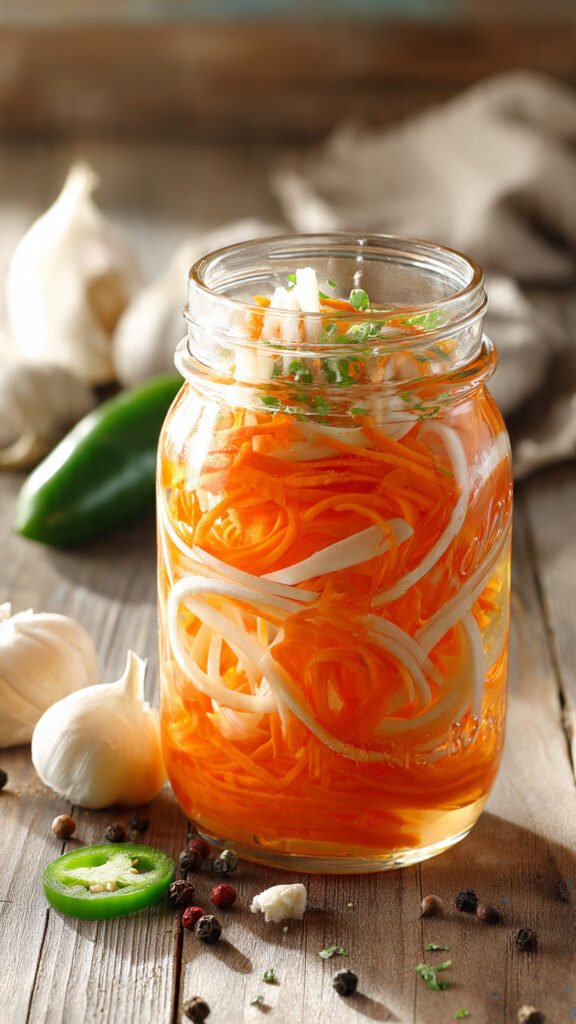
- The Matchstick (Julienne): This is the classic Banh Mi cut. It maximizes surface area so they pickle faster and are easier to stuff into sandwiches. Aim for pieces about 3 inches long and as thin as a matchstick. A julienne peeler is a lifesaver here; otherwise, practice those knife skills.
- The Coin: Slicing them into rounds. This is easier and great for snacking or salads, but they take a little longer to absorb the flavor because they are thicker.
- The Spear: Like a cucumber pickle. Good for snacking, bad for sandwiches.
- Tip: Whichever shape you choose, try to keep them uniform. You don’t want one floppy carrot and one hard-as-a-rock carrot in the same jar.
2. Salt the Veggies (The Secret Step) Toss your cut carrots (and daikon, if using) into a colander or bowl. Sprinkle them with the salt and maybe a tablespoon of the sugar. Massage it in with your hands. Let it sit for about 15–20 minutes.
- Why? This draws out excess water. This ensures your carrots stay crunchy rather than getting soggy later. After 20 minutes, rinse them thoroughly with cold water and drain well. You want them dry-ish before the brine hits.
3. Make the Brine In a small saucepan or a microwave-safe bowl (no judgment), combine the rice vinegar, water, remaining sugar, and any extra salt.
- Heat it up just enough to dissolve the sugar. You do not need to bring this to a rolling boil. We aren’t trying to cook the vinegar off. Just warm it up, stir until the liquid is clear, and remove from heat.
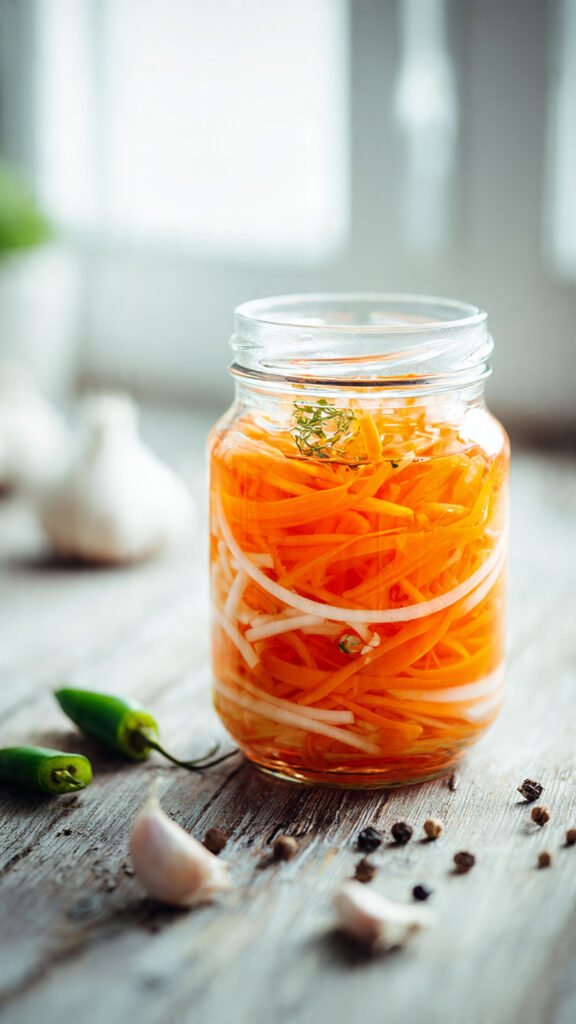
4. Pack the Jar Get a clean mason jar (or a recycled spaghetti sauce jar—we love sustainability). Pack your carrots in there tight.
- Add the Flair: This is when you shove in the smashed garlic clove, the peppercorns, and the slice of jalapeño if you’re using them. Make it look pretty.
5. The Pour Pour the warm (not scalding hot!) brine over the carrots. Make sure the veggies are completely submerged. If they are poking their heads out, they might get weird. Push them down or add a splash more vinegar.
6. The Waiting Game Let the jar sit on the counter until it cools to room temperature. Then, screw the lid on tight and toss it in the fridge.
- The Hard Truth: You can eat them in an hour, but they will taste underwhelming. Wait at least 24 hours. 48 hours is peak flavor town.
Common Mistakes to Avoid
Even though this is easy, I have seen people ruin it. Don’t be those people.
- Using “Old” Carrots: If your carrot is already bendy before you pickle it, no amount of vinegar will save it. You need firm, fresh carrots for that snap. Garbage in, garbage out.
- Boiling the Carrots: DO NOT cook the carrots in the brine on the stove. This isn’t soup. We want them raw and crisp. The brine should be warm, but the carrots stay raw.
- The Iodine Trap: Using iodized table salt can sometimes turn the brine cloudy or give the veggies a funny color. Stick to Kosher salt or pickling salt if you want that crystal-clear Instagram look.
- Thinking You Don’t Need Sugar: “I’m quitting sugar, can I skip it?” No. Well, physically yes, but it will taste like battery acid. The sugar is there to balance the pH and the flavor profile. If you must, use honey or maple syrup, but it changes the flavor significantly.
Alternatives & Substitutions
Variety is the spice of life, and pickles are no exception. Here is how to remix this pickle carrots recipe:
- The “Taqueria” Style: Swap the Rice Vinegar for Distilled White Vinegar (it’s sharper). Add sliced onions, whole garlic cloves, oregano, and lots of jalapeños. This is what you get at authentic Mexican taco joints. It’s punchy and aggressive in the best way.
- The “Dill Pickle” vibe: Add fresh dill, mustard seeds, and garlic. Omit the sugar (or reduce it heavily). This tricks your brain into thinking you’re eating a cucumber pickle, but with a carrot crunch. Weird? Maybe. Delicious? Yes.
- The “Spicy Korean” Twist: Add a teaspoon of Gochugaru (Korean red pepper flakes) and a slice of ginger to the jar. The heat builds slowly and pairs amazing with BBQ.
- Sugar Substitutes: If you really can’t do white sugar, Monkfruit sweetener actually works okay here. It dissolves well. Just avoid Stevia as it tends to leave a bitter metallic aftertaste that clashes with the vinegar.
FAQ (Frequently Asked Questions)
1. How long do these keep in the fridge? Technically up to a month. Realistically? You’ll eat them in a week. If the brine starts looking cloudy or smells funky (bad funky, not vinegar funky), toss it.
2. Can I preserve these in the pantry? Nope. This is a “Quick Pickle.” It has not been heat-processed for shelf stability. If you leave this jar in your pantry, you are creating a science experiment, not food. Keep it chilled!
3. Can I reuse the brine? IMO, yes, but only once. The vegetables release water which dilutes the vinegar over time. You can throw a fresh batch of carrots into the leftover brine once, but after that, make fresh brine. Don’t be cheap with vinegar.
4. Why are my carrots soft? You probably poured boiling hot liquid over them and cooked them slightly, or you skipped the salting/rinsing step. Or your carrots were old. It happens. Still edible, just less satisfying.
5. Can I pickle baby carrots? You can, but baby carrots are just big carrots shaved down, and they tend to be a bit wetter/softer. They work, but slicing a whole carrot usually yields a better texture.
6. Is this recipe spicy? Only if you want it to be. Without the peppercorns or jalapeño, it’s just sweet and tangy.
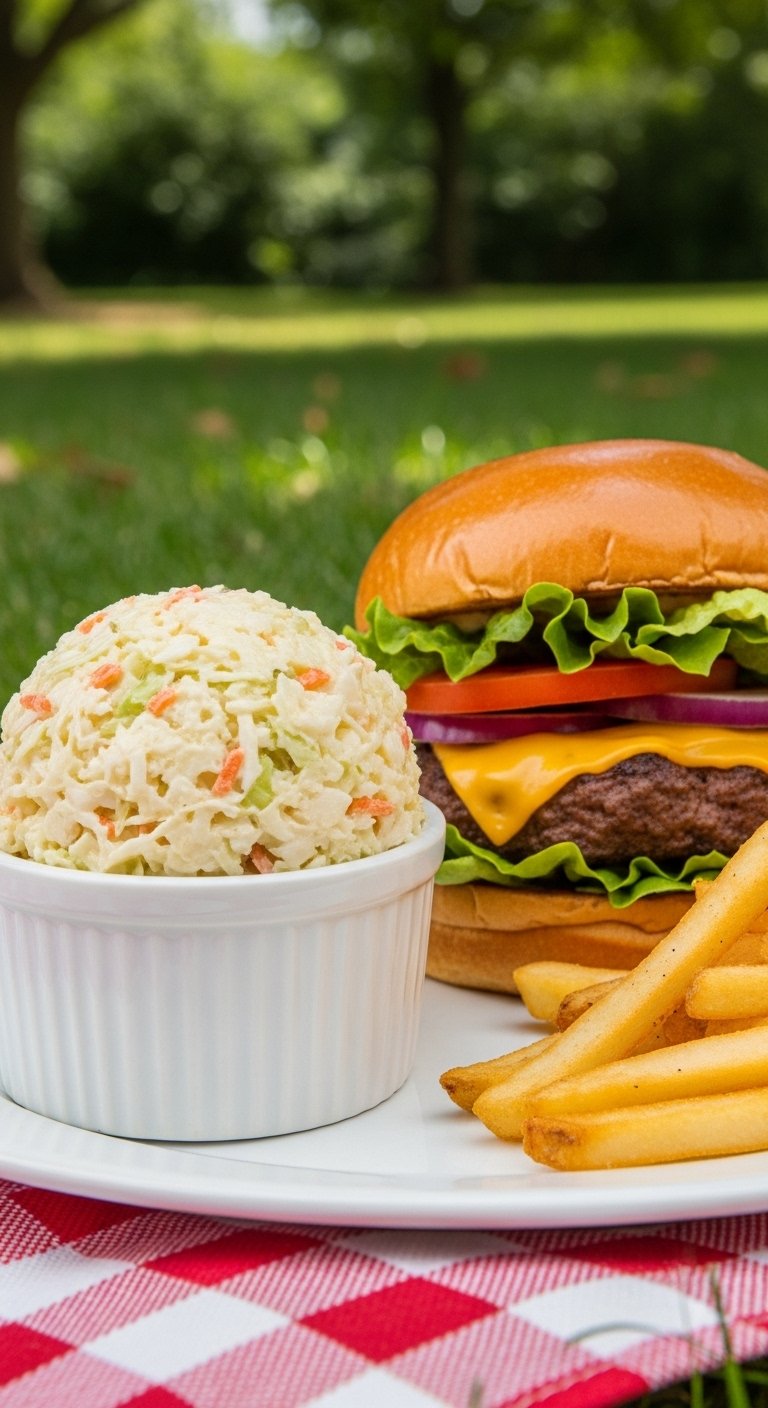
7. What do I eat these with? Banh Mi sandwiches, rice bowls, salads, burgers, tacos, or honestly? Just straight out of the jar while standing in front of the fridge at 2 AM.
Final Thoughts
There you have it. You are now the proud owner of a jar of vibrant, tangy, crunchy happiness. Making this pickle carrots recipe is one of those small kitchen victories that makes you feel like you have your life together, even if the rest of the house is a mess.
These carrots add a bright pop of color and flavor to literally anything savory. So, go grab those sad carrots from the bottom of your fridge and give them the destiny they deserve.
Now go impress someone—or yourself—with your new culinary skills. You’ve earned it!