🥟 Crispy Baked Pork Empanadas Recipe (Easy & Flaky!)
Okay, let’s be real for a second. Handheld food is just superior food. There’s something deeply primal and satisfying about ditching the cutlery and diving face-first into something delicious without societal judgment. And when that handheld food is a flaky, buttery golden pocket stuffed to the brim with savory, perfectly seasoned pork?
Yeah, game over. You’ve officially entered comfort food nirvana.
If you’ve been craving those little pockets of joy usually found at bakeries or street stalls, stop what you’re doing. Put down the phone (unless you’re reading this on it, then keep holding it), cancel the delivery order, and get your apron on. Today, we are conquering the pork empanadas recipe. It’s easier than you think, way tastier than frozen versions, and honestly, kind of therapeutic to assemble.
Let’s get cooking.
Why This Recipe is Awesome
Look, I don’t want to oversell it, but these pork empanadas might change your life. Or at least your weekend snack game. Here is why this particular recipe deserves a permanent spot in your rotation:
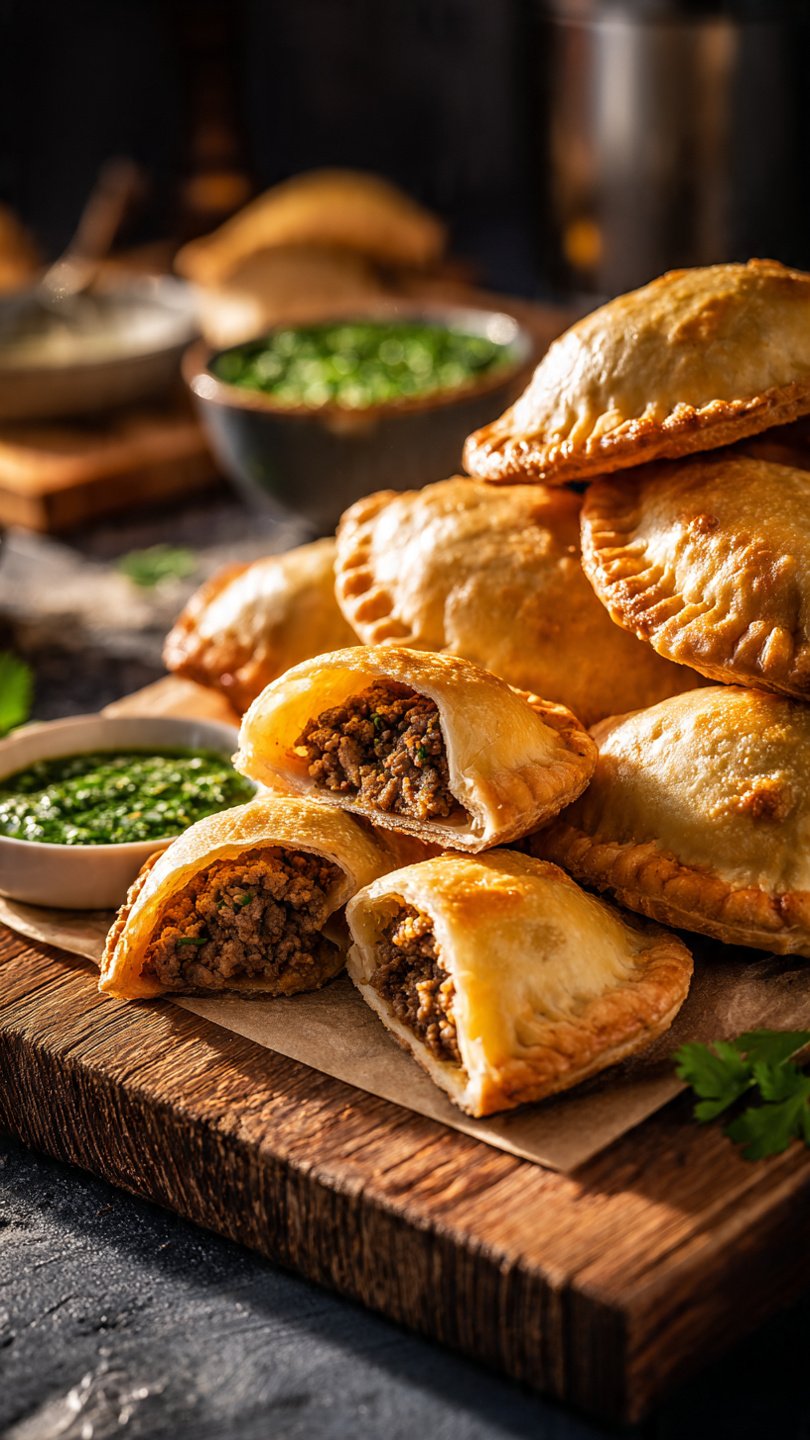
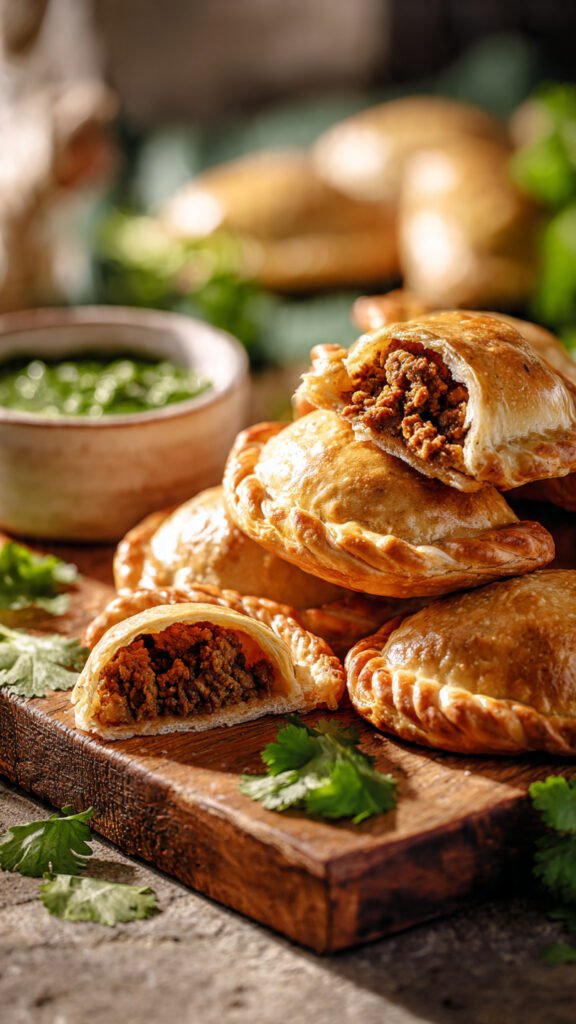
The Texture Contrast is Unreal The magic of a truly great empanada lies in the battle between the exterior and the interior. We are aiming for a crust that is shatteringly crisp and golden brown on the outside. It should flake everywhere when you bite into it—if you aren’t covered in crumbs, did you even eat an empanada? Inside that protective shield lives a filling of juicy, tender ground pork that’s been simmered with aromatics until it’s incredibly flavorful and moist. The crunch followed by the savory melt-in-your-mouth filling is pure sensory bliss.
It’s Highly “Customize-able” This recipe is a fantastic canvas. While we are making a classic savory pork version today, once you master the technique, you can go wild. Want it spicy? Throw in some jalapeños. Feeling cheesy? Monterey Jack is your friend. Want to be controversial? Add raisins and olives (it’s traditional in many regions, don’t knock it ’til you try it). You are the boss of your empanada destiny.
They Are Ultimate Party Food (Or “Me Party” Food) These bad boys are perfectly portable. They don’t require a plate, they hold their temperature well, and people absolutely lose their minds when you show up with a platter of homemade empanadas. They also freeze like a dream. You can make a huge batch on a lazy Sunday, freeze them unbaked, and then pop a few in the oven whenever a craving strikes on a Tuesday night. That, my friends, is self-care.
The “Cheat Code” Option We’ll talk about dough below, but FYI: this recipe works incredibly well with store-bought pie crusts if you just don’t have the energy to deal with flour dust today. No judgment here; we love efficiency.
Ingredients You’ll Need
We aren’t reinventing the wheel here; just making a really delicious wheel. Here is what you need to raid your pantry for:
For the Filling:
- Ground Pork: Go for something with a little fat content (like 80/20). Lean pork dries out faster than my motivation on a Monday morning. Fat equals flavor and moisture inside that crust.
- Onion & Garlic: The backbone of flavor. Use a medium yellow onion and as much garlic as your heart tells you is right (minimum 3 cloves, let’s be honest).
- Bell Pepper: Red bell pepper adds a nice sweetness and pops of color, but green works if that’s what’s rotting in your crisper drawer right now.
- Tomato Paste: Just a tablespoon adds a deep, rich umami flavor and helps bind the filling together so it’s not crumbly.
- The Spice Squad: We need ground cumin (essential for that smoky, earthy flavor), dried oregano, and smoked paprika. Salt and fresh cracked pepper are mandatory, obviously.
- Chicken Broth (or water): Just a splash to deglaze the pan and keep the filling moist as it cooks down.
For the Dough & Assembly:
- The Dough: You need enough pastry for about 12-15 medium empanadas. You can use two boxes of refrigerated rolled pie crusts (the easy route) or your favorite homemade empanada dough recipe if you’re feeling ambitious.
- Egg Wash: One egg beaten with a splash of water. This is crucial. It’s the “Instagram filter” for baked goods, giving them that shiny, golden-brown finish. Without it, they look sad and pale.
Step-by-Step Instructions
Alright, let’s assemble these pockets of happiness. We’re baking these today because dealing with a vat of hot frying oil sounds like too much work right now.
Phase 1: The Flavor Base (The Filling)
- Sizzle the Pork: Grab a large skillet and place it over medium-high heat. Once hot, toss in your ground pork. Use a wooden spoon to break it up aggressively—nobody wants a giant meatball inside their empanada. Let it cook, stirring occasionally, until it’s mostly browned and the fat has started to render out. The sound should be a lively sizzle, not a gentle steam.
- Soften Aromatics: If the pork was super fatty, drain off all but about a tablespoon of the grease. Reduce the heat to medium. Toss in your finely diced onion and bell pepper. Cook these down for about 5–7 minutes. You want them soft and translucent, smelling sweet and inviting. Add the minced garlic in the last minute so it doesn’t burn and turn bitter.
- Bloom the Spices: This is a pro tip. Push the meat and veggie mixture to the side of the pan slightly to create a little hot spot. Dump your cumin, oregano, and smoked paprika right onto the hot pan surface. Let them toast for exactly 30 seconds until they smell incredibly intense. This “blooming” process releases oil-soluble flavors that you just don’t get if you dump them on top of the meat. Mix it all together.
- Sauce It Up: Stir in the tomato paste, ensuring it coats everything. Let that cook for a minute until it turns a slightly darker, rusty red color. Finally, pour in that splash of chicken broth to scrape up any delicious browned bits stuck to the bottom of the pan (the fond). Simmer everything on low for another 3–5 minutes until the liquid has mostly evaporated and the mixture is thick and cohesive. Season generously with salt and pepper. Taste it! It should taste highly seasoned because the crust will mellow it out.
- The Chill Zone (Crucial Step!): Remove the pan from the heat. You must let the filling cool completely. I mean room temperature cold. If you put hot pork onto buttery dough, the butter will melt instantly, your dough will get soggy and tear, and you will be sad. Spread the filling on a baking sheet and pop it in the fridge to speed this up.
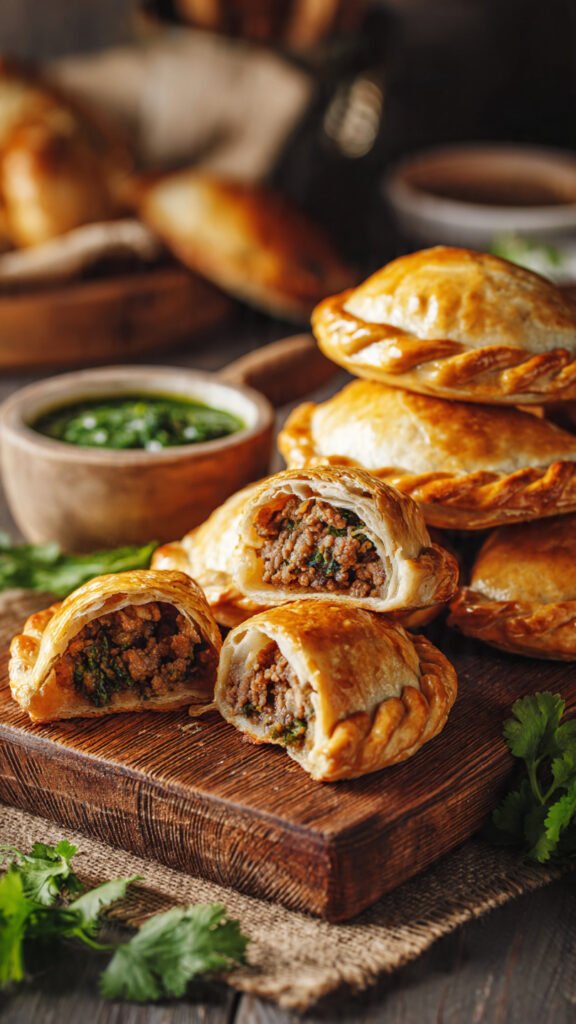
Phase 2: Assembly & Baking
- Prep the Station: Preheat your oven to 400°F (200°C). Line two large baking sheets with parchment paper. (Less cleanup later—you’re welcome).
- Cut the Rounds: Roll out your dough on a lightly floured surface. If using store-bought, just unroll it. Using a 4-inch or 5-inch round cutter (or just an overturned cereal bowl and a knife), cut out as many circles as you can. Re-roll scrap dough once to get a few more.
- Fill and Fold: Hold a dough circle in your non-dominant hand. Place about 1.5 to 2 tablespoons of the cooled pork filling in the center. Do not get greedy! Overstuffing leads to explosions in the oven.
- The Crimp: Dip your finger in water and run it along the edge of half the dough circle. Fold the dough over to create a half-moon shape, enclosing the filling. Press the edges firmly together to seal. To get that classic look, use the tines of a fork to press down along the curved edge, crimping it shut. It doesn’t have to be perfect; “rustic” is a charming aesthetic.
- The Bake: Transfer your assembled empanadas to the baking sheets. Brush the tops generously with that egg wash. Using a sharp knife or fork, poke one or two tiny holes in the top of each empanada so steam can escape (another anti-explosion measure).
- Golden Glory: Bake for 18–22 minutes. You are looking for a deep golden-brown color all over. If they look pale, leave them in longer. Trust your eyes, not just the timer. Your kitchen should smell amazing right now. Let them cool on the pan for 5 minutes before transferring to a wire rack so you don’t burn your tongue off on the first bite.
Common Mistakes to Avoid
Even though this pork empanadas recipe is pretty straightforward, things can go wrong. Don’t do these things:
- The “Greedy Stuffer”: Seriously, stop overfilling them. If you put too much pork in, you won’t be able to seal it properly, and it will burst open while baking, leaking delicious juices all over your tray and leaving you with a dry empanada. Less is more.
- The “Hot Pork” Disaster: I mentioned this already, but it bears repeating. Using warm filling on cold dough is the number one cause of soggy empanadas that fall apart before they even hit the oven. Patience, grasshopper. Chill that filling.
- Skipping the Egg Wash: If you skip the egg wash, your empanadas will taste fine, but they will look unfinished and doughy, even when fully cooked. We eat with our eyes first. Do the wash.
- Under-Seasoning: Remember, the dough is basically just flour and fat—it’s bland. The filling needs to punch above its weight class in flavor to balance out the crust. Don’t be shy with the salt and cumin.
Alternatives & Substitutions
Make this recipe fit your vibe.
- The Dough: If you want to feel like a pastry chef, make a traditional empanada dough with flour, butter, egg, and water. If you want ultimate flakiness and don’t mind a mess, use puff pastry sheets (just watch them carefully in the oven, they puff fast).
- The Protein: Not feeling pork? Ground beef is a classic swap. Ground turkey or chicken works too, but you might need to add a little extra olive oil to the pan since they are leaner. You could even do a lentil and mushroom mix for a vegetarian version that still has a “meaty” texture.
- Add-Ins: As mentioned, diced potatoes, hard-boiled eggs, olives, or raisins are very traditional add-ins in various South American countries. If you want to add cheese, shred some mild cheddar or Monterey Jack and mix it into the cooled pork filling right before assembling.
FAQ (Frequently Asked Questions)
Can I fry these instead of baking them? Well, technically yes. Frying them in hot oil will give you an incredibly bubbly, crispy crust that is undeniably delicious. But it also makes your house smell like a fryer for three days and involves scary hot oil. Baking is easier, cleaner, and still super crispy. Your call.
Can I freeze these for later? IMO, this is the best part about empanadas. Assemble them completely, but don’t egg wash or bake them. Freeze them in a single layer on a baking sheet until solid, then transfer them to a freezer bag. You can bake them straight from frozen—just add about 5–8 extra minutes to the baking time.
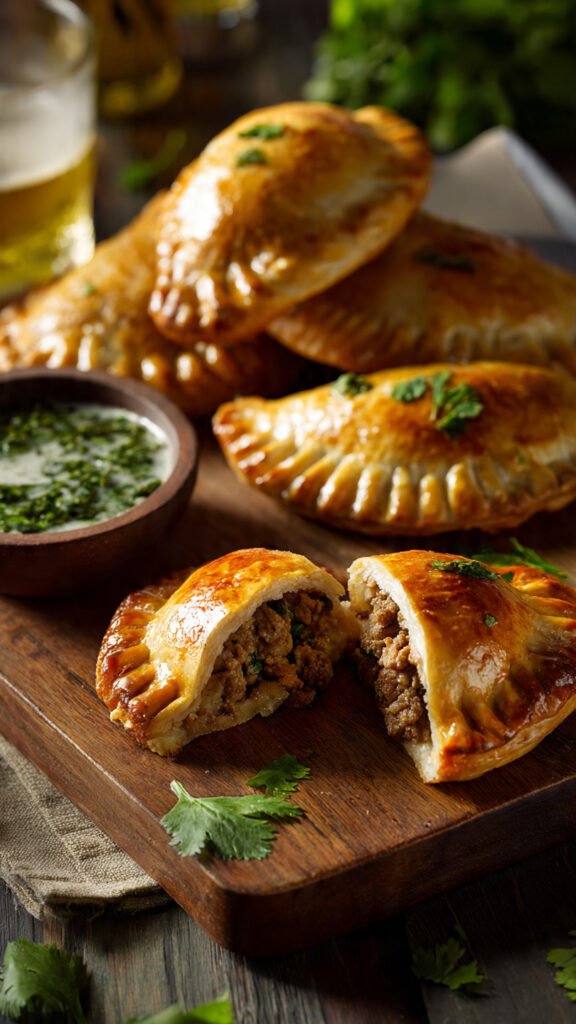
What do I dip them in? They are juicy enough on their own, but a dip never hurts. Chimichurri is the elite choice here—all those herbs and garlic cut through the richness perfectly. A simple salsa, hot sauce, or even a garlic aioli works wonders too.
Why did my empanadas open up in the oven? You either overstuffed them, didn’t seal the edges tightly enough with water and pressure, or forgot to poke a steam vent hole in the top. It happens to the best of us. They still taste good, they just look “extra rustic.”
Can I use margarine instead of butter if making homemade dough? Well, technically yes, but why hurt your soul like that? Butter provides flavor and better flakiness. Stick to the real stuff if you can.
Final Thoughts
There you have it. A pork empanadas recipe that delivers crispy, savory, comforting bliss right out of your own oven. It’s a little bit of effort for a massive payoff.
Don’t worry if your first batch doesn’t look perfectly uniform. The slightly lumpy, oddly crimped ones usually taste the best anyway. Now go impress someone—or just impress yourself on the couch watching Netflix—with your new culinary skills. You’ve earned it!