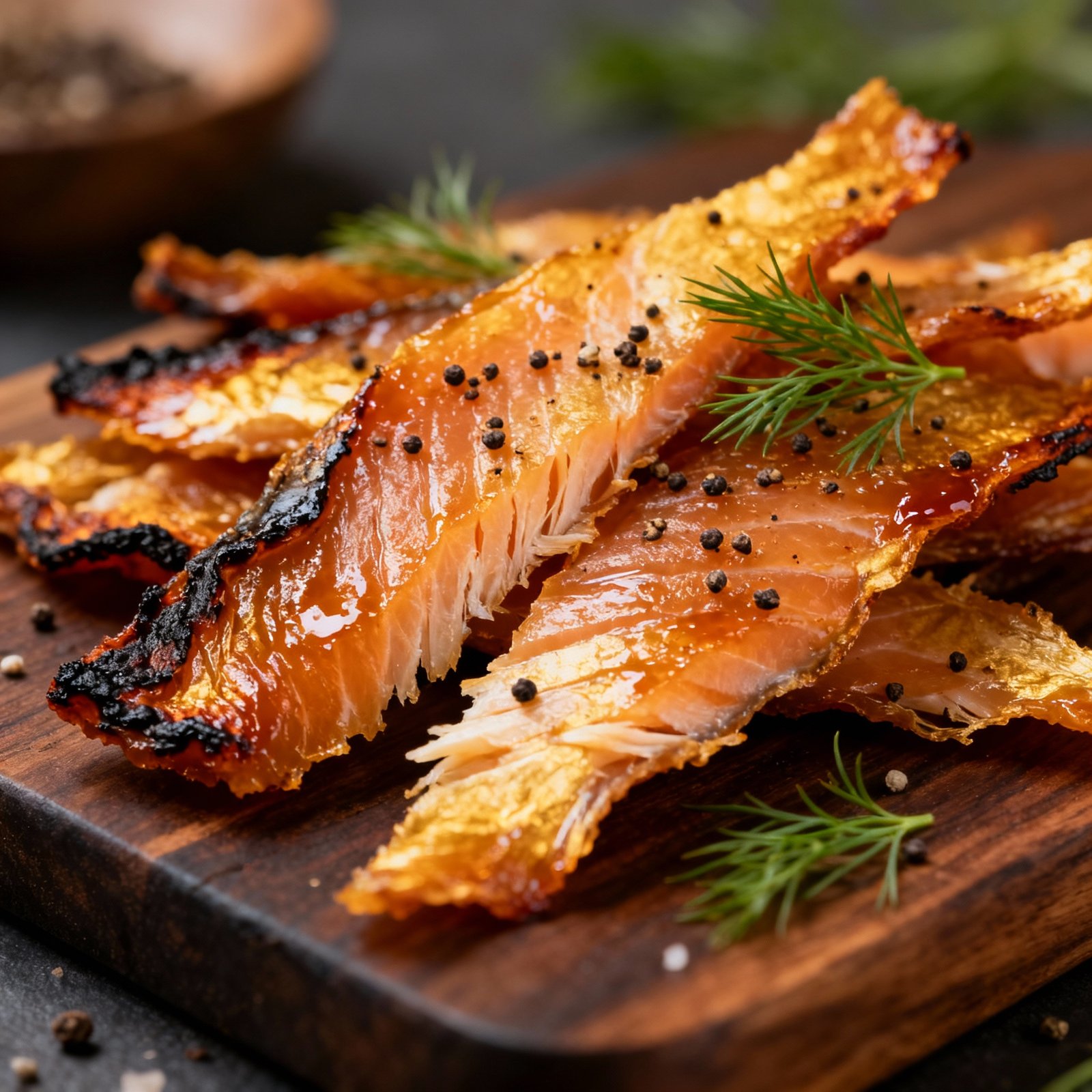
Salmon Jerky Recipe: The Ultimate Guide to Smoky, Savory Perfection
Craving a healthy, protein-packed snack that’s bursting with flavor? Look no further than homemade salmon jerky! This isn’t your gas station jerky; this is a culinary adventure, a chance to transform fresh salmon into a chewy, smoky delight that will tantalize your taste buds. Forget the processed stuff loaded with preservatives and artificial flavors. With this recipe, you’re in control of every ingredient, ensuring a delicious and nutritious snack that’s perfect for hiking, road trips, or simply satisfying your midday cravings.
Making salmon jerky might seem intimidating, but trust us, it’s surprisingly easy. This comprehensive guide will walk you through each step, from selecting the perfect salmon to achieving that ideal jerky texture. Get ready to impress your friends and family with this gourmet treat!
Why This Recipe Works
This recipe is designed for success, even for beginner jerky makers. Here’s why it works so well:
- Balanced Flavor Profile: The marinade is a carefully crafted blend of salty, sweet, and savory elements, perfectly complementing the rich flavor of salmon. We use soy sauce for umami, brown sugar for a touch of sweetness, and smoked paprika for that irresistible smoky depth.
- Proper Curing: The curing process is crucial for drawing out moisture and inhibiting bacterial growth. We use a combination of salt and sugar, which not only preserves the salmon but also enhances its flavor.
- Optimized Drying Time: We provide a range of drying times based on the method you choose (dehydrator or oven), ensuring you achieve that perfect chewy texture without over-drying the jerky.
- Versatile: The recipe is easily adaptable to your preferences. Want it spicier? Add a pinch of cayenne pepper. Prefer a sweeter jerky? Increase the brown sugar. The possibilities are endless!
Ingredients
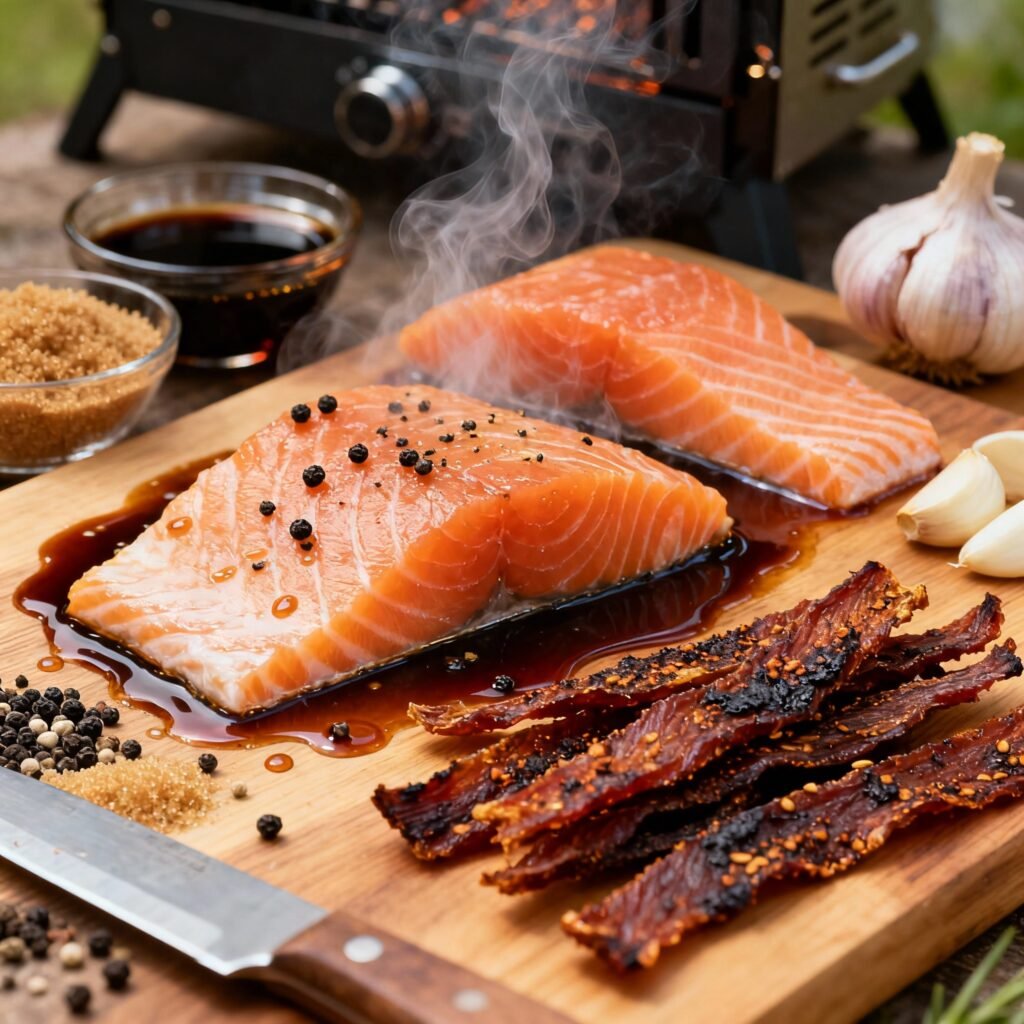
- 1 pound fresh salmon fillet, skin removed, pin bones removed
- 1/2 cup soy sauce (low sodium recommended)
- 1/4 cup brown sugar, packed
- 2 tablespoons maple syrup
- 2 tablespoons rice vinegar
- 1 tablespoon smoked paprika
- 1 teaspoon garlic powder
- 1/2 teaspoon onion powder
- 1/4 teaspoon black pepper
- Optional: 1/4 teaspoon cayenne pepper (for a spicy kick)
Instructions
- Prepare the Salmon:
- Carefully remove the skin from the salmon fillet using a sharp knife. A flexible fillet knife works best.
- Run your fingers along the fillet to check for any remaining pin bones. Use tweezers or pliers to remove them.
- Slice the salmon against the grain into 1/4-inch thick strips. Consistent thickness is key for even drying. Partially freezing the salmon for about 30 minutes can make slicing easier.
- Make the Marinade:
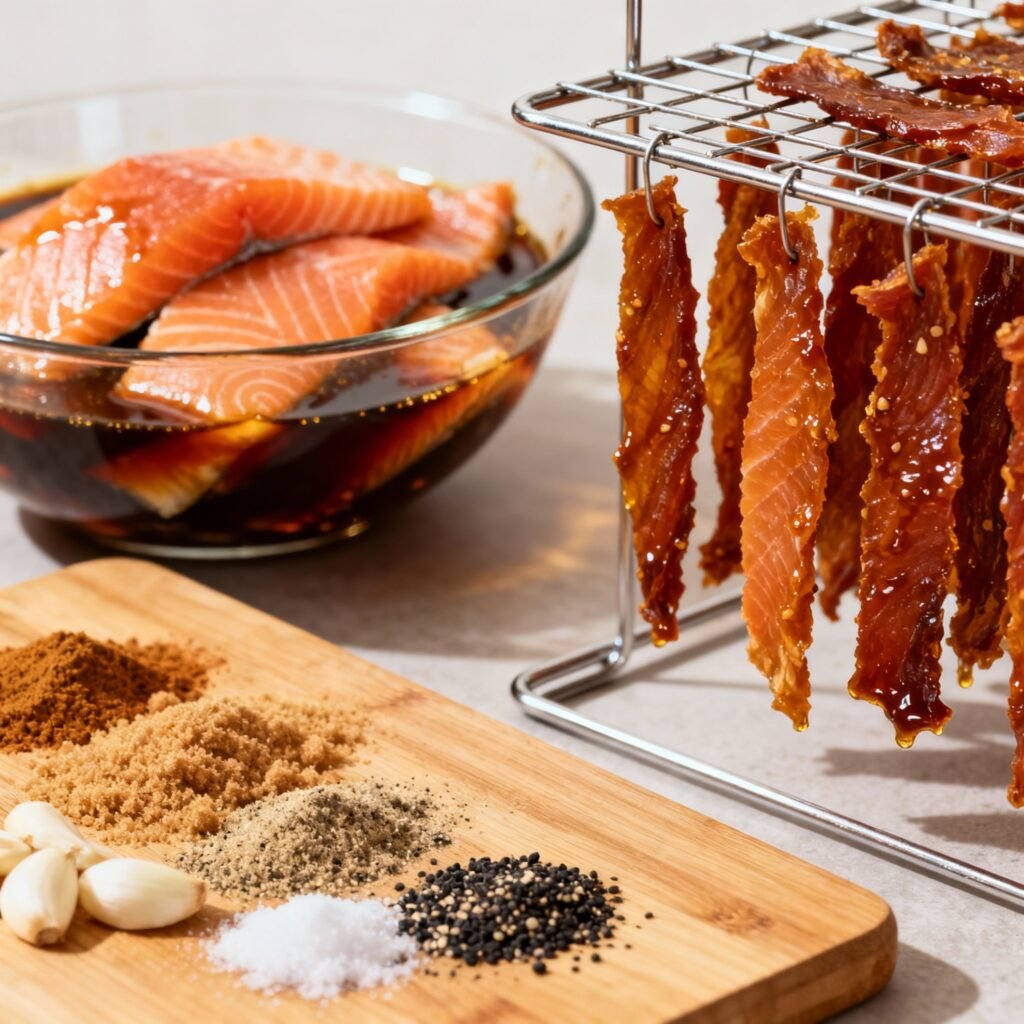
- In a medium bowl, whisk together the soy sauce, brown sugar, maple syrup, rice vinegar, smoked paprika, garlic powder, onion powder, black pepper, and cayenne pepper (if using).
- Ensure the brown sugar is completely dissolved in the soy sauce mixture.
- Marinate the Salmon:
- Place the salmon strips in a resealable plastic bag or a glass container.
- Pour the marinade over the salmon, ensuring all pieces are evenly coated.
- Seal the bag or container and refrigerate for at least 4 hours, or preferably overnight. This allows the flavors to penetrate the salmon and helps to cure it.
- Arrange the Salmon:
- Remove the salmon strips from the marinade and pat them dry with paper towels. This helps to remove excess moisture and speeds up the drying process.
- Arrange the salmon strips in a single layer on dehydrator trays, leaving a small space between each piece for air circulation. If using an oven, place the strips on a wire rack set over a baking sheet.
- Dehydrate or Bake:
- Dehydrator: Set the dehydrator to 145°F (63°C) and dry for 4-8 hours, or until the jerky is leathery and slightly pliable. The drying time will depend on the thickness of your salmon strips and the humidity in your environment.
- Oven: Preheat the oven to the lowest possible temperature, ideally 170°F (77°C). If your oven doesn’t go that low, prop the oven door open slightly with a wooden spoon to allow moisture to escape. Bake for 3-6 hours, or until the jerky is leathery and slightly pliable. Check the jerky frequently and rotate the baking sheet for even drying.
- Cool and Test:
- Once the jerky is done, remove it from the dehydrator or oven and let it cool completely.
- Test the jerky by bending a piece. It should bend without breaking and have a slightly chewy texture. If it’s too brittle, it’s over-dried. If it’s too soft, continue drying for a bit longer.
Tips for Success
- Salmon Selection: Use high-quality, fresh salmon for the best flavor and texture. Sockeye or King salmon are excellent choices due to their higher fat content, which contributes to a richer flavor and prevents the jerky from becoming too dry.
- Even Slicing: Consistent slicing is crucial for even drying. Invest in a good quality knife and take your time. Partially freezing the salmon helps immensely.
- Marinade Time: Don’t skimp on the marinating time! The longer the salmon marinates, the more flavorful and tender the jerky will be.
- Drying Temperature: Maintaining a consistent drying temperature is essential. Use an oven thermometer to ensure your oven is at the correct temperature. If using a dehydrator, follow the manufacturer’s instructions.
- Patience is Key: Making jerky takes time, so be patient! Don’t rush the drying process, as this can result in jerky that is either too dry or not fully cooked.
- Doneness Test: The bend test is the best way to determine if the jerky is done. It should bend without breaking and have a slightly chewy texture.
Storage Instructions
To ensure your salmon jerky stays fresh and delicious, store it properly:
- Airtight Container: Store the cooled jerky in an airtight container or resealable plastic bag.
- Refrigeration: For optimal freshness, store the jerky in the refrigerator for up to 2 weeks.
- Freezing: For longer storage, you can freeze the jerky for up to 2 months. Thaw it in the refrigerator before consuming.
FAQ
- Can I use frozen salmon? Yes, you can use frozen salmon, but make sure to thaw it completely in the refrigerator before slicing and marinating.
- Can I adjust the sweetness of the jerky? Absolutely! Adjust the amount of brown sugar to your liking. You can also use honey or agave nectar as alternatives.
- Can I add other spices to the marinade? Of course! Feel free to experiment with different spices and herbs, such as red pepper flakes, ginger, or sesame seeds.
- My jerky is too dry. What did I do wrong? You likely over-dried the jerky. Next time, reduce the drying time or lower the temperature.
- My jerky is too soft. What did I do wrong? You likely didn’t dry the jerky long enough. Continue drying for a bit longer, checking it frequently.
- Is salmon jerky safe to eat? Yes, as long as you follow the instructions carefully and ensure the salmon is cooked to a safe internal temperature. The curing process and drying help to inhibit bacterial growth.
Conclusion
Congratulations! You’ve successfully created your own batch of delicious and healthy salmon jerky. This recipe is a testament to the fact that homemade snacks can be both incredibly satisfying and surprisingly easy to make. So, ditch the store-bought stuff and embrace the joy of crafting your own culinary creations. Enjoy your salmon jerky on your next adventure, share it with friends and family, or simply savor it as a guilt-free treat. Happy snacking!