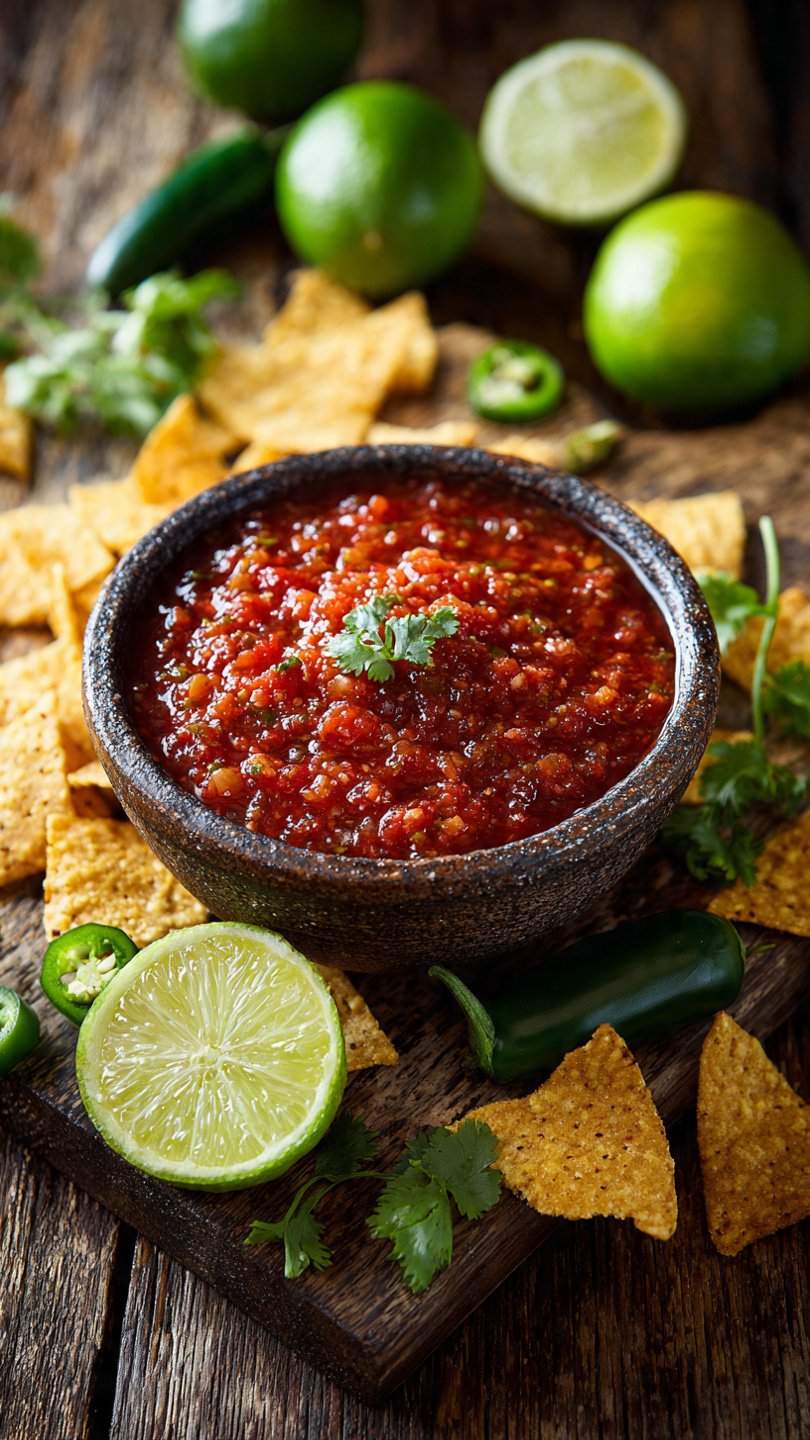
🌶️ The Ultimate Restaurant-Style Salsa Dip Recipe (Better Than Jarred!)
Look, let’s just put it out there: jarred salsa is sad.
You know the one. It’s been sitting on the grocery store shelf since the mid-90s, it smells weirdly metallic when you pop the lid, and it tastes mostly of vinegar and dashed hopes. It’s fine in an emergency (like a 2 AM nacho crisis), but does it bring you joy? Absolutely not.
If you’re craving that vibrant, punchy, addictive red gold they serve at your favorite Mexican spot with the warm basket of chips, you have to make it yourself.
But here’s the good news: making an incredible salsa dip recipe at home is ridiculously easy. It’s faster than driving to the store to buy the sad jar, and infinitely better tasting. We’re talking fresh ingredients, customizable heat, and a texture that actually grips the chip instead of sliding off in a watery puddle.
Put down the jar, grab your food processor, and let’s change your snacking life forever.
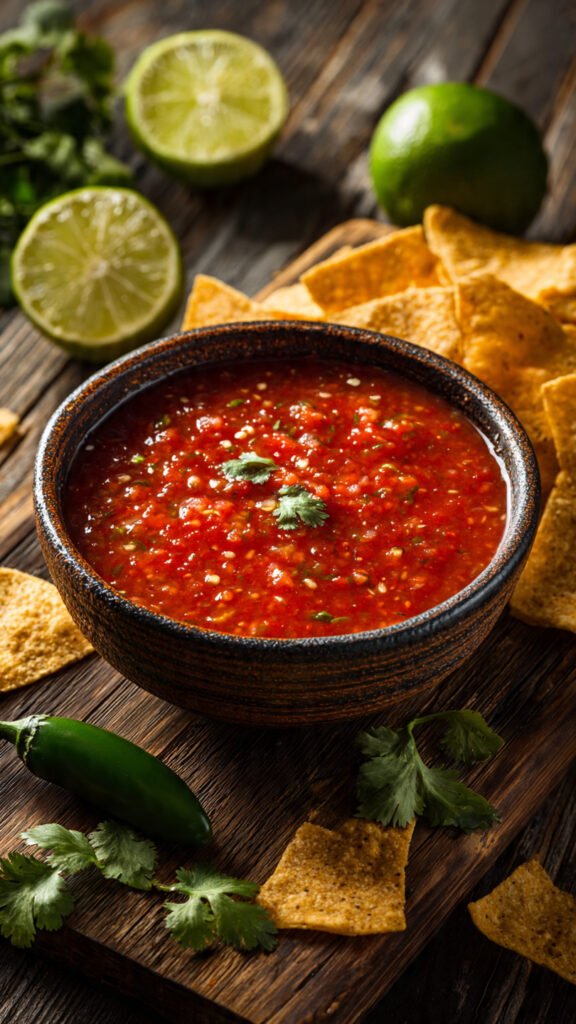
Why This Recipe is Awesome
Okay, I know what you might be thinking. “It’s just salsa dip. How exciting can it be?”
Oh, sweet summer child. This isn’t just salsa. This is the gateway drug to never enjoying store-bought dips again. Here is precisely why this recipe rocks my world, and why it’s about to rock yours.
It Tastes Like Actual Food, Not Preservatives Commercial salsa is loaded with citric acid and preservatives to keep it “fresh” for two years in a warehouse. That stuff dulls the flavor profile significantly. When you use fresh lime juice, real garlic cloves, and crisp onions, the flavors sing. The acidity is bright and clean, cutting through the richness of salty tortilla chips perfectly. It tastes alive.
The Texture is King We are aiming for “Restaurant Style” here. What does that mean? It means it’s not a chunky pico de gallo (which requires way too much knife work for a lazy Tuesday), but it’s also not a smooth gazpacho soup. It’s that perfect middle ground—slightly pureed but with enough distinct little bits of onion, jalapeño, and tomato to provide an awesome mouthfeel. It’s substantial enough to scoop, but saucy enough to dip.
You Control the Burn This is major. Some people think mayonnaise is spicy; others want to feel like their tongue is actively melting. When you buy a jar that says “Medium,” it’s a total gamble. When you make this salsa dip recipe at home, you are the master of your own destiny. You can leave the jalapeño seeds in for a kick, toss in a habanero if you’re feeling dangerous, or leave the peppers out entirely if you’re feeding toddlers (or people with toddler palates).
The “Marrying” Effect This is a little bit of food science for ya. While this salsa is good immediately after blending, something magical happens if you let it sit in the fridge for an hour. The salt draws moisture from the tomatoes and onions, creating a flavorful brine. The garlic mellows out, losing its raw, biting edge and infusing the whole mixture with savory goodness. The cilantro oils seep into the liquid. It basically homogenizes into a super-flavor. It’s the dip that keeps on giving.
Ingredients You’ll Need
Don’t panic; you probably have half of this stuff already. We aren’t reinventing the wheel here, just using good tires.
- Canned Whole Peeled Tomatoes: Bet you thought I’d say fresh! Nope. For a consistent, year-round “restaurant style” texture and depth of flavor, good quality canned tomatoes are actually better than sad, out-of-season fresh ones. If you want to be fancy, grab San Marzano tomatoes. A 28-ounce can is perfect.
- Fresh Roma Tomatoes: Okay, I lied a little. We also need a couple of fresh Roma (plum) tomatoes. Why both? The canned provide the saucy base, and the fresh ones provide that bright, raw tomato flavor and a nice chunky texture. It’s the best of both worlds.
- White Onion: You want the sharp, clean bite of white onion here. Red onion is too sweet, and yellow onion can sometimes be a bit sulfurous when raw. Roughly chop about half of a medium one.
- Jalapeño Peppers: Start with one or two. Pro Tip: The heat lives mostly in the white membrane and the seeds. If you want flavor without the fire, slice it open and scrape those bits out with a spoon. If you want to feel alive, toss them in whole (minus the stem, obviously).
- Garlic Cloves: Fresh. Only. Do not even look at that jar of pre-minced garlic that sits in fridge liquid. Peel 2–3 nice big cloves.
- Fresh Cilantro: The herb that divides humanity. If you have the genetic variant that makes cilantro taste like soap, I am profoundly sorry for your loss. Feel free to omit it. For the rest of us, use a generous handful—leaves and tender stems are totally fine.
- Limes: You need fresh lime juice. The stuff in the little plastic green squeeze bottle tastes metallic and fake. You’ll need the juice of 1–2 limes, depending on how juicy they are.
- Spices: Coarse kosher salt (crucial for drawing out flavors), a pinch of sugar (to balance the acidity of the canned tomatoes), and a little ground cumin for that earthy, taco-night vibe.
Step-by-Step Instructions
Get your food processor out. If you don’t have one, a good blender can work, but you have to be very careful not to turn your salsa into a smoothie.
1. The Rough Chop We are about to let a machine do the heavy lifting, but we need to help it out a little. Peel your garlic cloves. Roughly chop your half onion into big chunks. Cut the stems off your jalapeños (and deseed them if you want a milder salsa). Quarter your fresh Roma tomatoes. You don’t need to be precise here; we just don’t want to throw whole vegetables at the food processor blade.
2. The Aromatics Blitz This is a crucial step for texture. Before the tomatoes go in, toss the garlic cloves, onion chunks, and jalapeños into the food processor. Pulse it 5 to 7 times. You want these ingredients minced down into little confetti-sized pieces. Why do this first? If you throw everything in at once, you’ll have to over-blend the tomatoes just to get the onions chopped up, resulting in watery salsa. Blending the hard stuff first ensures everything ends up the same size at the end.
3. Add the Flavor Boosters Now, throw in that big handful of cilantro. Squeeze in the juice of one whole lime. Add about a teaspoon of kosher salt, a half-teaspoon of cumin, and that pinch of sugar (trust me on the sugar, it cuts the tinny taste of canned tomatoes). Pulse 2 or 3 times just to get the cilantro chopped up a bit.
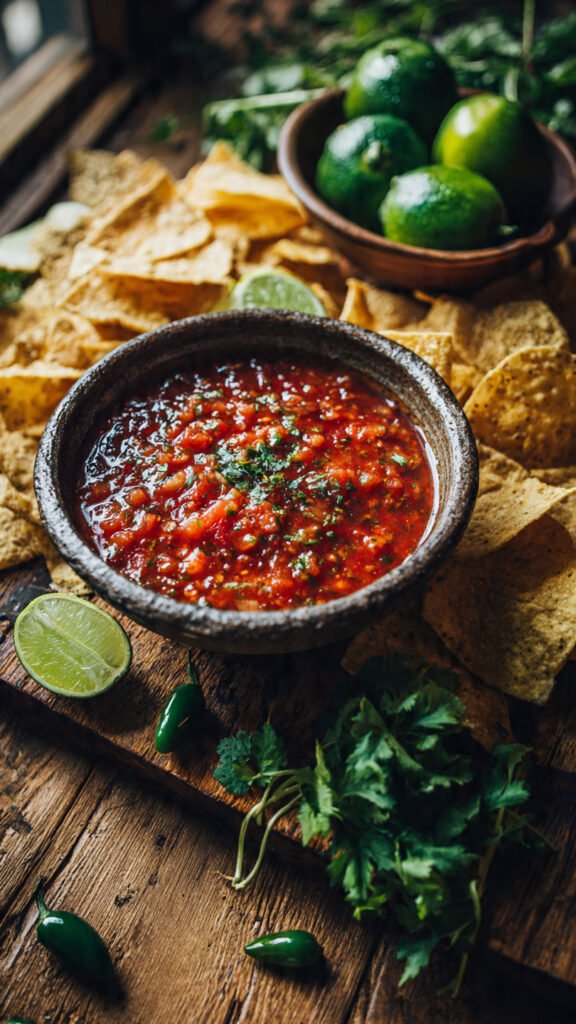
4. Tomato Time Add your quartered fresh Roma tomatoes and the entire can of whole peeled tomatoes, including the juice.
5. The Pulse (The Most Important Part) Do not press “On” and walk away. You must use the Pulse button. Short, one-second bursts. Pulse about 8 to 12 times. Stop and look at it. Is it still too chunky? Give it a few more pulses. You are looking for a consistency where it’s mostly saucy, but you can still clearly see small bits of tomato and onion floating around. If you over-blend it, you’ll introduce too much air, turning it pink and foamy. We don’t want pink foam; we want deep red salsa.
6. Taste and Adjust (The Fun Part) Grab a tortilla chip. Dip it. Taste it. What does it need?
- Does it taste flat? Add more salt, a quarter teaspoon at a time. Salt is usually the answer.
- Does it need more zing? Squeeze in the juice of the second lime.
- Not spicy enough? Well, it’s too late to add more whole jalapeño now unless you want big chunks, but you could add a dash of cayenne powder.
7. The Chill (Optional but Recommended) You can eat it right now. It will be delicious. But if you can manage to wrap the bowl in plastic wrap and stick it in the fridge for just 30 minutes to an hour, the flavors will meld together into something truly spectacular.
Common Mistakes to Avoid
Even though this recipe is nearly idiot-proof, I have seen good people make bad salsa choices. Don’t be like them.
- The Smoothie Effect: As mentioned above, over-blending is the enemy. If you hold the button down constantly, you will make cold tomato soup. Use the pulse button like your life depends on it.
- Garlic Powder crimes: Using garlic powder instead of fresh cloves will give the salsa a weird, processed “pizza sauce” flavor. Just peel the fresh clove; it takes ten seconds.
- Ignoring the Salt: Tomatoes need a lot of salt to taste like anything. If your salsa tastes boring, it’s 99% likely an issue of under-salting. Don’t be afraid of the salt pig.
- Using “Salad” Tomatoes: Don’t use big, watery beefsteak tomatoes for this. They have too much water and too many seeds, and not enough flesh. Stick to Romas (plum tomatoes) or canned whole peeled.
Alternatives & Substitutions
This recipe is a sturdy base, feel free to get weird with it once you master the original.
- Make it Smoky (Chipotle): This is my favorite variation. Toss in 1 or 2 chipotle peppers in adobo sauce (from the little can in the Mexican aisle) during step 2. It adds a deep, smoky heat and a beautiful dark color.
- Fire Roasted: Use canned “fire-roasted” tomatoes instead of regular ones. They have little black charred bits that look nice and taste slightly smokier.
- The “Soap Gene” Fix: If you hate cilantro, swap it out for flat-leaf Italian parsley just for the green color, or just leave it out entirely. It’ll still be good.
- Super Mild Version: Omit the jalapeños entirely and substitute about a quarter of a green bell pepper. You’ll get the pepper flavor crunch without a speck of heat.
FAQ (Frequently Asked Questions)
How long does this salsa last in the fridge? Ideally, you’ll eat it all within 48 hours while it’s freshest. However, it will keep safely in an airtight container in the fridge for up to a week. Just know that the cilantro will start to look a little sad after day three, and the onions might get stronger.
Can I freeze this salsa dip recipe? Technically, yes. Should you? IMO, no. Freezing and thawing tomatoes completely changes their cell structure. When you thaw this salsa, it will be much more watery and the texture will be mushy. It’ll taste okay cooked into chili or soup, but it won’t be great for dipping chips.
Why is my salsa orange or pink instead of red? You over-blended it! When you incorporate too much air into tomatoes, they turn orange/pink. Next time, fewer pulses! It will still taste fine, it just doesn’t look as pretty.
Can I use fresh tomatoes only instead of canned? You can, but it’s harder to get that “restaurant style” consistency. If you use only fresh tomatoes, you’ll need to use very ripe Romas, and you may need to add a splash of tomato juice or water to get it saucy enough. You’ll also need to add a tablespoon of tomato paste to deepen the flavor, as fresh tomatoes aren’t as concentrated as canned.
I made it too spicy! Help! Oops. It happens to the best of us. The easiest fix is dilution. Add another half-can of tomatoes or another fresh Roma tomato and pulse it again. You can also try adding a tiny bit more sugar and lime juice to distract the palate from the heat.
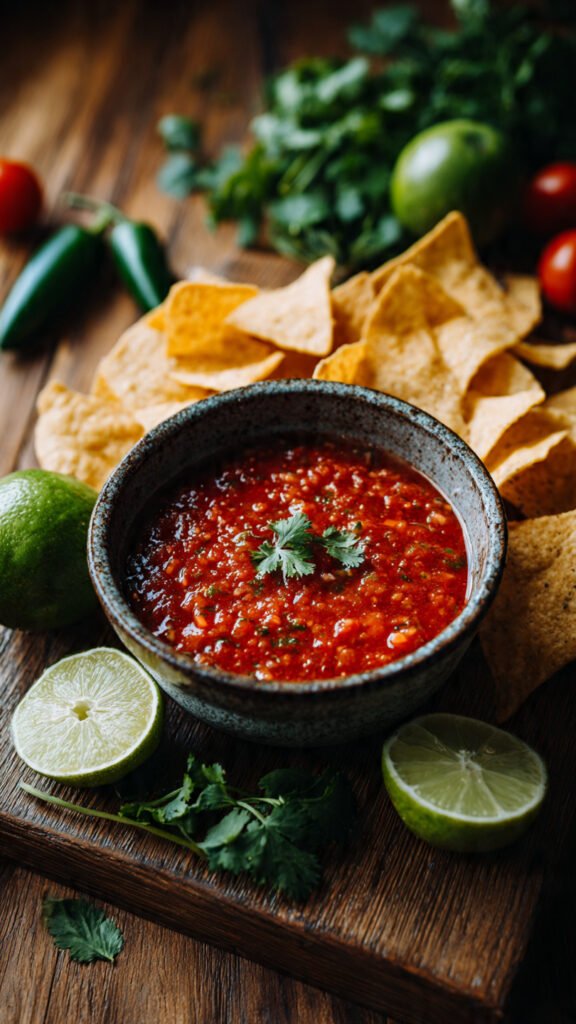
Final Thoughts
There you have it. You are now fully equipped to break free from the shackles of mediocre jarred salsa.
This salsa dip recipe is one of those low-effort, high-reward things to keep in your back pocket. It’s perfect for game days, taco Tuesdays, or just a Wednesday night when you decide dinner is going to be a bag of chips and a margarita (no judgment here).
Once you make this a couple of times, you won’t even need to measure anything. You’ll just eyeball the cilantro, toss in the peppers, and know exactly how many pulses it needs. You’ll be a salsa whisperer. Now go impress someone—or just yourself—with your new culinary skills. You’ve earned it!