
Souse Meat Recipe: A Tangy, Savory Delight from Head to Tail!
Souse meat, sometimes called head cheese (though it rarely contains cheese!), is a flavorful and surprisingly versatile dish that has graced tables around the world for centuries. This traditional preparation, often made with parts of the pig that might otherwise be overlooked, transforms humble ingredients into a culinary experience. While the idea of using the head, feet, or hocks might seem daunting to some, the result is a truly unique and delicious product: a savory terrine bursting with textures and a tangy, vinegary kick. Think of it as a nose-to-tail celebration of flavor, perfect for slicing and serving as an appetizer, snack, or even a hearty addition to a sandwich. This recipe breaks down the process into manageable steps, ensuring a rewarding and flavorful outcome. Prepare to be surprised by the depth of flavor and the satisfyingly jiggly texture of homemade souse meat!
Why This Recipe Works
This recipe is designed to be approachable and adaptable, even for those who are new to the world of offal cookery. Here’s why it works:
- Comprehensive Instructions: Each step is clearly outlined, from the initial preparation of the meat to the final pressing.
- Flavor Balancing: The recipe carefully balances the richness of the meat with the acidity of vinegar and the warmth of spices, resulting in a well-rounded flavor profile.
- Customizable Spice Blend: The spice blend is a guideline, allowing you to adjust the flavors to your personal preferences. Feel free to experiment with different herbs and spices.
- Emphasis on Stock Quality: The recipe highlights the importance of a flavorful stock, as it’s the backbone of the souse meat. Using homemade stock, if possible, will elevate the final product.
- Proper Pressing Technique: The pressing process is crucial for achieving the desired texture and compact form. The recipe provides detailed instructions on how to properly press the souse meat.
Ingredients
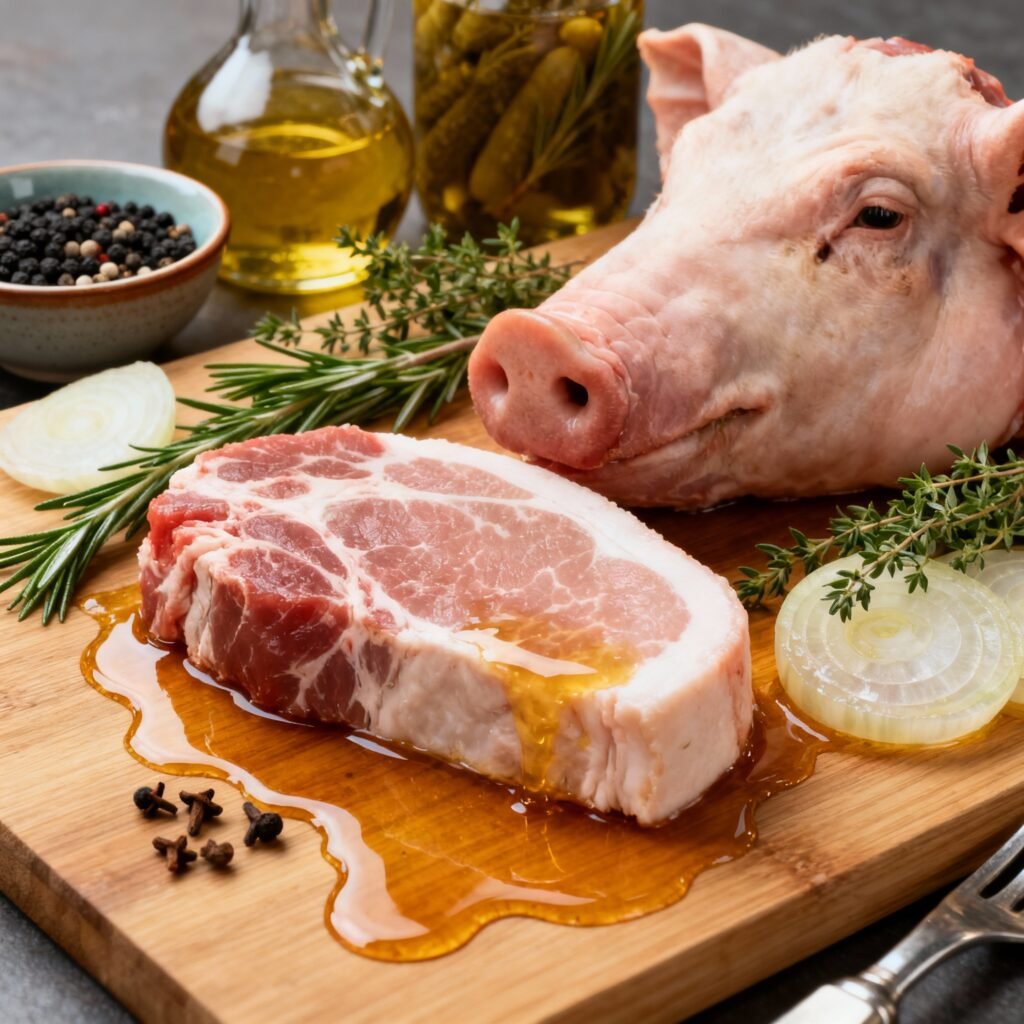
- 2 lbs Pig’s Head (cleaned and split) or Pig’s Feet/Hocks (can use a combination)
- 1 lb Pork Shoulder (optional, for added meatiness)
- 1 large Onion, quartered
- 4 cloves Garlic, smashed
- 2 Carrots, roughly chopped
- 2 Celery Stalks, roughly chopped
- 1 Bay Leaf
- 1 tsp Black Peppercorns
- 1/2 tsp Allspice Berries
- 1/4 tsp Dried Thyme
- 1/4 tsp Dried Marjoram
- 1/4 tsp Red Pepper Flakes (optional, for heat)
- 1 cup Apple Cider Vinegar (or white vinegar)
- 1/2 cup Water
- Salt to taste
- Fresh Parsley, chopped (for garnish)
Instructions
- Prepare the Meat: Rinse the pig’s head, feet, or hocks thoroughly under cold running water. If using the pig’s head, ensure any remaining bristles are removed. If using feet, you may need to scald them briefly to remove any remaining hairs.
- Simmer the Meat: Place the pig’s head, feet, or hocks (and pork shoulder, if using) in a large stockpot or Dutch oven. Add the onion, garlic, carrots, celery, bay leaf, peppercorns, allspice, thyme, marjoram, and red pepper flakes (if using). Cover with cold water, ensuring the meat is fully submerged.
- Bring to a Boil, Then Simmer: Bring the water to a boil over high heat, then reduce the heat to low, cover, and simmer gently for 3-4 hours, or until the meat is very tender and easily falls off the bone. The cooking time will vary depending on the size and type of meat used.
- Cool and Debone: Remove the meat from the pot and let it cool slightly. Reserve the cooking liquid (stock). Once cool enough to handle, carefully debone the meat, discarding any bones, skin, and cartilage. Shred or chop the meat into small, bite-sized pieces.
- Strain the Stock: Strain the reserved stock through a fine-mesh sieve lined with cheesecloth to remove any solids. This will result in a clear and flavorful broth.
- Combine Meat and Stock: In a large bowl, combine the shredded or chopped meat with the strained stock. Add the apple cider vinegar and water. Season generously with salt to taste. The mixture should be quite flavorful, as the flavors will mellow during the pressing process.
- Mold and Press: Line a loaf pan or other suitable mold with plastic wrap, leaving enough overhang to cover the top. Pour the meat and stock mixture into the prepared mold. Fold the plastic wrap over the top to completely enclose the souse meat.
- Apply Pressure: Place a weight on top of the wrapped souse meat. This could be another loaf pan filled with cans, a brick, or a heavy book. The goal is to apply consistent pressure to compact the meat and remove excess liquid.
- Refrigerate: Refrigerate the souse meat for at least 24 hours, or preferably 48 hours, to allow it to fully set and develop its flavor.
- Unmold and Serve: After refrigerating, remove the weight and carefully unmold the souse meat from the loaf pan. Discard the plastic wrap. Slice the souse meat into thin slices and serve chilled or at room temperature. Garnish with fresh parsley, if desired.
Tips for Success
- Source Quality Ingredients: The quality of your ingredients will directly impact the flavor of your souse meat. Choose fresh, high-quality meat and spices.
- Don’t Skimp on Simmering Time: The long simmering time is essential for tenderizing the meat and extracting maximum flavor.
- Taste and Adjust Seasoning: Taste the stock and meat mixture before molding and pressing, and adjust the seasoning as needed. Remember that the flavors will mellow during the refrigeration process.
- Use a Sharp Knife for Slicing: A sharp knife will ensure clean and even slices.
- Experiment with Flavors: Feel free to experiment with different herbs, spices, and vinegars to create your own unique souse meat recipe. Consider adding ingredients like pickled onions, chopped peppers, or hard-boiled eggs.
Storage Instructions
Souse meat should be stored in the refrigerator in an airtight container. It will keep for up to 5-7 days. For longer storage, you can freeze the souse meat. Wrap it tightly in plastic wrap and then foil, or place it in a freezer-safe container. Frozen souse meat can be stored for up to 2-3 months. Thaw in the refrigerator overnight before serving.
FAQ
- Can I use a different type of vinegar? Yes, you can use other types of vinegar, such as white wine vinegar or rice vinegar, but apple cider vinegar provides a pleasant balance of sweetness and acidity.
- Can I add gelatin to help it set? While not traditionally used, you can add a small amount of unflavored gelatin to the stock if you prefer a firmer texture. Follow the package instructions for the amount to use.
- What can I serve with souse meat? Souse meat is delicious served as an appetizer with crackers, bread, or pickles. It can also be used in sandwiches or salads. Mustard, horseradish, or hot sauce are great accompaniments.
- I can’t find pig’s head. What else can I use? Pig’s feet or hocks are a good substitute, as they also contain a lot of collagen, which is essential for the gelatinous texture. You can also use a combination of pig’s feet and pork shoulder.
- Is souse meat healthy? Souse meat is relatively high in protein and collagen, but it can also be high in fat and sodium. It should be consumed in moderation as part of a balanced diet.
Conclusion
Souse meat is a testament to the resourceful and flavorful traditions of nose-to-tail cooking. While it may require a bit of time and effort, the resulting dish is a truly unique and rewarding culinary experience. With its savory flavors, jiggly texture, and tangy kick, homemade souse meat is sure to impress your friends and family. So, gather your ingredients, embrace the process, and prepare to enjoy a taste of history!