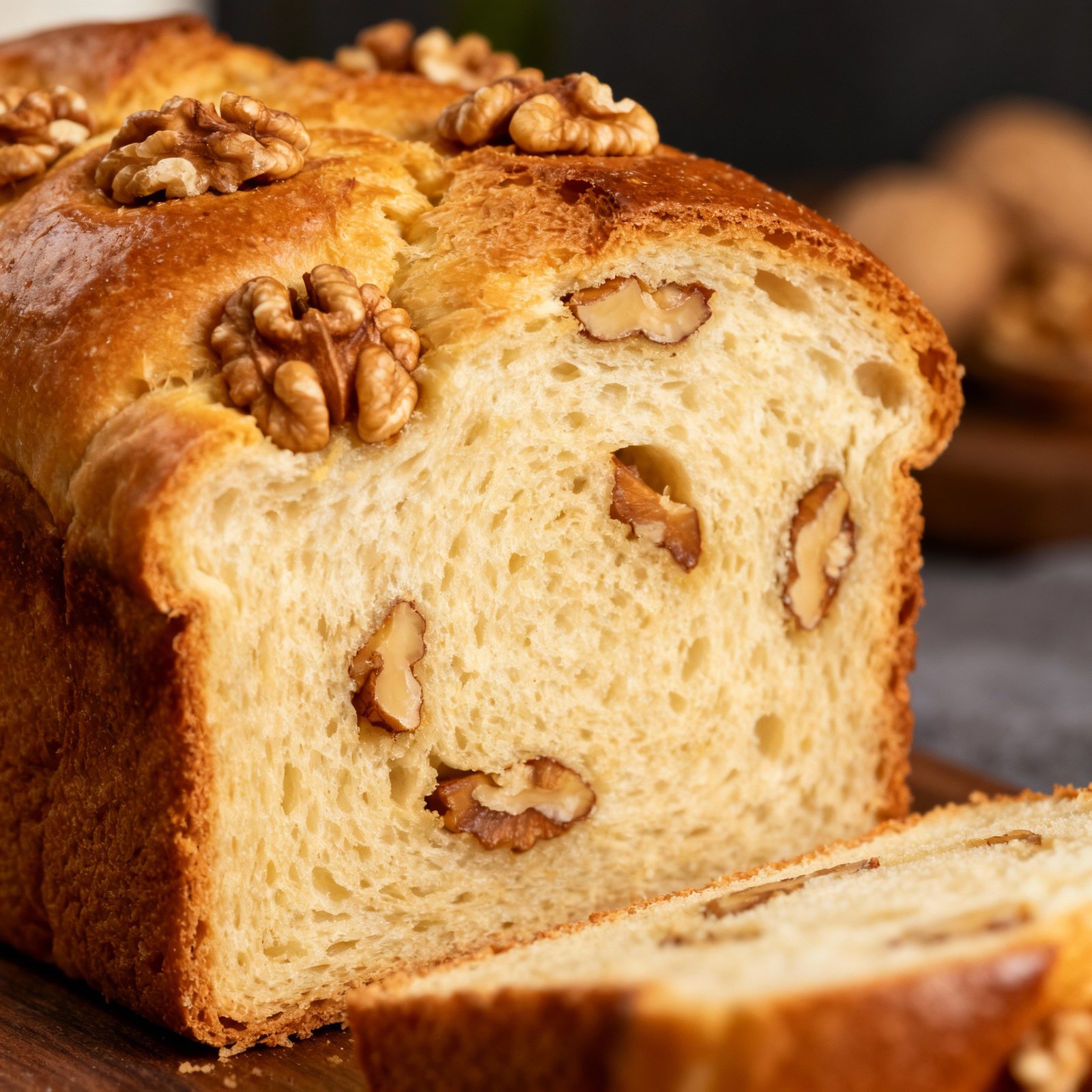
Walnut Bread Recipe: The Ultimate Comfort Bake
Is there anything quite as comforting as the aroma of freshly baked bread wafting through the house? And when that bread is studded with crunchy, toasted walnuts, it elevates the experience to a whole new level of deliciousness. This walnut bread recipe is a celebration of simple ingredients, resulting in a loaf that’s perfect for breakfast, lunch, or a cozy evening snack. Whether you’re a seasoned baker or just starting out, this recipe is foolproof and guaranteed to impress. Get ready to enjoy a slice of heaven!
Why This Recipe Works
This walnut bread recipe isn’t just about throwing ingredients together; it’s about understanding the science behind a perfectly baked loaf. Here’s why this recipe consistently delivers exceptional results:
- Balanced Hydration: The ratio of flour to liquid is carefully calculated to ensure a moist, yet sturdy crumb. Too much liquid and the bread will be gummy; too little and it will be dry.
- Proper Gluten Development: The kneading process is crucial for developing the gluten in the flour, which gives the bread its structure and chewiness. We guide you through the kneading process, ensuring optimal gluten development.
- Walnut Distribution: We incorporate the walnuts in a way that prevents them from sinking to the bottom of the loaf. Toasting them beforehand also enhances their flavor and prevents them from becoming soggy.
- Temperature Control: From proofing the dough to baking the loaf, temperature plays a vital role. We provide specific temperature guidelines to ensure the yeast activates properly and the bread bakes evenly.
- Resting Time: Allowing the dough to rest and rise properly is essential for a light and airy texture. We provide clear instructions on proofing times and techniques.
Ingredients
- All-Purpose Flour: 3 cups (360g), plus more for dusting
- Active Dry Yeast: 2 1/4 teaspoons (1 packet)
- Granulated Sugar: 2 tablespoons
- Salt: 1 teaspoon
- Warm Water: 1 1/4 cups (300ml), lukewarm (105-115°F / 40-46°C)
- Unsalted Butter: 2 tablespoons, melted
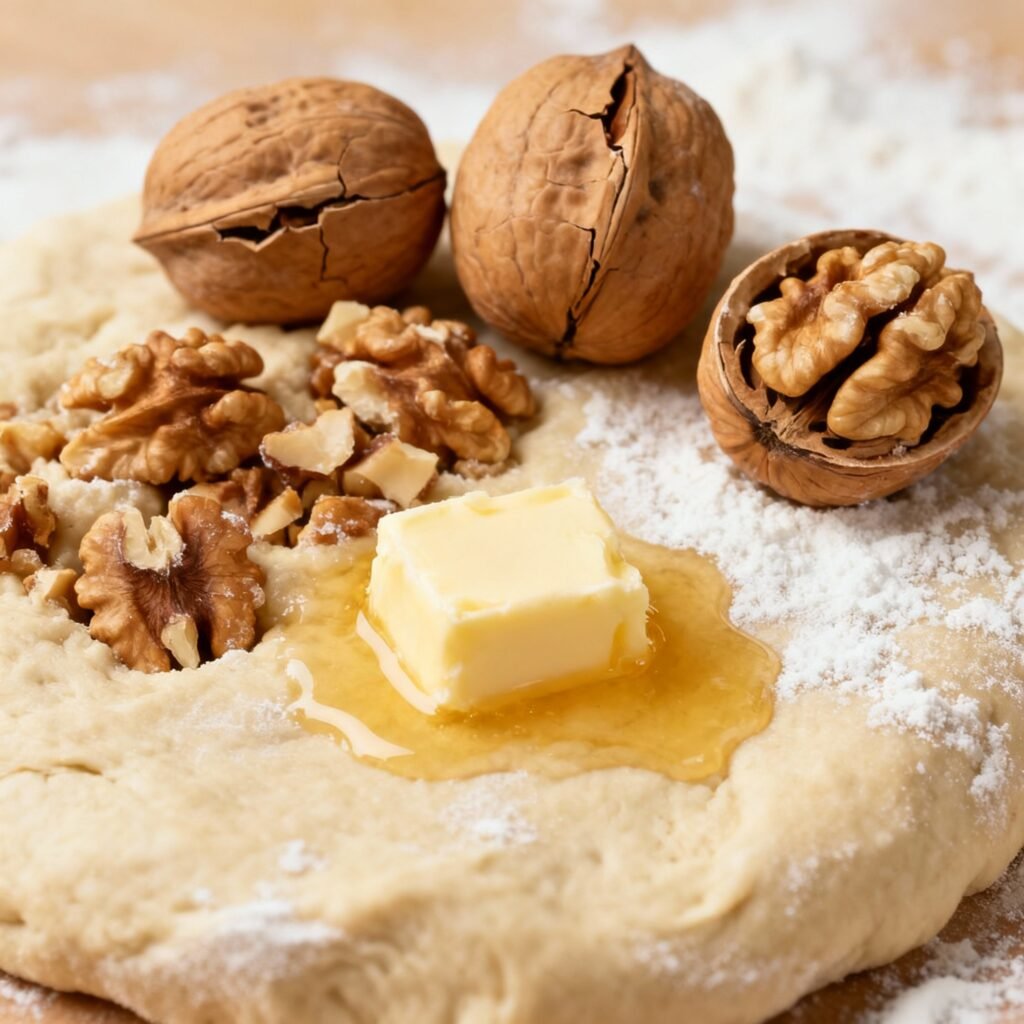
- Walnuts: 1 cup (100g), roughly chopped and toasted
- Optional: 1 tablespoon honey or maple syrup for a touch of sweetness
Instructions
- Activate the Yeast: In a large bowl, combine the warm water, sugar, and yeast. Let it stand for 5-10 minutes, or until foamy. This indicates that the yeast is active and ready to use.
- Combine Wet and Dry Ingredients: Add the melted butter (and honey/maple syrup, if using) to the yeast mixture. Gradually add the flour and salt, mixing until a shaggy dough forms.
- Knead the Dough: Turn the dough out onto a lightly floured surface and knead for 8-10 minutes, or until it becomes smooth and elastic. If using a stand mixer, knead with the dough hook for 5-7 minutes.
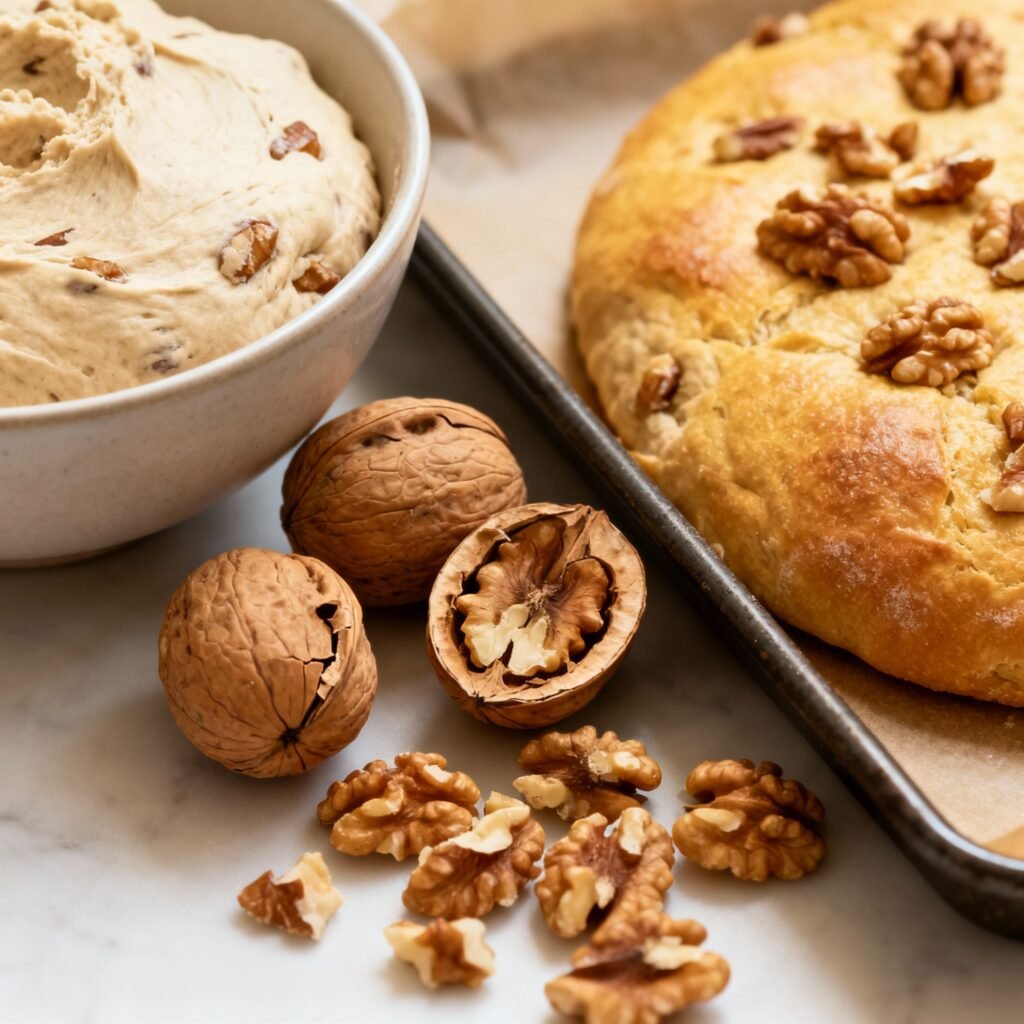
- Incorporate the Walnuts: Gently knead in the toasted walnuts until they are evenly distributed throughout the dough.
- First Rise: Place the dough in a lightly oiled bowl, turning to coat. Cover with plastic wrap or a clean kitchen towel and let it rise in a warm place for 1-1.5 hours, or until doubled in size.
- Shape the Dough: Gently punch down the dough to release the air. Shape it into a loaf and place it in a greased 9×5 inch loaf pan.
- Second Rise: Cover the loaf pan with plastic wrap or a clean kitchen towel and let it rise for another 30-45 minutes, or until it has almost doubled in size.
- Preheat the Oven: Preheat oven to 375°F (190°C).
- Bake the Bread: Bake for 30-35 minutes, or until the loaf is golden brown and sounds hollow when tapped on the bottom. If the top is browning too quickly, tent it with foil.
- Cool the Bread: Let the bread cool in the loaf pan for 10 minutes before transferring it to a wire rack to cool completely.
Tips for Success
Baking bread can be a rewarding experience, and these tips will help you achieve the perfect walnut bread every time:
- Use Fresh Yeast: Expired yeast won’t activate properly, resulting in a flat, dense loaf. Check the expiration date on your yeast before using it.
- Proper Water Temperature: The water should be warm, not hot. Hot water can kill the yeast. Use a thermometer to ensure the water is between 105-115°F (40-46°C).
- Don’t Over-Knead: Over-kneading can result in a tough bread. Knead until the dough is smooth and elastic, but not overly stiff.
- Toast the Walnuts: Toasting the walnuts enhances their flavor and prevents them from becoming soggy during baking. Toast them in a dry skillet over medium heat for 5-7 minutes, or until fragrant.
- Warm Place for Rising: A warm environment encourages the yeast to thrive and helps the dough rise properly. You can place the dough in a slightly warmed oven (turned off), or in a warm spot in your kitchen.
- Check for Doneness: The bread is done when it’s golden brown and sounds hollow when tapped on the bottom. You can also use a thermometer to check the internal temperature, which should be around 200-210°F (93-99°C).
- Cool Completely: Resist the urge to slice into the bread while it’s still warm. Allowing it to cool completely will prevent it from becoming gummy.
Storage Instructions
To keep your walnut bread fresh and delicious for as long as possible, follow these storage tips:
- Room Temperature: Store the cooled bread in an airtight container or wrapped tightly in plastic wrap at room temperature for up to 3 days.
- Freezer: For longer storage, slice the bread and freeze it in a freezer-safe bag or container for up to 2 months. Thaw at room temperature before serving.
FAQ
Here are some frequently asked questions about making walnut bread:
- Can I use a different type of nut? Yes, you can substitute the walnuts with pecans, almonds, or hazelnuts.
- Can I use whole wheat flour? Yes, you can substitute up to half of the all-purpose flour with whole wheat flour. Keep in mind that whole wheat flour absorbs more liquid, so you may need to add a little more water.
- Can I make this bread vegan? Yes, you can substitute the butter with vegan butter and the honey/maple syrup with agave nectar.
- My bread is not rising. What could be the problem? The yeast may be expired, the water may be too hot or too cold, or the environment may not be warm enough.
- My bread is too dense. What could be the problem? The dough may not have been kneaded enough, or it may not have risen properly.
Conclusion
This walnut bread recipe is more than just a recipe; it’s an invitation to create a comforting and delicious experience in your own kitchen. With its simple ingredients, easy-to-follow instructions, and irresistible flavor, this bread is sure to become a family favorite. So, gather your ingredients, preheat your oven, and get ready to enjoy the delightful aroma and satisfying taste of homemade walnut bread. Happy baking!